

 プレビュー
プレビュー
 シェアする
シェアする シェアする
シェアする
 詳細を見る
詳細を見る

 ダウンロード
 似ている作品
 X線調査
X線調査 スライドショー
 Stats
StatsAnnunciation


 詳細を見る
詳細を見る
ジークレー/アートプリント
迅速な制作と多彩な仕上げオプションを備えた、ミュージアムクオリティのジークレーまたはキャンバスプリント。 ( 手描きの絵画を購入 Switch to Digital Image)




P118B $10

P118H $10

P118W $10

P438Z $10

P508JH $12

P508YH $12

P805H $10

P805Z $10

P919BZ $10

P919G $10

P919XJ $10

P959ZH $10

P968JZ $12

W106C $8

W218G $10

W218JH $8

W218Y $10

W307PJ $10

W316G $10

W316PJ $8

W316Y $10

W398PJ $8

W4111J $10

W500HY $15

W500JH $15

W692G $12

W849H $8

W940BG $15

W953PJ $8




作品のオリジナル比率に合わせた、当店の規定サイズからお選びください。

特定のフレームやスペースに合わせて、ご自身でサイズを指定することも可能です。選択されたサイズが元の画像の比率と一致しない場合、作品をトリミングするか、鏡面反射または単色での塗りつぶしによって画像を拡張いたします。制作を開始する前に、ご確認用のデジタルモックアップをお送りいたします。
画面上のプレビューには、実際のトリミングや拡張は反映されませんのでご注意ください。最終的な構図を正確に確認できるのは、モックアップのみとなります。
カスタムサイズも承っておりますが、元の比率を維持するためには、あらかじめ用意されたリストからサイズを選択することをお勧めいたします。


 ガラスオプションは、110cm未満のサイズでのみご利用いただけます。

Annunciation
ジークレー/アートプリント
複製画のサイズ
-


合計金額
$ 62
A Celestial Encounter in Late Gothic Splendor
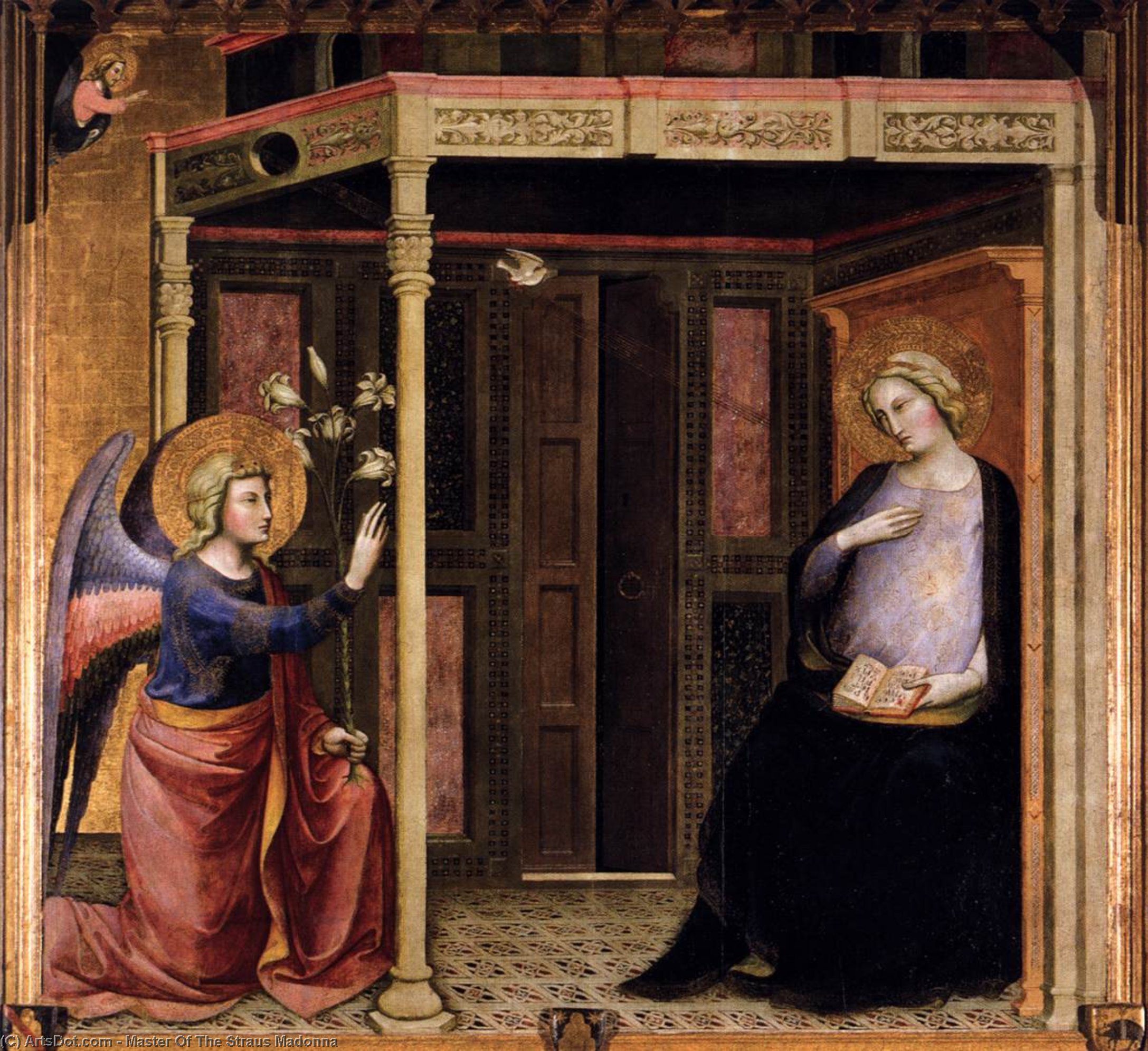
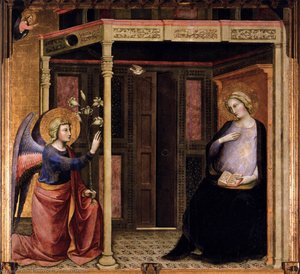
In the quiet, hallowed atmosphere of the early fifteenth century, a profound moment of divine intervention was captured on wood by an artist whose name remains whispered in the corridors of history: the Master of the Straus Madonna. His work, Annunciation, dated to approximately 1400, serves as a breathtaking window into the Late Gothic period, where the earthly and the divine intersect through delicate brushwork and profound spiritual gravity. The painting presents a sacred dialogue between two celestial beings, frozen in a moment of eternal significance. On one side, an angel stands with a haloed grace, clutching a book that signifies the fulfillment of prophecy, while his counterpart gestures with a hand extended in a gesture of holy tidings. This composition does more than merely depict a scene; it invites the viewer into a sanctuary of light and devotion.
The technique employed by this Florentine master reflects the transition from the heavy, solemn Giottesque tradition toward a more lyrical, luminous style that would eventually pave the way for the Renaissance. The panel painting, a medium prized for its intimacy and portability, allows for an extraordinary level of detail that rewards the close observer. One can trace the intricate architectural flourishes—the columns and arches that frame the figures—suggesting a sacred interior, perhaps a cathedral or a private chapel. The artist utilizes a palette dominated by rich earth tones, yet this sobriety is brilliantly interrupted by the vibrant, saturated hues of the angels' robes. These splashes of color act as visual anchors, drawing the eye through the complex geometry of the Gothic setting and highlighting the celestial nature of the protagonists.
Symbolism and the Spirit of the Florentine Renaissance
Every element within this masterpiece is imbued with symbolic weight, designed to guide the faithful toward contemplation. The presence of the book held by the angel is not merely a decorative detail but a profound symbol of the Word made flesh, representing the scriptural promises being realized in that very moment. The architectural elements—the arches and pillars—serve as more than just a backdrop; they represent the stability of the Church and the structured order of the cosmos. As a piece of art, it embodies the tension of its era: the lingering shadows of medieval mysticism clashing beautifully with the emerging humanist interest in classical form and spatial clarity.
For the discerning collector or interior designer, an Annunciation reproduction offers much more than mere decoration; it provides a focal point of historical depth and emotional resonance. The painting’s ability to evoke a sense of peace, reverence, and timelessness makes it an ideal centerpiece for spaces designed for reflection, such as a library, a study, or a formal sitting room. To possess a high-quality reproduction of this work is to bring a fragment of Florentine history into the modern home, surrounding oneself with the enduring beauty of the Gothic spirit and the masterful hand of an anonymous genius who helped shape the course of Western art.
関連作品
アーティストの略歴
The Enigmatic Visionary of Florence
In the hallowed, sun-drenched corridors of Florentine art history, certain names resonate with clarity, while others linger like a beautiful, half-remembered dream. The Master of the Straus Madonna belongs to this latter, more mysterious category. An artist whose true identity remains veiled behind the shroud of anonymity, he stands as a pivotal figure in Late Gothic painting, acting as a vital conduit between the heavy, solemn traditions of the Giottesque era and the burgeoning, luminous humanist spirit that would soon define the early fifteenth century. Though his personal biography is fragmented, scholars suggest a life rooted in the vibrant artistic pulse of Florence, with documentary traces pointing toward a birth around 1385.
His identity is often whispered to be one and the same as Cenni di Francesco di Ser Cenni, a connection that adds a layer of human depth to his otherwise elusive persona. To study his work is to witness a master navigating a period of profound artistic dynamism—a time when the monumental solidity of Giotto’s legacy met the delicate, ethereal revival of classical ideals championed by thinkers like Brunelleschi and Donatello. He did not merely follow these trends; he synthesized them into a singular, lyrical language that captured both the weight of the earthly and the grace of the divine.
A Symphony of Light and Devotion
The oeuvre of this Florentine master is characterized by an extraordinary devotion to sacred themes, particularly the Madonna and Child. His surviving panels, numbering approximately thirty, reveal a painter deeply preoccupied with the spiritual intimacy of the Virgin Mary and her infant son. He achieved lasting renown through works such as the celebrated panel donated by the Straun family to the Museum of Fine Arts, Houston, from which he derives his moniker. In these compositions, one finds a breathtaking mastery of luminous coloration and delicate drapery, elements that imbue his figures with a sense of celestial lightness.
His technical prowess is perhaps most evident in the way he balances form and emotion:
- The Man of Sorrows with Instruments of the Passion: Housed in Warsaw’s National Museum, this work showcases his ability to portray human suffering through subtle modeling of flesh and an expressive, haunting gaze.
- The Annunciation: Located at the Accademia Gallery in Florence, this piece serves as a cornerstone of his legacy, utilizing vibrant, saturated hues to create an atmosphere of serene, spiritual contemplation.
- Virgin and Child with Two Angels: A testament to his skill in capturing spiritual evanescence, where slender, pale figures seem to float within a sacred, architectural space.
Legacy of the Late Gothic Transition
The historical significance of the Master of the Straus Madonna lies in his role as a bridge. He occupied the delicate space between the works of Agnolo Gaddi and the more advanced style of Lorenzo Monaco. His paintings are not merely religious icons but are windows into a transitional epoch where the heavy, grounded forms of the past were beginning to dissolve into the graceful, flowing lines of the early Renaissance. By blending Giottesque solidity with a new, lyrical tenderness, he helped prepare the Florentine palate for the profound humanism that was to follow.
Even without a confirmed name, his presence is felt in every delicate fold of pigment and every soulful glance captured on wood. He remains an essential voice in the narrative of Italian art—a master who, through the sheer beauty of his anonymous hand, continues to invite the modern viewer into a sanctuary of eternal grace and profound devotion.
基本情報
- Artistic Movement Or Style: Late Gothic
- Artists Or Movements Influenced By This Artist: ['Masolino']
- Artists Who Influenced This Artist:
- Agnolo Gaddi
- Lorenzo Monaco
- Full Name: Cenni di Francesco di Ser Cenni
- Nationality: Italian
- Notable Artworks:
- Annunciation
- Man of Sorrows
- Place Of Birth: Florence
関連記事
The Radiant Dusk of Medieval Vision: Exploring Late Gothic Art's Synthesis of Faith, Form & Emotionality (c. 1300-1500)
Explore the exquisite beauty & spiritual depth of Late Gothic art (c. 1300-1500). Discover key artists, symbolism, and its lasting influence on the Renaissance. Expert insights at ArtsDot.
Celestial Messengers: A Comprehensive Exploration of Angelic Representation in Art History
Explore the captivating history of angels in art! Discover symbolism, iconic Renaissance masterpieces & renowned artists. Expert insights for art lovers & collectors at ArtsDot.
Celestial Messengers: Angels in Painting – A Historical & Artistic Exploration
Explore the captivating history of angels in painting! Discover symbolism, iconic Renaissance & Byzantine masterpieces, and renowned artists. Expert insights for art lovers & collectors at ArtsDot.

Late Medieval Masterpieces: 10 Artworks That Defined an Era | ArtsDot
Journey through 10 defining Late Medieval masterpieces – from Giotto's frescoes to Jan van Eyck’s realism. Explore the stories, techniques & vibrant colors of Gothic art. Find museum-quality reproductions and elevate your home decor with ArtsDot.com! Discover all masterpieces on ArtsDot.com
Beyond Borders: The Spiritual & Stylistic Innovations of International Gothic Art
Explore the exquisite beauty & spiritual depth of International Gothic art. Discover key artists like Simone Martini & Pol de Limbourg, its origins, symbolism, and lasting influence on European painting. Expert insights at ArtsDot.