

 プレビュー
プレビュー
 プリントを購入
 シェアする
シェアする シェアする
シェアする
 詳細を見る
詳細を見る

 ダウンロード
 似ている作品
 X線調査
X線調査 スライドショー
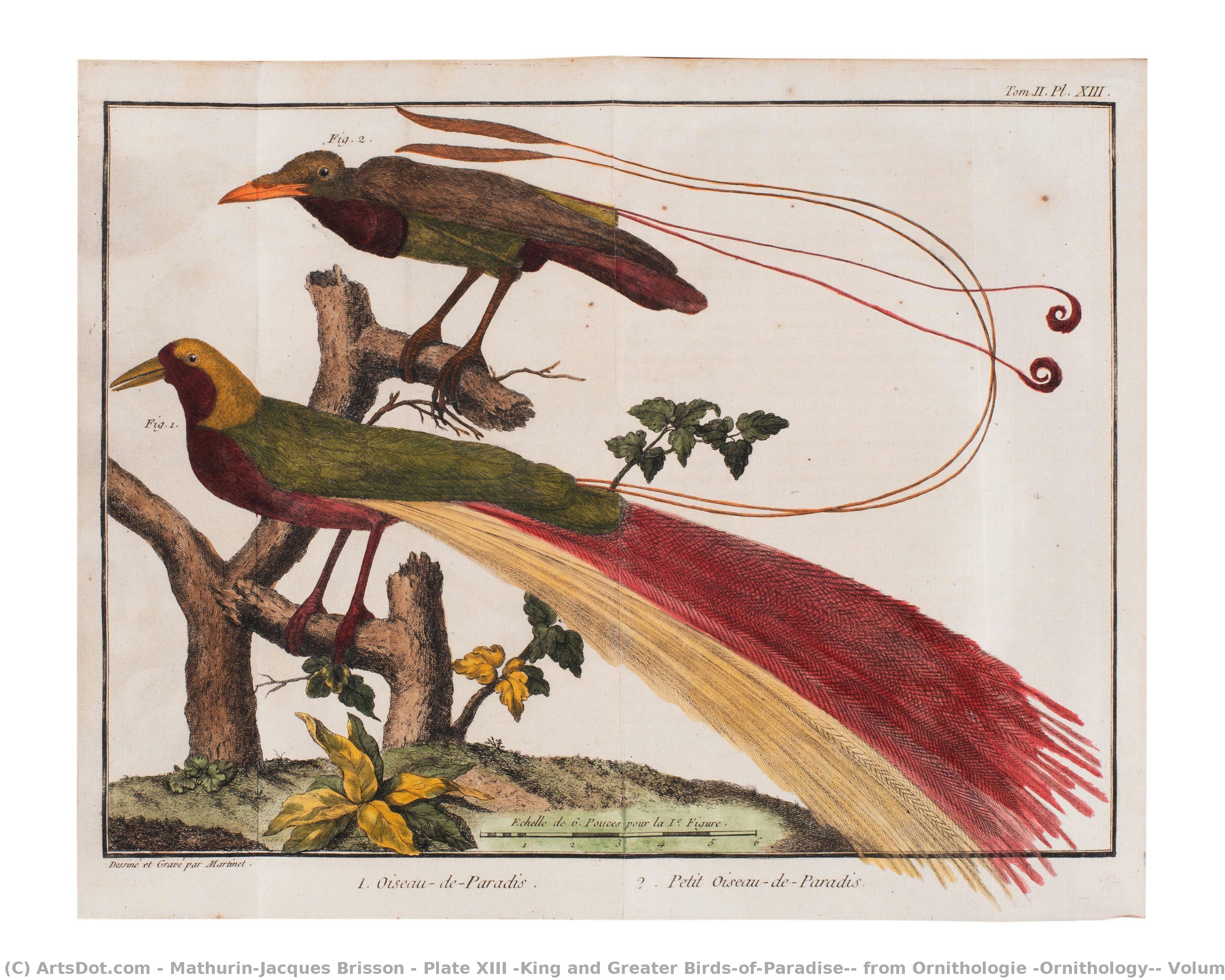
Plate XIII (King and Greater Birds-of-Paradise), from Ornithologie (Ornithology), Volume 2
 Acrylic On Canvas
- WallArt
- 18th Century Naturalism
 1760
1760- 19th Century
 25.0 x 19.0 cm
 Toledo Museum of Art
 詳細を見る
詳細を見る
オンラインプレビューをはるかに凌ぐ、高解像度で鮮明なデジタル画像をご購入いただけます。
各ファイルは、社内の専門家が高度なツールと熟練した手作業によるレタッチを用いて、細心の注意を払って準備されています。すべての画像において、卓越した鮮明度、正確な色彩再現性、そして繊細なディテールを保証いたします。
最終ファイルは、プロフェッショナルな編集・印刷環境ですぐにご利用いただけるよう最適化された状態で、72時間以内にメールにてお届けいたします。これは、一流のデザインスタジオ、出版社、ギャラリーから信頼されているものと同等の品質です。
デジタル画像のご注文に付随する特典
高品質なデジタル画像配信を、確かな品質で。
ArtsDot.com を選ぶことは、単に画像を手に入れることではありません。それは、プロの手によって精密に仕上げられ、満足保証が付いた高品質なデジタルアートワークを受け取ることを意味します。ご注文いただいた際に自動的に付随する内容は、以下の通りです:

メールですぐにお届け
ご注文から72時間以内に、高解像度のデジタル画像ファイルがメールでお手元に届きます。すぐにそのままご利用いただけます。

AI技術で最適化されたデジタルファイル
お客様の作品は、高度なAIツールと専門家による手作業の編集を組み合わせてプロフェッショナルに最適化されており、細部のディテール、鮮明さ、そして正確な色再現性を最大限に引き出しています。

一生涯無料の再送サービス
ファイルを誤って削除したり、紛失してしまったりしましたか?ご安心ください。いつでも無料で再送いたします。

輸入手数料は一切かかりません
関税や手数料、配送料を気にすることなく、お気に入りのアートワークをすぐにお楽しみいただけます。デジタルダウンロードは常に免税です。

色彩再現の保証
プロ仕様のツールとカラーマネジメント技術を用いることで、デジタル画像が元の色を最大限に忠実に再現することを保証いたします。

60日間満足保証
ご購入いただいたデジタル画像にご満足いただけない場合は、60日以内であれば、修正または100%の返金(理由を問う必要はありません)をさせていただきます。

100% 返金保証
ご満足いただけない場合は、デジタルファイルを受け取ってから60日以内であれば、理由を問わず全額返金いたします。

まとめ買い割引
3枚購入で10%OFF - 5枚購入で15%OFF - 10枚以上購入で20%OFF。クリエイティブなプロジェクト、ギャラリー、エージェンシーに最適です。
Plate XIII (King and Greater Birds-of-Paradise), from Ornithologie: A Window into Enlightenment Natural History
Mathurin-Jacques Brisson’s “Plate XIII” offers more than just a depiction of exotic birds; it's a tangible artifact of the 18th century’s burgeoning scientific curiosity. Executed in 1760, this meticulously rendered plate hails from his seminal work, *Ornithologie*, a groundbreaking attempt to classify and illustrate the world’s avian species with unprecedented detail. Measuring a modest 25 x 19 cm, its scale belies the immense ambition of Brisson's project – a testament to the Enlightenment’s faith in observation and rational classification. The painting itself captures two magnificent birds-of-paradise, one notably larger than the other, engaged in a dynamic interaction that speaks volumes about the natural world as understood at the time.
Artistic Technique and Brisson's Method
- Detailed Illustration: Brisson’s illustrations were revolutionary for their accuracy. He employed a combination of direct observation, dissection (a controversial practice at the time), and artistic license to create images that were both scientifically informative and aesthetically pleasing.
- Color Palette: The use of vibrant colors – achieved through layering translucent glazes – was characteristic of the period’s watercolor techniques. These delicate washes allowed for nuanced shading and a sense of luminosity, particularly evident in the iridescent plumage of the birds.
- Compositional Precision: The arrangement of the birds within the frame demonstrates Brisson's understanding of visual hierarchy and balance. The larger bird dominates the left side, drawing the viewer’s eye while the smaller one provides a counterpoint, creating a dynamic composition.
Symbolism and the Birds-of-Paradise
The birds-of-paradise themselves were not merely subjects of scientific study; they held profound symbolic significance within European culture. These flamboyant creatures, with their elaborate plumage and seemingly absurd mating rituals, represented the pinnacle of natural extravagance – a visual embodiment of beauty, deception, and the mysteries of the animal kingdom. Brisson’s choice to depict them highlights the fascination Europeans had with the exotic and the perceived ‘primitive,’ reflecting a desire to understand and categorize the world's diverse forms of life.
Historical Context: The Age of Enlightenment
"Plate XIII" is inextricably linked to the intellectual currents of the 18th century. Brisson’s *Ornithologie* emerged during a period of intense scientific inquiry, driven by figures like Carl Linnaeus and fueled by advancements in taxonomy and natural history. The work reflects the Enlightenment's emphasis on empirical observation, rational classification, and the belief that humanity could unlock the secrets of nature through systematic study. Brisson’s meticulous approach laid the groundwork for modern ornithology and exemplifies the spirit of scientific discovery during this transformative era.
関連作品
作家の略歴
The Visionary of the Natural World: The Life of Mathurin Jacques Brisson
In the heart of the Enlightenment, a period defined by an insatiable hunger for knowledge and the systematic categorization of the universe, Mathurin Jacques Brisson emerged as a luminous figure. Born on April 30, 1723, in the tranquil French town of Fontenay-le-Comte, Brisson’s early years were marked by a tension between tradition and discovery. Though his path was initially directed toward the solemnity of ecclesiastical studies, the call of the natural world proved far more compelling. In 1747, he made the courageous decision to abandon the clergy, choosing instead to dedicate his intellect to the boundless complexities of life itself. This pivot from the spiritual to the empirical would eventually lead him to become one of the most significant contributors to zoological science and scientific illustration in history.
The trajectory of Brisson’s career was irrevocably altered through his profound association with René Antoine Ferchault de Réaumur. Joining the service of this esteemed French naturalist in 1749, Brisson found himself immersed in an environment of unparalleled scientific rigor. Under Réaumur’s mentorship, he gained access to a vast and diverse collection of specimens, which served as both his laboratory and his inspiration. This period of apprenticeship instilled in him a deep reverence for anatomical precision and the necessity of direct observation. It was here that Brisson began to refine the meticulous eye that would later define his artistic and scientific legacy, learning to see beyond mere surface beauty to the structural truths of the animal kingdom.
A Masterpiece of Empirical Artistry
The pinnacle of Brisson’s life work arrived in 1760 with the publication of his monumental six-volume treatise, Ornithologie. This work was not merely a book of descriptions; it was a revolutionary manifesto of scientific accuracy. At a time when many naturalists relied on secondhand accounts or dried, unrecognizable specimens, Brisson pioneered a methodology rooted in direct engagement. He insisted upon personally examining each bird before committing its likeness and characteristics to paper. This commitment to empirical truth transformed the nature of ornithological documentation, bridging the gap between fine art and rigorous science.
The illustrations within Ornithologie remain some of the most breathtaking examples of natural history art ever produced. Each plate serves as a window into a vibrant, living world, characterized by:
- Exquisite Detail: A profound focus on the texture of plumage, the curvature of beaks, and the delicate structure of talons.
- Vibrant Coloration: The use of pigments that capture the iridescent sheen of tropical species, such as the majestic King and Greater Birds-of-Paradise.
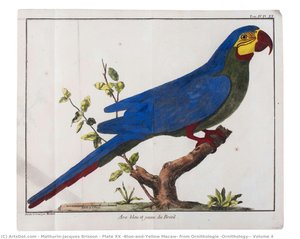
- Anatomical Integrity: A seamless blend where aesthetic beauty serves the purpose of scientific identification, seen clearly in works like his stunning depiction of the Blue-and-Yellow Macaw.
Legacy and Historical Significance
Beyond the visual splendor of his plates, Brisson’s contribution to the foundation of modern taxonomy cannot be overstated. His systematic approach to classifying animals provided a crucial framework that influenced subsequent generations of naturalists, including the likes of Carl Linnaeus. By emphasizing the importance of observable physical traits and detailed anatomical study, he helped move biology away from folklore and toward a disciplined, evidence-based science.
Mathurin Jacques Brisson passed away in 1806, leaving behind a legacy that continues to resonate in both the halls of scientific institutions and the galleries of art historians. His work remains a testament to the era's belief that through careful observation and artistic dedication, the mysteries of the natural world could be brought into the light of human understanding. Today, his illustrations are cherished not only as historical documents but as timeless masterpieces of scientific illustration, capturing the fleeting elegance of nature with an enduring, soulful precision.
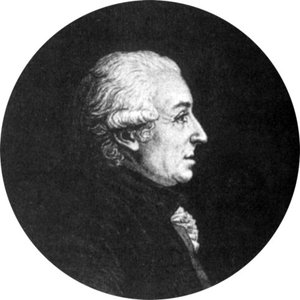
mathurin-jacques brisson
1723 - 1806 , France
プロフィール概要
- Artistic Movement Or Style: Naturalism
- Artists Or Movements Influenced By This Artist: ['']
- Artists Who Influenced This Artist:
- Carl Linnaeus
- Jacob Theodor Klein
- Date Of Birth: April 30, 1723
- Date Of Death: June 23, 1806
- Full Name: Mathurin Jacques Brisson
- Nationality: French
- Notable Artworks: ['Plate XX (Blue-and-Yellow Macaw) from Ornithologie']
- Place Of Birth: Fontenay-le-Comte, France

