

 プレビュー
プレビュー
 プリントを購入
 シェアする
シェアする シェアする
シェアする
 詳細を見る
詳細を見る

 ダウンロード
 似ている作品
 X線調査
X線調査 スライドショー
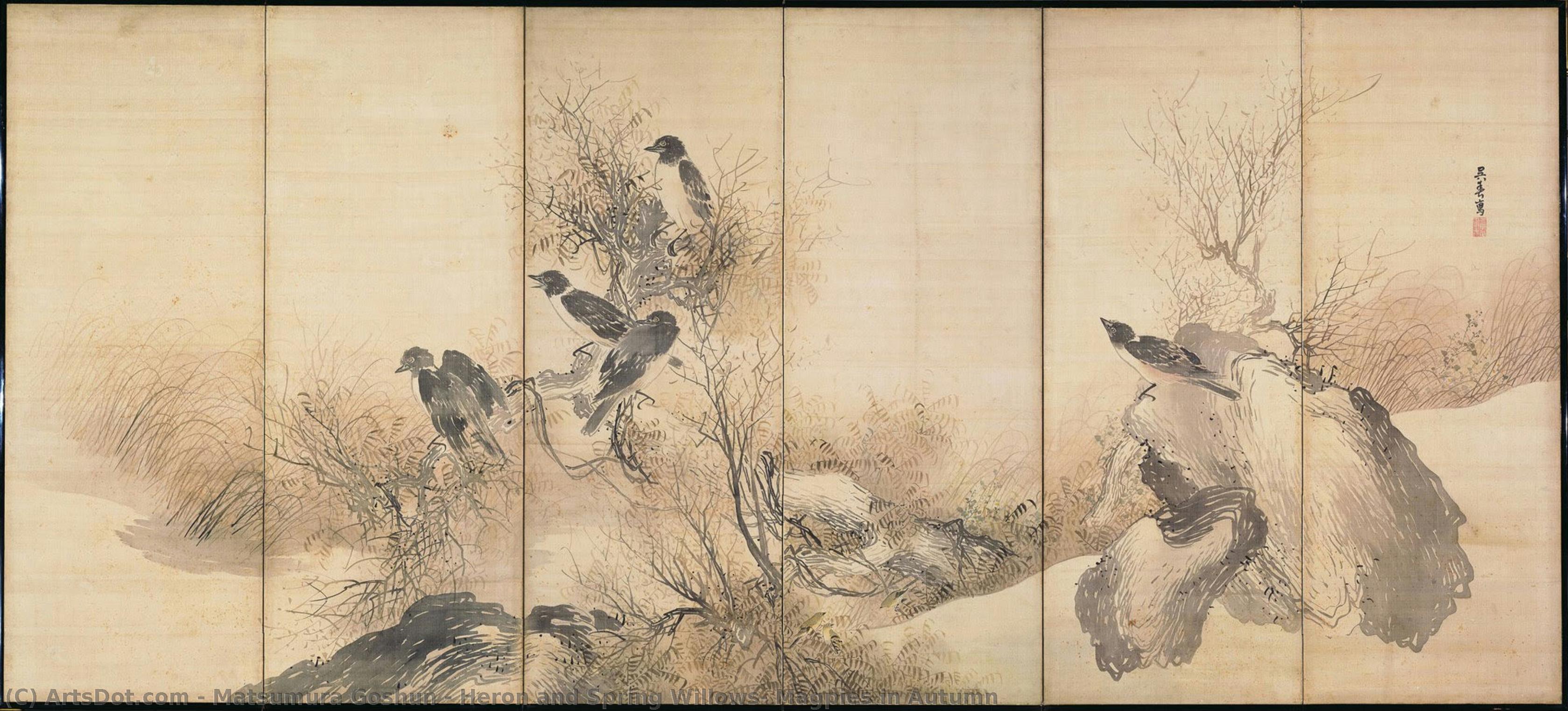
Heron and Spring Willows; Magpies in Autumn
 詳細を見る
詳細を見る




































作品のオリジナル比率に合わせた、当店の規定サイズからお選びください。

特定のフレームやスペースに合わせて、ご希望のサイズをご入力いただけます。選択されたサイズが元の画像の比率と異なる場合、アートワークをトリミングするか、手描きで要素を追加して絵画を拡張いたします。デジタルモックアップ を制作し、制作開始前にご確認(承認)をいただきます。
画面上のプレビューは、実際のトリミングや拡張を正確に反映しているものではありません。最終的な構図は、モックアップによってのみ正確にご確認いただけます。
カスタムサイズもご利用いただけますが、元の比率を維持するためには、あらかじめ用意されたリストからサイズを選択することをお勧めいたします。
ご注文後、ArtsDot.com チームより詳細な指示をお送りするとともに、仕上がりイメージ(モックアップ)をご提供いたします。


 ガラスオプションは、110cm未満のサイズでのみご利用いただけます。

Heron and Spring Willows; Magpies in Autumn
複製技法
複製画のサイズ
-


合計金額
$ 263
関連作品



アーティストの略歴
Matsumura Goshun: Bridging Literati Tradition and Maruyama Realism
Matsumura Goshun (1752-1811), often referred to as Matsumura Gekkei, stands as a pivotal figure in Japanese painting during the Edo period. He wasn’t merely a painter; he was a foundational architect of the Shijō school, a unique artistic lineage that skillfully blended the contemplative elegance of literati painting with the burgeoning realism championed by Maruyama Ōkyo and his circle. Born into a privileged family – his father served as an official at the royal mint – Goshun’s early life was steeped in cultural refinement, receiving rigorous instruction in calligraphy, poetry, classical literature, and, crucially, painting from accomplished masters of both nanga (Chinese-style landscape) and literati traditions. This comprehensive education laid the groundwork for his distinctive artistic voice. His formative years were deeply influenced by Yosa Buson (1716–1784), a master of the Southern School of Japanese painting, whose profound understanding of composition, brushwork, and atmospheric perspective shaped Goshun’s early style. Buson instilled in him the core tenets of literati painting – an emphasis on capturing the essence of nature through subtle details, conveying emotion rather than literal representation, and prioritizing personal expression over meticulous detail. However, Goshun's journey wasn't without its hardships. The untimely deaths of his wife and father, coupled with Buson’s declining health in 1781, forced him to relocate from Kyoto’s Shijō-district to Ikeda near Osaka, a period marked by financial struggle and the necessity of seeking patronage. Despite these challenges, he continued to hone his skills, maintaining a connection to Buson's literati style while grappling with the realities of self-sufficiency.The Influence of Maruyama Ōkyo and the Shift in Style
A turning point arrived in 1787 when Goshun joined the circle of painters working for Maruyama Ōkyo (1733–1795), a leading figure in the Maruyama school. Ōkyo’s influence proved transformative, introducing elements of Western perspective and a more direct engagement with observation into his work. This exposure led to a significant evolution in Goshun's style. He began incorporating Ōkyo’s techniques – bolder brushstrokes, heightened color palettes, and a greater attention to detail—into his compositions. This wasn’t a wholesale abandonment of his literati roots but rather a sophisticated synthesis; he retained the core principles of balance and harmony while embracing a more dynamic and visually arresting approach. The fire that ravaged parts of Kyoto in 1789 further solidified this shift, forcing both Goshun and Ōkyo to seek refuge together at a temple, fostering a period of collaborative exchange and mutual influence.A Unique Artistic Synthesis: Literati Brushwork Meets Maruyama Realism
Goshun’s artistic development can be characterized by a remarkable ability to fuse disparate influences into a cohesive and deeply personal style. While his early work is undeniably rooted in Buson's literati tradition – characterized by understated elegance, subtle color gradations, and a focus on capturing the spirit of nature—his later paintings demonstrate a growing mastery of Maruyama’s techniques. He skillfully balanced the contemplative mood of literati painting with Ōkyo’s more direct approach to observation, resulting in works that possess both intellectual depth and visual vibrancy. His compositions often feature meticulously rendered details – birds perched on branches, rocks sculpted by wind and water, or glimpses of distant mountains—all presented within a framework of carefully considered balance and harmony.Notable Works and Legacy
Among Goshun’s most celebrated works is “Herb Gatherer in the Mountains,” a captivating depiction of a solitary figure amidst a serene landscape. This piece exemplifies his ability to convey both the beauty of nature and the quiet dignity of human experience. His paintings frequently depict birds, showcasing an exceptional level of detail and sensitivity in capturing their plumage and behavior – a testament to his keen observational skills. Following Ōkyo’s death in 1795, Goshun established the Shijō school, solidifying his position as a key figure in Edo-period art. The school continued to produce works that reflected his unique synthesis of literati tradition and Maruyama realism for decades after his death. Matsumura Goshun’s legacy lies not only in his individual paintings but also in his pioneering role as a bridge between two distinct artistic traditions, shaping the course of Japanese painting for generations to come. His work continues to be exhibited and studied worldwide, offering a profound glimpse into the artistic landscape of 18th-century Japan.
matsumura goshun
1752 - 1811
基本情報
- Artistic Movement Or Style: Shijō School, Literati, Maruyama
- Artists Or Movements Influenced By This Artist: ['Maruyama Ōkyo']
- Artists Who Influenced This Artist: ['Yosa Buson']
- Date Of Birth: April 28, 1752
- Date Of Death: September 4, 1811
- Full Name: Matsumura Goshun
- Nationality: Japanese
- Notable Artworks: ['Herb Gatherer in the Mountains']
- Place Of Birth: Kyoto, Japan

