

 プレビュー
プレビュー
 シェアする
シェアする シェアする
シェアする
 詳細を見る
詳細を見る

 ダウンロード
 似ている作品
 X線調査
X線調査 スライドショー
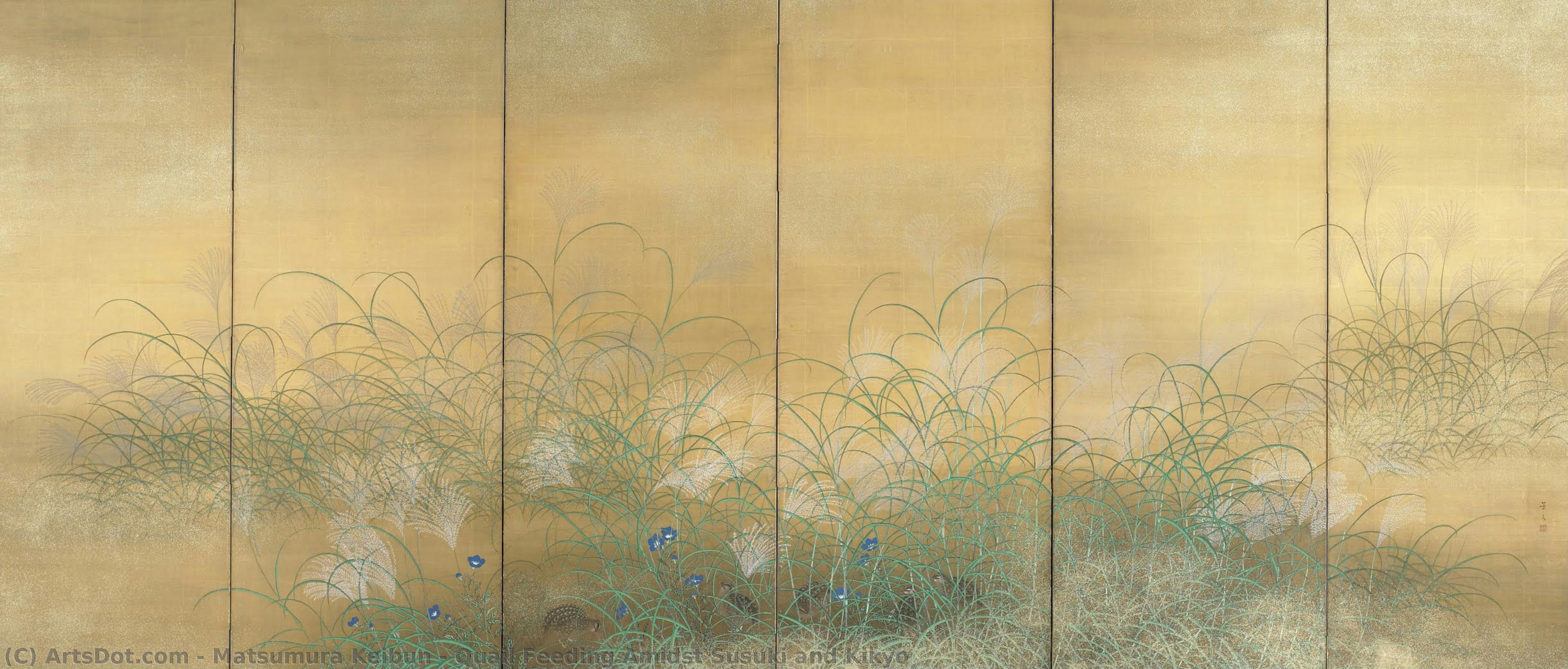
Quail Feeding Amidst Susuki and Kikyo

 詳細を見る
詳細を見る
ジークレー/アートプリント
迅速な制作と多彩な仕上げオプションを備えた、ミュージアムクオリティのジークレーまたはキャンバスプリント。 ( 手描きの絵画を購入 画像を購入)




































作品のオリジナル比率に合わせた、当店の規定サイズからお選びください。

特定のフレームやスペースに合わせて、ご自身でサイズを指定することも可能です。選択されたサイズが元の画像の比率と一致しない場合、作品をトリミングするか、鏡面反射または単色での塗りつぶしによって画像を拡張いたします。制作を開始する前に、ご確認用のデジタルモックアップをお送りいたします。
画面上のプレビューには、実際のトリミングや拡張は反映されませんのでご注意ください。最終的な構図を正確に確認できるのは、モックアップのみとなります。
カスタムサイズも承っておりますが、元の比率を維持するためには、あらかじめ用意されたリストからサイズを選択することをお勧めいたします。


 ガラスオプションは、110cm未満のサイズでのみご利用いただけます。

Quail Feeding Amidst Susuki and Kikyo
ジークレー/アートプリント
複製画のサイズ
-


合計金額
$ 62
関連作品

アーティストの略歴
Matsumura Keibun: Life and Legacy
Early Life and Training
Matsumura Keibun (1779-1843) was a prominent Japanese painter active during the Edo period. Born in Kyoto, Japan, he came from an artistic family. He was the younger half-brother of Matsumura Goshun, who founded the influential Shijō school of painting. Keibun received his initial art education directly from Goshun, laying the foundation for his future style and career.
Artistic Development and Style
Keibun began exhibiting his work as early as 1796, demonstrating a precocious talent. His style closely mirrored that of his half-brother Goshun, but developed a lighter and more manneristic quality over time. While rooted in traditional Japanese painting techniques, Keibun’s approach possessed a distinctive elegance and refinement. He was skilled in various genres, including landscapes, figure paintings, and particularly excelled in kachō-ga (bird-and-flower painting).
Major Achievements and Works
- Inheritance of Goshun’s Studio: Upon Goshun's death in 1811, Keibun inherited his studio, solidifying his position within the Shijō school.
- ‘Go Keibun gafu’: In 1829, he published ‘Go Keibun gafu’ (Keibun's art of painting), an illustrated book that significantly contributed to establishing and promoting Goshun’s artistic principles.
- Gion Matsuri Float Paintings: A notable achievement was his creation of bird paintings on the ceiling of the ‘naginata-hoko’ (long sword halberd) float for the Gion Matsuri festival in 1829. These paintings remain in use today, a testament to their enduring quality.
- ‘Shiki Kōsaku-zu’: Perhaps his most celebrated work is the set of fusuma (sliding doors) at Myōhō–ji temple, depicting ‘Cultivation in the Four Seasons’. These paintings showcase Keibun’s mastery of composition and detail.
Influences and Historical Significance
Keibun was profoundly influenced by his half-brother, Goshun, whose style he initially emulated. However, he gradually developed a unique artistic voice within the Shijō school tradition. His work reflects the aesthetic preferences of Kyoto during the late Edo period, characterized by elegance and refinement.
Keibun’s contribution lies in his skillful continuation and subtle evolution of the Shijō school style. He helped to solidify Goshun's legacy while adding his own distinctive touch. His paintings are now held in numerous prestigious museums worldwide, including the British Museum, the Metropolitan Museum of Art, and the Seattle Art Museum, demonstrating his lasting impact on Japanese art history.
Later Life and Legacy
Beyond his artistic pursuits, Keibun also served as chief priest at the Myōhō-in temple in Kyoto. He passed away on May 25, 1843, and was initially interred at Daitsū-ji before being moved to Konpuku-ji, a more esteemed Zen temple. His work continues to be admired for its beauty, technical skill, and historical significance.
Matsumura Keibun
1779 - 1843 , Japan
基本情報
- Birth Date: 1779
- Birth Place: Kyoto, Japan
- Death Date: 1843-05-25
- Influenced By: Matsumura Goshun
- Movement: Shijō school
- Name: Matsumura Keibun
- Nationality: Japanese
- Notable Works: Shiki Kōsaku-zu (Four Seasons Cultivation)

