

 プレビュー
プレビュー
 シェアする
シェアする シェアする
シェアする
 詳細を見る
詳細を見る

 ダウンロード
 似ている作品
 X線調査
X線調査 スライドショー
 統計情報
統計情報Three Sisters
 1978
1978 23.0 x 15.0 cm
 詳細を見る
詳細を見る
ジークレー/アートプリント
迅速な制作と多彩な仕上げオプションを備えた、ミュージアムクオリティのジークレーまたはキャンバスプリント。 ( 手描きの絵画を購入 デジタル画像販売へ切り替え)




































作品のオリジナル比率に合わせた、当店の規定サイズからお選びください。

特定のフレームやスペースに合わせて、ご自身でサイズを指定することも可能です。選択されたサイズが元の画像の比率と一致しない場合、作品をトリミングするか、鏡面反射または単色での塗りつぶしによって画像を拡張いたします。制作を開始する前に、ご確認用のデジタルモックアップをお送りいたします。
画面上のプレビューには、実際のトリミングや拡張は反映されませんのでご注意ください。最終的な構図を正確に確認できるのは、モックアップのみとなります。
カスタムサイズも承っておりますが、元の比率を維持するためには、あらかじめ用意されたリストからサイズを選択することをお勧めいたします。


 ガラスオプションは、110cm未満のサイズでのみご利用いただけます。

Three Sisters
ジークレー/アートプリント
複製画のサイズ
-


合計金額
$ 62
Artist Background
Matt Phillips was an American artist known for his unique style, which often featured everyday subjects and scenes. His work can be found in various museums and collections, including the Smithsonian American Art Museum. To learn more about Matt Phillips and his artwork, visit ArtsDot.com.The Painting
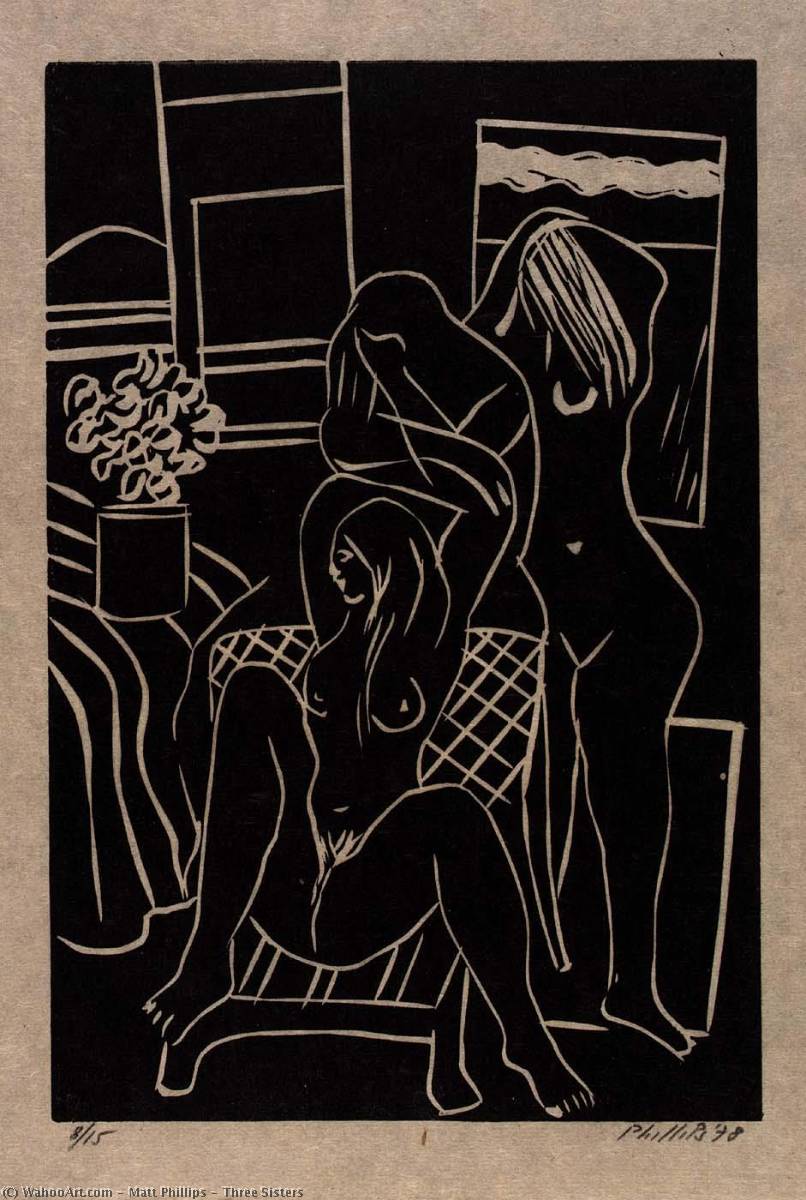
Three Sisters is a thought-provoking piece that invites the viewer to reflect on the relationships between the subjects. The use of black and white adds a sense of timelessness, allowing the viewer to focus on the emotional connection between the sisters. The drawing is characterized by its simplicity, with clean lines and minimal details, which emphasizes the bond between the three women.Artistic Style
The artistic style of Matt Phillips is reminiscent of other notable artists, such as Beatrix Potter, who was known for her children's books featuring animals. To learn more about Beatrix Potter and her work, visit Wikipedia.- Simple yet powerful compositions
- Emphasis on emotional connection
- Use of black and white to convey timelessness
The Three Sisters is a beautiful example of Matt Phillips' ability to create emotionally charged artworks that continue to captivate audiences today. As a handmade oil painting reproduction, it can be a wonderful addition to any art collection, and ArtsDot.com offers a wide range of reproductions for art lovers to enjoy.
関連作品








アーティストの略歴
The Poetic Resonance of Matt Phillips
Born in the vibrant landscape of New York City on March 13, 1928, Matt Phillips embarked on a life journey that would eventually weave together the threads of literature, music, and visual art into a singular, expressive tapestry. His early years were marked by a significant transition when his family moved to Leesburg, Georgia, during his childhood—an experience that planted the seeds for his deep connection to the American landscape. Before he became a master of the printed page, Phillips was a man of melody; his youthful passion for the guitar, nurtured by close friends, instilled in him a rhythmic sensibility that would later manifest in the fluid lines and balanced compositions of his artwork. This intersection of lyrical thought and visual form defines much of his enduring legacy.
Phillips’s intellectual evolution was as profound as his artistic one. With a Master’s degree in Literature from the University of any Chicago and further studies at Stanford University, he approached the canvas with the soul of a poet. This literary foundation allowed him to view printmaking not merely as a technical process, but as a medium for storytelling and emotional exploration. His early career saw him delving into poetry, yet it was through his time at the Barnes Foundation in Merion, Pennsylvania, that his visual language truly began to coalesce. Immersed in the rich traditions of modernism, he learned to appreciate the delicate interplay between shape, space, and color, preparing him for a transformative period in Paris during the 1960s, where European artistic movements further refined his aesthetic vision.
A Revival of the Monotype
The true hallmark of Phillips’s contribution to the art world lies in his courageous rediscovery and revival of the monotype technique. While many of his contemporaries were moving toward more industrial or mass-reproducible methods, Phillips looked backward to the late nineteenth century, drawing inspiration from masters such as Edgar Degas, Paul Gauguin, and Maurice Prendergast. He saw in the monotype a unique opportunity to capture the ephemeral—the fleeting light of a landscape or the transient emotion of a human gesture. By painting directly onto glass or metal plates and transferring those images to paper through pressure, he created works that possessed a singular, unrepeatable soul.
His mastery of this medium allowed him to oscillate between various thematic realms:
- Atmospheric Landscapes: Works like "Along the Quay" demonstrate his ability to use the monotype process to evoke serenity and order, using light and shadow to create a sense of timelessness.
- Intimate Human Connections: In pieces such as "Serenade," Phillips utilized soft lines and gentle curves to depict scenes of quiet companionship, turning a simple riverside setting into a profound meditation on peace.
- Graphic Simplicity: His drawings, including the evocative "Three Sisters," showcase a capacity for intense emotional depth through stark, powerful compositions that rely on the strength of a single line.
Legacy and Academic Influence
Beyond the studio, Matt Phillips was a dedicated educator who believed in the transformative power of creativity. His tenure as a professor at Bard College in Annandale-on-Hudson, New York, allowed him to pass his reverence for experimentation onto a new generation of artists. Even after his formal retirement from academia in 1987, his spirit of exploration never waned; he continued to travel and exhibit, treating the world itself as an ever-changing gallery. His work remains a vital part of the American canon, with significant pieces held in prestigious institutions such as the Smithsonian American Art Museum.
Today, Phillips is remembered not just as a printmaker, but as a bridge between eras. He successfully bridged the gap between the classical techniques of the past and the expressive freedoms of the modern age. Through his revival of the monotype, he ensured that the delicate, hand-crafted intimacy of the medium would continue to resonate, offering viewers a window into a world where color, shape, and spirit exist in perfect, poetic harmony.

matt phillips
1927 - 2017
基本情報
- Artistic Movement Or Style: Monotype
- Artists Or Movements Influenced By This Artist: ['Matisse']
- Artists Who Influenced This Artist:
- Maurice Prendergast
- Degas
- Date Of Birth: 1927
- Date Of Death: 2017
- Full Name: Matt Phillips
- Nationality: American
- Notable Artworks:
- Singular Impressions: The Monotype in America
- The Painterly Print
- Place Of Birth: New York City