

 プリントを購入
 シェアする
シェアする シェアする
シェアする
 詳細を見る
詳細を見る

 ダウンロード
 似ている作品
 スライドショー
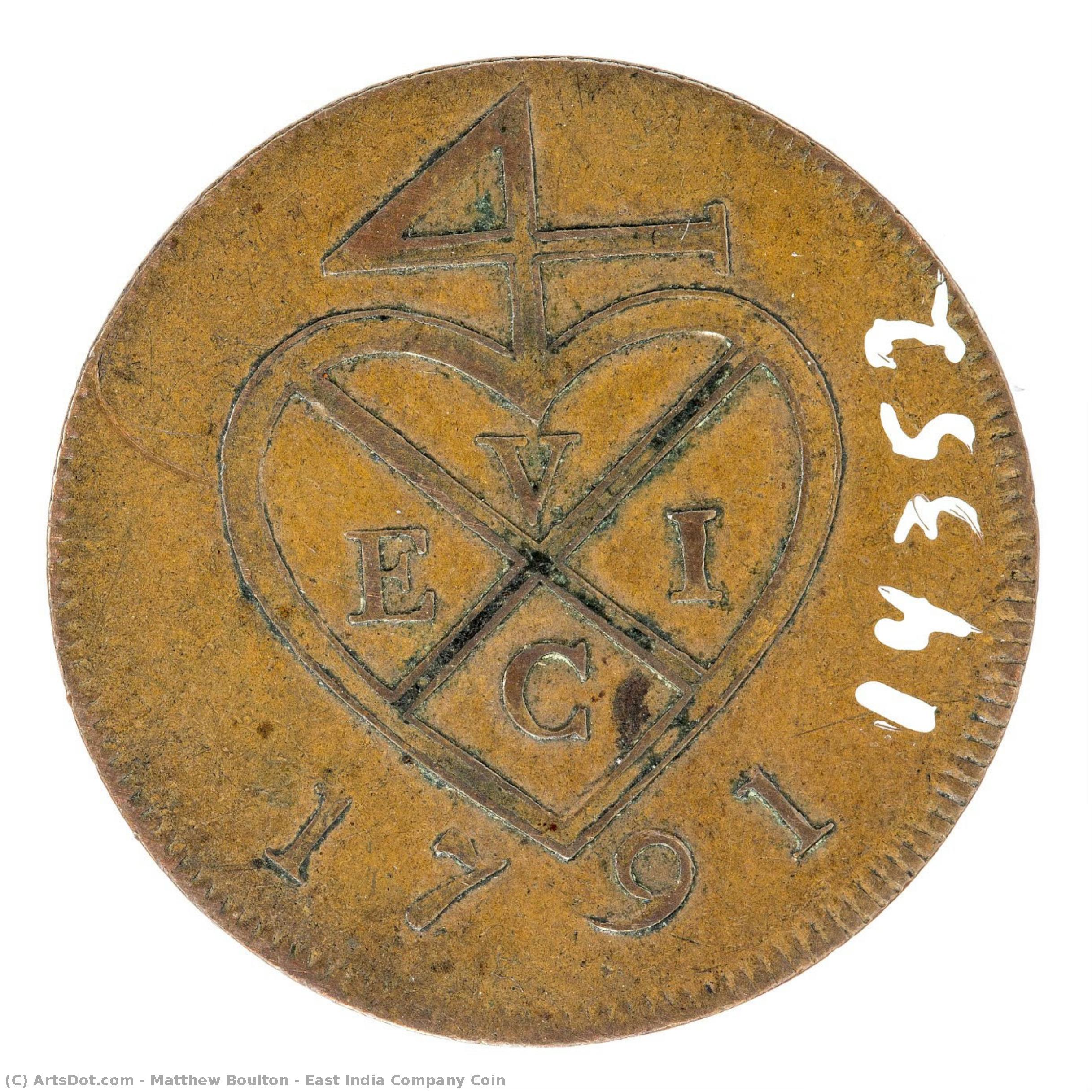
East India Company Coin


 詳細を見る
詳細を見る




































作品のオリジナル比率に合わせた、当店の規定サイズからお選びください。

特定のフレームやスペースに合わせて、ご希望のサイズをご入力いただけます。選択されたサイズが元の画像の比率と異なる場合、アートワークをトリミングするか、手描きで要素を追加して絵画を拡張いたします。デジタルモックアップ を制作し、制作開始前にご確認(承認)をいただきます。
画面上のプレビューは、実際のトリミングや拡張を正確に反映しているものではありません。最終的な構図は、モックアップによってのみ正確にご確認いただけます。
カスタムサイズもご利用いただけますが、元の比率を維持するためには、あらかじめ用意されたリストからサイズを選択することをお勧めいたします。
ご注文後、ArtsDot.com チームより詳細な指示をお送りするとともに、仕上がりイメージ(モックアップ)をご提供いたします。


 ガラスオプションは、110cm未満のサイズでのみご利用いただけます。

East India Company Coin
複製技法
複製画のサイズ
-


合計金額
$ 263
作品解説
A Glimpse into Empire: The East India Company Coin by Matthew Boulton
This unassuming bronze coin, dated 1791, offers a fascinating window into the complex world of the British East India Company and the burgeoning industrial revolution in late 18th-century England. More than mere currency, it represents a confluence of artistic innovation, imperial ambition, and technological advancement, all masterfully orchestrated by Matthew Boulton at his groundbreaking Soho Mint. The coin’s very existence speaks volumes about an era defined by global trade, colonial expansion, and the rise of mechanized production.
The Soho Mint: Where Art Met Industry
Matthew Boulton was not a painter or sculptor in the traditional sense, but he was undeniably an artist—an innovator who revolutionized the creation of coins and medals. Born into a family of metalworkers in Handsworth, near Birmingham, Boulton inherited a practical understanding of manufacturing processes. However, his genius lay in applying these principles to artistic production with unprecedented precision and efficiency. The establishment of the Soho Mint in 1788 marked a pivotal moment. Partnering with James Watt, inventor of the improved steam engine, Boulton harnessed the power of machinery to produce coins on an industrial scale—a feat previously unimaginable. This collaboration wasn't simply about mass production; it was about achieving unparalleled accuracy and consistency in artistic design, elevating coin-making from a craft to a nascent form of industrial art.
Symbolism and Design: A Heartfelt Representation of Imperial Power
The coin itself is a study in understated elegance. The heart shape, prominently featured on both sides, immediately draws the eye. This motif, repeated with varying sizes, likely held symbolic significance within the East India Company’s context—perhaps representing loyalty, affection for the empire, or even a stylized representation of trade and prosperity. Encircling the central cross are Roman numerals denoting the year 1791, anchoring the coin firmly in its historical moment. The brownish patina acquired over centuries only enhances its aged beauty, whispering tales of journeys across continents and transactions that shaped global economies. The deliberate design choices—the clean lines, the balanced composition, the subtle interplay of light and shadow—reflect Boulton’s commitment to both aesthetic appeal and functional durability. It was a coin designed not just to be spent but also to endure as a tangible symbol of British power in India.
A Legacy Forged in Bronze: The Impact of Boulton's Innovation
The East India Company Coin is more than just an antique; it’s a testament to Matthew Boulton’s visionary approach. His Soho Mint set new standards for precision and efficiency in coinage, influencing minting practices worldwide. The coin serves as a tangible link to the era of burgeoning industrialization and expanding global empires. Owning a reproduction of this remarkable piece is not merely acquiring an artwork; it's possessing a fragment of history—a silent witness to the ambitions, innovations, and complexities of the 18th century. It’s a conversation starter, a historical artifact, and a beautiful addition to any collection or interior space, evoking a sense of timeless elegance and imperial grandeur.
関連作品

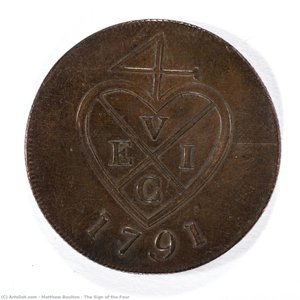
アーティストの略歴
Matthew Boulton: A Pioneer of Industrial Art
Early Life and Background
- Born in Handsworth, West Midlands, England, Matthew Boulton (1728-1809) came from a family deeply involved in manufacturing.
- His father was a successful metalworker, and young Matthew received his early education at the Soho Manufactory, laying the foundation for his future endeavors.
- This upbringing instilled in him both a practical understanding of industrial processes and an appreciation for craftsmanship.
The Establishment of the Soho Mint
- In 1788, Boulton established the Soho Mint, a groundbreaking enterprise that revolutionized coin production.
- He partnered with James Watt, inventor of the improved steam engine, to power machinery used in minting coins and medals.
- This collaboration marked a pivotal moment in the integration of industrial technology into artistic creation.
Artistic Development & Numismatic Innovation
- Boulton wasn’t a traditional artist in the sense of painting or sculpting, but he possessed an exceptional eye for design and detail.
- His primary focus was on numismatics – the study and collection of coins and medals.
- He elevated medal-making from a craft to a fine art form through innovative designs and meticulous execution.
- The use of steam power allowed for greater precision, consistency, and artistic complexity in his work.
Notable Works & Commissions
- Seringapatam Medal (1801-2): Commissioned by the East India Company to commemorate the British victory over Tipu Sultan at Seringapatam. A highly detailed and historically significant medal.
- Battle of Trafalgar Medal (1805): Boulton personally funded the production of this medal, celebrating Admiral Nelson’s triumph. It exemplifies his patriotic spirit and artistic commitment.
- He also produced coins for the East India Company and various other institutions, showcasing a diverse range of designs.
- Other works include various commemorative medals and tokens reflecting significant events and individuals of his time.
Influences & Artistic Style
- Boulton drew inspiration from classical art, particularly the sculptural traditions of ancient Greece and Rome.
- He admired the precision and detail found in antique coins and medals, striving to emulate these qualities in his own work.
- The prevailing Neoclassical style of the late 18th century heavily influenced his designs, emphasizing order, balance, and clarity.
Historical Significance & Legacy
- Matthew Boulton’s innovations transformed coin production, setting new standards for quality and security.
- His integration of steam power into the artistic process was a landmark achievement in industrial history.
- The Soho Mint continued to operate after his death (sold in 1850), leaving a lasting legacy on British coinage and medal-making.
- Boulton’s work demonstrates the powerful synergy between art, industry, and technological advancement. He remains a significant figure in both artistic and industrial history.
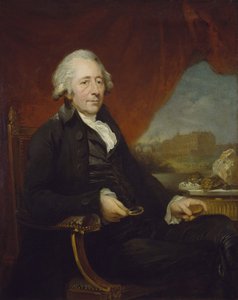
matthew boulton
United Kingdom
基本情報
- Birth_Place: Handsworth, United Kingdom
- Movement: Neoclassical
- Name: Matthew Boulton
- Nationality: British
- Notable Works:
- Seringapatam Medal
- Battle of Trafalgar Medal
関連記事
Thomas Daniell: Navigating Light, Landscape & Cultural Exchange in Early 19th-Century India
Explore the captivating landscapes of Thomas Daniell, a pioneering artist who documented India's beauty in the 19th century. Discover his 'Oriental Scenery,' aquatint technique & lasting legacy. Hand-painted reproductions available at ArtsDot.

Alfred East: Pioneering Plein Air & Evoking Atmospheric Landscapes
Explore the life & work of Alfred East, a pioneer of British plein air painting. Discover his techniques for capturing atmospheric landscapes, Barbizon influences, and lasting legacy. Learn more at ArtsDot.

Marianne North's Masterpieces: 25 Botanical Paintings That Bloom With Adventure | ArtsDot
Journey through the vibrant world of Marianne North’s botanical paintings! Explore 25 iconic artworks from this Victorian artist, celebrating exotic flora & travel. Find museum-quality reproductions and curated decor ideas at ArtsDot.com.
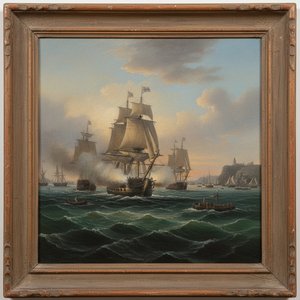
Thomas Butterworth (1768–1842): Navigating the Aesthetics of British Marine Painting
Explore the captivating maritime art of Thomas Butterworth (1768–1842). Discover his stunning depictions of Napoleonic naval battles and life at sea, commissioned works for the East India Company, and enduring legacy. Learn more today!
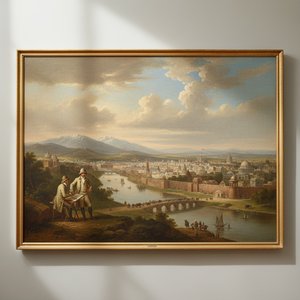
Panoramic Visions of Empire: The Daniells’ Artistic Collaboration & Legacy
Explore the captivating 'Oriental Scenery' by Thomas & William Daniell. Discover their pioneering aquatint prints of India, imperial context, artistic collaboration, and lasting legacy. A deep dive for history lovers.

