

 プレビュー
プレビュー
 シェアする
シェアする シェアする
シェアする
 詳細を見る
詳細を見る

 ダウンロード
 似ている作品
 X線調査
X線調査 スライドショー
Pastoral Fairy-tale
 Oil On Canvas
- WallArt
- Expressionism
 Modern
 130.0 x 106.0 cm
 Kysuce Gallery
 詳細を見る
詳細を見る
ジークレー/アートプリント
迅速な制作と多彩な仕上げオプションを備えた、ミュージアムクオリティのジークレーまたはキャンバスプリント。 ( 手描きの絵画を購入 画像を購入)




P118B $10

P118H $10

P118W $10

P438Z $10

P508JH $12

P508YH $12

P805H $10

P805Z $10

P919BZ $10

P919G $10

P919XJ $10

P959ZH $10

P968JZ $12

W106C $8

W218G $10

W218JH $8

W218Y $10

W307PJ $10

W316G $10

W316PJ $8

W316Y $10

W398PJ $8

W4111J $10

W500HY $15

W500JH $15

W692G $12

W849H $8

W940BG $15

W953PJ $8




作品のオリジナル比率に合わせた、当店の規定サイズからお選びください。

特定のフレームやスペースに合わせて、ご自身でサイズを指定することも可能です。選択されたサイズが元の画像の比率と一致しない場合、作品をトリミングするか、鏡面反射または単色での塗りつぶしによって画像を拡張いたします。制作を開始する前に、ご確認用のデジタルモックアップをお送りいたします。
画面上のプレビューには、実際のトリミングや拡張は反映されませんのでご注意ください。最終的な構図を正確に確認できるのは、モックアップのみとなります。
カスタムサイズも承っておりますが、元の比率を維持するためには、あらかじめ用意されたリストからサイズを選択することをお勧めいたします。


 ガラスオプションは、110cm未満のサイズでのみご利用いただけます。

Pastoral Fairy-tale
ジークレー/アートプリント
複製画のサイズ
-


合計金額
$ 62
A Whimsical Encounter in the Heart of Slovakia
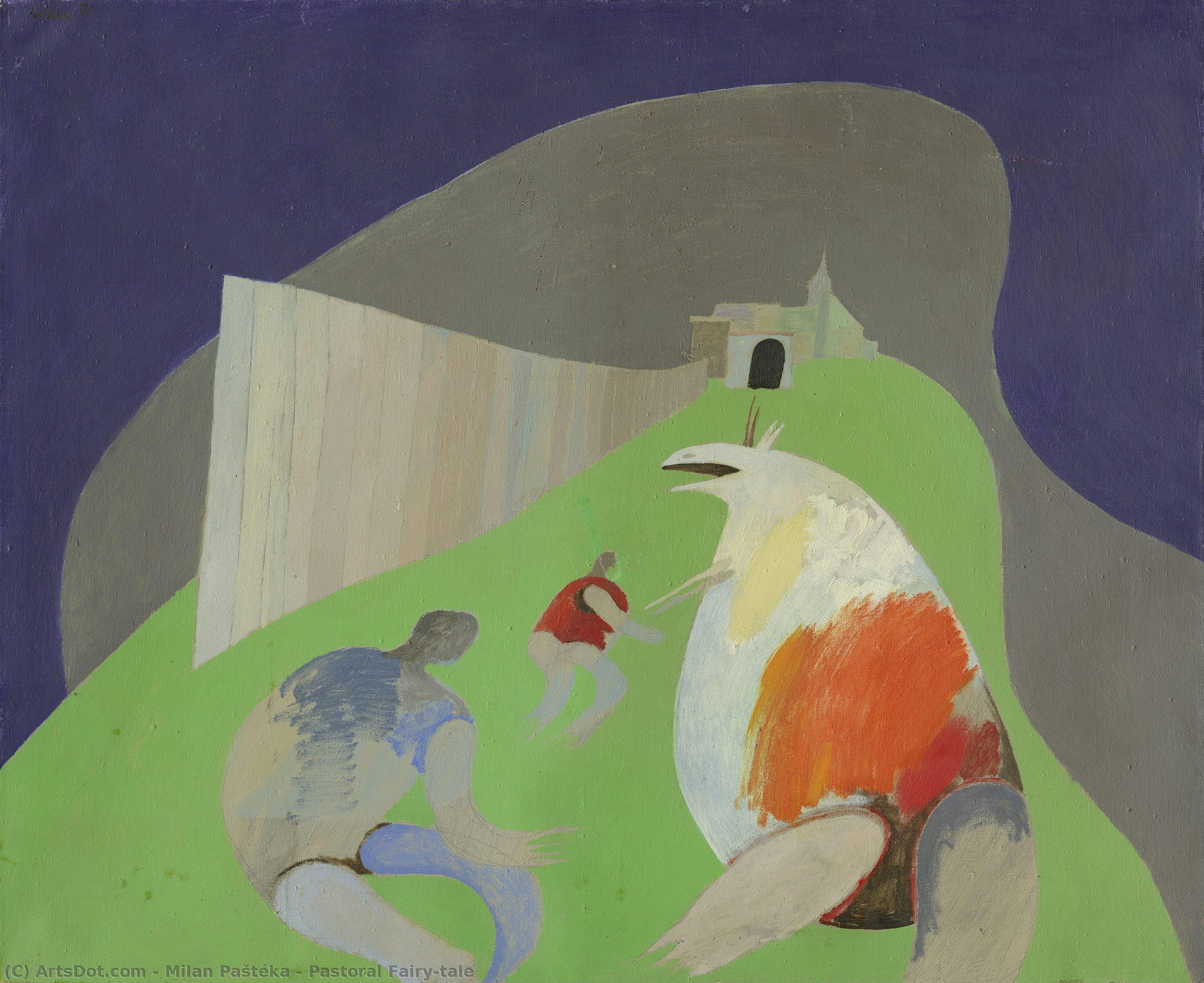
In the evocative oil painting "Pastoral Fairy-tale", the Slovak master Milan Paštéka invites viewers into a realm where the boundaries between reality and myth dissolve into a vibrant, dreamlike landscape. The canvas opens upon a serene pastoral setting, dominated by lush, verdant greens and an expansive, tranquil blue sky that suggests the infinite possibilities of a summer afternoon. At the heart of this composition stands a striking, anthropomorphic bird-like creature, its white plumage bright against the landscape, accented by brilliant orange wings. Captured in a moment of expressive vitality, the creature stands poised on a single leg, its beak parted as if mid-song or mid-whisper, acting as a celestial messenger between the natural world and the human observers below.
The scene is anchored by two human figures, seated upon the earth with their backs to the spectator. This choice of perspective—a classic technique in narrative painting—creates an intimate sense of mystery, allowing the viewer to peer over their shoulders into a private, enchanted dialogue. Dressed in deep blues and rich reds, these figures ground the whimsical elements of the piece in a sense of human presence, suggesting a shared moment of wonderment. The interaction between the avian entity and the humans evokes themes of communication with nature and the rediscovery of childhood innocence through the lens of folklore.
Mastery of Expressionism and Landscape
Technically, Paštéka employs a style that leans toward Expressionism, utilizing bold, confident brushstrokes and a saturated color palette to convey emotion rather than mere topographical accuracy. The texture of the oil on canvas lends a tactile depth to the rolling hills and the distant, nestled village. In the background, the subtle architecture of a Central European hamlet, complete with a rising church spire, provides a sense of historical and cultural continuity. This juxtaposition of the fantastical foreground with a recognizable, grounded landscape creates a powerful tension between the known world and the realm of legend.
For the discerning collector or interior designer, this piece offers more than just visual beauty; it offers a narrative anchor for a room. The painting’s ability to balance movement and stillness makes it an ideal centerpiece for spaces designed for contemplation or storytelling. Whether placed in a sophisticated gallery setting or as a focal point in a contemporary living space, "Pastoral Fairy-tale" serves as a window into the soul of Slovak modernism, reminding us that even within the structured reality of our lives, there remains a profound, singing magic waiting to be heard.
関連作品

アーティストの略歴
Early Life and Artistic Foundations
Milan Paštéka, a name resonant within the landscape of Slovak modern painting, was born in Trenčín in 1931. His formative years were steeped in a familial atmosphere that initially steered him toward mathematics—his father being among the pioneers of Slovak mathematical thought. However, the pull of artistic expression proved too strong to resist. Paštéka defied expectations and embarked on his studies at the Academy of Fine Arts in Bratislava, a pivotal decision that would shape the course of his life and contribute significantly to the evolving narrative of Slovak art. He initially found mentorship under Ľudovít Fulla, a leading figure in Slovak modernism known for his synthesis of folk art traditions with avant-garde principles. This early influence instilled in Paštéka an appreciation for national identity interwoven with universal artistic concerns. A subsequent shift to the studio of Ján Želibský further refined his technical skills and broadened his understanding of abstract forms, setting the stage for his unique artistic voice.The Mikuláš Galanda Group and a Focus on Human Existence
Paštéka’s artistic trajectory took a defining turn with his membership in the influential Mikuláš Galanda Group, founded in 1957. This collective of artists represented a powerful force within Slovak art, united by a shared commitment to humanist values and a rejection of socialist realism. The group's ethos centered on exploring the human condition—its vulnerabilities, its aspirations, and its relationship with the surrounding world. Within this context, Paštéka’s work began to coalesce around a central theme: the representation of the human being in relation to space. He wasn’t interested in depicting figures as isolated entities but rather as integral components of a larger cosmic order. His paintings often feature simplified forms and muted palettes, creating an atmosphere of contemplation and existential questioning. The influence of Fulla's folk art sensibility remained present, though transformed into a more abstract language that prioritized emotional resonance over literal representation.Development of Style and Key Characteristics
Throughout the 1960s and 70s, Paštéka’s style matured, characterized by a distinctive blend of abstraction and figuration. His canvases are not entirely devoid of recognizable forms; rather, they present fragmented figures or suggestive shapes that evoke human presence without explicitly defining it. Space itself becomes a crucial element in his compositions—not merely as a backdrop but as an active force shaping the narrative. He employed a restrained color palette, often dominated by earth tones and subtle variations of gray, which contributes to the somber yet deeply moving quality of his work. The application of paint is typically deliberate and controlled, emphasizing texture and form over flamboyant brushwork. Works like “Walkers” and “Leaving” exemplify this approach—figures are reduced to essential outlines, their movements suggesting a sense of displacement or searching. "Couple" showcases the artist's ability to convey intimacy through minimalist forms.Later Years and Legacy
Paštéka continued to exhibit his work throughout the latter half of the 20th century, solidifying his position as a leading figure in Slovak art. He passed away in 1998 in Voznica, leaving behind a body of work that continues to inspire and provoke reflection. His paintings are held in numerous public and private collections across Slovakia and beyond. Paštéka’s historical significance lies not only in his artistic achievements but also in his unwavering commitment to humanist principles during a period marked by political constraints and ideological pressures. He was part of a generation of artists who sought to preserve individual expression and explore universal themes of existence, identity, and belonging.- Influences: Ľudovít Fulla, Ján Želibský, Slovak folk art traditions.
- Key Themes: Human connection to space, existentialism, the human condition, abstraction and figuration.
- Notable Groups: Mikuláš Galanda Group.
- Paštéka’s work offers a poignant meditation on the complexities of human existence—a testament to the enduring power of art to transcend boundaries and connect us to something larger than ourselves.

milan paštéka
1931 - 1998 , Slovakia
基本情報
- Artistic Movement Or Style: Abstract painting
- Artists Who Influenced This Artist:
- Ľudovít Fulla
- Ján Želibský
- Date Of Birth: 1931
- Date Of Death: 1998
- Full Name: Milan Paštéka
- Nationality: Slovak
- Notable Artworks:
- Walkers
- Leaving
- Couple
- Place Of Birth: Trenčín, Slovakia
関連記事
Idyllic Visions: Exploring the Pastoral Scene in Art History – From Arcadia to Modern Interpretations
Explore the captivating history of pastoral art from classical Arcadia to modern masterpieces. Discover key artists like Millet & Cole at ArtsDot. Find serene landscape paintings for your home.
Idyllic Visions: Exploring the Pastoral Tradition in Western Art – Themes, Techniques & Enduring Appeal
Explore the rich history of pastoral art from classical Arcadia to contemporary interpretations. Discover key artists, themes & collecting tips at ArtsDot.

ジョン・コンスタブルの傑作25選:英国風景画の巨匠が描く自然と光の詩 | ArtsDot
ジョン・コンスタブルの傑作25選。英国風景画の巨匠が描く自然と光の詩の世界へ。ロマン主義を代表する絵画、デダム・ヴェールやヘイ・ウェインなど、ArtsDotで高品質なアートプリントをお楽しみください。インテリアに深みと感動を。コレクションはこちら。

Evocations of Place: A Historical Journey Through Landscape Art
Explore the rich history of landscape art with ArtsDot. Discover renowned artists, movements like Impressionism & Romanticism, and expert guidance for collecting timeless pieces. Find your perfect serene escape today!

ロマン派ランドスケープ:時代を彩る巨匠の10選|アートとインテリアの世界
ロマン派絵画の時代を彩る10選。巨匠たちの風景が織りなす感動の世界へ。ターナー、ルーベンスなど、名作の裏話と高精細複製でアートをお部屋に。ArtsDot.comで至福のアート体験を。