

 プレビュー
プレビュー
 シェアする
シェアする シェアする
シェアする
 詳細を見る
詳細を見る

 ダウンロード
 似ている作品
 X線調査
X線調査 スライドショー
 統計情報
統計情報Qūmū
 Painting
- Northwest Coast Art
 19th Century
 42.0 x 35.0 cm
 Royal BC Museum
 詳細を見る
詳細を見る
オンラインプレビューをはるかに凌ぐ、高解像度で鮮明なデジタル画像をご購入いただけます。
各ファイルは、社内の専門家が高度なツールと熟練した手作業によるレタッチを用いて、細心の注意を払って準備されています。すべての画像において、卓越した鮮明度、正確な色彩再現性、そして繊細なディテールを保証いたします。
最終ファイルは、プロフェッショナルな編集・印刷環境ですぐにご利用いただけるよう最適化された状態で、72時間以内にメールにてお届けいたします。これは、一流のデザインスタジオ、出版社、ギャラリーから信頼されているものと同等の品質です。
デジタルアート
個人での鑑賞、印刷、クリエイティブなプロジェクト用に、高解像度ファイルをダウンロードできます。 ( プリント版に切り替え 手描きの絵画を購入)
デジタル画像のご注文に付随する特典
高品質なデジタル画像配信を、確かな品質で。
ArtsDot.com を選ぶことは、単に画像を手に入れることではありません。それは、プロの手によって精密に仕上げられ、満足保証が付いた高品質なデジタルアートワークを受け取ることを意味します。ご注文いただいた際に自動的に付随する内容は、以下の通りです:

メールですぐにお届け
ご注文から72時間以内に、高解像度のデジタル画像ファイルがメールでお手元に届きます。すぐにそのままご利用いただけます。

AI技術で最適化されたデジタルファイル
お客様の作品は、高度なAIツールと専門家による手作業の編集を組み合わせてプロフェッショナルに最適化されており、細部のディテール、鮮明さ、そして正確な色再現性を最大限に引き出しています。

一生涯無料の再送サービス
ファイルを誤って削除したり、紛失してしまったりしましたか?ご安心ください。いつでも無料で再送いたします。

輸入手数料は一切かかりません
関税や手数料、配送料を気にすることなく、お気に入りのアートワークをすぐにお楽しみいただけます。デジタルダウンロードは常に免税です。

色彩再現の保証
プロ仕様のツールとカラーマネジメント技術を用いることで、デジタル画像が元の色を最大限に忠実に再現することを保証いたします。

100日間満足保証
ご購入いただいたデジタル画像にご満足いただけない場合は、100日以内であれば、理由を問わず修正または100%の返金対応をさせていただきます。

100% 返金保証
ご満足いただけない場合は、デジタルファイルを受け取ってから100日以内であれば、理由を問わず全額返金いたします。

まとめ買い割引
3枚購入で10%OFF - 5枚購入で15%OFF - 10枚以上購入で20%OFF。クリエイティブなプロジェクト、ギャラリー、エージェンシーに最適です。
A Vision of Ancestral Power
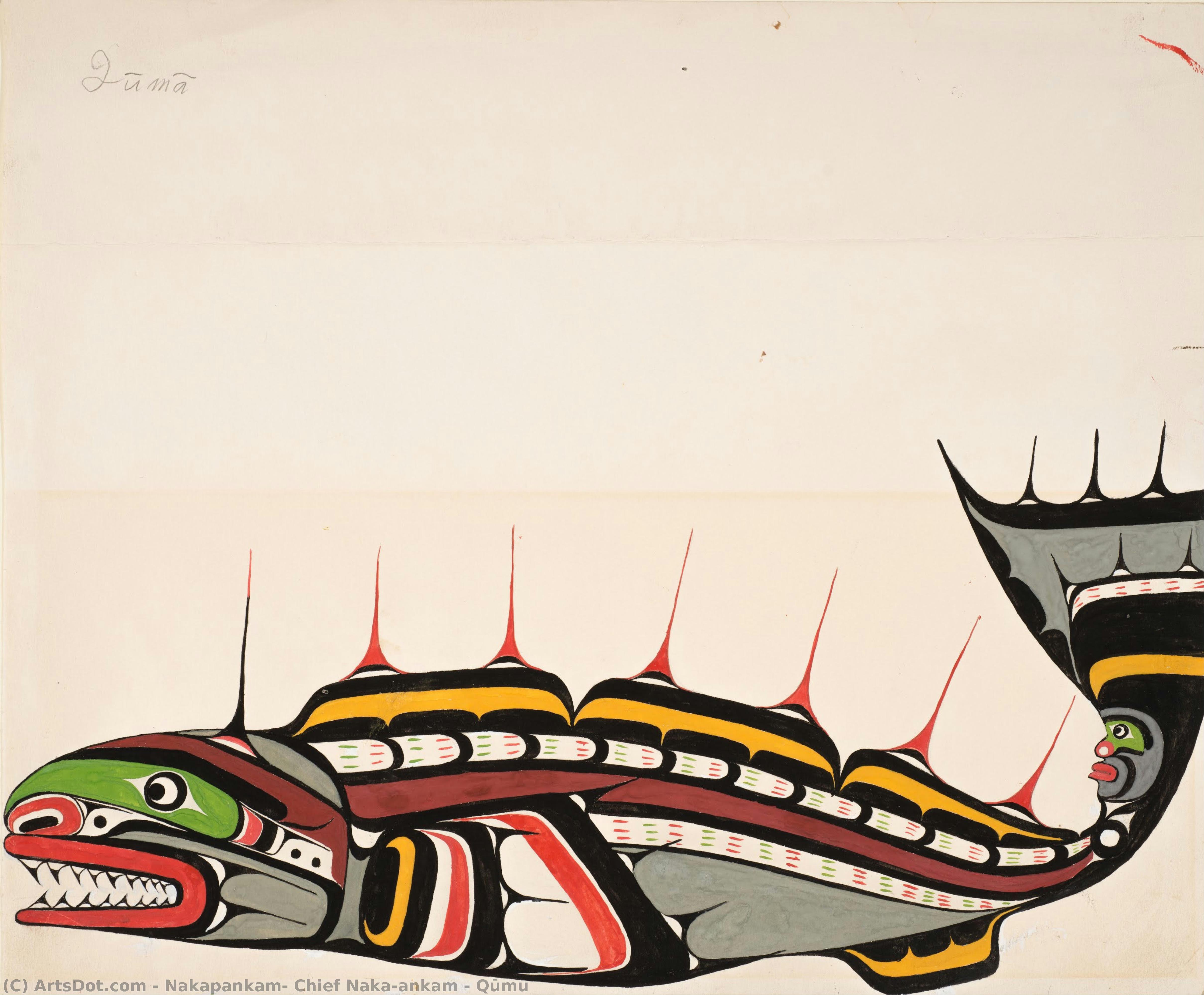
In the mesmerizing depths of Qūmū, we encounter more than just a depiction of marine life; we enter a sacred visual language preserved through generations. This striking work by the legendary Kwakwaka'wakw master, Chief Nakapankam—often revered as Mungo Martin—captures the formidable essence of a creature from the Pacific Northwest mythos. The painting presents a large fish, characterized by a long, predatory snout and sharp, formidable teeth, rendered with an intensity that commands immediate attention. Through a vibrant palette of deep reds, sun-drenched yellows, and verdant greens, the artist breathes life into the form, creating a specimen that feels both ancient and vibrantly present. The intricate, tattoo-like patterns dancing across its body suggest a complex narrative of lineage and spiritual protection, inviting the viewer to decode the layers of meaning woven into every stroke.
The technique employed in this piece is a masterful bridge between tradition and individual expression. Nakapankam utilizes bold, rhythmic lines that define the creature's anatomy while simultaneously decorating it with motifs that are hallmarks of Northwest Coast art. The interplay of black and white accents provides a structural clarity, allowing the more saturated colors to pop against the composition. This meticulous attention to detail creates a sense of movement, as if the fish is undulating through a primordial sea. For the discerning collector or interior designer, this piece offers a profound tactile quality; even in reproduction, the visual weight of the patterns and the deliberate application of color evoke the craftsmanship of a master carver translating wood into pigment.
Cultural Legacy and Aesthetic Splendor
To understand Qūmū is to understand the resilience of the Kwakwaka'wakw spirit. Born in Fort Rupert and trained under the watchful eye of his stepfather, the renowned carver Yakudlas Charlie James, Nakapankam was a pivotal figure in the revitalization of Indigenous art during a period of immense cultural pressure. His work does not merely represent a subject; it serves as a vessel for the potlatch traditions and the oral histories of his people. The symbolism within the fish's design—the sharp teeth representing strength and the swirling patterns representing the interconnectedness of all living things—functions as a visual heartbeat of the Northwest Coast. It is an art form where every curve holds a memory and every color carries a weight of significance.
Integrating such a powerful work into a contemporary space offers an opportunity to anchor a room with historical gravity and artistic soul. Whether placed in a minimalist gallery setting or a richly textured study, Qūmū acts as a focal point that sparks conversation and emotional resonance. It provides a sense of connection to the natural world and the enduring strength of human heritage. For those seeking to curate an environment filled with pieces that possess both aesthetic beauty and profound historical depth, this reproduction stands as a testament to the timeless brilliance of Chief Nakapankam’s vision.
関連作品

作家の略歴
The Legacy of a Cultural Guardian: Mungo Martin
In the heart of the Pacific Northwest, where the mist clings to the ancient cedars of British Columbia, the name Mungo Martin—or nakapankam—resonates as a symbol of cultural resilience and artistic mastery. Born in 1879 in Fort Rupert, Canada, Martin emerged from the rich traditions of the Kwakwaka'wakw people, not merely as a craftsman, but as a vital bridge between an ancestral past and a modernizing world. His life was deeply rooted in the potlatch traditions, a complex social and ceremonial system that serves as the heartbeat of his people. Raised amidst the songs, dances, and oral histories of the Kwakwaka'wakw, Martin’s early years were shaped by a profound immersion in the spiritual and communal rhythms of his heritage.
The foundation of his artistic prowess was laid through a lineage of mentorship and familial devotion. He was trained under the watchful eye of his stepfather, Yakudlas Charlie James, one of the most renowned Kwakwaka'wakw carvers of his era. This apprenticeship provided Martin with more than just technical skill; it offered him an intimate understanding of the symbolic language carved into wood. Simultaneously, the influence of his mother, Q'omiga, ensured that his art remained tethered to the soul of the culture, as she passed down the essential traditions and sacred songs that inform the very essence of Kwakwaka'wakw iconography.
A Synthesis of Tradition and Innovation
As Martin’s career progressed, his work began to exhibit a breathtaking synthesis of ancient motifs and evolving aesthetics. While his roots remained firmly planted in the traditional woodcarving techniques of his ancestors, he possessed a visionary ability to integrate modern sensibilities into his compositions. This evolution is particularly evident in his later works, where he adopted a more simplified, bold design language. One of the most striking technical hallmarks of his mature style was the use of a desirable white undercoat of paint, which provided a luminous foundation for the vibrant pigments that define Northwest Coast art.
His versatility extended beyond the monumental scale of totem poles and masks into the delicate realm of painting. His watercolor pieces, such as the evocative Qūmū, demonstrate a masterful command of color and form, showcasing how he could translate the power of sculptural relief onto a two-dimensional plane. This ability to navigate different mediums allowed him to communicate the depth of Kwakwaka'wakw cosmology to a much broader audience, reaching beyond his community to art enthusiasts and scholars across the globe.
Cultural Revitalization and Global Recognition
The historical significance of Mungo Martin cannot be overstated; he was a pivotal figure in the mid-20th-century reappraisal of Northwest Coast art. During an era when many Indigenous traditions faced systemic suppression, Martin worked tirelessly to ensure the survival of his people's visual language. His collaborations with anthropologists and researchers—including Marius Barbeau, Wilson Duff, and Ida Halpern—played a crucial role in documenting and preserving the intricate details of Kwakwaka'wakw art for future generations. Through these intellectual exchanges, he helped transform the perception of Indigenous carving from mere ethnographic curiosity to recognized fine art.
Today, the fruits of his labor are preserved in prestigious institutions such as the Royal BC Museum in Victoria, Canada, serving as a testament to his enduring impact. His life’s work stands as a monumental achievement in both art and activism, characterized by:
- The preservation of ancestral knowledge: Maintaining the integrity of Kwakwaka'wakw designs through generations of change.
- Technical innovation: Blending traditional woodcarving with modern painting techniques and bold, simplified aesthetics.
- Cultural diplomacy: Acting as a vital link between Indigenous communities and the global art world through scholarly collaboration.
Mungo Martin’s legacy is not found solely in the museum galleries or the towering poles that grace the landscape, but in the very survival of the Kwakwaka'wakw identity itself. He remains an eternal guardian of the cedar and the spirit, a master whose hands carved a path for his culture to endure through the ages.

nakapankam, chief nakaṕankam
1879 - 1962 , Canada
プロフィール概要
- Artistic Movement Or Style: Kwakwaka'wakw Art
- Artists Or Movements Influenced By This Artist: Marius Barbeau, Wilson Duff
- Artists Who Influenced This Artist: Yakudlas Charlie James
- Date Of Birth: 1879
- Full Name: Mungo Martin (Nakapankam)
- Nationality: Canadian
- Notable Artworks: ['Qūmū']
- Place Of Birth: Fort Rupert, Canada