

 プレビュー
プレビュー
 シェアする
シェアする シェアする
シェアする
 詳細を見る
詳細を見る

 ダウンロード
 似ている作品
 X線調査
X線調査 スライドショー
Quattro Santi Coronati


 詳細を見る
詳細を見る
ジークレー/アートプリント
迅速な制作と多彩な仕上げオプションを備えた、ミュージアムクオリティのジークレーまたはキャンバスプリント。 ( 手描きの絵画を購入 画像を購入)




P118B $10

P118H $10

P118W $10

P438Z $10

P508JH $12

P508YH $12

P805H $10

P805Z $10

P919BZ $10

P919G $10

P919XJ $10

P959ZH $10

P968JZ $12

W106C $8

W218G $10

W218JH $8

W218Y $10

W307PJ $10

W316G $10

W316PJ $8

W316Y $10

W398PJ $8

W4111J $10

W500HY $15

W500JH $15

W692G $12

W849H $8

W940BG $15

W953PJ $8




作品のオリジナル比率に合わせた、当店の規定サイズからお選びください。

特定のフレームやスペースに合わせて、ご自身でサイズを指定することも可能です。選択されたサイズが元の画像の比率と一致しない場合、作品をトリミングするか、鏡面反射または単色での塗りつぶしによって画像を拡張いたします。制作を開始する前に、ご確認用のデジタルモックアップをお送りいたします。
画面上のプレビューには、実際のトリミングや拡張は反映されませんのでご注意ください。最終的な構図を正確に確認できるのは、モックアップのみとなります。
カスタムサイズも承っておりますが、元の比率を維持するためには、あらかじめ用意されたリストからサイズを選択することをお勧めいたします。


 ガラスオプションは、110cm未満のサイズでのみご利用いただけます。

Quattro Santi Coronati
ジークレー/アートプリント
複製画のサイズ
-


合計金額
$ 62
作品詳細説明
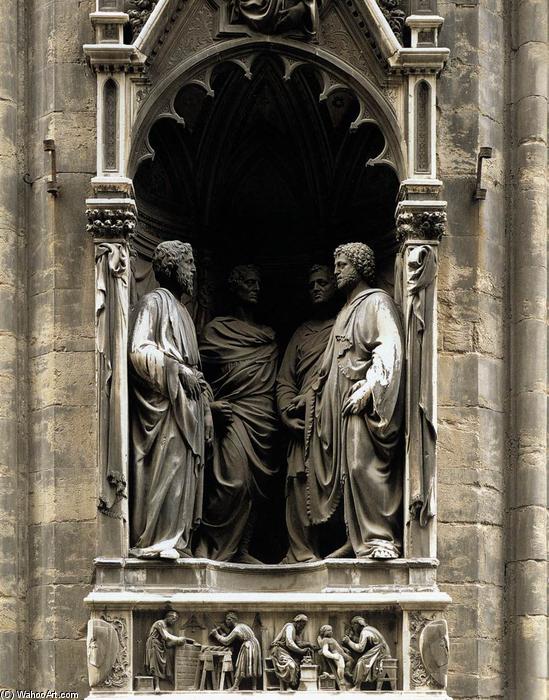
Nanni di Banco’s Quattro Santi Coronati: Bridging Gothic Legacy with Renaissance Vision
Giovanni di Antonio di Banco, known as Nanni di Banco (c. 1374 – 1421), stands as a pivotal figure in Florentine art history—a sculptor who deftly navigated the twilight of the Gothic era into the burgeoning brilliance of the Renaissance. Unlike his contemporaries like Donatello, whose innovations were driven by an uncompromising pursuit of classical ideals, Nanni’s genius resided in synthesizing the enduring traditions of medieval sculpture with the humanist spirit that was reshaping Florence’s intellectual landscape.
His contribution to the decoration of Orsanmichele—specifically the monumental group depicting four crowned saints—offers a profound glimpse into this transformative period. Commissioned by the Arte dei Maestri di Pietra e Legname guild in 1406–1408, it represents not merely an artistic achievement but also a reflection of Florentine civic identity and religious fervor.
A Synthesis of Styles: Gothic Roots and Classical Influence
The Quattro Santi Coronati’s stylistic complexity immediately distinguishes it from earlier sculptural productions. While undeniably rooted in the Gothic tradition—evident in its monumental scale, ribbed vaulting, and stylized drapery—the sculpture also incorporates elements characteristic of classical Roman art. This fusion is particularly striking in the faces of the saints themselves, which bear a resemblance to idealized portraits found in Roman sculptures.
As Giorgio Vasari eloquently observed, Nanni’s approach mirrored that of Donatello, yet crucially differed from him in prioritizing naturalism—a hallmark of Renaissance aesthetics. The sculptor skillfully captured human emotion and gesture, mirroring the humanist preoccupation with portraying the human condition authentically.
The Iconography and Symbolism of Martyrdom
The saints depicted are not merely figures; they embody a powerful theological narrative. They represent Claudius, Castor, Symphorian and Nicostratus—four Christian martyrs who refused to venerate Diocletian’s imperial cult during the persecutions of the fourth century AD. Their refusal stemmed from unwavering faith, resulting in their gruesome deaths.
The sculpture's central gesture—the outstretched hand—communicates a profound sense of contemplation and solemnity. It underscores the saints’ awareness of their impending fate, conveying an emotional depth that transcends mere representation. The positioning of the figures—particularly Castor and Symphorian—creates a dynamic interplay between stillness and movement, mirroring the humanist fascination with capturing human anatomy in precise detail.
The Context of Orsanmichele and Florentine Civic Identity
The Quattro Santi Coronati’s placement within the Orsanmichele complex—a former grain market transformed into an oratory and meeting hall for the guild—is itself significant. The sculpture served as a visual emblem of Florentine civic pride, reflecting the guild’s commitment to upholding Christian values.
Furthermore, the chapel's frescoes depict scenes from papal history, highlighting the importance of religious patronage in shaping Florentine culture and artistic production. They underscore the desire for Florence to assert its spiritual authority amidst the turbulent political landscape of the fourteenth century—a testament to Nanni di Banco’s enduring legacy as a sculptor who bridged the gap between Gothic grandeur and Renaissance humanism.
関連作品



アーティストの略歴
A Florentine Bridge Between Worlds
Nanni di Banco, born in Florence around 1380, occupies a fascinating and pivotal position within the early Italian Renaissance. He wasn’t a revolutionary like Donatello, nor did he possess the dazzling technical virtuosity of Ghiberti, but his importance lies in his ability to synthesize the waning Gothic traditions with the burgeoning humanist ideals that were reshaping Florentine art. Details surrounding his early life remain somewhat elusive; however, it's clear he benefited from the vibrant artistic atmosphere of Florence and likely received his initial training within a local workshop, absorbing the prevailing stylistic conventions while simultaneously witnessing the stirrings of a new era. His father, Antonio di Banco, was himself a respected sculptor and stonemason involved in the construction of the Florence Cathedral, providing Nanni with both familial guidance and access to the heart of Florentine artistic production. This grounding in traditional craftsmanship would prove crucial as he navigated the transition towards a more classical aesthetic.The Sculptural Language of Transition
Di Banco’s style represents a delicate balance between the elegance of late Gothic sculpture and the emerging naturalism that characterized the Renaissance. While influenced by the International Gothic style—evident in his refined drapery and attention to detail—he increasingly incorporated elements drawn from classical antiquity. This wasn't merely an imitation of ancient forms, but rather a thoughtful integration of classical principles into his work, striving for greater anatomical accuracy and a more convincing sense of three-dimensionality. He observed the Roman sculptures that were being rediscovered at the time, absorbing their emphasis on proportion, balance, and dignified composure. Unlike Donatello, who often imbued his figures with intense emotionality and dramatic expression, Di Banco favored a more restrained classicism. His figures possess a quiet dignity and serenity, reflecting a humanist ideal of rational order and harmonious beauty. This is not to say his work lacks individuality; on the contrary, he demonstrated a remarkable ability to imbue each figure with a distinct personality and character.Orsanmichele and Enduring Legacy
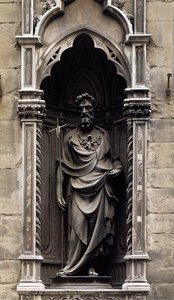
Nanni di Banco’s most celebrated achievement is undoubtedly the *Quattro Santi Coronati* (Four Crowned Martyrs), commissioned between 1412 and 1415 for the Orsanmichele church in Florence. This sculptural group, created for the stone carvers and woodworkers guild, stands as a testament to his skill and artistic vision. Each of the four figures – Saints Crispin, Crispianus, Dionysius, and Eustachius – possesses a unique personality and bears the marks of individual experience. The composition is remarkable not only for its naturalism but also for its complex construction as a unified ensemble; the saints are arranged in a harmonious grouping that conveys a sense of collective strength and spiritual conviction. Beyond Orsanmichele, Di Banco contributed to the *Porta della Mandorla* at the Florence Baptistery, working alongside other sculptors on this ambitious project. His panels depict scenes from the life of the Virgin Mary, showcasing his ability to narrate biblical stories with clarity and grace. Other notable works include sculptures of Saint Luke and Esaias, further demonstrating his mastery of form and expression.A Quiet Revolution
Nanni di Banco’s historical significance lies in his role as a crucial link between the Gothic past and the Renaissance future. He helped pave the way for later masters like Donatello and Michelangelo by establishing new standards for sculptural representation. His emphasis on naturalism, anatomical accuracy, and individualized portraiture challenged the conventions of medieval sculpture and anticipated the artistic achievements of the High Renaissance. Giorgio Vasari, in his seminal *Lives of the Most Excellent Painters, Sculptors, and Architects*, acknowledged Di Banco’s importance within the Florentine artistic tradition, recognizing his contribution to the evolving aesthetic landscape of the era. Though perhaps less celebrated than some of his contemporaries, Nanni di Banco remains a significant figure in Early Renaissance art—a sculptor who quietly but profoundly shaped the course of Western art history. His work embodies a spirit of thoughtful innovation and enduring beauty, continuing to inspire and captivate audiences centuries after its creation.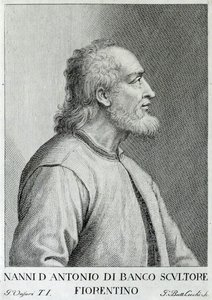
nanni d antonio di banco
1380 - 1421 , Italy
基本情報
- Artistic Movement Or Style: Early Renaissance
- Artists Or Movements Influenced By This Artist:
- Donatello
- Michelangelo
- Artists Who Influenced This Artist: ['International Gothic style']
- Date Of Birth: c. 1380
- Date Of Death: 1421
- Full Name: Nanni d'Antonio di Banco
- Nationality: Italian
- Notable Artworks:
- Quattro Santi Coronati
- Porta della Mandorla
- St. Luke
- Assumption of the Virgin
- Place Of Birth: Florence, Italy
関連記事

ジョット・ディ・ボンドーネ:至高の25選 - ルネサンスの夜明けを彩る傑作たち | ArtsDot
ジョット・ディ・ボンドーネの至高の25選。ルネサンス美術を牽引した巨匠の傑作と、その感動的な物語を紐解きます。高品質な絵画複製やインテリアアートで、名画の世界をあなたの空間に。ArtsDot.com でコレクションをご覧ください。

Bronze Sculptures That Defined Art History | ArtsDot
Journey through art history with our Top 10 bronze sculptures! Explore masterpieces by Rodin, Michelangelo & more. Discover stories behind iconic statues and find museum-quality reproductions for your home decor at ArtsDot.com.

The Enduring Form: Exploring Themes & Techniques in Sculpture Across Historical Periods
Explore the rich history of sculpture from ancient masterpieces to contemporary innovations. Discover key techniques, influential artists & investment potential for discerning art collectors.

The Enduring Form: Sculpture Across History, Technique & Emotional Resonance
Explore the rich history of sculpture with ArtsDot. Discover key techniques, influential artists & investment potential for discerning collectors. Expert insights into valuing and collecting timeless masterpieces.

Bronze Age to Modern Masters: 10 Sculptures That Redefined Art | ArtsDot
Journey through art history with 10 legendary bronze sculptures – from Michelangelo's David to Rodin’s Thinker. Explore the stories, techniques & timeless beauty of these masterpieces. Find museum-quality reproductions & elevate your home decor on ArtsDot.com.

