

 プレビュー
プレビュー
 シェアする
シェアする シェアする
シェアする
 詳細を見る
詳細を見る

 ダウンロード
 似ている作品
 X線調査
X線調査 スライドショー
 統計情報
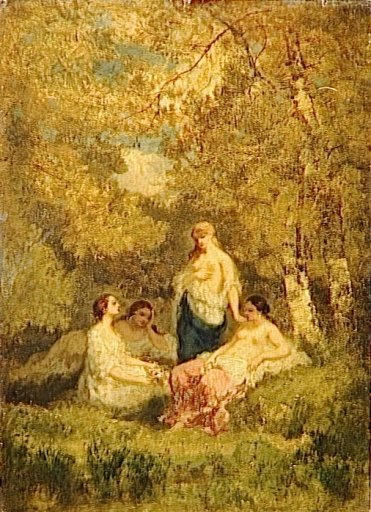
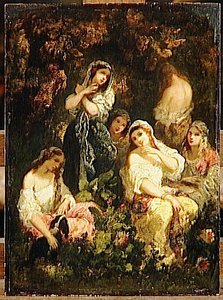
統計情報Nymphes sous bois


 詳細を見る
詳細を見る
手描き油彩複製画
当社のアーティストが、お客様のご希望のサイズと額縁に合わせて、キャンバスに手描きで制作する油彩画です。 ( プリント版に切り替え デジタル画像販売へ切り替え)




P118B $10

P118H $10

P118W $10

P438Z $10

P508JH $12

P508YH $12

P805H $10

P805Z $10

P919BZ $10

P919G $10

P919XJ $10

P959ZH $10

P968JZ $12

W106C $8

W218G $10

W218JH $8

W218Y $10

W307PJ $10

W316G $10

W316PJ $8

W316Y $10

W398PJ $8

W4111J $10

W500HY $15

W500JH $15

W692G $12

W849H $8

W940BG $15

W953PJ $8




作品のオリジナル比率に合わせた、当店の規定サイズからお選びください。

特定のフレームやスペースに合わせて、ご希望のサイズをご入力いただけます。選択されたサイズが元の画像の比率と異なる場合、アートワークをトリミングするか、手描きで要素を追加して絵画を拡張いたします。デジタルモックアップ を制作し、制作開始前にご確認(承認)をいただきます。
画面上のプレビューは、実際のトリミングや拡張を正確に反映しているものではありません。最終的な構図は、モックアップによってのみ正確にご確認いただけます。
カスタムサイズもご利用いただけますが、元の比率を維持するためには、あらかじめ用意されたリストからサイズを選択することをお勧めいたします。
ご注文後、ArtsDot.com チームより詳細な指示をお送りするとともに、仕上がりイメージ(モックアップ)をご提供いたします。


 ガラスオプションは、110cm未満のサイズでのみご利用いただけます。

Nymphes sous bois
複製技法
複製画のサイズ
-


合計金額
$ 338
An Idyllic Reverie in Verdant Depths
To gaze upon Nymphes sous bois is to step through a veil into a forgotten corner of the natural world—a place where myth breathes alongside the rustling leaves. Narcisso Díaz de la Peña has masterfully captured an atmosphere so profoundly romantic, it feels less like paint on canvas and more like a suspended moment in time. The composition immediately draws the viewer into a lush, almost palpable woodland setting. Four graceful nymphs are depicted amidst the dense foliage, their presence lending the scene an air of serene mystery. The overall impression is one of exquisite tranquility, bathed in the soft, filtered glow of sunlight struggling to penetrate the canopy above.
Mastery of Light and Leaf: Technique and Palette
Díaz de la Peña’s technical skill shines through in every brushstroke. He employs a palette dominated by rich greens, earthy browns, and touches of luminous gold, creating a deeply harmonious visual experience. The handling of light is particularly noteworthy; the dappled sunlight does not merely illuminate—it dances across the skin of the figures and catches the edges of the leaves, lending an ethereal quality to the entire scene. While the perspective possesses a certain academic flattening typical of the era, this choice serves the greater purpose of enhancing the dreamlike atmosphere. The textures are rendered with such care, whether it is the soft drape of fabric or the varied materiality of damp earth and moss, that one can almost feel the coolness of the forest air.
Echoes of Romanticism: Context and Symbolism
This work sits beautifully within the currents of 19th-century Romanticism. Díaz de la Peña was not merely recording a scene; he was channeling an emotional response to nature, much like his contemporaries who sought the sublime in the wild. The nymphs themselves are potent symbols—they represent untamed beauty, innocence, and the enduring power of nature itself. In art history, such figures often served as conduits for exploring humanity's relationship with the primal world. The scene whispers tales of classical mythology, inviting contemplation on themes of natural grace and timeless femininity.
Bringing the Forest Home: Decorating with Myth
For the collector or designer, Nymphes sous bois offers more than just decoration; it offers an emotional anchor for a space. Reproducing this piece allows one to infuse a room—be it a formal drawing-room or a tranquil reading nook—with the sophisticated romance of a bygone era. The blend of deep greens and warm ochres makes it incredibly versatile, pairing beautifully with rich wood tones or soft, natural textiles. It is an artwork that doesn't shout for attention but rather invites the viewer to pause, breathe deeply, and become momentarily lost in its verdant embrace.
関連作品


アーティストの略歴
Narcisso Díaz de la Peña: A Romantic Vision of Nature
Narcisso Díaz de la Peña (1807 – 1876) stands as a singular figure in Spanish Romantic landscape painting, renowned for his meticulous depictions of Iberian flora and fauna imbued with profound symbolic resonance. Born into a noble family in Zaragoza, Aragón, Díaz de la Peña’s artistic journey began modestly but swiftly ascended to prominence thanks to his unwavering dedication to capturing the sublime beauty of the natural world—a pursuit deeply rooted in the philosophical currents of his time. His life's work serves as a bridge between the scientific precision of the Enlightenment and the emotive, spiritual depth characteristic of the Romantic era.
His formative years were marked by exposure to Enlightenment ideals and scientific observation, yet he embraced Romanticism's emotive response to experience rather than rational analysis. Influenced heavily by Eugène Delacroix’s dramatic canvases and Friedrich Reinhold Rauwolf’s sublime landscapes, Díaz de la Peña sought to convey not merely visual impressions but also spiritual contemplation. This ambition is palpable in his celebrated works where he skillfully blends classical compositional principles with Romantic color palettes to evoke a mood of serene repose amidst exotic surroundings—a deliberate allusion to the fascination with Orientalism prevalent during the era.
Technique and the Art of Observation
Díaz de la Peña’s technique was characterized by painstaking detail and scientific accuracy. He meticulously studied botanical specimens, employing watercolor pigments mixed with gum arabic to achieve astonishing realism—a testament to his commitment to representing nature faithfully. Unlike many of his contemporaries who favored looser brushstrokes, Díaz de la Peña painstakingly layered washes of color, capturing subtle variations in texture and luminosity. This meticulous approach is particularly evident in his landscapes, where he renders dense foliage with remarkable precision, highlighting the interplay of light and shadow to convey a sense of atmospheric depth.
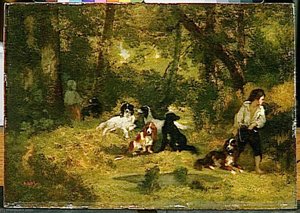
His mastery extended beyond mere botanical study into the realm of narrative and character. In works such as Girl with Dogs or Bohemiennes mendicantes, the artist demonstrates an ability to weave human presence into the natural landscape, creating scenes that feel both intimate and timeless. Whether working on oil on panel or utilizing more delicate mediums, his ability to manipulate light allowed him to transform a simple landscape into a tranquil, almost meditative experience for the viewer.
Legacy and Historical Significance
The historical significance of Narcisso Díaz de la Peña lies in his ability to elevate the landscape genre within the Spanish tradition. By merging the rigorous observation of nature with the emotional intensity of Romanticism, he provided a unique perspective that resonated far beyond the borders of Spain. His works, now preserved in prestigious institutions such as the Victoria and Albert Museum, continue to inspire awe through their soft colors and tranquil scenes.
To understand his contribution is to appreciate the following elements of his artistic identity:
- The Romantic Spirit: A profound focus on the emotional connection between the observer and the natural world.
- Scientific Precision: An unparalleled dedication to botanical and anatomical accuracy in his subjects.
- Atmospheric Mastery: The use of light and layered pigments to create depth, texture, and a sense of living air.
- Cultural Synthesis: The blending of Spanish landscape traditions with the broader European movements of Orientalism and Romanticism.
narcisso díaz de la peña
1807 - 1876
基本情報
- Artistic Movement Or Style: Romanticism
- Artists Who Influenced This Artist:
- Eugène Delacroix
- Caspar David Friedrich
- Date Of Birth: 1807
- Date Of Death: 1876
- Full Name: Narcisso Díaz de la Peña
- Nationality: Spanish
- Notable Artworks:
- Femmes mauresques au repos
- Sous bois
- Forêt de Fontainebleau
- Place Of Birth: Madrid, Spain
関連記事

Evocations of Place: A Historical Journey Through Landscape Art
Explore the rich history of landscape art with ArtsDot. Discover renowned artists, movements like Impressionism & tonalism, and expert guidance for collecting timeless pieces. Find your perfect serene escape today!
The Sublime and the Picturesque: Exploring Emotion & Nature in Romantic Landscape Painting
Explore the emotional power of Romantic landscape painting! Discover the sublime & picturesque traditions, key artists like Friedrich & Cole, and find your perfect artwork at ArtsDot.
The Enchanted Canopy: Exploring Forests in Art History – From Romantic Idealization to Ecological Consciousness
Explore the rich history of forests in art! Discover Romantic masterpieces by Friedrich & Monet, Symbolist depths, and contemporary visions. Find inspiration & quality reproductions at ArtsDot.

Evocations of Place: A Historical Journey Through Landscape Art
Explore the rich history of landscape art with ArtsDot. Discover renowned artists, movements like Impressionism & Romanticism, and expert guidance for collecting timeless pieces. Find your perfect serene escape today!

ロマン派ランドスケープ:時代を彩る巨匠の10選|アートとインテリアの世界
ロマン派絵画の時代を彩る10選。巨匠たちの風景が織りなす感動の世界へ。ターナー、ルーベンスなど、名作の裏話と高精細複製でアートをお部屋に。ArtsDot.comで至福のアート体験を。