

 プレビュー
プレビュー
 シェアする
シェアする シェアする
シェアする
 詳細を見る
詳細を見る

 ダウンロード
 似ている作品
 X線調査
X線調査 スライドショー
 統計情報
統計情報Crucifixion


 詳細を見る
詳細を見る
ジークレー/アートプリント
迅速な制作と多彩な仕上げオプションを備えた、ミュージアムクオリティのジークレーまたはキャンバスプリント。 ( 手描きの絵画を購入 デジタル画像販売へ切り替え)




































作品のオリジナル比率に合わせた、当店の規定サイズからお選びください。

特定のフレームやスペースに合わせて、ご自身でサイズを指定することも可能です。選択されたサイズが元の画像の比率と一致しない場合、作品をトリミングするか、鏡面反射または単色での塗りつぶしによって画像を拡張いたします。制作を開始する前に、ご確認用のデジタルモックアップをお送りいたします。
画面上のプレビューには、実際のトリミングや拡張は反映されませんのでご注意ください。最終的な構図を正確に確認できるのは、モックアップのみとなります。
カスタムサイズも承っておりますが、元の比率を維持するためには、あらかじめ用意されたリストからサイズを選択することをお勧めいたします。


 ガラスオプションは、110cm未満のサイズでのみご利用いただけます。

Crucifixion
ジークレー/アートプリント
複製画のサイズ
-


合計金額
$ 62
Artistic Style and Influences
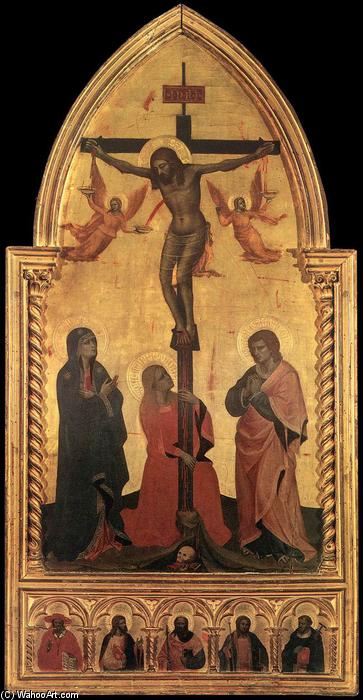
The painting showcases the artist's skill in capturing the emotional intensity of the scene, with the central figure of Jesus Christ on the cross being the focal point. The use of gold leaf in the background gives the painting an opulent and otherworldly appearance, while the intricate details and expressive faces of the surrounding figures add to the overall sense of drama and emotion. The influence of Maso di Banco can be seen in the compact and simplified forms of the two mourners, while the elegant narrative rhythm is reminiscent of the works of Bernardo Daddi.Key Features and Symbolism
The painting features several key elements, including:- The central figure of Jesus Christ on the cross, depicted with long hair and a beard, wearing a loincloth
- The surrounding figures of Mary Magdalene, John the Evangelist, and other mourners, dressed in medieval clothing
- The golden sky, symbolizing divinity and heaven
- The angels present in the scene, adding to the spiritual nature of the artwork
The Crucifixion by Nardo Leonardo Di Cione is a masterpiece of Gothic art that continues to inspire and awe audiences today. Its intricate details, expressive faces, and use of gold leaf make it a truly unique and captivating painting.
関連作品



アーティストの略歴
The Poet Painter of Florence: The Lyrical Legacy of Nardo di Cione
In the golden, turbulent era of fourteenth-century Florence, amidst the burgeoning shadows of the early Renaissance, there emerged a voice of profound tenderness and chromatic brilliance. Nardo di Cione, often whispered of in art historical circles as "the poet painter," was much more than a mere practitioner of the Florentine guild; he was a master of emotional resonance. While his contemporaries often sought to capture the monumental and the rigid, Nardo possessed an unparalleled sensitivity to form and a lyrical vein that allowed him to breathe life into the divine. Born around 1320, he was part of a formidable artistic dynasty, working alongside his brothers, the renowned Orcagna (Andrea di Cione) and Jacopo di Cione. Together, they formed a collaborative studio that acted as a crucible for innovation, shaping the visual language of Florence during its most formative years.
Nardo’s artistic foundation was built upon a rigorous understanding of both the tactile and the ethereal. His early training under Maestro Piero Bargellini, a distinguished sculptor and painter, provided him with a unique dual perspective. This apprenticeship instilled in him a deep reverence for sculptural volume, which he would later translate into painting through soft modeling and subtle differentiation of tone. This ability to marry the structural weight of sculpture with the fluid grace of painting is what truly distinguishes his hand. His work does not merely sit upon the surface; it possesses a rhythmic, breathing quality that suggests a profound human sympathy, even when depicting the most celestial subjects.
A Symphony of Devotion and Color
The zenith of Nardo’s collaborative achievements can be found within the hallowed walls of the Cappella Strozzi in Santa Maria Novella. Here, the Di Cione brothers undertook a monumental decorative program that remains a testament to their shared vision. While Orcagna focused on the central altarpiece, Nardo was entrusted with the profound narrative weight of the frescoes depicting The Last Judgment, Paradise, and Hell. In these works, Nardo’s mastery of color theory shines through; he utilized a rich palette to guide the viewer's soul from the terrifying depths of the inferno to the luminous, Byzantine-inspired splendor of paradise. His use of color was never merely decorative but served as a spiritual tool—a means of creating an otherworldly atmosphere that could evoke both dread and ecstasy.
Beyond these grand frescoes, Nardo’s independent works reveal a more intimate, devotional side of his genius. His Crucifixion, currently housed in the Uffizi Gallery, serves as a breathtaking example of Gothic elegance. Through the meticulous application of gold leaf and intricate detailing, he captures an intense emotionality that transcends the wooden panel. Similarly, his Standing Madonna with Child, created in the wake of the devastating bubonic plague of 1348, speaks to the historical necessity of art as a vessel for spiritual relief. In this piece, one sees the artist's ability to offer comfort through beauty, creating icons that served as anchors for a grieving Florentine populace.
Historical Significance and Artistic Spirit
The significance of Nardo di Cione lies in his ability to bridge the gap between the rigid traditions of the medieval period and the burgeoning humanism of the Renaissance. His work embodies a transition—a movement from the symbolic toward the emotive. To study Nardo is to witness the evolution of the Florentine spirit:
- Technical Versatility: The seamless integration of sculptural depth with painterly fluidity.
- Emotional Depth: A unique "poetic" approach that prioritized human sympathy and soft, expressive modeling.
- Chromatic Mastery: The use of vibrant, symbolic colors to navigate complex theological narratives.
nardo leonardo di cione
1320 - 1366
基本情報
- Artistic Movement Or Style: Renaissance Painting
- Artists Or Movements Influenced By This Artist: ['Late Gothic']
- Artists Who Influenced This Artist: ['Andrea di Cione']
- Date Of Death: c. 1366
- Full Name: Nardo di Cione
- Nationality: Italian
- Notable Artworks:
- Crucifixion
- Madonna and Child with Sts Peter and John the Evangelist
- Place Of Birth: Florence