

 プリントを購入
 シェアする
シェアする シェアする
シェアする
 詳細を見る
詳細を見る

 ダウンロード
 似ている作品
 スライドショー
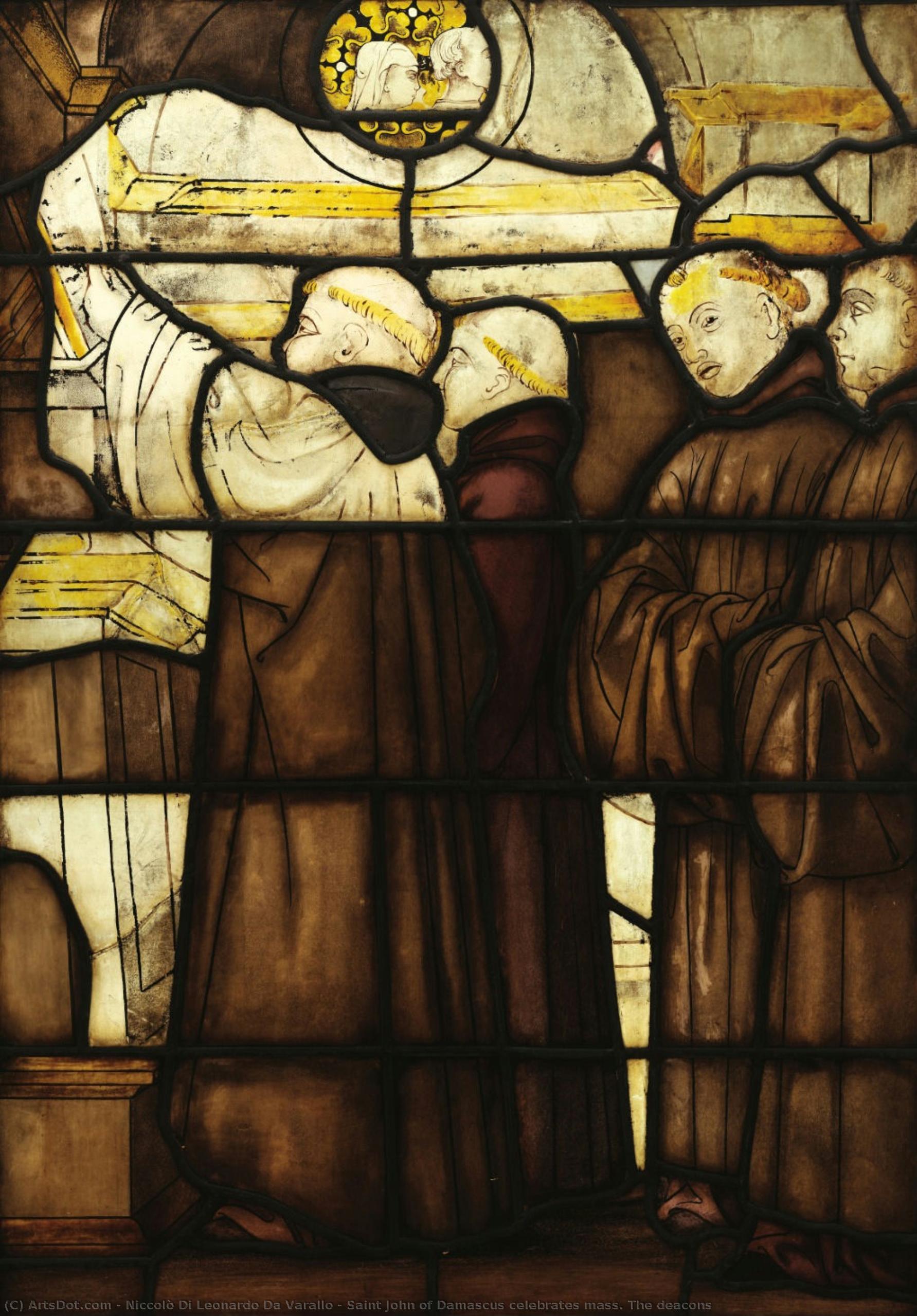
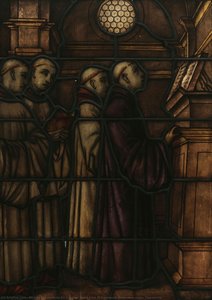
Saint John of Damascus celebrates mass. The deacons


 詳細を見る
詳細を見る




































作品のオリジナル比率に合わせた、当店の規定サイズからお選びください。

特定のフレームやスペースに合わせて、ご希望のサイズをご入力いただけます。選択されたサイズが元の画像の比率と異なる場合、アートワークをトリミングするか、手描きで要素を追加して絵画を拡張いたします。デジタルモックアップ を制作し、制作開始前にご確認(承認)をいただきます。
画面上のプレビューは、実際のトリミングや拡張を正確に反映しているものではありません。最終的な構図は、モックアップによってのみ正確にご確認いただけます。
カスタムサイズもご利用いただけますが、元の比率を維持するためには、あらかじめ用意されたリストからサイズを選択することをお勧めいたします。
ご注文後、ArtsDot.com チームより詳細な指示をお送りするとともに、仕上がりイメージ(モックアップ)をご提供いたします。


 ガラスオプションは、110cm未満のサイズでのみご利用いただけます。

Saint John of Damascus celebrates mass. The deacons
複製技法
複製画のサイズ
-


合計金額
$ 338
A Window Into Faith: Niccolò da Varallo’s “Saint John of Damascus Celebrates Mass”
The panel before us—a vibrant fragment from the magnificent stained-glass window V25 within Milan’s Duomo—offers a captivating glimpse into the artistic and spiritual landscape of late 15th-century Italy. Crafted by the Venetian master Niccolò da Varallo between 1479 and 1489, this work is more than just a decorative element; it's a meticulously rendered tableau of religious devotion, steeped in Byzantine iconography and reflecting the burgeoning humanist sensibilities of the Renaissance.
At its heart lies Saint John of Damascus, a pivotal figure in Christian theology. Born in Damascus during the reign of Emperor Leo III, he was unjustly accused and brutally punished – his right hand severed – for defending Christianity against iconoclasts. This panel depicts him in the act of celebrating mass, flanked by deacons and clerics, embodying both his theological authority and his enduring legacy as a patron saint of painters, disabled individuals, and pharmacists—a testament to his resilience and the profound impact of his faith.
The Language of Light: Technique and Materials
Varallo’s mastery lies not only in his subject matter but also in his technical skill. The panel is constructed entirely from brilliantly colored stained glass, meticulously cut and assembled using lead lines—a technique that was at its peak during this period. Notice the careful layering of hues: deep browns and ochres dominate, creating a sense of solemnity and reverence, while touches of gold highlight key figures and architectural details. The use of grisaille – opaque white glass – provides definition to the faces and drapery, adding depth and realism to the scene.
The light filtering through the glass transforms the panel into a dynamic source of color and shadow, an effect that was central to Varallo’s artistic vision. He expertly manipulated the transparency and opacity of each piece, creating a luminous quality that seems to emanate from within the glass itself—a characteristic hallmark of Gothic stained-glass artistry.
Symbolism and Spiritual Resonance
Beyond its immediate depiction, the panel is rich in symbolic meaning. The central figure of Saint John, holding his hand aloft, represents both his suffering and his unwavering faith. The presence of the deacons and clerics underscores the communal nature of worship and the hierarchical structure of the Church. Crucially, the upper portion of the window features a stylized depiction of the Holy Trinity—a powerful visual reminder of God’s divine unity.
Furthermore, the panel's association with Saint John as patron saint of painters speaks to the enduring connection between art and faith in this era. Varallo himself was a master glassmaker, and his work embodies a profound respect for craftsmanship and a deep understanding of the spiritual power of visual representation.
A Legacy of Beauty: Historical Context and Emotional Impact
Created during a period of significant artistic and religious transition, “Saint John of Damascus Celebrates Mass” reflects both the Gothic traditions inherited from the Middle Ages and the emerging Renaissance aesthetic. The panel’s vibrant colors, dynamic composition, and meticulous detail demonstrate Varallo's skill as a master craftsman, while its subject matter—a story of faith, suffering, and redemption—resonates deeply with viewers across centuries.
Today, this fragment offers a poignant reminder of the enduring power of art to inspire contemplation, evoke emotion, and connect us to our shared human heritage. It’s a window into a world of faith, beauty, and artistic innovation – a testament to the lasting legacy of Niccolò da Varallo and his remarkable contribution to the visual arts.
関連作品
アーティストの略歴
The Luminous Legacy of Niccolò da Varallo
In the heart of the Italian Renaissance, where light and shadow began to dance with newfound realism, the name Niccolò da Varallo emerges as a master of brilliance. Born around 1425 in the rugged beauty of Varallo della Val d'Oro, Lombardy, his very lineage was steeped in the alchemy of color. As the son of Leonardo da Varallo, a skilled glassmaker, Niccolò inherited more than just a family name; he inherited a profound understanding of how light interacts with medium, a gift that would later define his revolutionary approach to stained glass and frescoes.
While much of his early life remains veiled in the mists of history, his artistic trajectory was undoubtedly shaped by the vibrant cultural currents of Milan. It is believed that he refined his craft under the tutelage of Maestro Giovanni Battista Sant'Anna, a prominent figure in Milanese painting. This mentorship provided Niccolò with a bridge between the meticulous, ornamental traditions of the Gothic era and the burgeoning humanism of the Renaissance. Through this training, he mastered the ability to weave complex theological narratives into visual tapestries that were as much about spiritual transcendence as they were about technical precision.
A Master of Light and Glass
Niccolò’s most enduring contribution to the art world lies in his breathtaking stained-glass commissions for the Milan Cathedral. In these works, he transcended the traditional boundaries of the medium, moving away from static, flat designs toward a more dynamic and emotive storytelling style. His panels are not merely windows but portals into the divine, characterized by a fusion of Venetian color palettes and Gothic geometric intricacy.
His mastery is perhaps most evident in his depictions of the life of Saint John of Damascus. Through these glass narratives, Niccolò captured moments of profound spiritual weight with an almost cinematic quality:
- The Ordination of Saint John of Damascus: In this stunning panel, Varallo utilizes the interplay of light to depict a pivotal moment in Byzantine theology, using color to evoke the sanctity of the ritual.
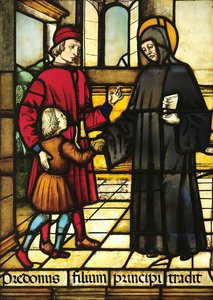
- Saint John of Damascus Receives the Prince: Here, the artist demonstrates his ability to render complex human interactions and regal dignity through the delicate manipulation of glass textures.
- The Miracle of the Reattached Hand: Perhaps one of his most captivating scenes, this panel depicts the miraculous reattachment of Saint John's hand, a feat of storytelling that uses vibrant hues to emphasize the divine intervention and the awe of the witnessing monks.
Historical Significance and Artistic Spirit
The work of Niccolò da Varallo represents a crucial evolutionary step in late medieval and early Renaissance art. He stood at the crossroads of two worlds, maintaining the decorative splendor of the Gothic tradition while embracing the emerging realism and emotional depth of the Renaissance. His ability to manipulate light—the very essence of stained glass—allowed him to create works that felt alive, breathing with the changing sunbeams that passed through the Milan Duomo.
Though his name may not carry the same immediate recognition as the giants of the High Renaissance, his influence on the decorative arts and ecclesiastical storytelling is immeasurable. He remains a testament to the power of craftsmanship, proving that when the precision of a glassmaker meets the soul of a painter, the result is an eternal glow that survives centuries of shadow.
niccolò di leonardo da varallo
1425 - 1490 , Italy
基本情報
- Artistic Movement Or Style: Renaissance
- Artists Or Movements Influenced By This Artist: ['Italian Renaissance']
- Artists Who Influenced This Artist:
- Andrea Mantegna
- Giovanni Battista Pontorno
- Date Of Birth: 1425
- Date Of Death: 1490
- Full Name: Niccolò di Leonardo da Varallo
- Nationality: Italian
- Notable Artworks:
- Saint John of Damascus celebrates mass. The deacons
- The ordination of Saint John of Damascus
- Place Of Birth: Varallo della Val d'Oro, Italy
関連記事

ジョン・シンガー・サージェント:至高の25選 - 美と光の肖像画の世界 | ArtsDot
ジョン・シンガー・サージェントの至高の25選。肖像画、写実主義、光と影の表現が美しい作品群を紐解きます。マダムXや少女の肖像など、時代を超えて愛される名作をArtsDotで鑑賞。高品質なアート複製で、お部屋に美術館のような空間を。今すぐコレクションをご覧ください。

ジョン・コンスタブルの傑作25選:英国風景画の巨匠が描く自然と光の詩 | ArtsDot
ジョン・コンスタブルの傑作25選。英国風景画の巨匠が描く自然と光の詩の世界へ。ロマン主義を代表する絵画、デダム・ヴェールやヘイ・ウェインなど、ArtsDotで高品質なアートプリントをお楽しみください。インテリアに深みと感動を。コレクションはこちら。
High Medieval Art: 10 Masterpieces That Shaped an Era | ArtsDot
Journey through High Medieval Art! Explore 10 iconic masterpieces – from Giotto's frescoes to stunning Gothic cathedrals. Discover the stories behind these timeless paintings, sculptures & illuminated manuscripts. Find museum-quality art reproductions at ArtsDot.com.
John La Farge: Pioneering American Colorism & Japonisme's Influence
Explore the groundbreaking work of John La Farge, a pioneer of American colorism and stained glass. Discover his captivating Japonisme-inspired murals & lasting legacy in 19th-century art. Expert insights for collectors.
Late Medieval Masterpieces: 10 Artworks That Defined an Era | ArtsDot
Journey through 10 defining Late Medieval masterpieces – from Giotto's frescoes to Jan van Eyck’s realism. Explore the stories, techniques & vibrant colors of Gothic art. Find museum-quality reproductions and elevate your home decor with ArtsDot.com! Discover all masterpieces on ArtsDot.com

