

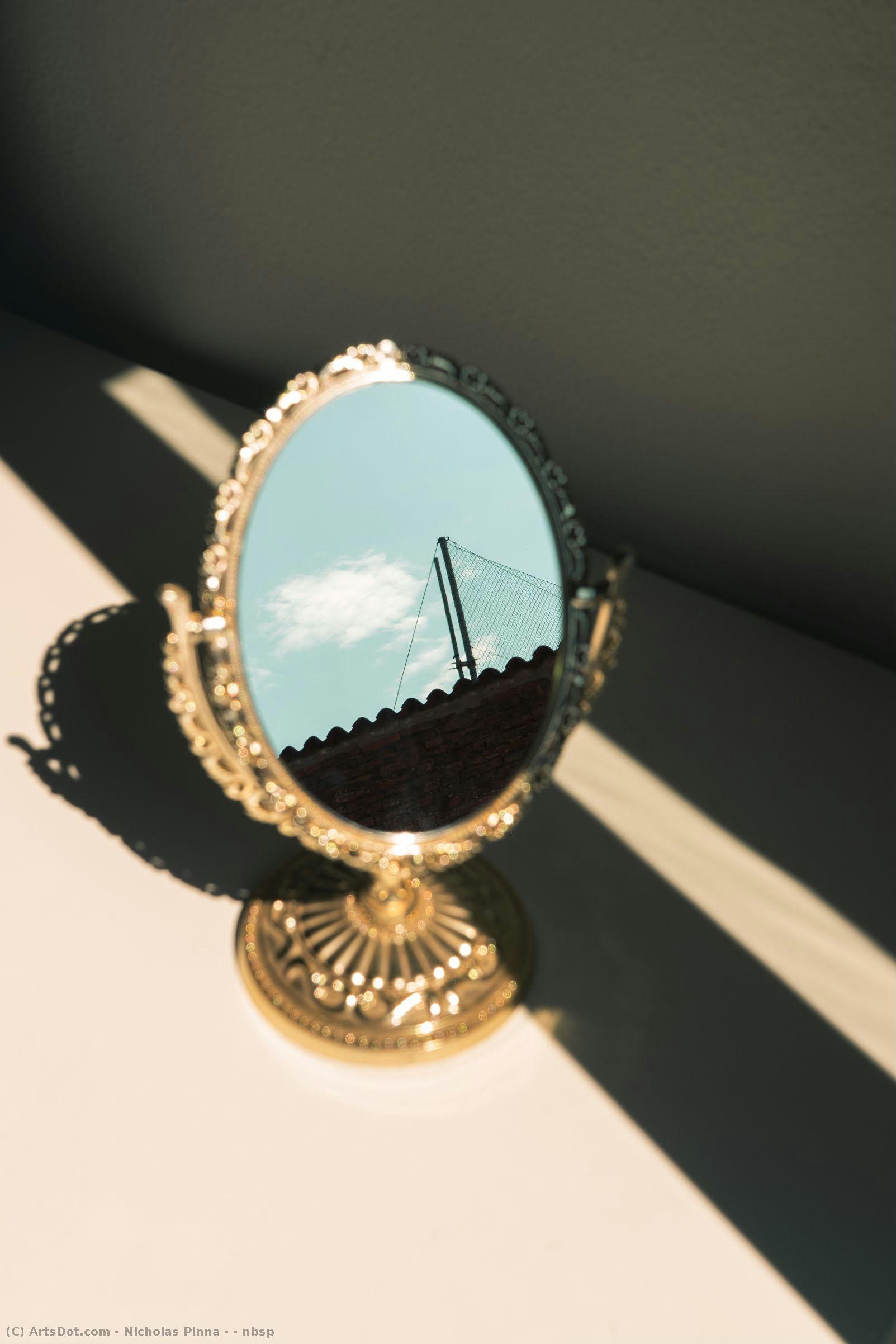
 プレビュー
プレビュー
 シェアする
シェアする シェアする
シェアする
 詳細を見る
詳細を見る

 ダウンロード
 似ている作品
 X線調査
X線調査 スライドショー
 Stats
Stats& nbsp

 詳細を見る
詳細を見る
手描き油彩複製画
当社のアーティストが、お客様のご希望のサイズと額縁に合わせて、キャンバスに手描きで制作する油彩画です。 ( Switch to Print Switch to Digital Image)




































作品のオリジナル比率に合わせた、当店の規定サイズからお選びください。

特定のフレームやスペースに合わせて、ご希望のサイズをご入力いただけます。選択されたサイズが元の画像の比率と異なる場合、アートワークをトリミングするか、手描きで要素を追加して絵画を拡張いたします。デジタルモックアップ を制作し、制作開始前にご確認(承認)をいただきます。
画面上のプレビューは、実際のトリミングや拡張を正確に反映しているものではありません。最終的な構図は、モックアップによってのみ正確にご確認いただけます。
カスタムサイズもご利用いただけますが、元の比率を維持するためには、あらかじめ用意されたリストからサイズを選択することをお勧めいたします。
ご注文後、ArtsDot.com チームより詳細な指示をお送りするとともに、仕上がりイメージ(モックアップ)をご提供いたします。


 ガラスオプションは、110cm未満のサイズでのみご利用いただけます。

& nbsp
複製技法
複製画のサイズ
-


合計金額
$ 263
関連作品






アーティストの略歴
A Chemist’s Vision: The Art of Nicholas Pinna
Nicholas Pinna, born in Milan, Italy, in 1974, occupies a fascinating intersection between the rigorous world of chemistry and the boundless realm of materials science. While not traditionally recognized as an artist in the conventional sense—he doesn't wield brushstrokes or sculpt clay—Pinna’s groundbreaking research into metal-organic frameworks (MOFs) and nanoparticle technology has yielded structures possessing an inherent beauty, a complexity that rivals nature itself. His work transcends pure scientific inquiry; it is a form of molecular architecture, a deliberate crafting of materials with properties poised to revolutionize catalysis, filtration, and sensing. Pinna’s journey began with a deep dive into physical chemistry at the Université Pierre et Marie Curie in Paris, culminating in a Ph.D. in 2001. This foundational education laid the groundwork for his subsequent explorations at the prestigious Fritz Haber Institute of the Max Planck Society in Berlin—an institution renowned for its pioneering work in chemical catalysis.From Molecular Structures to Functional Design
Pinna’s academic trajectory led him to a professorship at Humboldt University of Berlin, where he has since held positions as Vice Director and Director of the Institute of Chemistry. It is within this environment that his research truly flourished. His focus on MOFs—crystalline materials constructed from metal ions or clusters coordinated to organic ligands—represents a departure from traditional material design. Unlike their inorganic counterparts, MOFs possess tunable porosity, allowing for precise control over their internal structure and functionality. The encapsulation of pre-formed nanoparticles (NPs) within these frameworks further expands their application potential. Imagine microscopic cages, meticulously engineered to capture specific molecules or catalyze reactions with unparalleled efficiency. This is the essence of Pinna’s work—a move towards materials that are not merely passive components but active participants in chemical processes. His dedication and innovation have garnered significant recognition, evidenced by his extensive publication record and a citation count exceeding 22,945 on Google Scholar, solidifying his position as a leading figure in the field.Influences and Interdisciplinary Connections
While Pinna’s immediate influences stem from the giants of chemistry—pioneers like Gerhard Ertl who revolutionized surface chemistry—his work also resonates with broader artistic and architectural traditions. The intricate geometries of MOFs, their repeating patterns and crystalline structures, evoke comparisons to Islamic art or the delicate lattices found in Gothic cathedrals. The concept of *form follows function*, central to modernist design, is deeply embedded in Pinna’s approach. He doesn't simply create aesthetically pleasing structures; each framework is meticulously designed to fulfill a specific purpose. Furthermore, his exploration of nanoscale materials connects him to the burgeoning field of nanotechnology, where scientists are increasingly inspired by biological systems—the self-assembly processes found in nature and the remarkable efficiency of enzymes. His collaborations with researchers across diverse disciplines—from physics to engineering—underscore the interdisciplinary nature of his work.Major Achievements and Future Directions
Pinna’s most significant achievement lies in demonstrating the potential of MOFs as versatile platforms for catalysis, filtration, and sensing. His research has led to the development of materials capable of selectively capturing carbon dioxide from industrial emissions, purifying water with exceptional efficiency, and detecting trace amounts of pollutants with unprecedented sensitivity. The ability to tailor the pore size and chemical functionality of MOFs allows for a level of control previously unattainable in material science. Looking ahead, Pinna’s work promises even more transformative applications. He is actively exploring the use of MOFs in energy storage, drug delivery, and advanced separation technologies. His ongoing research into hybrid materials—combining MOFs with other functional components—holds the key to creating truly intelligent materials capable of responding to their environment and adapting to changing conditions.Historical Significance and a New Era of Material Creation
Nicholas Pinna’s contribution extends beyond specific scientific breakthroughs; he represents a paradigm shift in how we approach material creation. By embracing the principles of molecular architecture, he has opened up new avenues for designing materials with unprecedented functionality and control. His work challenges the traditional boundaries between chemistry, physics, and engineering, fostering collaboration and innovation across disciplines. Pinna’s legacy will not be measured solely in publications or citations but in the tangible impact his research has on addressing some of the most pressing global challenges—from climate change to resource scarcity. He is a testament to the power of scientific curiosity, demonstrating that even within the seemingly abstract world of molecular structures, there lies the potential for profound beauty and transformative change.
nicholas pinna
1974 - , Italy
基本情報
- Artistic Movement Or Style: Materials science
- Date Of Birth: 1974
- Full Name: Nicholas Pinna
- Nationality: Italian
- Place Of Birth: Milan, Italy