

 プレビュー
プレビュー
 シェアする
シェアする シェアする
シェアする
 詳細を見る
詳細を見る

 ダウンロード
 似ている作品
 X線調査
X線調査 スライドショー
 統計情報
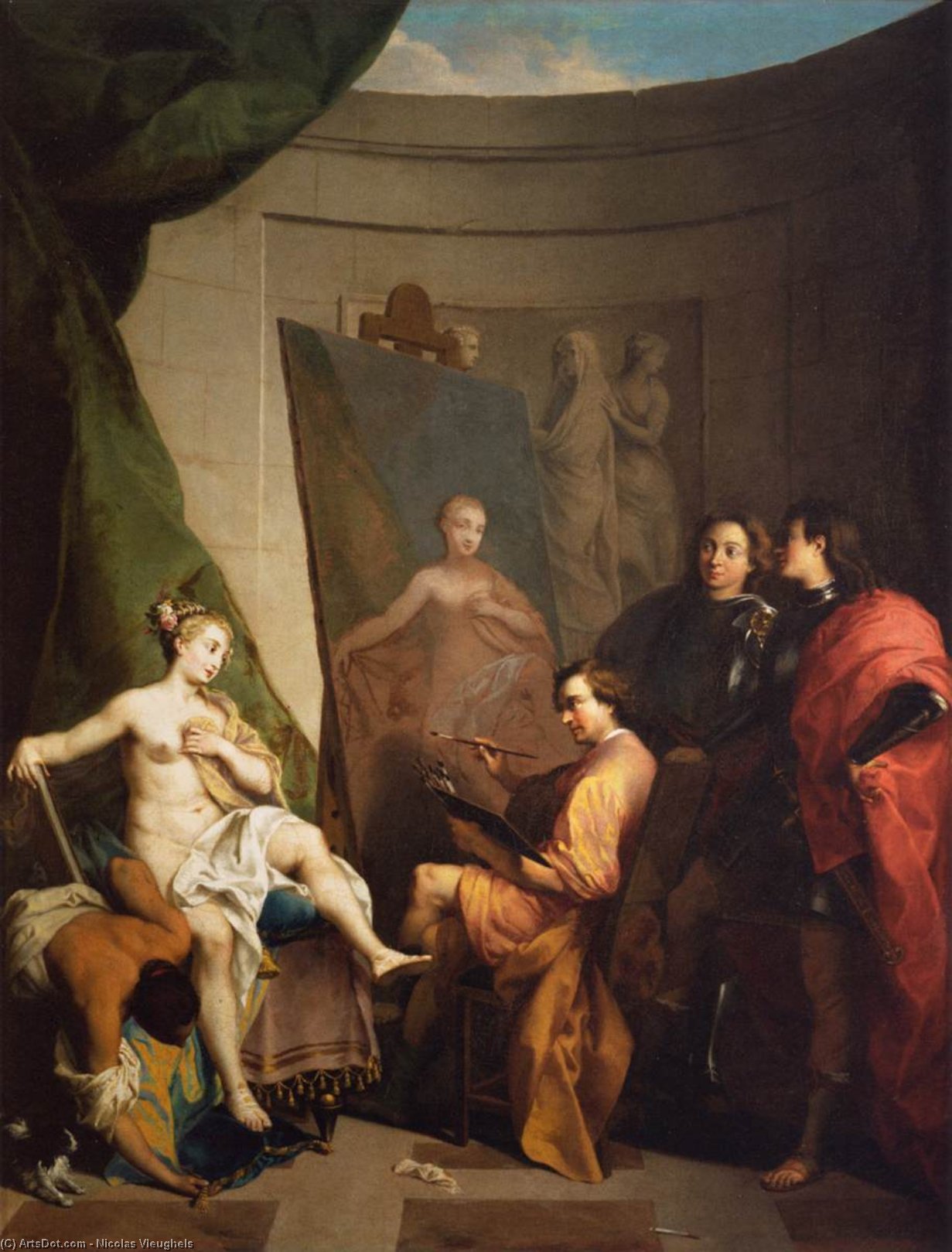
統計情報Apelles Painting Campaspe
 Oil On Canvas
- WallArt
- Baroque Classicism
 1716
1716 126.0 x 97.0 cm
 ルーブル美術館
 詳細を見る
詳細を見る
手描き油彩複製画
当社のアーティストが、お客様のご希望のサイズと額縁に合わせて、キャンバスに手描きで制作する油彩画です。 ( プリント版に切り替え デジタル画像販売へ切り替え)




P118B $10

P118H $10

P118W $10

P438Z $10

P508JH $12

P508YH $12

P805H $10

P805Z $10

P919BZ $10

P919G $10

P919XJ $10

P959ZH $10

P968JZ $12

W106C $8

W218G $10

W218JH $8

W218Y $10

W307PJ $10

W316G $10

W316PJ $8

W316Y $10

W398PJ $8

W4111J $10

W500HY $15

W500JH $15

W692G $12

W849H $8

W940BG $15

W953PJ $8




作品のオリジナル比率に合わせた、当店の規定サイズからお選びください。

特定のフレームやスペースに合わせて、ご希望のサイズをご入力いただけます。選択されたサイズが元の画像の比率と異なる場合、アートワークをトリミングするか、手描きで要素を追加して絵画を拡張いたします。デジタルモックアップ を制作し、制作開始前にご確認(承認)をいただきます。
画面上のプレビューは、実際のトリミングや拡張を正確に反映しているものではありません。最終的な構図は、モックアップによってのみ正確にご確認いただけます。
カスタムサイズもご利用いただけますが、元の比率を維持するためには、あらかじめ用意されたリストからサイズを選択することをお勧めいたします。
ご注文後、ArtsDot.com チームより詳細な指示をお送りするとともに、仕上がりイメージ(モックアップ)をご提供いたします。


 ガラスオプションは、110cm未満のサイズでのみご利用いただけます。

Apelles Painting Campaspe
複製技法
複製画のサイズ
-


合計金額
$ 263
Nicolas Vleughels: Bridging Flemish Tradition and Venetian Grandeur
Nicolas Vleughels (1668 – 1737) stands as a pivotal figure in the artistic landscape of the early Baroque era, embodying the confluence of Flemish artistic heritage with the burgeoning influence of Venetian painting. Born in Paris to Philippe Vleughels, a renowned Flemish painter who had emigrated from Antwerp, Nicolas inherited a lineage steeped in artistic excellence and established within a vibrant community of Flemish artists residing in the capital. His formative years were profoundly shaped by instruction under Pierre Mignard, a prominent portraitist whose meticulous realism would undoubtedly influence his stylistic sensibilities. Furthermore, he diligently copied works by Rubens—a titan of Baroque art—demonstrating an unwavering dedication to mastering the techniques and expressive power of one of his era’s greatest masters. This synthesis of Flemish precision and Venetian dynamism characterizes his oeuvre, securing him a prominent place in art history.The Painting: Apelles Painting Campaspe
“Apelles Painting Campaspe,” created in 1716, is an oil on canvas masterpiece that captures the essence of Venetian idealism blended with subtle Flemish nuances. The artwork depicts a serene tableau featuring a woman seated before a man wielding a paintbrush—a deliberate allusion to the legendary painter Apelles and his celebrated portrait of Alexander’s beloved Campaspe. This narrative embodies the humanist ideals prevalent during the period, reflecting an interest in portraying human emotion and intellect alongside aesthetic beauty. The composition is carefully balanced, utilizing geometric forms and harmonious color palettes typical of Venetian painters like Titian and Veronese. However, Vleughels subtly incorporates Flemish stylistic elements—particularly a meticulous attention to detail and textural rendering—resulting in a captivating visual experience.Detailed Description & Symbolism
The painting’s central figure, the woman, exudes composure and grace, her hands resting delicately on her chest – a gesture signifying vulnerability and contemplation. Her gaze directs towards the man, symbolizing artistic inspiration and creative endeavor. The room itself is rendered with understated realism, featuring furnishings like a chair, dining table, and couch—elements that contribute to the painting’s sense of domestic tranquility. Scattered throughout the space are symbolic objects: a vase positioned at the top left corner evokes notions of purity and refinement, mirroring classical ideals; a bowl on the dining table represents nourishment and abundance; and two books nestled close to each other symbolize knowledge and erudition. Collectively, these elements reinforce the painting’s overarching theme—a celebration of human connection and intellectual pursuit within an idealized setting.Technique & Artistic Influences
Vleughels' masterful technique demonstrates a profound understanding of chiaroscuro – the dramatic interplay between light and shadow – a hallmark of Venetian painting that elevates the artwork’s emotional impact. He skillfully employs glazing techniques to achieve luminous colors and subtle tonal variations, mirroring Rubens’ influence and furthering his artistic development. The artist’s meticulous attention to detail—evident in the rendering of fabrics, textures, and facial expressions—underscores the Flemish tradition's commitment to realism and psychological depth. This careful execution ensures that every element contributes to the painting’s overall narrative and aesthetic beauty.Concluding Remarks: An Enduring Legacy
“Apelles Painting Campaspe” stands as a testament to Nicolas Vleughels’ artistic genius—a harmonious fusion of Flemish tradition and Venetian grandeur. Its enduring appeal lies in its ability to evoke contemplation, admiration for beauty, and an appreciation for the complexities of human emotion. Like many artworks from this era, it continues to inspire artists and collectors alike, securing its place as a cornerstone of Baroque art history.- Artist: Nicolas Vleughels
- Birth Year: 1668
- Death Year: 1737
- Birth City: Paris
- Birth Country: France
Additional Research:
Explore the elegant works of Nicolas Vleughels, a French painter & director at the French Academy in Rome. Known for Venetian influences & classical themes.
Nicolas Vleughels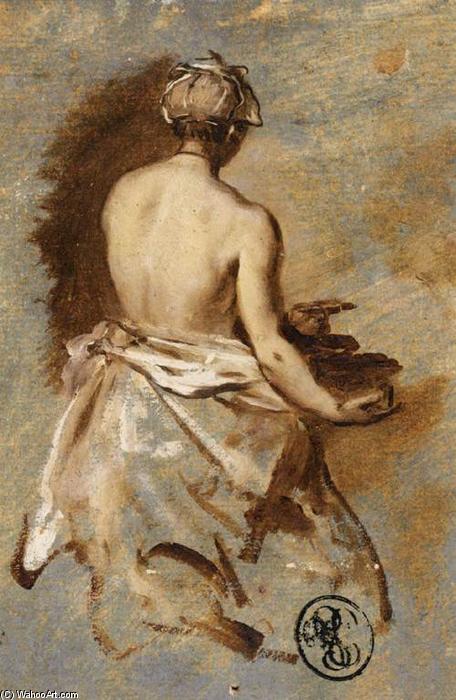
Discover the life & work of Nicolas Poussin, a master of French Classicism. Explore his allegorical paintings, Roman influences, and enduring impact on art history.
Nicolas Poussin: Classicism, Allegory & Order in 17th-Century French Painting
Explore the captivating world of Nicolaes Berchem, a leading Dutch Golden Age painter. Discover his idyllic landscapes, masterful technique & lasting influence on art history.
Nicolaes Berchem: Dutch Golden Age Pastoralism & The Evolution of Landscape Painting
File Information:
File Name: Vleughels, Nicolas - Apelles Painting Campaspe - 1716.jpg
File:Vleughels, Nicolas - Apelles Painting Campaspe - 1716.jpg

License: CC ZERO 1.0
Related Links:
Wikidata:
関連作品




アーティストの略歴
The Convergence of Flemish Heritage and Venetian Grandeur
Nicolas Vleughels stands as a pivotal figure in the artistic landscape of the early Baroque era, embodying a magnificent confluence of Flemish artistic heritage and the burgeoning influence of Venetian painting. Born in Paris in 1668, his very identity was rooted in a lineage of excellence; he was the son of Philippe Vleughels, a renowned Flemish painter who had emigrated from Antwerp. This connection to the great traditions of the North provided Nicolas with a foundation steeped in technical precision and a vibrant community of expatriate artists residing in the French capital.
His formative years were defined by rigorous instruction under the watchful eye of Pierre Mignard, a prominent portraitist whose meticulous realism would leave an indelible mark on Vle.ueghels’ stylistic sensibilities. Yet, it was his profound dedication to mastering the masters that truly shaped his hand. He spent countless hours diligently copying the works of Rubens, the titan of Baroque art, absorbing the expressive power and dynamic energy that characterized the Flemish tradition. This deep reverence for Rubens allowed him to weave a sense of muscularity and life into his compositions, even as he sought new horizons.
A Transformative Journey Through Italy
Despite early recognition—including securing the second prize in the Académie royale de peinture et de sculpture’s competition in 1694—Vleughels faced the inevitable challenges of establishing a singular voice in a crowded Parisian scene. Driven by an unquenchable ambition, he embarked on a transformative journey to Rome in 1703. This pilgrimage was not merely a change of scenery but a profound artistic awakening. In Italy, he encountered the works of Casper van Wittel, a celebrated vedute painter whose panoramic depictions of landscapes captivated him with their light and spatial depth.
The influence of Venice, however, would become the true cornerstone of his evolution. As he immersed himself in the Venetian atmosphere, the dramatic compositions of Veronese began to resonate deeply within his soul. This encounter catalyzed a stylistic shift toward an opulent color palette and a sense of theatrical staging. His work began to breathe with the warmth and grandeur of the Venetian Baroque, blending the structural integrity of his Flemish roots with a new, luminous splendor that celebrated light and movement.
Legacy and Artistic Maturity
Upon returning to Paris around 1709, Vleughels emerged as an artist of significant prestige, eventually serving as a director at the French Academy in Rome. His later years were marked by a fascinating intersection with the emerging Rococo movement; he forged a profound friendship with Jean-Antoine Watteau, whose delicate and playful style offered a striking contrast to Vleughels’ more classical and dramatic tendencies. This period of his life saw him navigating the transition between the heavy grandeur of the Baroque and the refined elegance of the coming age.
The enduring significance of Nicolas Vleughels lies in his ability to bridge disparate worlds. His oeuvre remains a testament to a life spent synthesizing diverse influences, from the meticulous detail of his Flemish ancestors to the sweeping, colorful drama of the Italian masters. Whether through the serene beauty found in his Study for the Head of Campaspe or the theatrical narrative of Apelles Painting Campaspe, Vleughels continues to captivate the viewer with a unique vision that remains eternally elegant and profoundly classical.
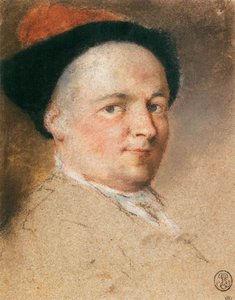
Nicolas Vleughels
1668 - 1737 , France
基本情報
- Artistic Movement Or Style: Baroque
- Artists Or Movements Influenced By This Artist: ['Jean-Antoine Watteau']
- Artists Who Influenced This Artist:
- Pierre Mignard
- Rubens
- Date Of Birth: Paris, France (1668)
- Date Of Death: 1737
- Full Name: Nicolas Vleughels
- Nationality: French
- Notable Artworks:
- Study for the Legs of Campaspe
- Young Woman with a Nude Back Presenting a Bowl
- Place Of Birth: Paris
関連記事

ジャコポ・ティンコレット:至高の25選 – ヴェネツィア巨匠のドラマと光の世界 | ArtsDot
ジャコポ・ティンコレットの至高の25選。ドラマと光の世界を彩るヴェネツィア派巨匠の名画を紐解きます。ルネサンス絵画からバロック絵画まで、ArtsDotで高品質な複製画やインテリアアートを見つけましょう。傑作コレクションをオンラインで探求してください。

バロックのドラマ:現代のインテリアに壮麗さと情感を取り込む
バロック様式の歴史、絵画、家具の魅力をご紹介。ArtsDotでは、高品質な油絵複製やカスタムポートレートをご提供し、現代のインテリアに壮麗さと情感を取り入れます。アートコンサルテーションも承ります。

Giclée Prints: Archival Quality & Aesthetic Nuances for the Discerning Collector
Explore the world of giclée prints with ArtsDot. Learn about archival quality, aesthetic nuances & investment potential. Expert guidance for discerning art collectors seeking museum-quality reproductions and lasting value.

Echoes of Time: Exploring the Enduring Appeal & Historical Context of Vintage Art Prints
Explore the captivating world of vintage art prints! Discover their history, collecting tips & enduring appeal. Expert insights on chromolithography and building a legacy collection with ArtsDot.

The Enduring Legacy of Fine Art Prints: Technique, History & Aesthetic Impact
Explore the rich history & techniques of fine art prints. Discover investment potential, assess authenticity, and learn how to preserve your collection with expert guidance. Trusted insights for discerning collectors.