

 プレビュー
プレビュー
 プリントを購入
 シェアする
シェアする シェアする
シェアする
 詳細を見る
詳細を見る

 ダウンロード
 似ている作品
 X線調査
X線調査 スライドショー
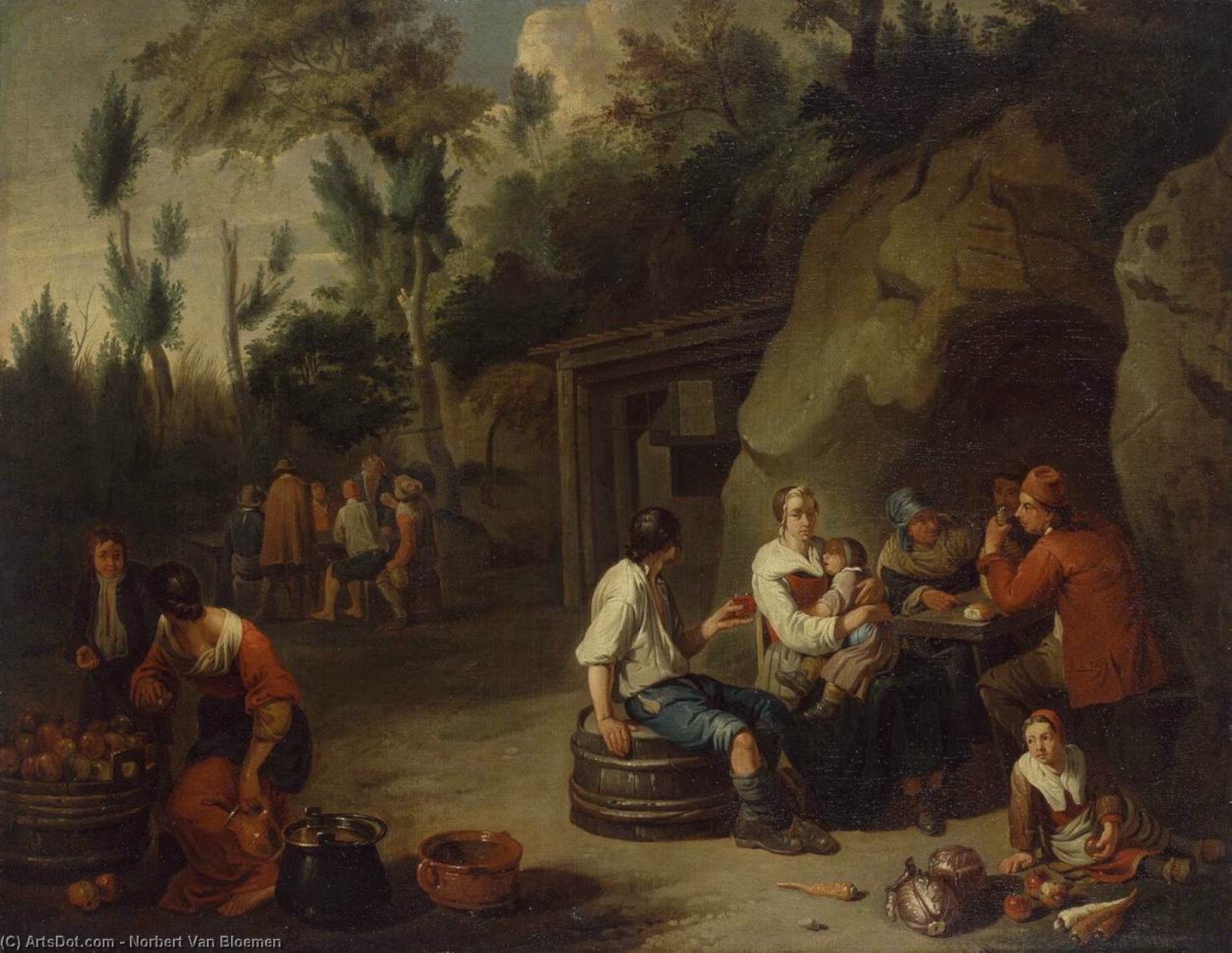
Peasant Family Sitting at a Table
 Oil On Canvas
- WallArt
- Flemish Baroque
 1700
1700 66.0 x 80.0 cm
 エルミタージュ美術館
 詳細を見る
詳細を見る




P118B $10

P118H $10

P118W $10

P438Z $10

P508JH $12

P508YH $12

P805H $10

P805Z $10

P919BZ $10

P919G $10

P919XJ $10

P959ZH $10

P968JZ $12

W106C $8

W218G $10

W218JH $8

W218Y $10

W307PJ $10

W316G $10

W316PJ $8

W316Y $10

W398PJ $8

W4111J $10

W500HY $15

W500JH $15

W692G $12

W849H $8

W940BG $15

W953PJ $8




作品のオリジナル比率に合わせた、当店の規定サイズからお選びください。

特定のフレームやスペースに合わせて、ご希望のサイズをご入力いただけます。選択されたサイズが元の画像の比率と異なる場合、アートワークをトリミングするか、手描きで要素を追加して絵画を拡張いたします。デジタルモックアップ を制作し、制作開始前にご確認(承認)をいただきます。
画面上のプレビューは、実際のトリミングや拡張を正確に反映しているものではありません。最終的な構図は、モックアップによってのみ正確にご確認いただけます。
カスタムサイズもご利用いただけますが、元の比率を維持するためには、あらかじめ用意されたリストからサイズを選択することをお勧めいたします。
ご注文後、ArtsDot.com チームより詳細な指示をお送りするとともに、仕上がりイメージ(モックアップ)をご提供いたします。


 ガラスオプションは、110cm未満のサイズでのみご利用いただけます。

Peasant Family Sitting at a Table
複製技法
複製画のサイズ
-


合計金額
$ 263
作品解説
A Moment of Rustic Harmony: Exploring Norbert van Bloemen’s “Peasant Family Sitting at a Table”
Norbert van Bloemen's "Peasant Family Sitting at a Table," painted around 1700, isn’t merely a depiction of a domestic scene; it’s a carefully constructed tableau brimming with quiet dignity and the subtle promise of shared sustenance. This oil-on-canvas work, measuring a modest 66 x 80 cm, resides within the esteemed collection of the Hermitage Museum in St. Petersburg, a testament to its enduring artistic merit. Van Bloemen, a pivotal figure bridging the traditions of Flemish realism with the burgeoning Italianate aesthetic known as Bamboccianti – artists who celebrated rural life and landscapes – masterfully captures a fleeting moment of familial connection within a humble setting.
The scene unfolds in what appears to be a simple farmhouse interior. A family, composed of men, women, and children, gathers around a sturdy wooden table laden with bowls and platters. The arrangement isn’t opulent; rather, it speaks to a life lived close to the earth, where abundance is found not in extravagant displays but in the shared experience of a meal. The figures themselves are rendered with a remarkable degree of naturalism – their faces etched with the marks of honest labor, their clothing practical and unadorned. Yet, Van Bloemen imbues them with an undeniable warmth and humanity, suggesting a deep-seated sense of belonging and mutual affection.
The Bamboccianti Influence: Landscape and Rural Life
Van Bloemen’s work firmly places him within the circle of Bamboccianti painters. This movement, originating in Florence during the early 17th century, championed a shift away from the grand historical and mythological subjects favored by earlier generations. Instead, Bamboccianti focused on scenes of rural life – peasants working their fields, celebrating festivals, or simply enjoying moments of quiet contemplation. Van Bloemen’s painting echoes this sensibility through its emphasis on the everyday lives of ordinary people, presented with a sensitivity to light, color, and atmosphere. The background, though somewhat indistinct, hints at a rolling landscape—a subtle nod to the importance of the natural world in shaping their existence.
Notably, the composition draws inspiration from earlier works like Jacob Jordaens’ “The Satyr and the Peasant,” a fable depicting a satyr who attempts to trick a peasant by offering him hot and cold food simultaneously. While not explicitly illustrating the fable, Van Bloemen captures a similar dynamic – a sense of cautious trust and reciprocal exchange. The family's interaction suggests a quiet understanding, a recognition that true value lies not in material possessions but in human connection.
Technical Details & Historical Context
Van Bloemen’s technique is characterized by its meticulous attention to detail and his skillful use of light and shadow. He employs a rich palette of earthy tones – browns, ochres, and greens – that evoke the textures of wood, cloth, and soil. The brushstrokes are generally smooth and blended, creating a sense of depth and realism. Born in Antwerp in 1670 and passing away in Amsterdam in 1746, Van Bloemen’s career spanned decades, allowing him to absorb influences from both the Flemish tradition and the burgeoning artistic currents of the Dutch Republic. His work reflects this synthesis – a harmonious blend of meticulous observation and expressive emotion.
The painting's creation coincides with a period of significant social and economic change in Europe. The rise of mercantilism and the growth of urban centers were transforming rural life, leading to increased interest in depicting the lives of peasants and laborers. Van Bloemen’s work can be seen as a response to this shift – a celebration of the enduring values of family, community, and connection to the land.
A Legacy of Rustic Beauty
“Peasant Family Sitting at a Table” is more than just a painting; it's a window into another time. It invites us to pause, reflect, and appreciate the simple pleasures of life – shared meals, family bonds, and the beauty of the natural world. Reproductions of this captivating artwork offer a tangible connection to Van Bloemen’s vision, bringing a touch of rustic harmony to any interior space. Its enduring appeal lies in its ability to evoke a sense of warmth, nostalgia, and quiet contemplation—qualities that continue to resonate with viewers today.
関連作品


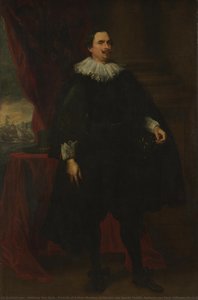
アーティストの略歴
The Legacy of Norbert van Bloemen: A Synthesis of North and South
In the grand tapestry of the Baroque era, few artists managed to weave together the rugged realism of the Low Countries with the sun-drenched elegance of Italy as seamlessly as Norbert van Bloemen. Born in Antwerp in 1670, a city then pulsating with artistic vitality, van Bloemen was destined for a life shaped by both familial tradition and international wanderlust. As the younger brother of the renowned painters Pieter and Jan Frans van Bloemen, his very foundation was laid within a lineage of masters. This early immersion in the Flemish tradition provided him with a technical rigor and an eye for detail that would become the hallmark of his later, more cosmopolitan works. His upbringing was not merely about learning brushstrokes; it was about inheriting a visual language of texture, light, and human emotion.
The trajectory of van Bloemen’s life took a transformative turn as he moved toward the Mediterranean, eventually finding himself in the heart of the Roman art scene. It was here that his style underwent a profound metamorphosis. Influenced by the Bamboccianti—a group of Dutch and Flemish painters in Rome who specialized in scenes of everyday life—he began to infuse his compositions with an Italianate charm. This period of his life is perhaps best encapsulated by his association with the Bentvueghels, a spirited society of artists where he adopted the nickname 'cefalus' or 'cephalos'. This moniker, a testament to his integration into the Roman artistic brotherhood, reflects a period of intense creative exchange and the blending of Northern observational precision with Southern atmospheric warmth.
Mastery of Genre and the Beauty of the Mundane
Van Bloemen’s oeuvre is a captivating exploration of the human condition, often found in the quiet, unadorned moments of rural existence. He possessed a rare ability to elevate the mundane into the monumental, turning simple peasant gatherings into profound studies of light and companionship. His works frequently feature themes of domesticity and communal life, rendered with a delicate touch that avoids sentimentality in favor of authentic realism. Through his brush, we encounter scenes such as:
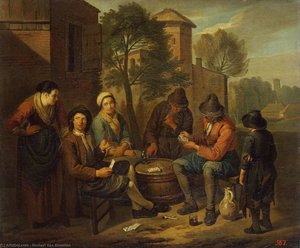
- Peasants Playing Cards: A vibrant display of camaraderie where the artist utilizes the interplay of shadow and light to capture the lively energy of a shared game, blending Flemish detail with an Italian sense of movement.
- Peasant Family Sitting at a Table: An intimate portrayal of togetherness, where the warmth of a shared meal is communicated through the soft textures of clothing and the gentle glow of a domestic interior.
- Interior with a Man and a Woman Smoking: A more contemplative genre scene that showcases his mastery of atmosphere, capturing a quiet moment of conversation that feels both timeless and deeply personal.
Technically, van Bloemen was a master of light. He understood how to use the chiaroscuro techniques prevalent in the Baroque period to direct the viewer's eye, creating depth and drama within even the most humble settings. His landscapes, while often serving as backdrops for his figures, possess an idealized beauty that speaks to the influence of Italianate aesthetics, providing a luminous stage for the rustic dramas unfolding within them.
Historical Significance and Artistic Enduring Spirit
As the 18th century progressed, van Bloemen’s influence traveled with him from Italy to the Dutch Republic, marking him as a truly pan-European artist. His ability to navigate different cultural landscapes allowed him to maintain a relevance that transcended borders. He did not merely imitate the styles of the South; he synthesized them into something uniquely his own—a style that respected the gritty honesty of his Flemish roots while embracing the poetic light of the Italian sun.
Today, the works of Norbert van Bloemen serve as vital historical documents of a period defined by movement and cultural fusion. He remains a pivotal figure for understanding the evolution of genre painting and the way in which the Bamboccianti style helped bridge the gap between Northern realism and Southern classicism. His legacy lives on in every brushstroke that captures the dignity of the common man and the enduring beauty of the natural world, reminding us that true artistry lies in the ability to find the extraordinary within the ordinary.
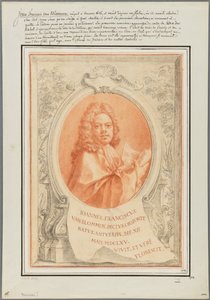
Norbert van Bloemen
1670 - 1746 , Belgium
基本情報
- Artistic Movement Or Style: Italianizing landscapes & Bamboccianti genre scenes
- Artists Or Movements Influenced By This Artist: ['Dutch Golden Age']
- Artists Who Influenced This Artist: ['Pieter van Bloemen']
- Date Of Birth: Antwerp, Belgium (1670)
- Date Of Death: ca. 1746
- Full Name: Norbert van Bloemen
- Nationality: Flemish
- Notable Artworks:
- Interior with a Man and a Woman Smoking
- Self portrait
- Genre Scene
- Place Of Birth: Antwerp
関連記事

レンブラント傑作25選:光と影の巨匠、魂を揺さぶる名画の世界 | ArtsDot
レンブラントの傑作25選。光と影の魔術師が描いた魂を揺さぶる名画の世界へ。美術史に残る自画像、夜警、宗教画…ArtsDotで高品質なアートプリントやインテリアアートをお楽しみください。コレクションはこちら→

Early Netherlandish Masters: 10 Paintings That Revolutionized Art & Decor
Journey into the world of Early Netherlandish painting! Explore 10 masterpieces by Jan van Eyck, Rogier van der Weyden & more. Discover stunning detail, symbolism & Renaissance art for your home decor. Find museum-quality reproductions on ArtsDot.com
Early Netherlandish Masters: 10 Paintings That Revolutionized Art & Decor
Journey into the Early Netherlandish Renaissance! Explore 10 iconic paintings by Jan van Eyck, Rogier van der Weyden & more. Discover stunning detail, symbolism, and oil painting techniques. Find museum-quality art reproductions for your home at ArtsDot.com.
Charles-André van Loo: A Study in Rococo Portraiture & the French Court's Artistic Dynamics
Explore the elegant world of Charles-André van Loo, a master of Rococo portraiture at the French court. Discover his life, techniques, and enduring influence on 18th-century art. Hand-painted reproductions available.
Hugo van der Goes: Devotion, Innovation & the Psychological Depth of Early Netherlandish Painting
Explore the revolutionary art of Hugo van der Goes – a master of Early Netherlandish painting renowned for his dramatic realism, psychological depth & profound influence on Renaissance artists. Discover his iconic works and lasting legacy.

