

 プレビュー
プレビュー
 プリントを購入
 シェアする
シェアする シェアする
シェアする
 詳細を見る
詳細を見る

 ダウンロード
 似ている作品
 X線調査
X線調査 スライドショー
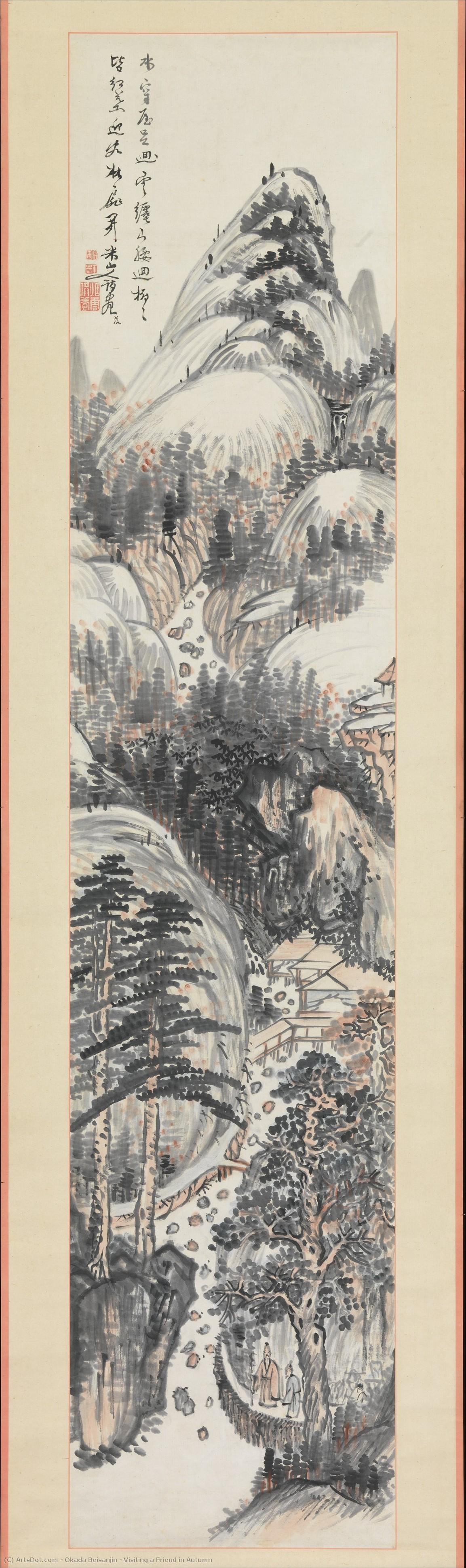
Visiting a Friend in Autumn
 136.0 x 29.0 cm
 詳細を見る
詳細を見る




































作品のオリジナル比率に合わせた、当店の規定サイズからお選びください。

特定のフレームやスペースに合わせて、ご希望のサイズをご入力いただけます。選択されたサイズが元の画像の比率と異なる場合、アートワークをトリミングするか、手描きで要素を追加して絵画を拡張いたします。デジタルモックアップ を制作し、制作開始前にご確認(承認)をいただきます。
画面上のプレビューは、実際のトリミングや拡張を正確に反映しているものではありません。最終的な構図は、モックアップによってのみ正確にご確認いただけます。
カスタムサイズもご利用いただけますが、元の比率を維持するためには、あらかじめ用意されたリストからサイズを選択することをお勧めいたします。
ご注文後、ArtsDot.com チームより詳細な指示をお送りするとともに、仕上がりイメージ(モックアップ)をご提供いたします。


 ガラスオプションは、110cm未満のサイズでのみご利用いただけます。

Visiting a Friend in Autumn
複製技法
複製画のサイズ
-


合計金額
$ 263
作品解説
関連作品









アーティストの略歴
A Life Rooted in Rice: The World of Okada Beisanjin
Okada Beisanjin, a name that translates evocatively as “Mountain of Rice,” was born in Hyogo, Japan, in 1744 and passed away in 1820. His life story is one of intriguing duality – beginning not as an artist, but as a rice merchant in Osaka during the Edo period. This early profession profoundly shaped his artistic identity, both literally through the adoption of “Beisanjin” as his *go* (artist’s name) and metaphorically, influencing his grounded aesthetic and connection to the natural world. While documentation from his youth is sparse, it's believed he inherited a family collection of paintings, sparking an early passion that would eventually lead him down a path far removed from commerce. The choice of “Beisanjin” itself hints at this transition; it could be interpreted as a humble acknowledgement of his origins or a respectful nod to the artistic traditions flourishing during the Northern Song dynasty (960-1127), a period he deeply admired.The Embrace of Bunjinga: A Literati Aesthetic
Okada Beisanjin emerged as a significant figure within the *bunjinga* school of painting, a style that resonated with Japan’s intellectual elite. *Bunjinga*, meaning “literati painting,” was directly inspired by the works of Chinese scholar-officials – artists who valued self-cultivation, poetry, calligraphy, and painting as integral parts of a refined life. Unlike more flamboyant styles prevalent at the time, *bunjinga* emphasized simplicity, spontaneity, and an intimate connection with nature. Beisanjin’s early exposure to his family's collection undoubtedly fueled this direction. He wasn’t merely copying forms; he was absorbing a philosophy – one that prioritized inner expression over technical virtuosity. His mentor, Uragami Gyokudō, a painter-musician and close family friend, played a crucial role in guiding Beisanjin toward mastering the nuances of this aesthetic. He studied Chinese ancient paintings meticulously, seeking to understand not just *how* they were painted but *why*.Developing a Unique Voice: Forceful Brushwork and Serene Landscapes
Beisanjin’s artistic journey wasn't one of strict imitation. While deeply rooted in the *bunjinga* tradition, he developed a distinctive style characterized by its forceful brushstrokes and unusual forms. His later works are particularly notable for this quality – a dynamic energy that sets him apart from his contemporaries. He didn’t shy away from bold, expressive lines, creating textures and shapes that feel both spontaneous and deliberate. This technique wasn't simply about visual impact; it was a way of conveying his personal experience of the landscape. His paintings often depict serene scenes – mountains shrouded in mist, winding streams, solitary trees – but they are imbued with a sense of vitality and movement. He excelled in landscape compositions, demonstrating an ability to capture the essence of nature through economy of brushstrokes. A prime example is “Winding Streams and Layered Mountains” (1812), where he masterfully uses ink on paper to evoke a feeling of tranquility and depth.Beyond Painting: Confucian Scholar and Retainer
Okada Beisanjin’s life extended beyond the realm of art. He eventually became a retainer for the Todo domain, serving as their official Confucian teacher. This position further solidified his status as an intellectual figure and likely influenced the philosophical underpinnings of his work. Confucianism emphasizes harmony, balance, and respect for tradition – values that are clearly reflected in his paintings. His role as a teacher suggests he wasn’t simply creating art for aesthetic pleasure; he was also using it as a means of expressing his beliefs and ideals. This dual identity—artist and scholar—is central to understanding the depth and complexity of his oeuvre.Legacy and Historical Significance
Okada Beisanjin's influence on Edo period art is undeniable. He stands as a pivotal figure in the *bunjinga* movement, bridging the gap between traditional Chinese aesthetics and Japanese sensibilities. His forceful brushwork, while initially unconventional, became a hallmark of his style and inspired generations of artists to explore new forms of expression. He demonstrated that artistic mastery wasn’t solely about technical precision but also about conveying personal experience and philosophical understanding. Today, his works are celebrated for their serene beauty, dynamic energy, and profound connection to the natural world, offering a glimpse into the life of a man who seamlessly blended commerce, scholarship, and artistry.- Style: Bunjinga (Literati Painting)
- Key Characteristics: Forceful brushwork, serene landscapes, unusual forms, economy of strokes.
- Influences: Chinese Literati painting, Uragami Gyokudō
- Historical Context: Edo Period Japan (1603-1868)
okada beisanjin
1744 - 1820 , Japan
基本情報
- Artistic Movement Or Style: Bunjinga painting
- Artists Who Influenced This Artist: ['Uragami Gyokudō']
- Date Of Birth: 1744
- Date Of Death: 1820
- Full Name: Okada Beisanjin
- Nationality: Japanese
- Place Of Birth: Hyogo, Japan

