

 プレビュー
プレビュー
 プリントを購入
 シェアする
シェアする シェアする
シェアする
 詳細を見る
詳細を見る

 ダウンロード
 似ている作品
 X線調査
X線調査 スライドショー
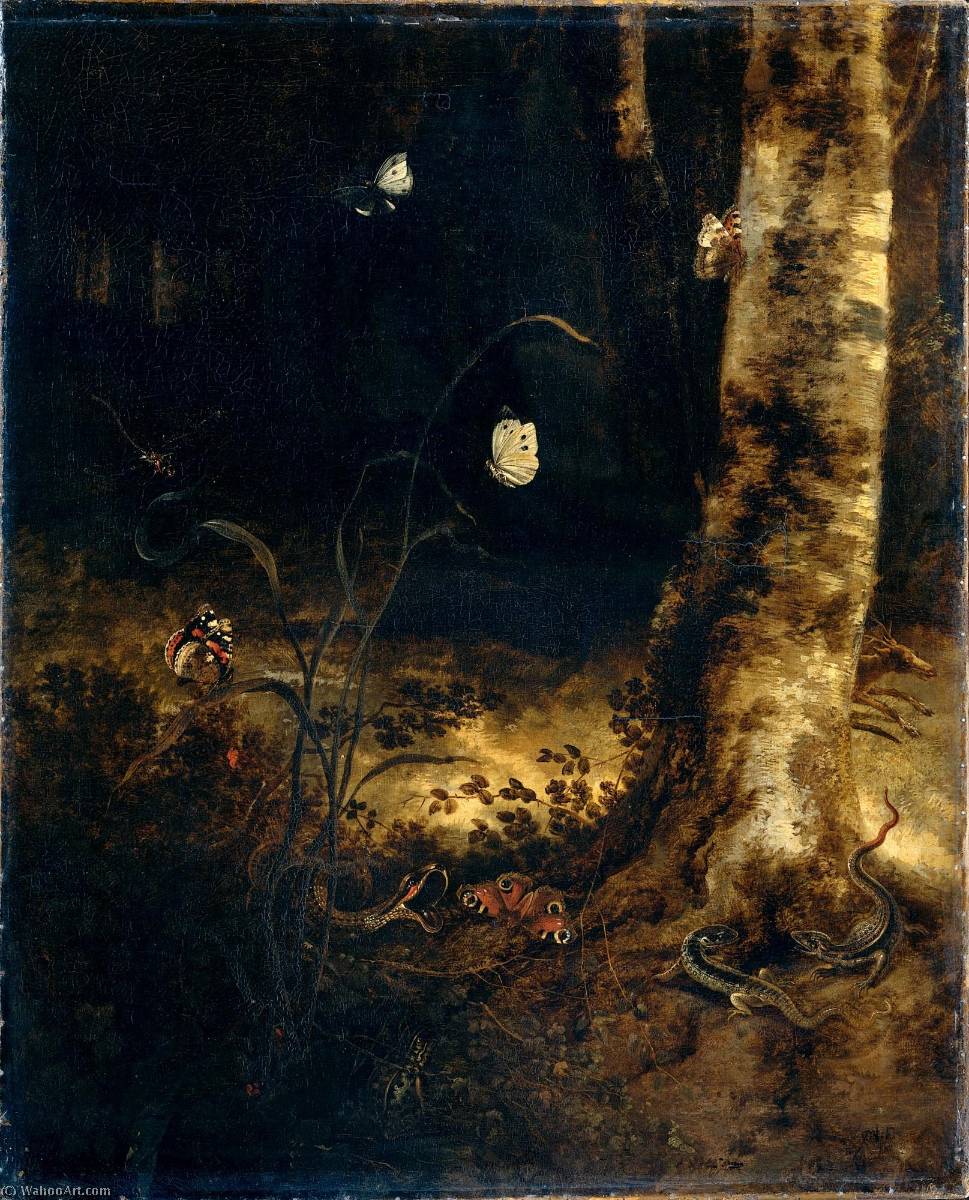
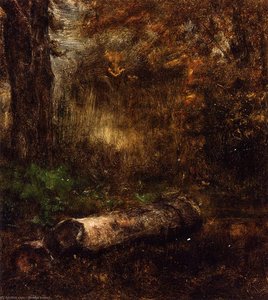
Forest floor still life with butterflies and reptiles


 詳細を見る
詳細を見る




P118B $10

P118H $10

P118W $10

P438Z $10

P508JH $12

P508YH $12

P805H $10

P805Z $10

P919BZ $10

P919G $10

P919XJ $10

P959ZH $10

P968JZ $12

W106C $8

W218G $10

W218JH $8

W218Y $10

W307PJ $10

W316G $10

W316PJ $8

W316Y $10

W398PJ $8

W4111J $10

W500HY $15

W500JH $15

W692G $12

W849H $8

W940BG $15

W953PJ $8




作品のオリジナル比率に合わせた、当店の規定サイズからお選びください。

特定のフレームやスペースに合わせて、ご希望のサイズをご入力いただけます。選択されたサイズが元の画像の比率と異なる場合、アートワークをトリミングするか、手描きで要素を追加して絵画を拡張いたします。デジタルモックアップ を制作し、制作開始前にご確認(承認)をいただきます。
画面上のプレビューは、実際のトリミングや拡張を正確に反映しているものではありません。最終的な構図は、モックアップによってのみ正確にご確認いただけます。
カスタムサイズもご利用いただけますが、元の比率を維持するためには、あらかじめ用意されたリストからサイズを選択することをお勧めいたします。
ご注文後、ArtsDot.com チームより詳細な指示をお送りするとともに、仕上がりイメージ(モックアップ)をご提供いたします。


 ガラスオプションは、110cm未満のサイズでのみご利用いただけます。

Forest floor still life with butterflies and reptiles
複製技法
複製画のサイズ
-


合計金額
$ 263
A Pioneer of Botanical Realism: Exploring Otto Marseus van Schrieck’s Forest Floor Still Life
Otto Marseus van Schrieck stands apart from his contemporaries in the Dutch Golden Age, not for grand narratives or aristocratic portraits but for a singular dedication to capturing the subtle beauty and meticulous detail of the natural world—specifically, the forest floor. Born around 1613 in Nijmegen, Netherlands, he defied convention by prioritizing observation over ostentation, establishing himself as one of the foremost practitioners of botanical realism within his era. While biographical details remain somewhat elusive, Van Schrieck’s artistic vision was undeniably shaped by a profound fascination with scientific inquiry and a desire to represent nature with unparalleled accuracy. This commitment would propel him to become an influential figure in shaping the aesthetic sensibilities of his time, notably inspiring Rachel Ruysch with his pioneering approach to dark, realistic botanical studies.The Art of Observation: Technique and Style
Van Schrieck’s distinctive style is characterized by a masterful blend of chiaroscuro—the dramatic interplay of light and shadow—and painstaking detail. He eschewed idealized representations favored by many artists of the period, opting instead for a brutally honest depiction of decay and decomposition alongside vibrant life forms. This approach wasn't merely stylistic; it reflected a burgeoning interest in anatomy and natural history, fueled by discoveries made during the Renaissance and continuing into the seventeenth century. Like Ruysch, Van Schrieck meticulously dissected specimens—often insects and reptiles—before applying them to canvas with astonishing precision. His brushstrokes are deliberate and controlled, layering pigments to achieve textures that convincingly mimic the surfaces of bark, moss, and damp earth. The resulting paintings possess an unsettling beauty – a captivating juxtaposition of vibrancy and morbidity that compels viewers to confront the cycle of life and death.A Window into Scientific Curiosity
The painting’s historical context is crucial to understanding its significance. During the Golden Age, Dutch scientists were actively engaged in classifying and documenting the natural world, driven by advancements in microscopy and anatomical dissection. Van Schrieck's work aligns perfectly with this intellectual fervor, serving as a visual testament to the era’s fascination with empirical observation. The inclusion of insects—particularly butterflies and reptiles—was not simply decorative; it represented a deliberate effort to illustrate the intricacies of biological specimens. Artists like Ruysch were actively collaborating with scientists, furthering knowledge through artistic representation – a remarkable symbiosis that speaks volumes about the cultural landscape of the time.Symbolism Beneath the Surface: Decay and Transformation
Beyond its technical brilliance, Van Schrieck’s forest floor still life carries profound symbolic weight. The depiction of decaying matter—rotting leaves, withered flowers—is not intended to shock but rather to convey a deeper philosophical message about the inevitability of change and the interconnectedness of all living things. Death is presented as an integral part of the natural cycle, mirroring observations made by scientists studying metamorphosis and decomposition. Yet, amidst this darkness lies beauty – the luminous glow of butterflies fluttering amongst the decaying foliage, highlighting the resilience of life even in its most vulnerable stages. This duality underscores Van Schrieck’s artistic conviction that truth resides not only in portraying observable phenomena but also in exploring their underlying spiritual implications.Emotional Resonance: Capturing the Essence of Nature
Ultimately, Van Schrieck's forest floor still lifes transcend mere visual representation; they evoke a visceral emotional response. The paintings compel viewers to confront mortality while simultaneously appreciating the splendor of the natural world. They capture a mood of quiet contemplation—a feeling of being immersed in an environment untouched by human intervention. This profound connection with nature is achieved through masterful use of color and texture, creating an experience that lingers long after viewing. Like Ruysch’s work, Van Schrieck's paintings invite us to consider the sublime – the awe-inspiring grandeur of creation alongside its inherent fragility.関連作品


アーティストの略歴
A Pioneer of the Dutch Forest Floor: The Life and Art of Otto Marseus van Schrieck
Otto Marseus van Schrieck emerged during the vibrant flourishing of the Dutch Golden Age, a period defined by both remarkable artistic innovation and burgeoning scientific inquiry. Born around 1613 in Nijmegen, Netherlands, Van Schrieck carved a unique niche for himself within the landscape of 17th-century painting—one that focused on the often-overlooked beauty and intricate details of forest undergrowth. While biographical details surrounding his early life remain somewhat scarce, it’s clear he possessed an innate aptitude for meticulous observation and naturalistic representation, qualities that would come to define his artistic career. He wasn't drawn to grand historical narratives or portraits of societal elites; instead, Van Schrieck found inspiration in the humble world beneath our feet—a realm teeming with life, decay, and subtle beauty.From Italy to Amsterdam: A Journey of Artistic Refinement
A pivotal period in Van Schrieck’s development was his sojourn to Italy between 1652 and 1657. He traveled extensively through Rome and Florence, studying alongside prominent painters like Matthias Withoos and Willem van Aelst. This exposure proved transformative, allowing him to absorb new techniques and refine his own distinctive style. In Rome, he became a member of the *Bentvueghels*, a society of Dutch and Flemish artists known for their eccentric nicknames and often boisterous behavior. Van Schrieck’s moniker within this group—"the Snuffelaer” (sniffer)—reveals much about his artistic inclinations; it was bestowed upon him due to his fascination with reptiles and amphibians, creatures that would become recurring motifs in his work. This period wasn't merely a technical education; it fostered an intellectual curiosity and a willingness to explore unconventional subject matter. Following his Italian experience, Van Schrieck briefly served at the court of the Grand Duke of Tuscany before venturing through England and France, eventually settling in Amsterdam in 1664, the same year he married Margarita Gysels, daughter of engraver Cornelius Gysels.A World in Miniature: Themes and Techniques
Van Schrieck’s paintings are immediately recognizable for their dark, atmospheric backgrounds and extraordinarily detailed depictions of flora and fauna. He didn't simply paint flowers or insects; he created immersive worlds—miniature ecosystems teeming with life. Key themes within his oeuvre include the transience of life, the beauty inherent in nature’s details, and a subtle exploration of decay. His compositions frequently feature forest floors covered in mushrooms, decaying leaves, and an array of reptiles (snakes and lizards) and insects. These weren't merely decorative elements; they were symbolic representations of mortality, transformation, and the cyclical nature of existence. He masterfully employed light and shadow to create a sense of depth and realism, drawing viewers into these intimate scenes. He was also one of the first artists known to experiment with *lepidochromy*, a technique involving pressing butterfly wings onto canvases to transfer their iridescent scales—a testament to his innovative spirit and dedication to capturing nature’s delicate beauty.Legacy and Influence: A Lasting Impression on Dutch Still Life
Otto Marseus van Schrieck occupies a unique position within the canon of Dutch Golden Age painting. He pioneered a specialized niche, focusing on subjects that were largely ignored by his contemporaries. His work contributed to the growing interest in botanical illustration and scientific observation during the 17th century, reflecting a broader cultural shift towards empirical inquiry. He influenced a generation of artists, most notably Rachel Ruysch, who would further develop the genre of flower and insect painting with her own distinctive style. Other artists who felt his influence include Willem van Aelst, Antonie van Borssom, Elias van den Broeck, Jacob Marrel, Abraham Mignon, Christiaen Striep, Isac Vromans, Matthias Withoos, and Pieter Withoos. Van Schrieck’s legacy extends beyond direct artistic imitation; he encouraged a deeper appreciation for the natural world and demonstrated the artistic potential of seemingly mundane subjects. He died in Amsterdam in 1678, leaving behind a body of work that continues to captivate audiences with its exquisite detail, atmospheric depth, and profound contemplation of life's ephemeral qualities. His paintings serve as a reminder to look closely at the world around us—to find beauty in the unexpected and to appreciate the intricate interconnectedness of all living things.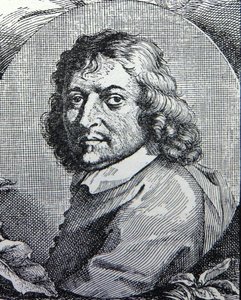
Otto Marseus van Schrieck
1620 - 1678 , Netherlands
基本情報
- Artistic Movement Or Style: Dutch Golden Age painting
- Artists Or Movements Influenced By This Artist:
- Rachel Ruysch
- Willem van Aelst
- Antonie van Borssom
- Artists Who Influenced This Artist:
- Matthias Withoos
- Willem van Aelst
- Date Of Birth: 1620
- Date Of Death: 1678
- Full Name: Otto Marseus van Schrieck
- Nationality: Dutch
- Notable Artworks:
- Wild butterflies and plants...
- Vase of Flowers with Butterflies
- Still Life with Poppy...
- Place Of Birth: Nijmegen, Netherlands
関連記事

黄金世紀の巨匠たち:バロック絵画が彩る10選|ArtsDot
オランダ黄金時代の10大傑作を紐解く!レンブラント、フェルメール…バロック絵画の魅力と時代背景を深く探求。ArtsDotで、至高のアートコレクションと空間演出のヒントを見つけよう。高品質なアートプリントで、お部屋を華やかに。

レンブラント傑作25選:光と影の巨匠、魂を揺さぶる名画の世界 | ArtsDot
レンブラントの傑作25選。光と影の魔術師が描いた魂を揺さぶる名画の世界へ。美術史に残る自画像、夜警、宗教画…ArtsDotで高品質なアートプリントやインテリアアートをお楽しみください。コレクションはこちら→

Golden Age Reflections: Dutch Baroque Painting & Cultural Innovation
Explore the Dutch Golden Age of painting! Discover key artists like Vermeer & ter Borch, their innovative techniques, and the rich cultural context behind these Baroque masterpieces. Learn about collecting & appreciating this iconic art period.
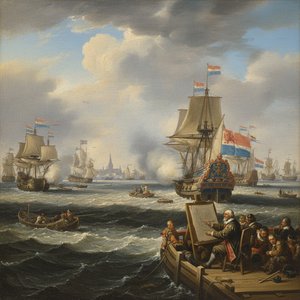
Willem van de Velde the Elder: Master of Maritime Painting & Chronicler of the Dutch Golden Age
Discover the captivating maritime paintings of Willem van de Velde the Elder, a master chronicler of the Dutch Golden Age. Explore his unparalleled realism and lasting influence on naval art history.

Illuminating Innovation: Exploring the Dutch Golden Age of Painting
Explore the Dutch Golden Age of painting with ArtsDot. Discover Rembrandt, Vermeer & other Masters. Learn about key characteristics, iconic artworks, and lasting influence. Expert insights for collectors & enthusiasts.

