

 プレビュー
プレビュー
 プリントを購入
 シェアする
シェアする シェアする
シェアする
 詳細を見る
詳細を見る

 ダウンロード
 似ている作品
 X線調査
X線調査 スライドショー
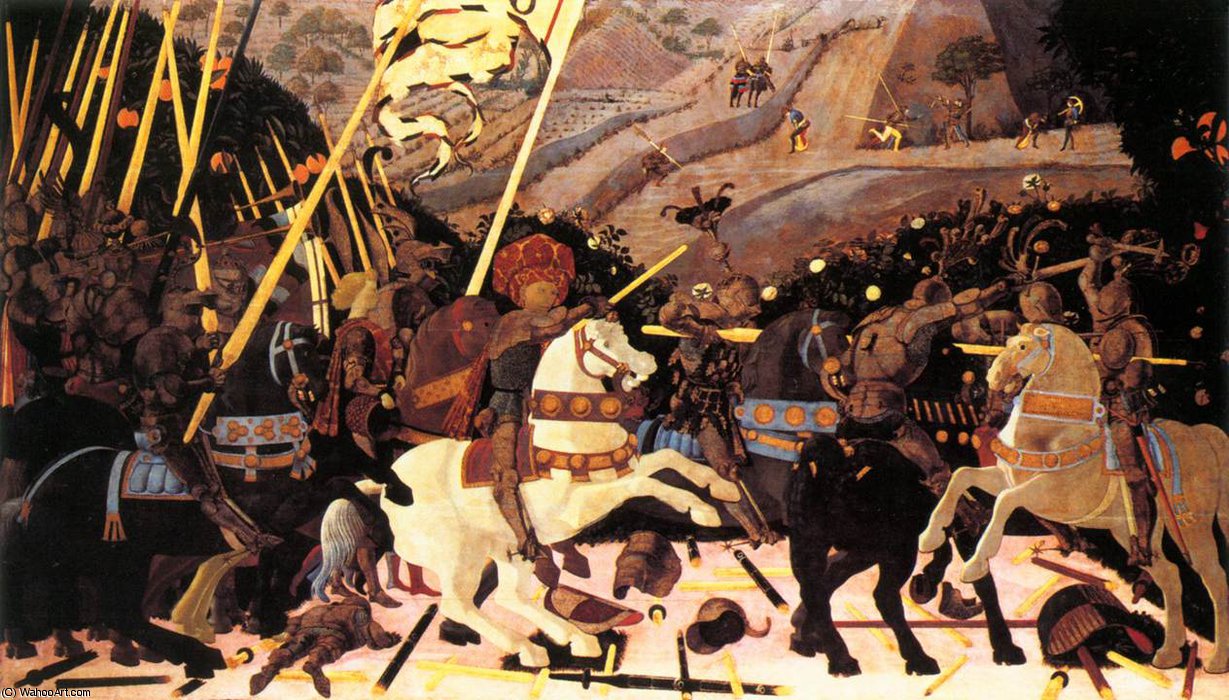
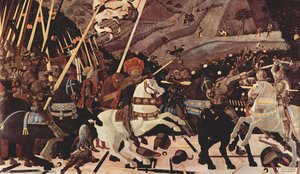
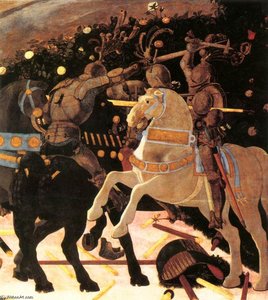
Battle of San Romano - Niccolò da Tolentino


 詳細を見る
詳細を見る
オンラインプレビューをはるかに凌ぐ、高解像度で鮮明なデジタル画像をご購入いただけます。
各ファイルは、社内の専門家が高度なツールと熟練した手作業によるレタッチを用いて、細心の注意を払って準備されています。すべての画像において、卓越した鮮明度、正確な色彩再現性、そして繊細なディテールを保証いたします。
最終ファイルは、プロフェッショナルな編集・印刷環境ですぐにご利用いただけるよう最適化された状態で、72時間以内にメールにてお届けいたします。これは、一流のデザインスタジオ、出版社、ギャラリーから信頼されているものと同等の品質です。
デジタル画像のご注文に付随する特典
高品質なデジタル画像配信を、確かな品質で。
ArtsDot.com を選ぶことは、単に画像を手に入れることではありません。それは、プロの手によって精密に仕上げられ、満足保証が付いた高品質なデジタルアートワークを受け取ることを意味します。ご注文いただいた際に自動的に付随する内容は、以下の通りです:

メールですぐにお届け
ご注文から72時間以内に、高解像度のデジタル画像ファイルがメールでお手元に届きます。すぐにそのままご利用いただけます。

AI技術で最適化されたデジタルファイル
お客様の作品は、高度なAIツールと専門家による手作業の編集を組み合わせてプロフェッショナルに最適化されており、細部のディテール、鮮明さ、そして正確な色再現性を最大限に引き出しています。

一生涯無料の再送サービス
ファイルを誤って削除したり、紛失してしまったりしましたか?ご安心ください。いつでも無料で再送いたします。

輸入手数料は一切かかりません
関税や手数料、配送料を気にすることなく、お気に入りのアートワークをすぐにお楽しみいただけます。デジタルダウンロードは常に免税です。

色彩再現の保証
プロ仕様のツールとカラーマネジメント技術を用いることで、デジタル画像が元の色を最大限に忠実に再現することを保証いたします。

60日間満足保証
ご購入いただいたデジタル画像にご満足いただけない場合は、60日以内であれば、修正または100%の返金(理由を問う必要はありません)をさせていただきます。

100% 返金保証
ご満足いただけない場合は、デジタルファイルを受け取ってから60日以内であれば、理由を問わず全額返金いたします。

まとめ買い割引
3枚購入で10%OFF - 5枚購入で15%OFF - 10枚以上購入で20%OFF。クリエイティブなプロジェクト、ギャラリー、エージェンシーに最適です。
A Triumph of Visionary Perspective: Paolo Uccello’s Battle of San Romano
Paolo Uccello, born Paolo di Dono in 1397 amidst the verdant hills surrounding Florence, stands as a singular beacon within the Early Renaissance—a painter who transcended mere representation to forge an entirely new path for artistic expression. His moniker, “Uccello,” playfully referencing the diminutive bird, speaks volumes about his fascination with avian imagery and foreshadows his dedication to capturing movement and dynamism on canvas. Yet, this whimsical inclination masks a mind rigorously focused on unlocking the mathematical secrets of visual space, striving to translate geometric principles into breathtaking artworks that defied convention. He wasn’t merely an artist; he was a pioneer, a cartographer of perception, meticulously crafting scenes like “The Battle of San Romano” to demonstrate the revolutionary advancements of linear perspective. His formative years were spent under the tutelage of Lorenzo Ghiberti, whose workshop fostered an environment ripe for intellectual exploration and artistic innovation. This mentorship instilled in Uccello not only technical mastery but also a profound appreciation for humanist ideals—a lineage that undoubtedly shaped his worldview and fueled his ambition to elevate painting beyond traditional illusionism. The influence of Brunelleschi’s groundbreaking dome construction at Florence Cathedral served as an undeniable inspiration, prompting Uccello to grapple with the challenge of accurately depicting depth and dimensionality on a flat surface – a feat previously unattainable by artists.The Battle: A Dramatic Rendering of Florentine Military Might
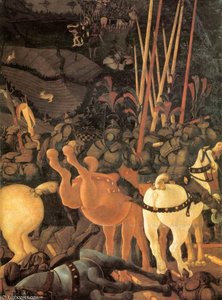
“The Battle of San Romano,” comprising three monumental panels executed in egg tempera on wooden planks, represents more than just a depiction of a pivotal historical event; it embodies Uccello’s audacious experimentation with perspective and his masterful command of color and composition. Commissioned by the Bartolini Salimbeni family between 1435 and 1460—a testament to Florentine patronage during the Renaissance—the painting commemorates the clash between Florentine and Sienese armies at San Romano in 1432, a conflict emblematic of the broader political tensions gripping Tuscany. The scene captures the visceral energy of combat with remarkable precision, showcasing a squadron of horses engaged in fierce melee, their riders locked in desperate struggles for dominance.Technique & Innovation: Mastering Linear Perspective
Uccello’s genius lay not merely in capturing the drama of battle but in fundamentally altering how artists approached spatial representation. He painstakingly calculated vanishing points and orthogonals—lines converging at a distant horizon—creating an illusion of depth that was unprecedented in its time. This meticulous attention to mathematical accuracy distinguishes “The Battle” from earlier Florentine paintings, establishing it as a cornerstone of Renaissance artistic achievement. Furthermore, Uccello employed a vibrant palette dominated by reds, yellows, and blues, skillfully layering colors to convey texture and luminosity—a technique characteristic of Florentine painting during this period. The artist’s deliberate use of color contributes significantly to the overall emotional impact of the artwork, conveying both the brutality of warfare and the grandeur of Florentine ambition.Symbolism & Emotional Resonance: Beyond Mere Representation
Beyond its technical brilliance, “The Battle” resonates with deeper symbolic meanings reflecting humanist ideals prevalent during the Renaissance. The depiction of noble warriors embodies courage, honor, and loyalty—values central to Florentine culture at the time. Moreover, the meticulous detail in portraying the horses’ musculature and movement underscores Uccello's fascination with anatomical accuracy, mirroring the burgeoning interest in scientific observation that characterized the era. Ultimately, “The Battle of San Romano” transcends its historical subject matter, inviting viewers into a realm of visual splendor and intellectual contemplation—a timeless masterpiece demonstrating the transformative power of artistic innovation.関連作品
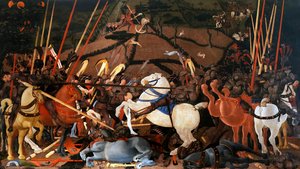
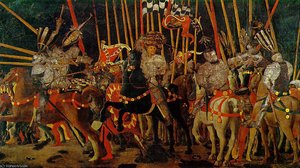
![The Arezzo Cycle - Battle Between Heraclius And Chosroes (detail) [02] — ピエロ・デッラ・フランチェスカ, Renaissance Perspective Depth](/media/artworks/images-thumb/98/34/98347af994d22729e1f9ce1f6365df5b.jpg)
作家の略歴
パオロ・ウッチョーロ:視覚の数学者、ルネサンスの先駆者
1397年、アレッチョ近郊プラトヴェッキオに生まれ、1475年にフィレンツェで生涯を閉じたパオロ・ディ・ドーノ、通称パオロ・ウッチョーロ。彼はルネサンス初期の画家であり、数学者として、絵画における視覚的遠近法への先駆的な取り組みによって、美術史にその名を刻みました。「鳥(Uccello)」という愛称は、彼の動物、特に鳥への愛情と、その鮮やかな描写に対する才能から得られたものです。ウッチョーロの芸術は、単なる絵画技術の習熟にとどまらず、知的な探求心、そして現実世界の認識原理を解き明かそうとする飽くなき好奇心の表れでした。幼少期には理髪師であり外科医でもあった父の影響を受けつつも、フィレンツェの貴族系の母から洗練された美的感覚を育み、1412年から1416年までにはロレンツォ・ギベルティの下で修行し、その後の芸術的発展に大きな影響を与えました。ギベルティの工房での経験は、彼にゴシック様式の特徴である装飾的な優美さと物語の明瞭さを深く理解させましたが、同時に既存の枠組みを超えようとする情熱を燃え上がらせたのです。遠近法の探求:数学的思考と絵画
ウッチョーロの芸術的成長は、単なる技術の習得ではなく、知覚を支配する根本原理に対する飽くなき探究心によって推進されました。彼は数学、特に幾何学と遠近法に没頭し、それらを抽象的な学問としてではなく、現実をより真実に表現するための道具として捉えました。フィリッポ・ブルネレスキが線形遠近法の発見者であることはよく知られていますが、ウッチョーロはそれを絵画に応用した最初の芸術家の一人であり、消失点や直交線を丹念に計算することで、これまで存在しなかった奥行きを創り出しました。これは単なる技術的な正確さではなく、物語の構成、劇性の強調、そして作品全体に秩序と知的な厳格さを与える手段だったのです。ジョルジョ・ヴァサリが記したように、ウッチョーロは遠近法への執着心から夜遅くまで研究に没頭し、消失点や空間関係について熟考していました。この献身こそが、芸術を革命的に変革し、後世の芸術家たちに道を開いたのです。幻想の傑作:主要作品と様式
ウッチョーロの作品群は比較的規模は小さいものの、ゴシック様式の優美さとルネサンスの革新性を融合させた独特なスタイルによって特徴づけられます。サン・ロマノの戦いシリーズは、おそらく彼の最も有名な業績であり、フィレンツェの勝利を記念するために依頼された三枚連作です。これらの絵画は単なる戦争の描写ではなく、渦巻く人物、断片化された鎧、劇的に短縮された槍で満たされたダイナミックな構成です。鮮やかな色彩と丹念に計算された遠近法によって、息を呑むような奥行きが創出されています。聖母マリア誕生は、浅い空間の中に説得力のある奥行きを作り出すウッチョーロの線形遠近法の習熟度を示し、聖ジョージと竜は、大胆な色彩と様式化された形態によって特徴づけられた伝説的な聖人の印象的な描写を提供しています。ノアの洪水と箱舟のような作品においても、ウッチョーロの建築的細部への関心と複雑な構成が顕著に現れています。彼のスタイルは常に以下の要素を反映しています:- 鮮やかな色彩と大胆な色の使用
- 劇的な効果のためにしばしば限界まで押し広げられた線形遠近法への重点
- ゴシック美術を彷彿させる様式化された人物と装飾的なパターン
- 幾何学的形態と空間関係に対する深い関心
遺産と影響:美術史における永続的な意義
パオロ・ウッチョーロの貢献は、彼の個々の絵画を超えて、美術史全体を大きく変えました。彼による遠近法の先駆的な探求は、数えきれないほどの芸術家たちに影響を与え、その後の芸術の流れを根本的に変えました。アルブレヒト・デューラーのようなドイツの版画家であり画家もまた、ウッチョーロの作品から大きなインスピレーションを受け、遠近法の研究に専念し、その原理を自身の芸術的実践に取り入れました。ウッチョーロのスタイルは、彼のキャリアを通してやや型にはまらないものでありましたが(ゴシック様式の洗練とルネサンスの革新性のユニークな融合)、彼の空間と形態に対する画期的なアプローチは、西洋美術の発展における重要な人物としての地位を確固たるものにしました。1475年にフィレンツェで亡くなった彼は、美しい絵画だけでなく、知的な好奇心と芸術的勇気の遺産を残し、今もなお私たちを魅了し続けています。彼の作品は、私たちが目にするものが何であるかだけでなく、どのように見るのかという理解こそが真の芸術の本質であることを思い出させてくれます。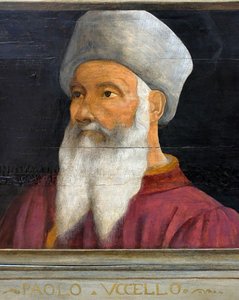
ウッチョロ
1397 - 1475 , イタリア
プロフィール概要
- フルネーム: パオロ・ウッチェロ
- 主な作品:
- サン・ロマーノの戦い
- 生 Virgin
- 聖ジョージと竜
- 出身地: プラートヴェッキョ、イタリア
- 国籍: イタリア
- 影響を与えたアーティスト: ['アルブレヒト・デューラー']
- 影響を受けたアーティスト:
- ロレンツォ・ギベルティ
- ドナテッロ
- 死亡年月日: 1475年
- 生年月日: 1397年
- 芸術運動/スタイル: 初期ルネサンス

