 プレビュー
プレビュー
 プリントを購入
 シェアする
シェアする シェアする
シェアする
 詳細を見る
詳細を見る

 ダウンロード
 似ている作品
 X線調査
X線調査 スライドショー
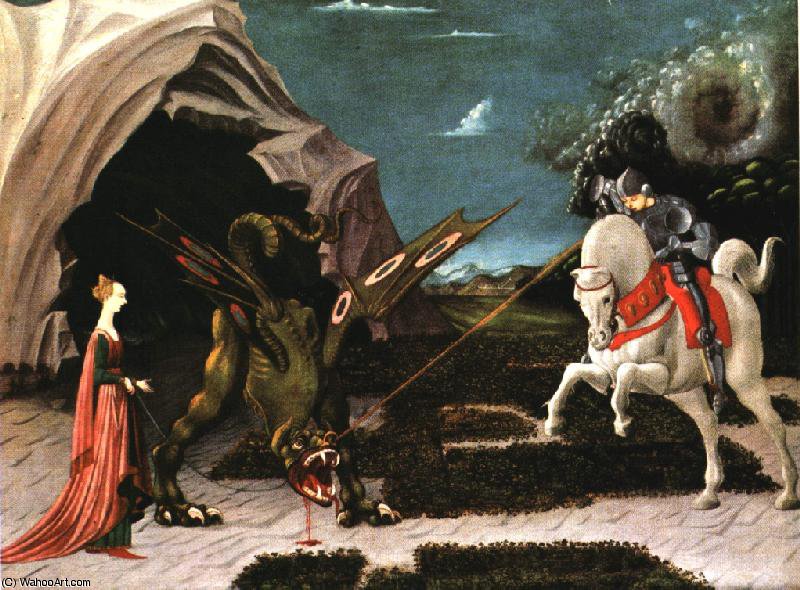
St george and the dragon,1456, nglondon


 詳細を見る
詳細を見る




P118B $10

P118H $10

P118W $10

P438Z $10

P508JH $12

P508YH $12

P805H $10

P805Z $10

P919BZ $10

P919G $10

P919XJ $10

P959ZH $10

P968JZ $12

W106C $8

W218G $10

W218JH $8

W218Y $10

W307PJ $10

W316G $10

W316PJ $8

W316Y $10

W398PJ $8

W4111J $10

W500HY $15

W500JH $15

W692G $12

W849H $8

W940BG $15

W953PJ $8




作品のオリジナル比率に合わせた、当店の規定サイズからお選びください。

特定のフレームやスペースに合わせて、ご希望のサイズをご入力いただけます。選択されたサイズが元の画像の比率と異なる場合、アートワークをトリミングするか、手描きで要素を追加して絵画を拡張いたします。デジタルモックアップ を制作し、制作開始前にご確認(承認)をいただきます。
画面上のプレビューは、実際のトリミングや拡張を正確に反映しているものではありません。最終的な構図は、モックアップによってのみ正確にご確認いただけます。
カスタムサイズもご利用いただけますが、元の比率を維持するためには、あらかじめ用意されたリストからサイズを選択することをお勧めいたします。
ご注文後、ArtsDot.com チームより詳細な指示をお送りするとともに、仕上がりイメージ(モックアップ)をご提供いたします。


 ガラスオプションは、110cm未満のサイズでのみご利用いただけます。

St george and the dragon,1456, nglondon
複製技法
複製画のサイズ
-


合計金額
$ 263
A Florentine Dance of Space and Myth
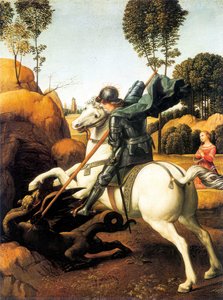
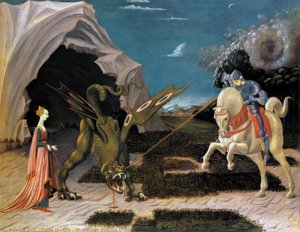
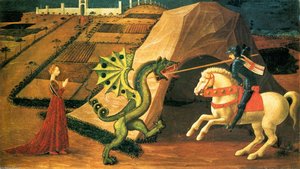
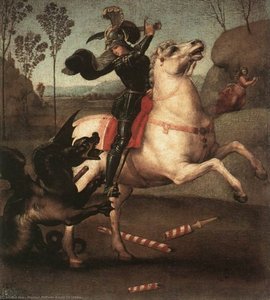
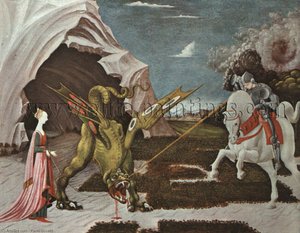
Paolo Uccello’s *Saint George and the Dragon* stands as an extraordinary testament to the artistic ambition of the Early Renaissance, embodying not merely visual beauty but a radical reimagining of perspective—a feat that cemented Uccello's reputation as one of Florence’s most daring innovators. Painted between 1435 and 1440, this tempera masterpiece resides in the National Gallery of London, offering visitors an unparalleled glimpse into the mind of a painter who wrestled with fundamental questions about how we perceive reality. Born Paolo di Dono in Pratovecchio around 1397, Uccello’s upbringing was marked by both practical skills – his father practiced medicine – and familial connections to Florentine nobility. He honed his artistic talents under Lorenzo Ghiberti's mentorship at the Baptistery workshop, absorbing the influence of Brunelleschi’s groundbreaking dome project and immersing himself in the burgeoning humanist scholarship that championed reason and observation. This intellectual fervor fueled Uccello’s relentless pursuit of scientific accuracy within the realm of art, a characteristic that distinguishes him from many of his contemporaries. The painting itself depicts Saint George triumphantly slaying a fearsome dragon before a fortified castle—a narrative drawn directly from Christian legend, symbolizing the victory of good over evil and divine grace over pagan darkness. However, Uccello didn’t simply recount the tale; he transformed it into a meticulously constructed illusion of depth—a technique known as *prospettiva artificiale*, or “artificial perspective.” Unlike traditional depictions where figures appear flattened on a single plane, Uccello employed mathematical calculations and geometric projections to create an astonishingly convincing sense of three-dimensionality. This ambitious endeavor was partly inspired by Leon Battista Alberti’s treatise on perspective, demonstrating Uccello's engagement with the latest developments in Renaissance thought.- Technique: Tempera on wood panel – a durable medium favored for altarpieces and monumental paintings.
- Style: Early Renaissance – characterized by idealized figures, balanced compositions, and an emphasis on classical ideals of beauty.
- Composition: The scene unfolds across multiple receding planes—the castle walls dominate the background, followed by a lower terrace and finally, Saint George and his horse in the foreground. This layering creates a dramatic visual hierarchy.
- Historical Context: Produced during Lorenzo Medici’s reign—a period marked by political stability and cultural flourishing.
- Symbolism: Represents the struggle between good and evil, divine grace and pagan darkness; embodies Florentine pride and ambition.
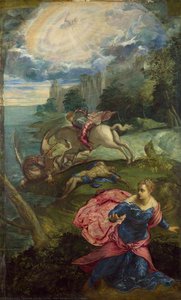
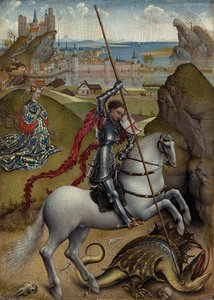
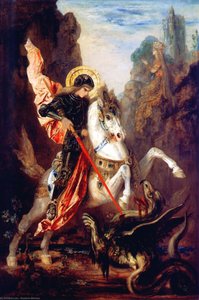
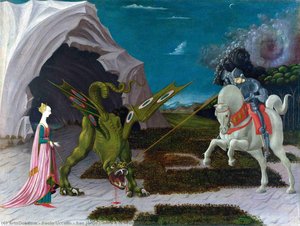
アーティストの略歴
パオロ・ウッチョーロ:視覚の数学者、ルネサンスの先駆者
1397年、アレッチョ近郊プラトヴェッキオに生まれ、1475年にフィレンツェで生涯を閉じたパオロ・ディ・ドーノ、通称パオロ・ウッチョーロ。彼はルネサンス初期の画家であり、数学者として、絵画における視覚的遠近法への先駆的な取り組みによって、美術史にその名を刻みました。「鳥(Uccello)」という愛称は、彼の動物、特に鳥への愛情と、その鮮やかな描写に対する才能から得られたものです。ウッチョーロの芸術は、単なる絵画技術の習熟にとどまらず、知的な探求心、そして現実世界の認識原理を解き明かそうとする飽くなき好奇心の表れでした。幼少期には理髪師であり外科医でもあった父の影響を受けつつも、フィレンツェの貴族系の母から洗練された美的感覚を育み、1412年から1416年までにはロレンツォ・ギベルティの下で修行し、その後の芸術的発展に大きな影響を与えました。ギベルティの工房での経験は、彼にゴシック様式の特徴である装飾的な優美さと物語の明瞭さを深く理解させましたが、同時に既存の枠組みを超えようとする情熱を燃え上がらせたのです。遠近法の探求:数学的思考と絵画
ウッチョーロの芸術的成長は、単なる技術の習得ではなく、知覚を支配する根本原理に対する飽くなき探究心によって推進されました。彼は数学、特に幾何学と遠近法に没頭し、それらを抽象的な学問としてではなく、現実をより真実に表現するための道具として捉えました。フィリッポ・ブルネレスキが線形遠近法の発見者であることはよく知られていますが、ウッチョーロはそれを絵画に応用した最初の芸術家の一人であり、消失点や直交線を丹念に計算することで、これまで存在しなかった奥行きを創り出しました。これは単なる技術的な正確さではなく、物語の構成、劇性の強調、そして作品全体に秩序と知的な厳格さを与える手段だったのです。ジョルジョ・ヴァサリが記したように、ウッチョーロは遠近法への執着心から夜遅くまで研究に没頭し、消失点や空間関係について熟考していました。この献身こそが、芸術を革命的に変革し、後世の芸術家たちに道を開いたのです。幻想の傑作:主要作品と様式
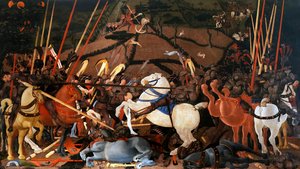
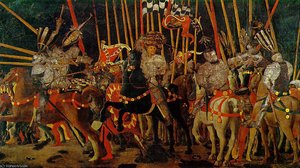
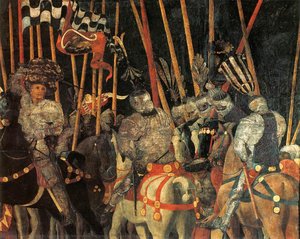
ウッチョーロの作品群は比較的規模は小さいものの、ゴシック様式の優美さとルネサンスの革新性を融合させた独特なスタイルによって特徴づけられます。サン・ロマノの戦いシリーズは、おそらく彼の最も有名な業績であり、フィレンツェの勝利を記念するために依頼された三枚連作です。これらの絵画は単なる戦争の描写ではなく、渦巻く人物、断片化された鎧、劇的に短縮された槍で満たされたダイナミックな構成です。鮮やかな色彩と丹念に計算された遠近法によって、息を呑むような奥行きが創出されています。聖母マリア誕生は、浅い空間の中に説得力のある奥行きを作り出すウッチョーロの線形遠近法の習熟度を示し、聖ジョージと竜は、大胆な色彩と様式化された形態によって特徴づけられた伝説的な聖人の印象的な描写を提供しています。ノアの洪水と箱舟のような作品においても、ウッチョーロの建築的細部への関心と複雑な構成が顕著に現れています。彼のスタイルは常に以下の要素を反映しています:- 鮮やかな色彩と大胆な色の使用
- 劇的な効果のためにしばしば限界まで押し広げられた線形遠近法への重点
- ゴシック美術を彷彿させる様式化された人物と装飾的なパターン
- 幾何学的形態と空間関係に対する深い関心
遺産と影響:美術史における永続的な意義
パオロ・ウッチョーロの貢献は、彼の個々の絵画を超えて、美術史全体を大きく変えました。彼による遠近法の先駆的な探求は、数えきれないほどの芸術家たちに影響を与え、その後の芸術の流れを根本的に変えました。アルブレヒト・デューラーのようなドイツの版画家であり画家もまた、ウッチョーロの作品から大きなインスピレーションを受け、遠近法の研究に専念し、その原理を自身の芸術的実践に取り入れました。ウッチョーロのスタイルは、彼のキャリアを通してやや型にはまらないものでありましたが(ゴシック様式の洗練とルネサンスの革新性のユニークな融合)、彼の空間と形態に対する画期的なアプローチは、西洋美術の発展における重要な人物としての地位を確固たるものにしました。1475年にフィレンツェで亡くなった彼は、美しい絵画だけでなく、知的な好奇心と芸術的勇気の遺産を残し、今もなお私たちを魅了し続けています。彼の作品は、私たちが目にするものが何であるかだけでなく、どのように見るのかという理解こそが真の芸術の本質であることを思い出させてくれます。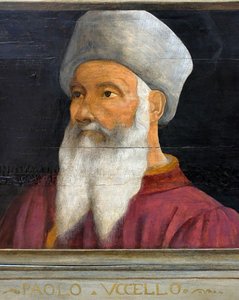
ウッチョロ
1397 - 1475 , イタリア
基本情報
- フルネーム: パオロ・ウッチェロ
- 主な作品:
- サン・ロマーノの戦い
- 生 Virgin
- 聖ジョージと竜
- 出身地: プラートヴェッキョ、イタリア
- 国籍: イタリア
- 影響を与えたアーティスト: ['アルブレヒト・デューラー']
- 影響を受けたアーティスト:
- ロレンツォ・ギベルティ
- ドナテッロ
- 死亡年月日: 1475年
- 生年月日: 1397年
- 芸術運動/スタイル: 初期ルネサンス
関連記事

ジョルジュ・ブラック傑作25選:革新的なキュビスムの世界と装飾への誘い
ジョルジュ・ブラックの傑作25選。キュビスムを代表する画家、その革新的な色彩と技法に迫ります。名画から知られざる逸品まで、美術史に残る作品群をArtsDot.comで鑑賞。お部屋を彩るアートプリントも多数ご用意。今すぐオンラインでコレクションをご覧ください。

ジョルジュ・スーラ傑作25選:光と色彩の科学が織りなす芸術の世界|ArtsDot
ジョルジュ・スーラの傑作25選。点描画の光と色彩、印象派から新印象派へ—ArtsDotで美術史を紐解き、リビングやダイニングを彩る高品質なアートプリントを見つけましょう。セーラ作品集をオンラインで鑑賞ください。
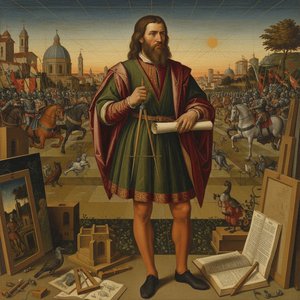
Paolo Uccello: Pioneering Perspective & the Renaissance Pursuit of Visual Truth
Explore the revolutionary art of Paolo Uccello, a Florentine Renaissance master who pioneered perspective. Discover his iconic paintings like 'St. George & The Dragon' and learn about his lasting influence on art history.
Discover the Divine: Inspiring Saint Anthony Artworks to Elevate Your Home Decor
Transform your home with the profound beauty of Saint Anthony artworks. Explore exquisite Baroque reproductions by Murillo and Zurbarán, hand-painted on 100% cotton canvas to bring divine serenity and timeless elegance to your interior design.
Daniel Ridgway Knight: A Study in Victorian Genre Painting & Rural Idealism
Explore the captivating world of Daniel Ridgway Knight, a master of Victorian genre painting. Discover his serene rural scenes, realistic technique & lasting influence on American Impressionism. Learn about his life, art, and collectibility.