 プレビュー
プレビュー
 プリントを購入
 シェアする
シェアする シェアする
シェアする
 詳細を見る
詳細を見る

 ダウンロード
 似ている作品
 X線調査
X線調査 スライドショー
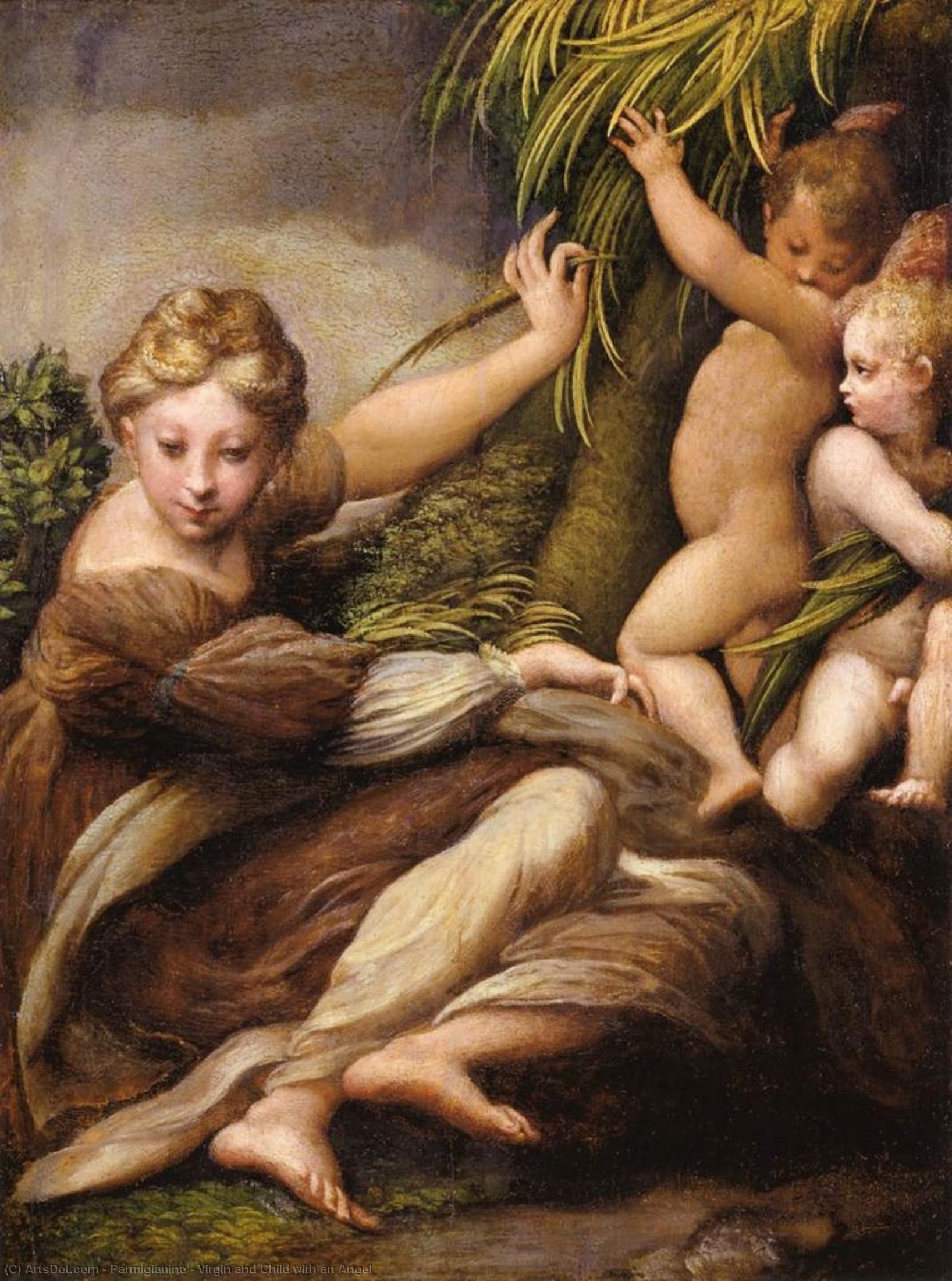
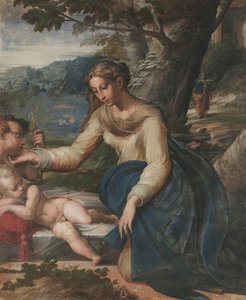
Virgin and Child with an Angel
 Oil On Canvas
- WallArt
- Mannerist
 1523
1523 26.0 x 19.0 cm
 Städel Museum
 詳細を見る
詳細を見る




P118B $10

P118H $10

P118W $10

P438Z $10

P508JH $12

P508YH $12

P805H $10

P805Z $10

P919BZ $10

P919G $10

P919XJ $10

P959ZH $10

P968JZ $12

W106C $8

W218G $10

W218JH $8

W218Y $10

W307PJ $10

W316G $10

W316PJ $8

W316Y $10

W398PJ $8

W4111J $10

W500HY $15

W500JH $15

W692G $12

W849H $8

W940BG $15

W953PJ $8




作品のオリジナル比率に合わせた、当店の規定サイズからお選びください。

特定のフレームやスペースに合わせて、ご希望のサイズをご入力いただけます。選択されたサイズが元の画像の比率と異なる場合、アートワークをトリミングするか、手描きで要素を追加して絵画を拡張いたします。デジタルモックアップ を制作し、制作開始前にご確認(承認)をいただきます。
画面上のプレビューは、実際のトリミングや拡張を正確に反映しているものではありません。最終的な構図は、モックアップによってのみ正確にご確認いただけます。
カスタムサイズもご利用いただけますが、元の比率を維持するためには、あらかじめ用意されたリストからサイズを選択することをお勧めいたします。
ご注文後、ArtsDot.com チームより詳細な指示をお送りするとともに、仕上がりイメージ(モックアップ)をご提供いたします。


 ガラスオプションは、110cm未満のサイズでのみご利用いただけます。

Virgin and Child with an Angel
複製技法
複製画のサイズ
-


合計金額
$ 313
作品解説
A Delicate Dance Between Idealism and Reality: Exploring Parmigianino’s Virgin and Child
Parmigianino's "Virgin and Child with an Angel," painted in 1523, stands as a testament to the Mannerist movement’s fascination with refined beauty and subtle distortions—a departure from the idealized forms of High Renaissance art that preceded it. More than just a depiction of religious piety, this masterpiece embodies a profound exploration of human emotion and artistic innovation, captivating viewers centuries later with its ethereal grace and unsettling realism.The Subject Matter: Arcadia Revisited
The painting transports us back to the pastoral ideals of Arcadia—a mythical realm celebrated by poets like Virgil and Petrarch—where innocence reigned supreme and nature held dominion over human affairs. At its core lies a serene Madonna, cradling her infant son amidst a tranquil landscape bathed in diffused sunlight. Two angelic figures hover above, conveying divine benevolence and guardianship. However, Parmigianino doesn’t simply recreate the familiar iconography of motherhood; he imbues it with an unsettling stillness—a palpable tension between serenity and vulnerability that speaks to the complexities of human experience. The Virgin's pose is deliberately asymmetrical, subtly challenging conventional artistic conventions and hinting at a deeper psychological dimension.A Mannerist Style Defined by Refinement and Distortion
Parmigianino’s stylistic choices firmly establish him within the Mannerist tradition. Unlike the balanced compositions favored by Raphael or Michelangelo, “Virgin and Child” prioritizes elegance over symmetry. The pyramidal structure is deliberately destabilized, creating a sense of unease that compels the eye to linger on every detail. This subtle distortion—a hallmark of Mannerism—extends beyond mere compositional imbalance; it’s evident in the elongated proportions of the figures, particularly the Madonna's torso and hands, which appear unnaturally graceful. These distortions aren’t gratuitous; they serve as a deliberate provocation, questioning established aesthetic ideals and emphasizing the artist’s mastery of technique.Technique: Impasto and Light – Mastering Oil Paint
The painting’s remarkable beauty stems from Parmigianino's meticulous application of oil paint—a technique perfected during this period. He employs impasto extensively, layering thick strokes of pigment onto the canvas to create textured surfaces that capture the luminescence of light. This masterful manipulation of texture is particularly noticeable in the drapery and foliage, where the artist painstakingly builds up ridges of paint to simulate the play of sunlight on fabric and leaves—a feat of artistic realism unparalleled by many of his contemporaries. The diffused lighting contributes significantly to the painting’s emotional impact, casting soft shadows that heighten the sense of depth and intimacy. Parmigianino's meticulous blending ensures a harmonious interplay between color and light, creating an atmosphere of contemplative beauty.Symbolism: Beyond Mere Representation
“Virgin and Child” is laden with symbolic significance—a reflection of Renaissance humanist thought’s preoccupation with exploring human psychology alongside religious dogma. The Virgin’s pose embodies purity and maternal devotion, while the angel figures represent divine grace and protection. However, Parmigianino subtly disrupts these traditional symbols by presenting them in a context that anticipates Mannerist anxieties about mortality and decay. The landscape itself—partially obscured by mist—suggests the fragility of earthly existence and underscores the Madonna’s vulnerability as protector of innocence.Emotional Impact: A Moment Frozen in Time
Ultimately, Parmigianino's "Virgin and Child" transcends mere visual representation; it evokes a profound emotional response. The painting captures a fleeting moment of serene contemplation—a tableau vivant that invites viewers to contemplate themes of beauty, faith, and the human condition. Its delicate balance between idealized form and subtle distortion compels us to confront uncomfortable truths about mortality and illusion—leaving an indelible impression on anyone who encounters its timeless elegance. It remains a cornerstone of Mannerist art, demonstrating Parmigianino’s unparalleled skill in conveying emotion through visual artistry.関連作品
![Stanze Vaticane - The Mass At Bolsena (detail) [03] — ラファエロ, Renaissance Humanism](/media/artworks/images-thumb/1e/98/1e980164e267e9f0f3c8f9b8255cbb21.jpg)


アーティストの略歴
洗練された感性:パルミジャニーノの生涯と芸術
ジョロラモ・フランチェスコ・マリア・マッツォーラ、通称パルミジャニーノ—「パルマの小さな者」—は、盛期ルネサンスに現れながらも、勃興しつつあったマニエリスム様式を決定づけた重要な人物となりました。1503年1月11日にパルマで生まれ、幼少期は父親フィリッポ・マッツォーラの死という悲劇に見舞われました。叔父ミケーレとピエール・イラリオに育てられ、彼らもさほど優れた芸術家ではありませんでしたが、若いパルミジャニーノは家族の中で最初の芸術的訓練を受けました。しかし、その基盤は、すぐに彼の才能を凌駕するであろう特別な才能のための単なる踏み台に過ぎませんでした。驚くべきことに18歳にして、彼はバルディ祭壇画を完成させ、その作品は年相応以上の成熟度と洗練された様式を示し、真に傑出した芸術家の到来を告げました。フィレンツェ、ローマそしてマニエリスム的ビジョンの形成
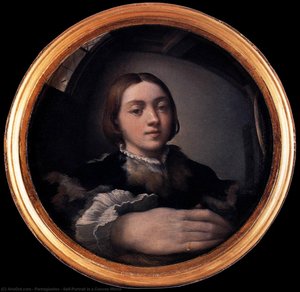
パルミジャニーノの芸術的な旅は1524年頃にフィレンツェへと向かいました。そこで彼はラファエロやレオナルド・ダ・ヴィンチといった巨匠の影響を受けましたが、すぐに独自の道を歩み始めました。教皇クレメンス7世に3枚の絵画を献上し、その中には凸面鏡に描かれた印象的な自画像が含まれていました—それは彼の技術力と芽生え始めた自己認識の証でした。この行為はローマでの依頼を得ることに成功しましたが、1527年の略奪によって都市の芸術的状況はすぐに混乱しました。逃げざるを得なくなったパルミジャニーノはボローニャに避難し、そこで彼の最も有名な作品の一つである聖家族を描きました。この時期に、彼の独特な様式が真に結晶化しました—細長いフォルム、優雅なポーズ、洗練された官能性が彼の芸術のトレードマークとなりました。彼は単に現実を表現しているのではなく、優雅さと理想的な美しさというレンズを通してそれを再構築していたのです。この盛期ルネサンスにおける自然主義への重点からの逸脱は、彼を人工性、洗練さ、古典的フォルムの意図的な歪みによって特徴づけられる芸術運動であるマニエリスムの重要な革新者として位置づけました。細長いフォルムと優雅さの傑作
パルミジャニーノの遺産は、比較的少ないながらも非常に影響力のある作品群の上に築かれています。首の長い聖母(1534)は、おそらく彼の最も象徴的な作品です。その落ち着きがなく魅惑的な構成は、細長い首と手足を持つ人物を特徴とし、従来の美しさや比率に対する概念に挑戦しています。この意図的な歪みは単なる様式的なものではなく、精神的な憧れと世俗離れした優雅さを伝えています。同様に、ローマ滞在中に完成された聖ヒエロニモスの幻視(1527)は、彼の解剖学と遠近法の習熟度を示しつつも、マニエリスムの劇的な構成と感情的な強度を受け入れています。これらの有名な絵画に加えて、パルミジャニーノの素描は並外れた技術力と感受性を示しています。人物、ドレープ、建築要素の研究は、細部への細心の注意とフォルムに対する深い理解を明らかにしています。彼のあまり知られていない作品でさえ、例えば弓を引くアモールなどは、彼の作品を定義する同じ洗練された感性と技術的な巧みさを示しています。中断された遺産:パルミジャニーノの晩年
悲劇的に、パルミジャニーノの有望なキャリアは1540年にカサルマッジョーレで37歳という若さで突然終わりを迎えました。彼の死の状況は依然として不明確です—ある説では熱病に倒れたとされていますが、別の説では転倒による合併症を示唆しています。短い生涯にもかかわらず、パルミジャニーノはイタリア・ルネサンス芸術に消えない足跡を残しました。彼はマニエリスムの最も重要な代表者の一人として名を馳せ、彼の優雅な様式とフォルムと構成に対する革新的なアプローチで何世代もの芸術家に影響を与えました。彼の作品は今日でも観客を魅了し続けており、美が単に観察されるのではなく積極的に創造される世界への一瞥を提供しています—それは芸術的ビジョンの永続的な力の証です。パルマとフォンタネラートに残された未完のフレスコ画は、何ができたのかを痛切に思い出させますが、それでも彼の不完全な状態でも、その輝きは時を超えて響き渡る巨匠の才能を示しています。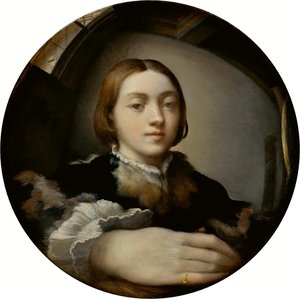
パルミジャニーノ
1503 - 1540 , イタリア
基本情報
- Artistic Movement Or Style: マニエリスム様式
- Artists Or Movements Influenced By This Artist: ['イタリア・ルネサンス']
- Artists Who Influenced This Artist:
- コレッジョ
- ラファエロ
- Date Of Birth: 1503年1月11日
- Date Of Death: 1540年
- Full Name: ジロラモ・フランチェスコ・マッツォーラ
- Nationality: イタリア人
- Notable Artworks (List Of Titles):
- 首の長い聖母
- 聖ヒエロニムスの幻視
- 凸面鏡像
- Place Of Birth (City And Country): イタリア、パルマ
関連記事
ラファエロ傑作25選:ルネサンス巨匠の物語と芸術の世界 | ArtsDot
ラファエロの傑作25選🎨 ルネサンス巨匠の物語と芸術の世界を紐解きます。美しい絵画複製や壁掛けアートで、お部屋に名画の彩りを。ArtsDot.comで、美術史に残る作品群をご覧ください✨
Titian: Innovation, Technique & the Venetian Renaissance Portrait Tradition
Explore the revolutionary techniques & enduring legacy of Titian, the master of Venetian Renaissance portraiture. Discover insights for collectors & appreciate his impact on art history.
ウフィツィ美術館の至宝25選:ルネサンス巨匠たちの傑作とアートデコレーション
ウフィツィ美術館の至宝25選:ボッティチェリ、レオナルド・ダ・ヴィンチ…ルネサンス巨匠たちの傑作と感動的な物語を紐解きます。高品質な絵画複製やアートプリントで、お部屋に名画の輝きを。ArtsDot.comで芸術の世界へ。
ボッティチェリの至宝25選:ルネサンス美術の華麗なる世界 | ArtsDot
ボッティチェリの至宝25選。ルネサンス美術を代表する「春」「ヴィーナスの誕生」など、名画の物語と芸術史を紐解きます。ArtsDotで高品質な複製画やインテリアアートを見つけ、お部屋に永遠の美を。今すぐコレクションをご覧ください。
Mario Sironi: A Poetic of Modern Italian Identity Through Symbolism & Social Commentary
Explore the profound works of Mario Sironi, a key figure in Italian Modernism. Discover his evolution from Futurism to Metaphysical painting and his powerful social commentary. Learn about his legacy at ArtsDot.