

 プレビュー
プレビュー
 プリントを購入
 シェアする
シェアする シェアする
シェアする
 詳細を見る
詳細を見る

 ダウンロード
 似ている作品
 X線調査
X線調査 スライドショー
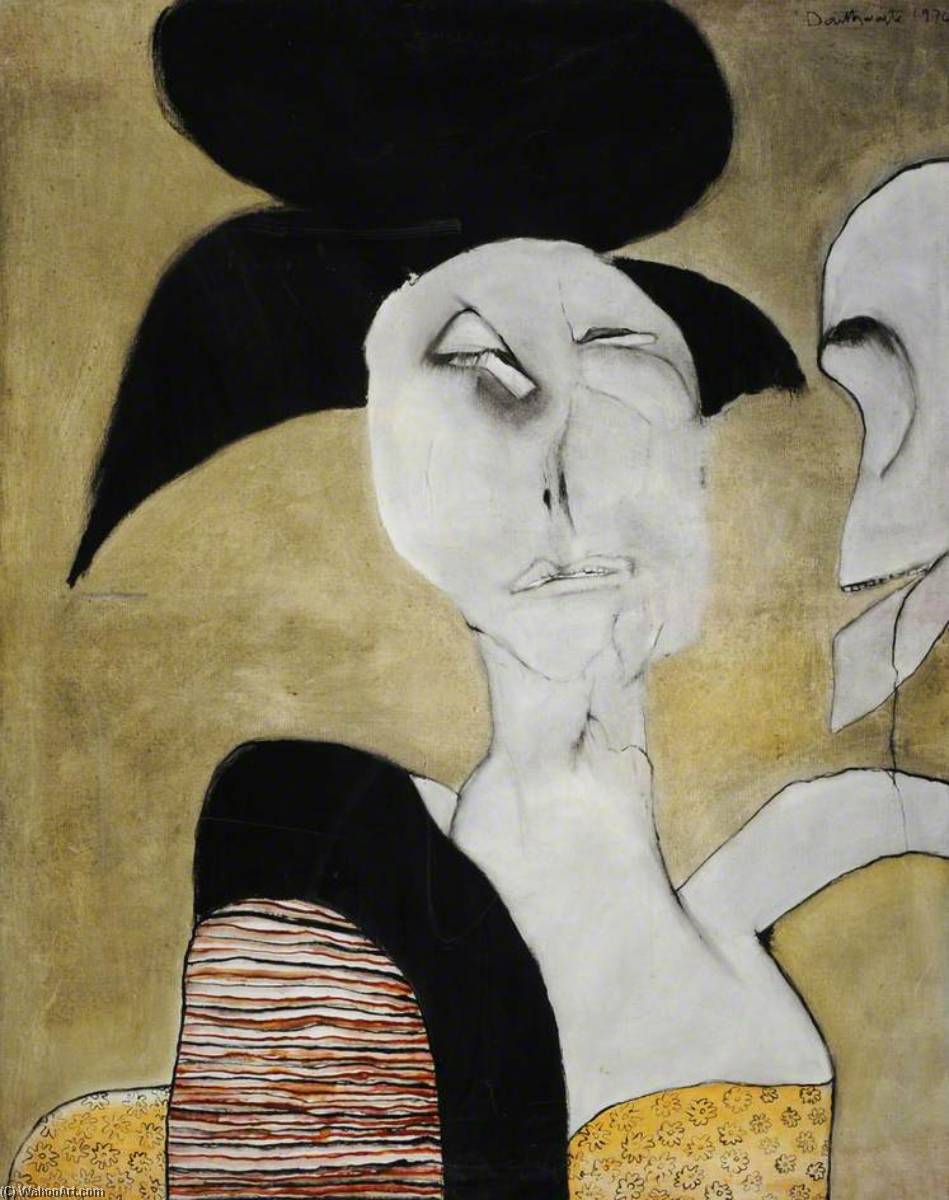
Woman and Death
 155.0 x 124.0 cm
 詳細を見る
詳細を見る




































作品のオリジナル比率に合わせた、当店の規定サイズからお選びください。

特定のフレームやスペースに合わせて、ご希望のサイズをご入力いただけます。選択されたサイズが元の画像の比率と異なる場合、アートワークをトリミングするか、手描きで要素を追加して絵画を拡張いたします。デジタルモックアップ を制作し、制作開始前にご確認(承認)をいただきます。
画面上のプレビューは、実際のトリミングや拡張を正確に反映しているものではありません。最終的な構図は、モックアップによってのみ正確にご確認いただけます。
カスタムサイズもご利用いただけますが、元の比率を維持するためには、あらかじめ用意されたリストからサイズを選択することをお勧めいたします。
ご注文後、ArtsDot.com チームより詳細な指示をお送りするとともに、仕上がりイメージ(モックアップ)をご提供いたします。


 ガラスオプションは、110cm未満のサイズでのみご利用いただけます。

Woman and Death
複製技法
複製画のサイズ
-


合計金額
$ 288
関連作品








アーティストの略歴
A Life Painted in Torment and Triumph: The World of Pat Douthwaite
Pat Douthwaite, born in Glasgow in 1934 and passing away in Dundee in 2002, remains a compelling figure in the landscape of Scottish art. Though she often playfully claimed a later birth year – 1939 – her life was one marked by restless movement, profound introspection, and an artistic vision that drew comparisons to the emotionally charged works of Modigliani and Soutine. Douthwaite’s journey wasn't conventional; it was a path forged through dance, travel, and ultimately, a fierce dedication to painting despite lacking formal training. Her early years in Paisley provided little indication of the turbulent creative spirit within, but by 1947, she had embarked on studies in expressive dance and ballet with Margaret Morris, a pivotal moment that would shape her understanding of form, movement, and emotional expression. This period wasn’t merely about technique; it was an immersion into a world where the body spoke volumes, a language Douthwaite would later translate onto canvas.From Celtic Ballet to a Singular Artistic Voice
The influence of Morris and her partner, J.D. Fergusson, proved transformative. Fergusson, a Scottish Colourist, instilled in Douthwaite an appreciation for the interplay of light and landscape – elements that would subtly permeate her later work. Her involvement with Celtic Ballet culminated in a performance at Jacob’s Pillow Theatre in Massachusetts in 1954, but it was around this time that she began to feel the pull towards visual art. Fergusson actively discouraged formal education, believing it might stifle her originality – a testament to his faith in her innate talent. This decision proved crucial; Douthwaite's style would remain untamed by academic constraints, raw and deeply personal. The late 1950s saw her leave Scotland for England, immersing herself in a vibrant artistic milieu alongside figures like Robert MacBryde, Robert Colquhoun, Peter Cook, Roger Law, and William Crozier, whom she met in Glasgow. While the extent of these relationships remains somewhat unclear, this period fostered an environment of experimentation and intellectual exchange.Themes of Femininity, Travel, and Inner Turmoil
Douthwaite’s art is characterized by a fearless exploration of the female psyche. Her paintings are not portraits in the traditional sense; they are visceral representations of inner states, often imbued with a sense of torment and vulnerability. She didn't shy away from difficult subjects, tackling themes like the Manson Trial, American Women Bandits, and the life of aviator Amy Johnson – all filtered through her unique emotional lens. Her extensive travels—to York, Edinburgh, Dumfriesshire, Berwick upon Tweed, North Africa, India, and Peru—were not merely geographical shifts but profound experiences that shaped her worldview and informed her artistic vision. These journeys provided a rich tapestry of imagery and cultural encounters, yet the recurring motif remains the exploration of womanhood, often depicted with a striking blend of strength and fragility. Although she resisted easy categorization, Douthwaite’s work resonates deeply with feminist themes, offering a powerful, albeit unconventional, perspective on female identity.A Legacy Rediscovered
Despite her prolific output and inclusion in several museum collections, Douthwaite remained somewhat overlooked during her lifetime. Her art was often described as controversial, even disturbing, challenging conventional notions of beauty and representation. However, recent years have witnessed a growing appreciation for her singular talent. Exhibitions like the 2015/16 show at the Scottish National Gallery of Modern Art, “Modern Scottish Women: Painters and Sculptors 1885-1965,” helped to place Douthwaite’s work within a broader historical context, recognizing it as a triumph of feminist art. Her paintings continue to provoke strong reactions, captivating viewers with their raw emotional intensity and unique visual language. The publication of biographies dedicated to her life and work further solidifies her position as a significant figure in Scottish art history.Technique and Influence
Douthwaite’s technique is marked by its expressive quality – often described as having “an almost embroidered applique effect.” Her compositions are dynamic, with bold colors and confident lines that convey a sense of urgency and emotional power. She worked tirelessly, driven by an internal need to create, often painting through the night while listening to jazz music. While comparisons to Modigliani and Soutine are apt – particularly in their shared exploration of psychological torment – Douthwaite’s work possesses a distinct voice. She combined dark imagery with vibrant hues, creating a visual tension that reflects the complexities of her inner world. Her legacy lies not only in her paintings themselves but also in her unwavering commitment to artistic originality and her fearless exploration of the human condition. She was, as she herself described it, “The High Priestess of the grotesque,” a title that encapsulates the power and complexity of her remarkable art.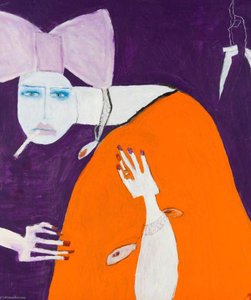
pat douthwaite
1934 - 2002
基本情報
- Artistic Movement Or Style: Expressionism
- Artists Who Influenced This Artist:
- Modigliani
- Soutine
- Date Of Birth: July 28, 1934
- Date Of Death: July 26, 2002
- Full Name: Pat Douthwaite
- Nationality: Scottish
- Place Of Birth: Glasgow, Scotland

