メニュー
無料アート相談
プレビュープレビュー ARで試着ARで試着 手描きの絵画を購入 手描きの絵画を購入画像を購入 画像を購入 シェアするシェアする
詳細を見る詳細を見る お気に入りに追加 お気に入りに追加 ダウンロードダウンロード 似ている作品似ている作品 X線調査X線調査 スライドショースライドショー

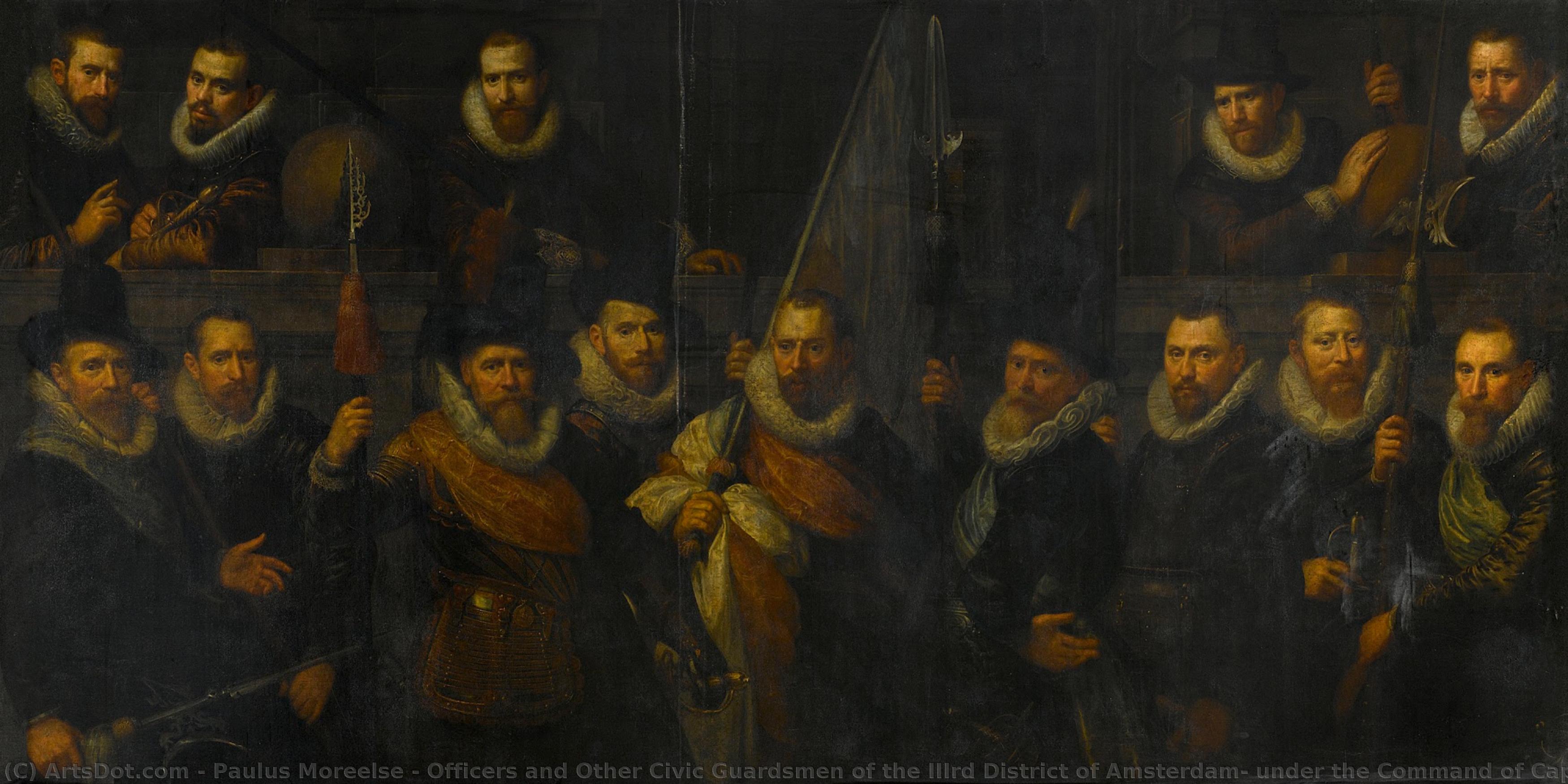
Officers and Other Civic Guardsmen of the IIIrd District of Amsterdam, under the Command of Captain Jacob Gerritsz Hoyngh and Lieutenant Nanningh Florisz Cloeck, Paulus Moreelse, 1616

  • 制作日1616
  • 寸法169.0 x 334.0 cm

パウルス・モレルス(1571-1638)は、ユトレヒト出身のオランダの肖像画家であり建築家です。マニエリスム様式、神話、田園風景で知られ、代表作には『ディアナとカリスト』などがあります。 #オランダ美術 #肖像画

ジークレー/アートプリント

迅速な制作と多彩な仕上げオプションを備えた、ミュージアムクオリティのジークレーまたはキャンバスプリント。 (手描きの絵画を購入 手描きの絵画を購入画像を購入 画像を購入)

標準サイズ
オーダーメイド
CM
INCH

作品のオリジナル比率に合わせた、当店の規定サイズからお選びください。

高さ

特定のフレームやスペースに合わせて、ご自身でサイズを指定することも可能です。選択されたサイズが元の画像の比率と一致しない場合、作品をトリミングするか、鏡面反射または単色での塗りつぶしによって画像を拡張いたします。制作を開始する前に、ご確認用のデジタルモックアップをお送りいたします。
画面上のプレビューには、実際のトリミングや拡張は反映されませんのでご注意ください。最終的な構図を正確に確認できるのは、モックアップのみとなります。
カスタムサイズも承っておりますが、元の比率を維持するためには、あらかじめ用意されたリストからサイズを選択することをお勧めいたします。

世界中への配送()は、標準の4〜5週間ではなく、2週間でお届けいたします。(28 8月)

why_choose_icon
世界中へ無料エクスプレス配送
why_choose_icon
高品質なリネンキャンバス
why_choose_icon
配送時完全保険付
why_choose_icon
関税・輸入税の払い戻し保証
why_choose_icon
忠実な色彩再現保証
why_choose_icon
60日間返品保証(製造上の欠陥のみ)
why_choose_icon
100% 全額返金保証
why_choose_icon
まとめ買い割引のご案内

合計金額

$ 62

reproduction

Officers and Other Civic Guardsmen of the IIIrd District of Amsterdam, under the Command of Captain Jacob Gerritsz Hoyngh and Lieutenant Nanningh Florisz Cloeck, Paulus Moreelse, 1616

ジークレー/アートプリント

複製画のサイズ

-

合計金額

$ 62

The present painting is the only civic guard piece by an Utrecht master to have survived, and Moreelse, together with Frans Hals, were the only artists not resident in Amsterdam to receive commissions from that city’s guard companies.5 Moreelse’s portrait shows 14 civic guardsmen from District III, which extended roughly from Damrak west to the Nieuwezijds Achterburgwal (Spuistraat), and was bounded by Kolksteeg on the north, and Dirk van Hasseltsteeg on the south. The names of the captain and lieutenant were recorded by Gerard Schaep in his 1653 list of portraits in the three civic guard headquarters in Amsterdam.6 The painting hung in the Kloveniersdoelen, the headquarters of the arquebusiers’ civic guard. Standing to the left of the ensign is the captain, Jacob Gerritsz Hoyngh (1555-1625), who is shown wearing an ornamental suit of armour and holding a short officer’s pike decorated with a large tassel in his right hand. Hoyngh also wears a chain with a portrait medallion of Prince Maurits.7 It is not known when or for what reason Hoyngh received this medallion, but perhaps it had something to do with Maurits’s visit to Amsterdam in 1613, on which occasion the city’s entire civic guard presented itself to the prince.8 Hoyngh, a Counter-Remonstrant, was a cloth merchant and dyer who lived in a house called ‘de Swarte Leeuw’ in Nieuwendijk (no. 156), a street in District III.9 In 1618 and 1620, he served as one of the city’s four burgomasters. The lieutenant, Nanningh Florisz Cloeck (1567-1624), stands to the right of the ensign and holds a partisan. Cloeck was a Remonstrant, and a merchant and soap manufacturer by profession, and from 1607 to 1620 he was Commissioner of the Muster.10 He also lived in District III, in a house called ‘’t Wapen van Schagen’, the present-day Damrak no. 44. Unfortunately the identities of the ensign, who holds the red and white banner in the middle of the composition, and the other 11 civic guardsmen have not come down to us. Tümpel suggested that it was the appointment of Hoyngh and Cloeck to captain and lieutenant in the third district that led to the commission of the present portrait.11 By 1616, however, Hoyngh had already been captain for at least 20 years, as he was portrayed as such in a 1596 civic guard piece by Pieter Isaacsz.12 The lieutenant in Pieter Isaacsz’s group portrait is Wijbrant Appelman, who died the year the painting was completed. Nanningh Florisz Cloeck may, therefore, have already taken over the position of lieutenant in District III in 1596.13 While it is not known when exactly he became lieutenant, in 1620 the pro-Remonstrant Cloeck was forced to resign his commission for making disapproving remarks about the Counter-Remonstrant burgomaster, Reijnier Pauw.14 It is interesting to note that one of the three burgomasters who called for this resignation was Jacob Gerritsz Hoyngh. The fact that Moreelse received this commission indicates that he already had a significant reputation outside Utrecht by 1616. The composition of his civic guard piece, however, is by no means innovative. The placement of the figures in two rows parallel to the picture plane, the figures in the second row shown higher behind a balustrade, is a compositional type that was popular in the 16th century and already employed in the earliest known independent civic guard piece in Amsterdam, from 1529.15 It is, perhaps, significant, that that painting hung in the arquebusiers’ headquarters, that is to say the same building where Moreelse’s portrait would be displayed. It cannot be claimed, however, that Moreelse was reviving an old compositional type, as Frans Badens had shown the civic guardsmen of District VII in the same manner around 1608.16 Compared to the 16th-century portraits for which this composition type was employed, and even Badens’s painting, Moreelse’s appears modern, as the figures are not pressed together and have a convincing voluminousness.17 Moreelse appears also to have followed Badens’s example in placing the two sergeants, identifiable by their halberds, at the extreme left and right in the bottom row. Like Badens’s painting as well, Moreelse’s includes an opening in the middle of the composition. In this case it provides a view into a series of interior spaces. The setting of the painting does not reflect the architecture of the arquebusiers’ headquarters, the tower ‘Swych Wtrecht’, but is fanciful.18 Apart from their obvious association with cannon balls, the two stone spheres on the balustrade also carried associations with the virtues of constancy and wisdom.19 Jonathan Bikker, 2007 See Bibliography and Rijksmuseum painting catalogues See Key to abbreviations and Acknowledgements This entry was published in J. Bikker (ed.), Dutch Paintings of the Seventeenth Century in the Rijksmuseum Amsterdam, I: Artists Born between 1570 and 1600, coll. cat. Amsterdam 2007, no. 216.

アーティストの略歴

ミケランジェロ・メリジ・ダ・カラヴァッジョ:光と影の革命児

カラヴァッジョの名で広く知られるミケランジェロ・メリジは、美術史において最も謎めいた、そして最も影響力のある人物の一人であり続けています。1571年頃にミラノで生まれた彼の生涯は、劇的な出来事の渦中の中にありました。激しい気性、輝きと血の両方に浸された筆致、そして数世紀を経た今なお観る者を魅了してやまないその遺産。ロンバルディア地方の無名の画家からローマの寵児へと駆け上がった彼の軌跡は、類まれな才能と大胆な技法、そして西洋美術の行く末に与えた深遠な影響を物語っています。カラヴァッジョの物語は、単なる芸術的達成の記録ではありません。それはスキャンダルと暴力、そして究極的には消えることのない情熱が織りなす、壮大なドラマなのです。

黎明期と修練:ミラノ、革新の種

カラヴァッジョの幼少期は、いくぶん謎に包まれています。しかし、彼がロンバルディアの有力なスフォルツァ家やコロンナ家と縁のある家系に生まれたことは分かっています。父フェルモ・メリジはカラヴァッジャ侯爵の家政官を務め、母ルチア・アラトリも同地域の裕福な家庭の出身でした。彼はミラノにて、ティツィアーノの追随者であったシモーネ・ペテルザーノのもとで弟子入りし、4年間にわたって技を磨きました。この時期、彼は当時の主流であった芸術的規範――優雅さと均衡、そして理想化された形態を重視する様式――に触れることとなります。しかし、この極めて早い段階から、カラヴァッジョは既成の規範を逸脱しようとする意志を見せており、それが後に彼の代名詞となる革命的なアプローチの兆しとなっていました。ミラノでの形成期に目にしたレオナルド・ダ・ヴィンチの『最後の晩餐』の影響は、後の劇的な構図や革新的な遠近法の活用を形作る重要な要因となったとしばしば語られています。

ローマ:才能と動乱の坩堝

1592年、カラヴァッ動は「ある争い」から逃れるべくミラノを離れ、活気あふれる芸術の都ローマへと辿り着きました。彼はすぐに、教皇クレメンス8世に仕える成功した画家ジュゼッペ・チェザーリのスタジオで助手として働き始めます。この時期は、過酷な労働と限られた評価の日々ではありましたが、彼にかけがえのない経験をもたらし、有力なパトロンとの接点を与えてくれました。決定的なのは、彼が独自の様式を実験し始めたことです。『トカゲに噛まれた少年』(1594年頃)などの作品には、明暗の劇的な対比を生み出す「テネブリズム」の特異な使用と、日常的な人々を非日常的な状況下で描く彼特有の手法が顕著に現れています。これはルネサンス美術に蔓延していた理想化された人物像からの決定的な決別でした。カラヴァッジョはあえて粗野な顔立ちや洗練されていない外見を持つモデルを選び、彼らに前例のない即時性とリアリズムを吹き込んだのです。

革命的技法:テネブリズムと写実的な細部

カラヴァッジョの芸術的革新は、主題の選択やモデリングの手法に留まりませんでした。光と影を操る「キアロスクーロ」の習熟は、まさに変革的でした。彼はテネブリズムと呼ばれる技法を用い、深い闇が画面を支配し、人物を漆黒の中に沈み込ませる一方で、重要な要素だけを強烈な光の溜まりで照らし出しました。これにより、感情的なインパクトを高め、観る者の視線を構図内の特定の箇所へと引きつける、演劇的でドラマチックな効果を生み出したのです。さらに、カラヴァしたは細部を驚くべき正確さで観察し、描き出しました。布地の質感、顔の皺、金属の光沢――それらは緻密に表現されています。彼はしばしば下書きを省略し、キャンバスに直接描くことで、即興的かつ極めて個人的なアプローチを可能にしました。この技法が生身のモデルの使用と結びつくことで、まるで人間の経験における一瞬の刹那を捉えたかのような、驚くほど生々しく、生命力に満ちた絵画が誕生したのです。

晩年と遺産:スキャンダル、追放、そして不朽の影響

1606年、カラヴァッジョの人生は暗転します。ある暴力的な衝突に巻き込まれ、一人の青年を死に至らしめてしまったのです。法の裁きを避けるべく、彼はローマを脱出し、ナポリ、マルタ、シチリアへと逃亡の旅を続けました。マルタにおいても、彼の激しい気性が再び紛争を引き起こし、結果として聖ヨハネ騎士団からの追放を招きました。その後、彼はナポリへと戻りますが、乱闘の中で致命傷を負います。1610年、トスカーナのポルト・エルコレにてカラヴァッジョは没しました。残された作品数は比較的少ないものの、彼が後世の芸術家たちに与えた影響は計り知れません。レンブラント、ベラスケス、ジェリコーをはじめ、彼の劇的な照明、写実的な人物描写、革新的な構図を取り入れた数多の巨匠たちの作品の中に、その足跡を見ることができます。カラヴァッジョの遺産は絵画の枠を超えています。彼は表現へのアプローチを根本から変え、美の理想化から人間経験の生々しい現実へと焦点を移したのです。その転換は、今なお観る者の心に響き続けています。彼の描いた世界は、ドラマと感情、そして時代を超越した普遍性を湛え、今もなお強烈な力を放ち続けているのです。
パウルス・モレルス

パウルス・モレルス

1571 - 1638 , オランダ

基本情報

  • Artistic Movement Or Style: バロック; テネブリズム
  • Artists Or Movements Influenced By This Artist:
    • レンブラント
    • ベラスケス
    • ジェリコー
  • Artists Who Influenced This Artist:
    • ティツィアーノ
    • ジョルジョーネ
  • Date Of Birth: 1571年9月29日
  • Date Of Death: 1610年7月18/19日
  • Full Name: ミケランジェロ・メリジ・ダ・カラヴァッジオ
  • Nationality: イタリア
  • Notable Artworks:
    • 聖マタイの召命
    • エマオの晩餐
    • ダビデとゴリアテ
    • 聖母の死
  • Place Of Birth: イタリア、ミラノ
テーマ、スタイル、特徴別に分類された作品を探索しましょう。