

 シェアする
シェアする シェアする
シェアする
 詳細を見る
詳細を見る

 ダウンロード
 似ている作品
 スライドショー
 統計情報
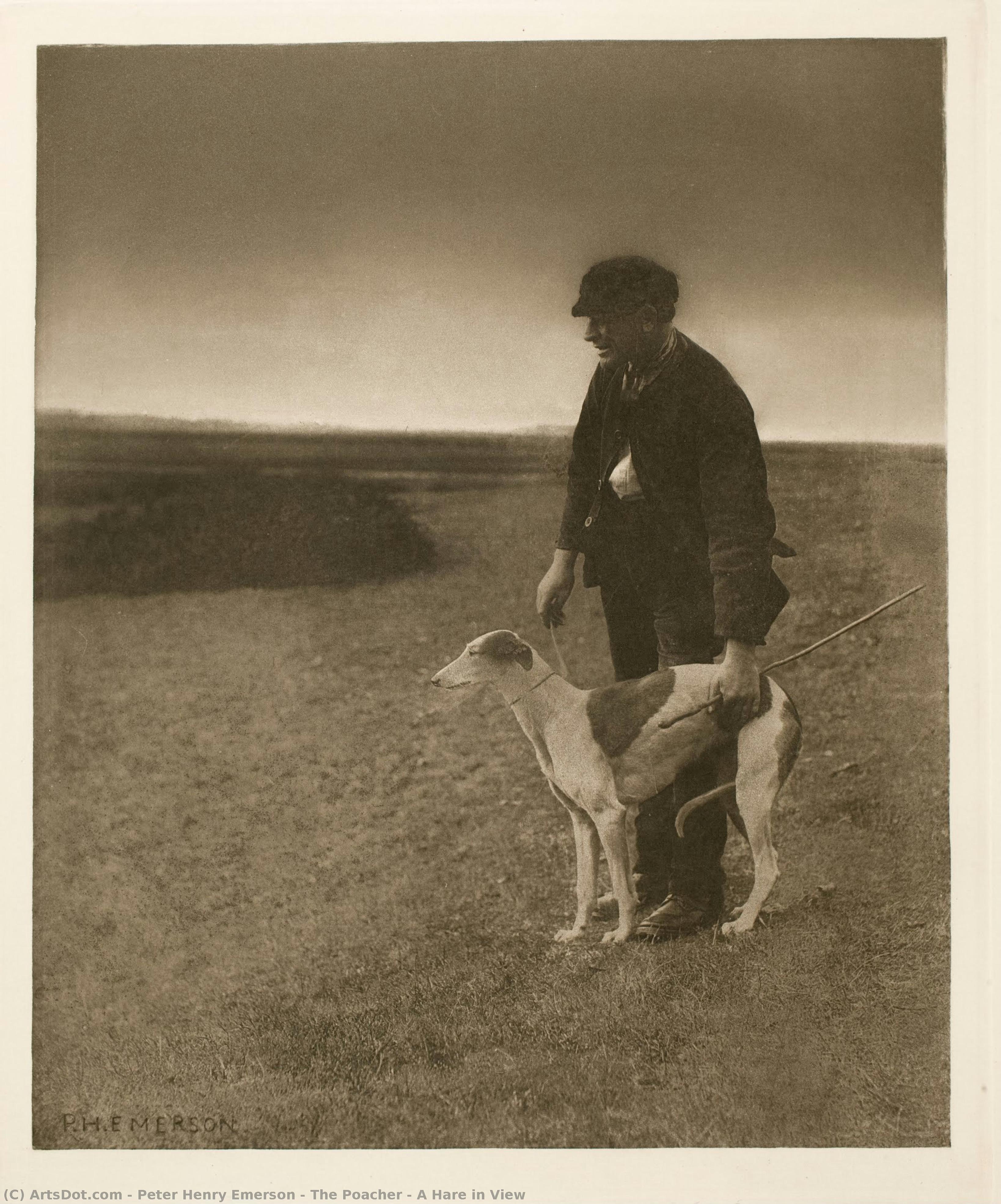
統計情報The Poacher - A Hare in View
 Black and White Photography
- Photo
- Naturalism
 1886
1886- 19th Century
 23.0 x 28.0 cm
 ジョージ・イーストマン博物館
 詳細を見る
詳細を見る
ジークレー/アートプリント
迅速な制作と多彩な仕上げオプションを備えた、ミュージアムクオリティのジークレーまたはキャンバスプリント。 ( 手描きの絵画を購入 デジタル画像販売へ切り替え)




































作品のオリジナル比率に合わせた、当店の規定サイズからお選びください。

特定のフレームやスペースに合わせて、ご自身でサイズを指定することも可能です。選択されたサイズが元の画像の比率と一致しない場合、作品をトリミングするか、鏡面反射または単色での塗りつぶしによって画像を拡張いたします。制作を開始する前に、ご確認用のデジタルモックアップをお送りいたします。
画面上のプレビューには、実際のトリミングや拡張は反映されませんのでご注意ください。最終的な構図を正確に確認できるのは、モックアップのみとなります。
カスタムサイズも承っておりますが、元の比率を維持するためには、あらかじめ用意されたリストからサイズを選択することをお勧めいたします。


 ガラスオプションは、110cm未満のサイズでのみご利用いただけます。

The Poacher - A Hare in View
ジークレー/アートプリント
複製画のサイズ
-


合計金額
$ 62
関連作品
アーティストの略歴
Early Life and Education: A Cuban Beginning
Peter Henry Emerson, born on May 13th, 1856, began life amidst the lush landscapes of La Palma Estate, a sugar plantation near Encrucijada, Cuba. His parents, Henry Ezekiel Emerson, an American, and Jane Harris Billing, a British woman, provided him with a unique upbringing far removed from the artistic circles he would later inhabit. A distant relative of both Samuel Morse and Ralph Waldo Emerson, young Peter’s early years were shaped by the rhythms of plantation life, a world steeped in natural beauty but also marked by the complexities of colonial society. The family's move to England in 1869, following his father’s death, signaled a significant shift in his trajectory. He received a classical education at Cranleigh School, where he distinguished himself as both a scholar and an athlete—a testament to his multifaceted intellect and energy. This foundation continued at King’s College London before culminating in a medical degree from Clare College, Cambridge in 1885.
From Surgeon to Photographer: A New Vision Emerges
Despite achieving academic success in medicine, Emerson harbored passions that lay elsewhere. In 1881, he acquired his first camera not as a tool for professional practice, but as an aid to bird-watching alongside ornithologist A.T. Evans. This seemingly casual beginning quickly blossomed into something far more profound. His involvement with the Camera Club of London in 1885 and subsequent election to the Council of the Photographic Society in 1886 marked a decisive turning point. He abandoned his surgical career, driven by an increasingly compelling desire to explore photography as a legitimate art form—a radical notion at the time. Emerson possessed not only intelligence and wealth but also a remarkable ability to articulate his convictions, qualities that would prove crucial in challenging established photographic norms.
Naturalistic Photography: Challenging Conventions
Emerson’s early work was deeply influenced by the naturalistic French painters, particularly those who focused on depicting rural life with honesty and detail. He championed a “naturalistic” approach to photography, advocating for sharp focus and meticulous recording of country scenes as they appeared—rejecting the then-popular practice of manipulating photographs to mimic painted effects. His first album, *Life and Landscape on the Norfolk Broads* (1886), comprised forty platinum prints that embodied this philosophy. However, Emerson was not one to remain static in his beliefs. He soon found himself dissatisfied with the indiscriminate clarity of sharp focus, recognizing it didn’t fully replicate human perception. This led him to experiment with soft focus techniques, though he ultimately found them lacking in their ability to capture the true depth and atmosphere of nature.
The Evolution of Style: Photogravure and a Shifting Aesthetic
Over the next decade, Emerson produced a remarkable body of work documenting the East Anglian fenlands. He published seven further books, culminating in *Marsh Leaves* (1895), widely considered his masterpiece. Increasingly frustrated with commercial printing processes that failed to meet his exacting standards, he took control of production himself, mastering the intricate art of photogravure for the final two volumes. This commitment to quality underscored his dedication to realizing his artistic vision. In 1889, Emerson published *Naturalistic Photography for Students of the Art*, a seminal text outlining his aesthetic principles and challenging prevailing photographic conventions. However, in a surprising turn, he recanted these views just two years later, acknowledging that accurate reproduction wasn’t synonymous with art itself.
Legacy and Historical Significance: A Pioneer of Straight Photography
Despite this shift in perspective, Emerson's initial arguments proved profoundly influential, laying the groundwork for much of 20th-century photography. He championed the idea of photography as a unique medium capable of capturing reality with unparalleled fidelity—a concept central to the development of straight photography. After *Marsh Leaves*, he largely ceased publishing photographs, turning his attention to other literary and scholarly pursuits, including genealogy and billiards. He began writing a history of artistic photography in 1924, completing the manuscript shortly before his death on May 12th, 1936, in Falmouth, Cornwall. Peter Henry Emerson’s legacy extends beyond his beautiful images; he was a visionary who dared to question established norms and elevate photography to its rightful place among the fine arts.
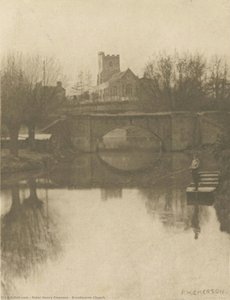
peter henry emerson
1856 - 1936
基本情報
- Artistic Movement Or Style: Straight photography, Pictorialism
- Artists Who Influenced This Artist: ['Jean-Francois Millet']
- Date Of Birth: May 13, 1856
- Date Of Death: May 12, 1936
- Full Name: Peter Henry Emerson
- Nationality: British
- Notable Artworks:
- Life and Landscape on Norfolk Broads
- Pictures of East Anglian Life
- Marsh Leaves
- Place Of Birth: Cuba
関連記事

White on Canvas: 10 Masterpieces & Timeless Elegance for Your Home Decor
Explore 10 iconic white paintings by Monet, Whistler & Rothko! Discover the stories behind these serene masterpieces and their impact on art history. Find museum-quality reproductions for your home decor at .

Dark Masterpieces: 10 Iconic Paintings Dominated by Black Tones |
Explore 10 iconic paintings dominated by black tones, from Rembrandt’s chiaroscuro to Goya's dark expressions. Discover the stories behind these masterpieces & find museum-quality art reproductions for your home at .
Beyond the Lens: Photography's Enduring Influence on Modern & Contemporary Art
Explore photography's pivotal role in shaping modern & contemporary art. Discover key movements, influential artists like Stieglitz, and expert collecting advice from ArtsDot.
Pictorialism: A Search for Artistic Photography's Soul – Aesthetics, Techniques & Legacy
Explore the captivating world of Pictorialism – a pivotal movement that transformed photography into fine art. Discover key artists like Stieglitz & Käsebier, techniques, and collecting tips from experts.

Monochrome Visions: Exploring the Aesthetic & Historical Significance of Black & White Photography
Explore the rich history & artistic power of black and white photography. From early techniques to iconic masters like Ansel Adams, discover why monochrome continues to captivate art lovers today. Expert insights for collectors.