 プレビュー
プレビュー
 シェアする
シェアする シェアする
シェアする
 詳細を見る
詳細を見る

 ダウンロード
 似ている作品
 X線調査
X線調査 スライドショー
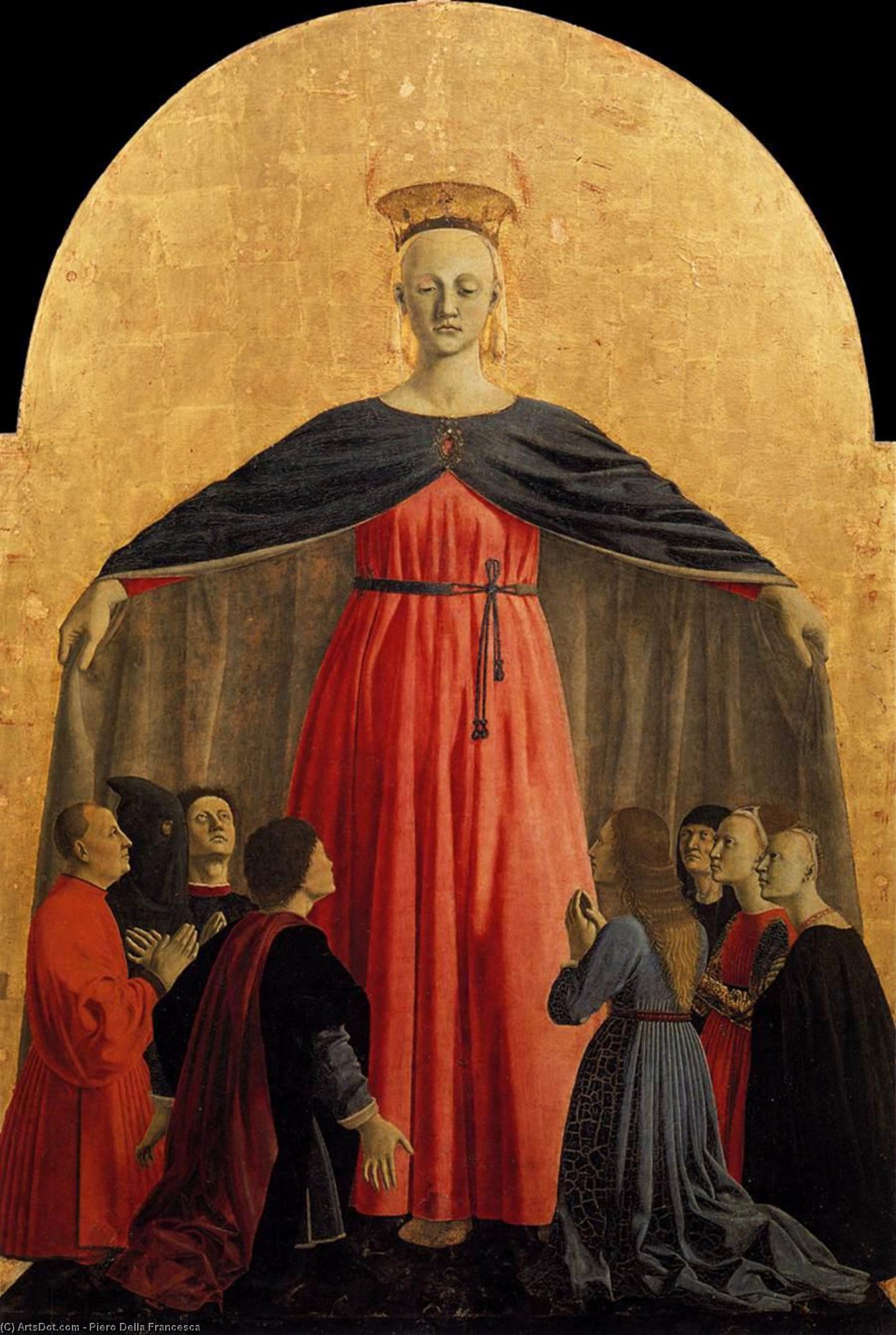
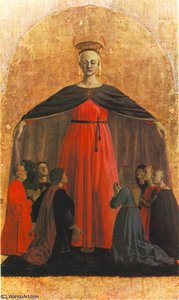
Polyptych of the Misericordia: Madonna of Mercy
 キャンバスにアクリル絵具
- ウォールアート
- Renaissance
 1460
1460- ルネサンス
 134.0 x 91.0 cm
 Pinacoteca Comunale
 詳細を見る
詳細を見る
ジークレー/アートプリント
迅速な制作と多彩な仕上げオプションを備えた、ミュージアムクオリティのジークレーまたはキャンバスプリント。 ( 手描きの絵画を購入 画像を購入)




P118B $10

P118H $10

P118W $10

P438Z $10

P508JH $12

P508YH $12

P805H $10

P805Z $10

P919BZ $10

P919G $10

P919XJ $10

P959ZH $10

P968JZ $12

W106C $8

W218G $10

W218JH $8

W218Y $10

W307PJ $10

W316G $10

W316PJ $8

W316Y $10

W398PJ $8

W4111J $10

W500HY $15

W500JH $15

W692G $12

W849H $8

W940BG $15

W953PJ $8




作品のオリジナル比率に合わせた、当店の規定サイズからお選びください。

特定のフレームやスペースに合わせて、ご自身でサイズを指定することも可能です。選択されたサイズが元の画像の比率と一致しない場合、作品をトリミングするか、鏡面反射または単色での塗りつぶしによって画像を拡張いたします。制作を開始する前に、ご確認用のデジタルモックアップをお送りいたします。
画面上のプレビューには、実際のトリミングや拡張は反映されませんのでご注意ください。最終的な構図を正確に確認できるのは、モックアップのみとなります。
カスタムサイズも承っておりますが、元の比率を維持するためには、あらかじめ用意されたリストからサイズを選択することをお勧めいたします。


 ガラスオプションは、110cm未満のサイズでのみご利用いただけます。

Polyptych of the Misericordia: Madonna of Mercy
ジークレー/アートプリント
複製画のサイズ
-


合計金額
$ 62
The Polyptych of the Misericordia: A Renaissance Masterpiece of Mercy and Perspective
Piero della Francesca’s Polyptych of the Misericordia, completed in 1462 for the Compagnia della Misericordia in Sansepolcro, is far more than a devotional panel; it's a profound exploration of space, light, and human emotion. Housed within the Pinacoteca Comunale of the same town, this polyptych—a complex arrangement of multiple panels—offers a captivating journey through religious narrative and showcases Piero’s revolutionary approach to artistic representation. It stands as a pivotal work in his career, marking a significant departure from the conventions of his time while firmly establishing him as one of the most innovative artists of the early Renaissance.
The polyptych's structure is immediately striking: a central panel depicting the Madonna della Misericordia, flanked by two outer panels featuring St. Sebastian and St. John the Baptist on either side. The remaining panels—a Crucifixion, an Annunciation, and scenes from the life of Christ—complete the narrative cycle. However, it’s not merely the subject matter that commands attention but rather Piero's masterful manipulation of perspective and his ability to imbue a static image with a remarkable sense of depth and realism. The earliest panels, particularly those depicting St. Sebastian and St. John the Baptist, demonstrate an early influence from Masaccio, evident in their use of nude figures—a bold move for the time—rendered with anatomical precision and a subtle suggestion of volume. These figures, however, are not simply copies; Piero transforms them through his own distinctive style, imbuing them with a quiet dignity and contemplative stillness.
The Central Madonna: A Revolutionary Space
At the heart of the polyptych lies the central panel depicting the Madonna della Misericordia. This iconic image—a common motif in Renaissance art—depicts Mary sheltering her followers beneath her mantle, a gesture of profound protection and mercy. What distinguishes this depiction is not just the Madonna’s serene expression or the richly embroidered garments, but rather the astonishingly realistic space created around her. Piero doesn't rely on traditional methods of diminishing size to suggest distance; instead, he employs linear perspective with breathtaking accuracy. The background appears to recede into an infinite horizon, creating a convincing illusion of depth that draws the viewer into the scene. The gilded background, a deliberate choice reflecting the patrons’ wealth and piety, further enhances this effect, adding a layer of luxurious grandeur.
Notably, the Madonna is rendered larger than life—a departure from medieval conventions—yet her three-dimensional form feels utterly believable. This juxtaposition of scale and realism speaks to Piero's ambition: he sought not merely to depict religious figures but to create convincing representations of human beings within a believable world. The meticulous attention to detail—the folds of the mantle, the texture of the fabrics, the subtle play of light and shadow—demonstrates his mastery of observation and his profound understanding of anatomy and spatial relationships. The composition is carefully balanced, with the figures arranged in a harmonious manner that reinforces the sense of order and stability.
Historical Context and Artistic Innovation
Commissioned in 1445 during a period of significant artistic and intellectual ferment, the Polyptych of the Misericordia reflects the broader trends of the early Renaissance. The Compagnia della Misericordia, a confraternity dedicated to charitable works, sought to express their devotion through this monumental artwork. The delay in its completion—a full seventeen years—highlights Piero’s meticulous approach and his commitment to achieving artistic perfection. He was deeply involved in other projects during this time, including the design of the fortress of Ridolfi and the frescoes in the Palazzo del Podestà in Arezzo.
Piero's work represents a crucial bridge between the Gothic traditions of his predecessors and the innovations of the High Renaissance. While influenced by Masaccio’s use of perspective, Piero developed his own distinctive style—characterized by its clarity, restraint, and geometric precision. His mastery of linear perspective, combined with his subtle understanding of light and shadow, created images that were both visually stunning and intellectually stimulating. The polyptych stands as a testament to Piero della Francesca's genius and his enduring legacy as one of the most important artists of the Renaissance.
A Legacy of Beauty and Perspective
The Polyptych of the Misericordia is more than just a beautiful painting; it’s a profound meditation on faith, mercy, and the human condition. Its enduring appeal lies in its ability to transport viewers to another time and place, inviting them to contemplate the mysteries of religion and the wonders of art. Today, reproductions of this masterpiece offer an opportunity to experience Piero della Francesca's genius firsthand, bringing his revolutionary vision into homes and spaces around the world.
関連作品
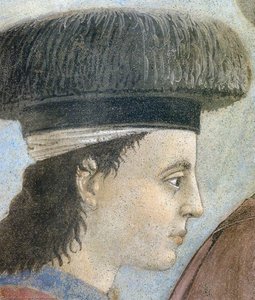
アーティストの略歴
ピエロ・デッラ・フランチェスカ:静謐と秩序の探求者
15世紀初期ルネサンスを代表する画家、ピエロ・デッラ・フランチェスカ。彼の名は、単なる芸術家という枠を超え、数学者、幾何学者としても知られています。ウンブリア地方の小さな町サンセポルクロで生まれ、その生涯は謎に包まれている部分も多いものの、残された作品群は、静謐な美と秩序への飽くなき探求を物語っています。フランチェスカの芸術は、単なる写実性を超え、知性と精神性が融合した独自の表現へと昇華されており、後世の芸術家たちに多大な影響を与えました。
生い立ちと初期の試み:フィレンツェとの出会い
ピエロ・デッラ・フランチェスカは、1415年頃、サンセポルクロで生まれました。父は革細工師であり、裕福な家庭環境で育ったピエロは、幼少期から教育を受け、読み書き能力も身につけました。1430年代には、地元の画家アントニオ・ダンギアリのもとで修行を積み、その後、芸術の中心地であるフィレンツェへと旅立ちます。そこで彼は、マサッチョの革新的な壁画や、フィリッポ・ブルネレスキの建築的才能に触発され、遠近法という新たな表現手法に魅せられます。ドメニコ・ヴェネツィアーノとの共同制作を通じて、フランチェスカはフィレンツェの芸術様式を深く理解し、自身の芸術性を磨き上げていったのです。
真実の十字架:傑作が生み出す静謐な世界
ピエロ・デッラ・フランチェスカの名声を決定づけたのは、アレーッツォのサン・フランチェスコ教会に描かれた『真実の十字架物語』の壁画です。この作品群は、十字架の木材が発見されるまでの伝説を壮大なスケールで描き出しており、その構成と色彩、そして何よりも人物の表情には、深い精神性と静謐さが漂っています。遠近法を駆使した緻密な空間描写は、見る者を圧倒し、まるで現実世界に入り込んだかのような錯覚を与えます。フランチェスカは、単なる物語を描くのではなく、人間の内面にある信仰心や希望といった普遍的なテーマを表現しようとしたのです。
数学と芸術の融合:遠近法への探求
ピエロ・デッラ・フランチェスカの芸術の特徴として、数学的知識との融合が挙げられます。彼は、レオナルド・ダ・ヴィンチやミケランジェロに先駆けて、遠近法の理論を深く研究し、それを自身の作品に応用しました。『遠近法に関する画法』という著書にも残されているように、彼は幾何学的な計算に基づいた正確な空間表現を追求しました。その結果、フランチェスカの作品は、単なる写実性を超え、秩序と調和がもたらす美しさを体現したものとなっています。彼の絵画は、まるで精密機械のように完璧に計算され、配置された要素が、見る者の心を静かに魅了するのです。
後世への影響:ルネサンスを越えた普遍性
ピエロ・デッラ・フランチェスカの芸術は、生前の評価とは異なり、20世紀になってようやくその真価が再認識されました。レオナルド・ダ・ヴィンチやラファエロといった巨匠たちも、彼の作品から影響を受けたと伝えられており、ルネサンス美術における重要な位置を占めています。フランチェスカの静謐で秩序立った世界観は、現代においても多くの人々に感動を与え続けています。彼の芸術は、単なる過去の遺産ではなく、普遍的な美と知性の探求という形で、未来へと受け継がれていくでしょう。
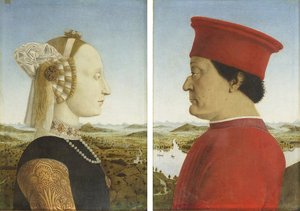
ピエロ・デッラ・フランチェスカ
1415 - 1492 , イタリア
基本情報
- フルネーム: ピエロ・デッラ・フランチェスカ
- 主な作品:
- 受胎告知
- 真の十字架の伝説
- モンテフェルトロ祭壇画
- 出生地: サンセポルクロ(イタリア)
- 国籍: イタリア
- 影響を与えたアーティスト:
- レオナルド・ダ・ヴィンチ
- ラファエロ
- 影響を受けたアーティスト:
- マサッチョ
- ドメニコ・ヴェネツィアーノ
- 死亡年月日: 1492年10月12日
- 生年月日: 1415年頃
- 芸術運動またはスタイル: 初期ルネサンス
関連記事
Piero della Francesca: Renaissance Perspective, Divine Proportion & the Pursuit of Ideal Form
Explore the revolutionary art of Piero della Francesca – master of perspective, divine proportion & Renaissance humanism. Discover his iconic paintings & lasting influence on art history.

ラファエロ傑作25選:ルネサンス巨匠の物語と芸術の世界 | ArtsDot
ラファエロの傑作25選🎨 ルネサンス巨匠の物語と芸術の世界を紐解きます。美しい絵画複製や壁掛けアートで、お部屋に名画の彩りを。ArtsDot.comで、美術史に残る作品群をご覧ください✨

ウフィツィ美術館の至宝25選:ルネサンス巨匠たちの傑作とアートデコレーション
ウフィツィ美術館の至宝25選:ボッティチェリ、レオナルド・ダ・ヴィンチ…ルネサンス巨匠たちの傑作と感動的な物語を紐解きます。高品質な絵画複製やアートプリントで、お部屋に名画の輝きを。ArtsDot.comで芸術の世界へ。
The Flourishing of Individuality: Renaissance Humanism & Artistic Innovation
Explore the profound impact of Renaissance humanism on art! Discover masterpieces by Piero della Francesca & Botticelli, and learn how this philosophy shaped a new era of artistic innovation. Find museum-quality reproductions at ArtsDot.
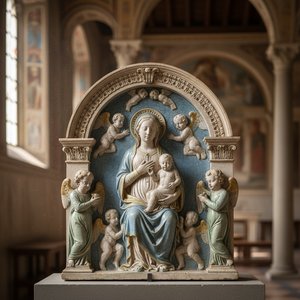
Luca della Robbia: Renaissance Sculpture & the Innovation of Terracotta Glazing
Discover the innovative terracotta glazing techniques of Luca della Robbia, a Renaissance master sculptor. Explore his iconic works, legacy, and collecting tips with ArtsDot.