 プレビュー
プレビュー
 シェアする
シェアする シェアする
シェアする
 詳細を見る
詳細を見る

 ダウンロード
 似ている作品
 X線調査
X線調査 スライドショー
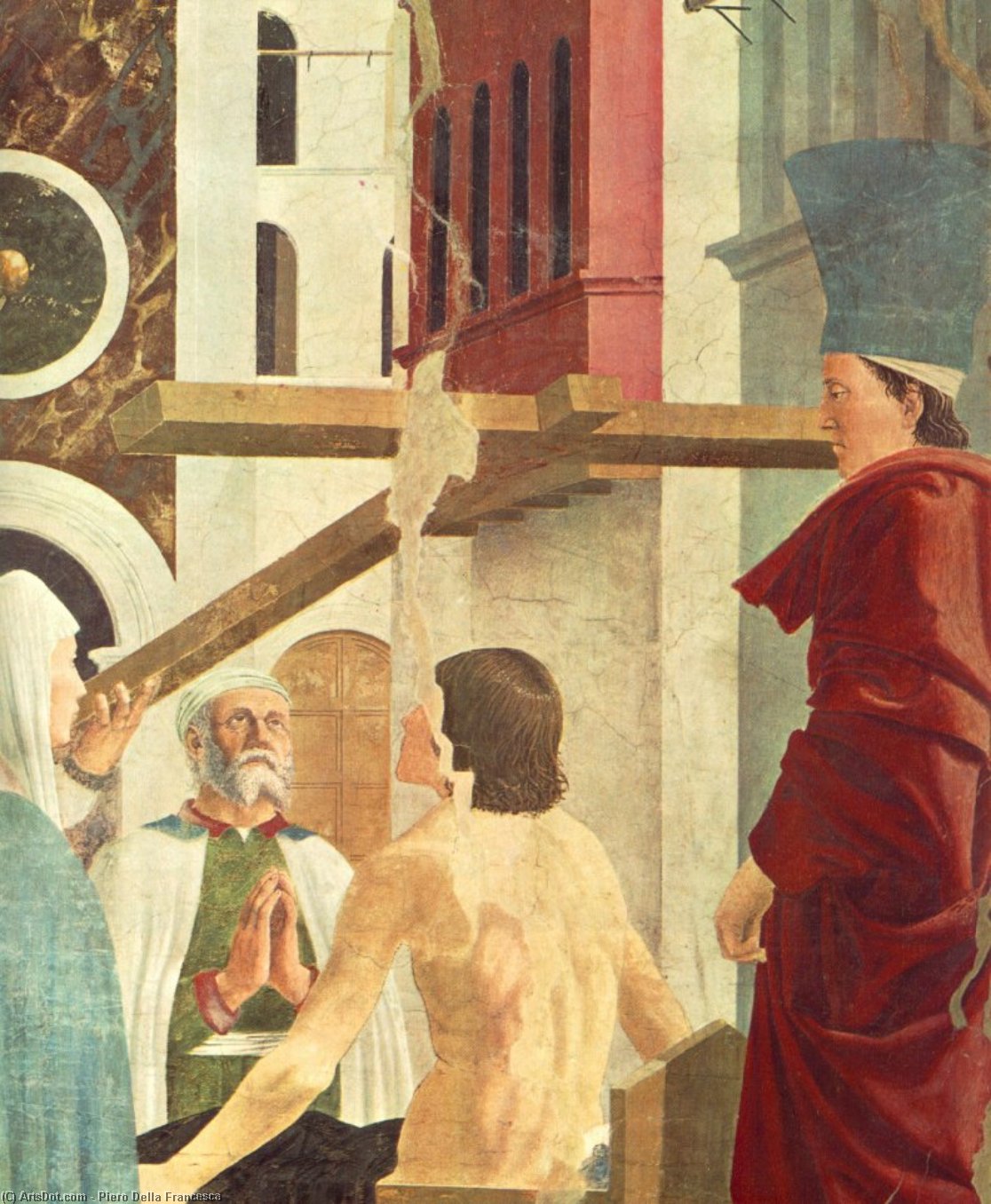
Proof of the True Cross (detail)2

 詳細を見る
詳細を見る
ジークレー/アートプリント
迅速な制作と多彩な仕上げオプションを備えた、ミュージアムクオリティのジークレーまたはキャンバスプリント。 ( 手描きの絵画を購入 画像を購入)




P118B $10

P118H $10

P118W $10

P438Z $10

P508JH $12

P508YH $12

P805H $10

P805Z $10

P919BZ $10

P919G $10

P919XJ $10

P959ZH $10

P968JZ $12

W106C $8

W218G $10

W218JH $8

W218Y $10

W307PJ $10

W316G $10

W316PJ $8

W316Y $10

W398PJ $8

W4111J $10

W500HY $15

W500JH $15

W692G $12

W849H $8

W940BG $15

W953PJ $8




作品のオリジナル比率に合わせた、当店の規定サイズからお選びください。

特定のフレームやスペースに合わせて、ご自身でサイズを指定することも可能です。選択されたサイズが元の画像の比率と一致しない場合、作品をトリミングするか、鏡面反射または単色での塗りつぶしによって画像を拡張いたします。制作を開始する前に、ご確認用のデジタルモックアップをお送りいたします。
画面上のプレビューには、実際のトリミングや拡張は反映されませんのでご注意ください。最終的な構図を正確に確認できるのは、モックアップのみとなります。
カスタムサイズも承っておりますが、元の比率を維持するためには、あらかじめ用意されたリストからサイズを選択することをお勧めいたします。


 ガラスオプションは、110cm未満のサイズでのみご利用いただけます。

Proof of the True Cross (detail)2
ジークレー/アートプリント
複製画のサイズ
-


合計金額
$ 62
作品詳細説明
A Masterpiece of Renaissance Precision: Piero della Francesca’s ‘Proof of the True Cross’
Piero della Francesca, born around 1415 in San Sepolcro, Umbria – a town steeped in artistic tradition yet remarkably untouched by the flamboyant excesses of Florence – stands as one of the most intellectually disciplined and profoundly influential painters of the Early Renaissance. Unlike many artists of his era whose lives unfold with considerable fanfare documented in biographical treatises, Piero’s personal history remains shrouded in mystery; details concerning his family lineage and formative years are scarce—a deliberate choice perhaps reflecting a painter preoccupied with capturing not merely appearances but underlying truths. However, what *is* undeniable is his extraordinary mind – equally captivated by the burgeoning artistic innovations of Florence and rigorously grounded in the precise mathematical principles underpinning perspective and proportion. His father was a shoemaker and tanner, providing Piero with a modest upbringing that nonetheless fostered an appreciation for craftsmanship and observation—skills crucial to developing his distinctive visual language. Initial artistic instruction likely occurred locally, absorbing the stylistic conventions of central Italian painting before Masaccio and Brunelleschi irrevocably altered the course of Renaissance art. This early exposure undoubtedly instilled in him a commitment to meticulous detail and geometric accuracy, characteristics that would define his oeuvre for decades to come.The Style and Technique: Geometric Harmony Embodied
Della Francesca’s artistic vision transcended mere imitation; he sought to elevate painting beyond superficial representation toward an idealized form rooted in mathematical certainty. His approach is characterized by a masterful deployment of linear perspective, achieved with astonishing precision—a technique pioneered by Brunelleschi and enthusiastically embraced by Masaccio that revolutionized the depiction of space. Unlike artists who relied on atmospheric haze or shading to convey depth, della Francesca employed orthogonal lines converging at vanishing points to create an illusion of three-dimensionality that remains remarkably convincing even today. This unwavering commitment to geometric harmony extends beyond perspective; he meticulously calculated proportions based on the Golden Ratio—a mathematical proportion found throughout nature and considered by Renaissance thinkers to embody divine beauty—resulting in compositions that possess a palpable sense of balance and order. The artist’s palette is restrained, favoring muted earthy tones – ochres, siennas, and umbers – which contribute to the painting's serene atmosphere and heighten its sculptural quality.Historical Context: Faith and Reason Converge
‘Proof of the True Cross,’ painted circa 1452 for the Basilica of San Francesco in Assisi—a commission reflecting the fervent piety of Umbrian society—represents a pivotal moment in Renaissance artistic thought. The painting’s subject matter – the crucifixion of Jesus Christ – is treated with solemn dignity and intellectual rigor, aligning perfectly with the humanist ideals championed by figures like Pico della Mirandola who sought to reconcile faith and reason. Della Francesca's depiction eschews dramatic gestures or emotional expressions; instead, he presents a carefully constructed tableau that invites contemplation rather than eliciting immediate affective response. This deliberate restraint underscores his belief that true beauty resides not in fleeting sensations but in enduring truths—a conviction powerfully conveyed through the painting’s geometric precision and harmonious coloration.Symbolism: Beyond Literal Representation
The composition itself is laden with symbolic significance. The central crucifix dominates the scene, representing Christ's sacrifice and embodying divine compassion. The figures surrounding it – including Saint Francis of Assisi himself – are rendered with understated realism, emphasizing their spiritual stature rather than physical appearance. Notably, the placement of the figures within the orthogonals—the converging lines of perspective—suggests a hierarchical order reflecting theological doctrines concerning salvation and redemption. Furthermore, the careful attention to detail—from the folds of Saint Francis’ robe to the texture of the wood – speaks to della Francesca's unwavering dedication to capturing the materiality of the world with uncompromising accuracy.Emotional Impact: Tranquility Amidst Suffering
Despite its depiction of a profoundly sorrowful event, ‘Proof of the True Cross’ exudes an aura of serene contemplation. Della Francesca achieves this effect not through overt emotionalism but by conveying profound spiritual depth—a testament to his artistic genius. The painting invites viewers to engage in a meditative process, prompting reflection on themes of faith, humility, and divine grace. Its enduring beauty lies precisely in its ability to transcend the limitations of mere visual representation, communicating an intangible sense of solemn reverence that continues to resonate with audiences centuries later. It stands as a beacon of Renaissance artistic excellence—a masterpiece demonstrating how intellectual rigor can illuminate the deepest recesses of human experience.関連作品
アーティストの略歴
ピエロ・デッラ・フランチェスカ:静謐と秩序の探求者
15世紀初期ルネサンスを代表する画家、ピエロ・デッラ・フランチェスカ。彼の名は、単なる芸術家という枠を超え、数学者、幾何学者としても知られています。ウンブリア地方の小さな町サンセポルクロで生まれ、その生涯は謎に包まれている部分も多いものの、残された作品群は、静謐な美と秩序への飽くなき探求を物語っています。フランチェスカの芸術は、単なる写実性を超え、知性と精神性が融合した独自の表現へと昇華されており、後世の芸術家たちに多大な影響を与えました。
生い立ちと初期の試み:フィレンツェとの出会い
ピエロ・デッラ・フランチェスカは、1415年頃、サンセポルクロで生まれました。父は革細工師であり、裕福な家庭環境で育ったピエロは、幼少期から教育を受け、読み書き能力も身につけました。1430年代には、地元の画家アントニオ・ダンギアリのもとで修行を積み、その後、芸術の中心地であるフィレンツェへと旅立ちます。そこで彼は、マサッチョの革新的な壁画や、フィリッポ・ブルネレスキの建築的才能に触発され、遠近法という新たな表現手法に魅せられます。ドメニコ・ヴェネツィアーノとの共同制作を通じて、フランチェスカはフィレンツェの芸術様式を深く理解し、自身の芸術性を磨き上げていったのです。
真実の十字架:傑作が生み出す静謐な世界
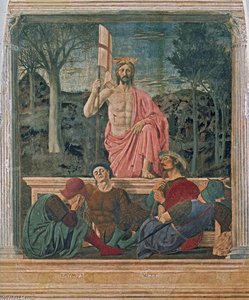
ピエロ・デッラ・フランチェスカの名声を決定づけたのは、アレーッツォのサン・フランチェスコ教会に描かれた『真実の十字架物語』の壁画です。この作品群は、十字架の木材が発見されるまでの伝説を壮大なスケールで描き出しており、その構成と色彩、そして何よりも人物の表情には、深い精神性と静謐さが漂っています。遠近法を駆使した緻密な空間描写は、見る者を圧倒し、まるで現実世界に入り込んだかのような錯覚を与えます。フランチェスカは、単なる物語を描くのではなく、人間の内面にある信仰心や希望といった普遍的なテーマを表現しようとしたのです。
数学と芸術の融合:遠近法への探求
ピエロ・デッラ・フランチェスカの芸術の特徴として、数学的知識との融合が挙げられます。彼は、レオナルド・ダ・ヴィンチやミケランジェロに先駆けて、遠近法の理論を深く研究し、それを自身の作品に応用しました。『遠近法に関する画法』という著書にも残されているように、彼は幾何学的な計算に基づいた正確な空間表現を追求しました。その結果、フランチェスカの作品は、単なる写実性を超え、秩序と調和がもたらす美しさを体現したものとなっています。彼の絵画は、まるで精密機械のように完璧に計算され、配置された要素が、見る者の心を静かに魅了するのです。
後世への影響:ルネサンスを越えた普遍性
ピエロ・デッラ・フランチェスカの芸術は、生前の評価とは異なり、20世紀になってようやくその真価が再認識されました。レオナルド・ダ・ヴィンチやラファエロといった巨匠たちも、彼の作品から影響を受けたと伝えられており、ルネサンス美術における重要な位置を占めています。フランチェスカの静謐で秩序立った世界観は、現代においても多くの人々に感動を与え続けています。彼の芸術は、単なる過去の遺産ではなく、普遍的な美と知性の探求という形で、未来へと受け継がれていくでしょう。
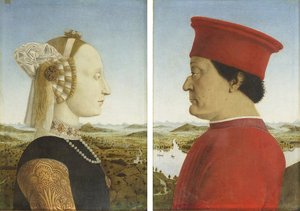
ピエロ・デッラ・フランチェスカ
1415 - 1492 , イタリア
基本情報
- フルネーム: ピエロ・デッラ・フランチェスカ
- 主な作品:
- 受胎告知
- 真の十字架の伝説
- モンテフェルトロ祭壇画
- 出生地: サンセポルクロ(イタリア)
- 国籍: イタリア
- 影響を与えたアーティスト:
- レオナルド・ダ・ヴィンチ
- ラファエロ
- 影響を受けたアーティスト:
- マサッチョ
- ドメニコ・ヴェネツィアーノ
- 死亡年月日: 1492年10月12日
- 生年月日: 1415年頃
- 芸術運動またはスタイル: 初期ルネサンス
関連記事
Sacred Narratives Embodied: A Comprehensive Exploration of Religious Iconography in Art History
Explore the rich history of religious iconography in art! Discover symbolism, movements & masterpieces from Byzantine to Renaissance periods. Expert insights for collectors and enthusiasts at ArtsDot.
フラ・アンジェリコの傑作25選:ルネサンス美術の神髄と至高の装飾 | ArtsDot
フラ・アンジェリコの傑作25選。ルネサンス美術の神髄を紐解き、天使のような静謐な色彩と宗教画の世界へ誘います。壁画やフレスコ画の技法、修道院に息づく祈りの絵…ArtsDotで至高のアートプリントをお手軽に。コレクションを探索する。
Sacred Narratives on Canvas: Exploring Religious Scenes & Their Enduring Influence
Explore the rich history of religious art from Giotto to the Renaissance masters with ArtsDot. Discover symbolism, techniques & enduring legacies. Museum-quality reproductions available.
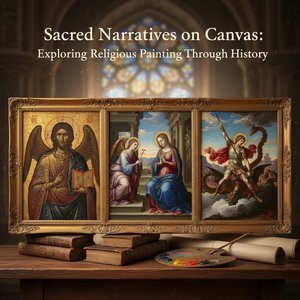
Sacred Narratives on Canvas: Exploring Religious Painting Through History
Explore the rich history of religious painting with ArtsDot.com! Discover iconic artworks, symbolism & techniques from antiquity to the Renaissance. Enhance your art appreciation today.
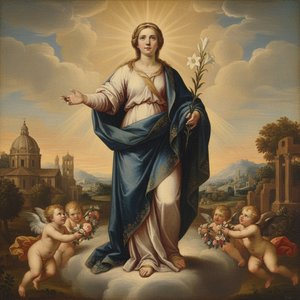
Embodied Divinity: Exploring Grace & Spiritual Representation in Western Art History
Explore the captivating history of divine grace in Western art! Discover masterpieces by Holbein, Raphael & Fra Angelico. Expert analysis for collectors and enthusiasts at ArtsDot.