

 プレビュー
プレビュー
 プリントを購入
 シェアする
シェアする シェアする
シェアする
 詳細を見る
詳細を見る

 ダウンロード
 似ている作品
 X線調査
X線調査 スライドショー
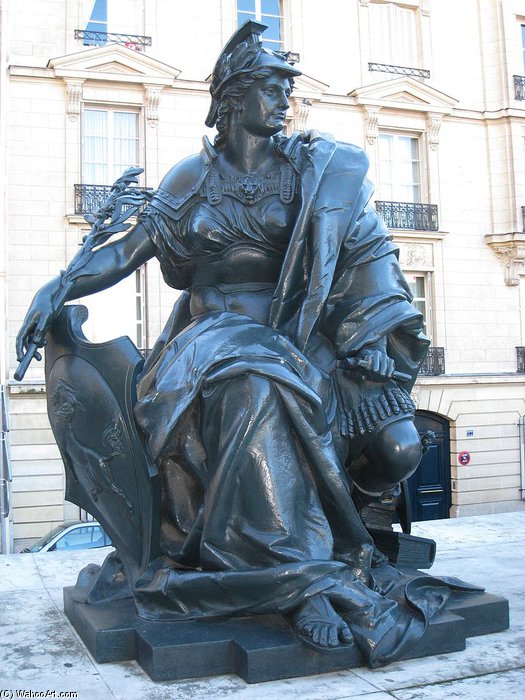
L'europe
 詳細を見る
詳細を見る




































作品のオリジナル比率に合わせた、当店の規定サイズからお選びください。

特定のフレームやスペースに合わせて、ご希望のサイズをご入力いただけます。選択されたサイズが元の画像の比率と異なる場合、アートワークをトリミングするか、手描きで要素を追加して絵画を拡張いたします。デジタルモックアップ を制作し、制作開始前にご確認(承認)をいただきます。
画面上のプレビューは、実際のトリミングや拡張を正確に反映しているものではありません。最終的な構図は、モックアップによってのみ正確にご確認いただけます。
カスタムサイズもご利用いただけますが、元の比率を維持するためには、あらかじめ用意されたリストからサイズを選択することをお勧めいたします。
ご注文後、ArtsDot.com チームより詳細な指示をお送りするとともに、仕上がりイメージ(モックアップ)をご提供いたします。


 ガラスオプションは、110cm未満のサイズでのみご利用いただけます。

L'europe
複製技法
複製画のサイズ
-


合計金額
$ 263
関連作品



アーティストの略歴
The Sculptor of Classical Grace: Pierre Alexandre Schoenewerk
In the heart of nineteenth-century Paris, a period defined by the transition from Romantic fervor to the disciplined elegance of the Victorian era, Pierre Alexandre Schoenewerk emerged as a master of stone and bronze. Born in 1820, Schoenewerk was not merely a sculptor but a custodian of classical tradition, breathing life into cold marble through a meticulous dedication to form and anatomical precision. His journey began within the prestigious halls of the École Supérieure des Beaux-Arts, where he immersed himself in an environment that demanded both technical rigor and emotional depth. Under the guidance of legendary figures such as Jean-Baptiste Carpeaux and Alexandre Barye, Schoenewerk learned to balance the burgeoning realism of his age with a profound reverence for the sculptural ideals established by the ancients.
The essence of Schoenewerk’s artistry lies in his ability to capture the fleeting nuances of human emotion within the permanence of sculpture. His training under David d'Angers, a titan of French sculpture, instilled in him a sense of monumental purpose. This influence is palpable in his most celebrated works, where the weight of grief or the lightness of youth is rendered with exquisite sensitivity. He did not seek the dramatic distortions often found in Romanticism; instead, he pursued a path of reasoned imitation and careful observation. His surfaces, often polished to a luminous sheen, invite the viewer to witness the delicate interplay of light and shadow across drapery and skin, creating a sense of movement that belies the stillness of his medium.
Masterpieces of Emotion and Form
To encounter a work by Schoenewerk is to engage in a silent dialogue with history. His repertoire spans various subjects, yet a recurring theme of poignant human experience binds his oeuvre together. One cannot discuss his legacy without mentioning La jeune Tarantine (The Tarantine Girl), a breathtaking marble composition from 1871. In this piece, the sculptor achieves a heartbreakingly beautiful portrayal of mourning, where every curve of the marble conveys the profound sorrow of a young woman lost in grief. This work, now held in the prestigious Musée d'Orsay, serves as a definitive testament to his ability to translate psychological depth into physical form.
Beyond the depths of tragedy, Schoenewerk also explored themes of grace and mythological beauty. His sculptures such as Jeune fille à la Fontaine and The Bather showcase a lighter, more ethereal side of his talent, focusing on the harmony of the human figure within its environment. Whether working in the enduring strength of bronze for pieces like Andromeda or the delicate translucency of marble, his technical mastery remained consistent. His ability to manipulate texture—from the smooth, idealized skin of a nymph to the intricate folds of classical garments—allowed him to create works that felt both timeless and intensely alive.
Legacy and Historical Significance
The recognition bestowed upon Schoenewerk during his lifetime reflects his standing within the French artistic hierarchy. In 1873, his contributions to the arts were formally honored when he was named a Chevalier of the French Legion of Honor, a distinction that solidified his reputation among the elite of the Parisian art world. His works became fixtures in significant collections and public spaces, contributing to the visual identity of a France that was deeply enamored with its classical heritage even as it moved toward modernity.
Today, the historical significance of Pierre Alexandre Schoenewerk resides in his role as a bridge between eras. He preserved the meticulous techniques of the Neoclassical tradition while infusing them with a sense of realism and emotional resonance that spoke to the sensibilities of the late nineteenth century. His ability to honor the precedents of masters like Michelangelo while navigating the complexities of his own time ensures that his sculptures remain much more than mere relics; they are enduring explorations of the human condition, frozen in the eternal beauty of stone.

pierre alexandre schoenewerk
1820 - 1885 , France
基本情報
- Artistic Movement Or Style: Realism
- Artists Who Influenced This Artist: ["David d'Angers"]
- Date Of Birth: Paris, France (1820)
- Date Of Death: 1885
- Full Name: Pierre Alexandre Schoenewerk
- Nationality: French
- Notable Artworks:
- Brunnenfigur Von Alexandre Schoenewerk
- Au Matin
- The Tarantine Girl
- Place Of Birth: Paris