

 プレビュー
プレビュー
 シェアする
シェアする シェアする
シェアする
 詳細を見る
詳細を見る

 ダウンロード
 似ている作品
 X線調査
X線調査 スライドショー
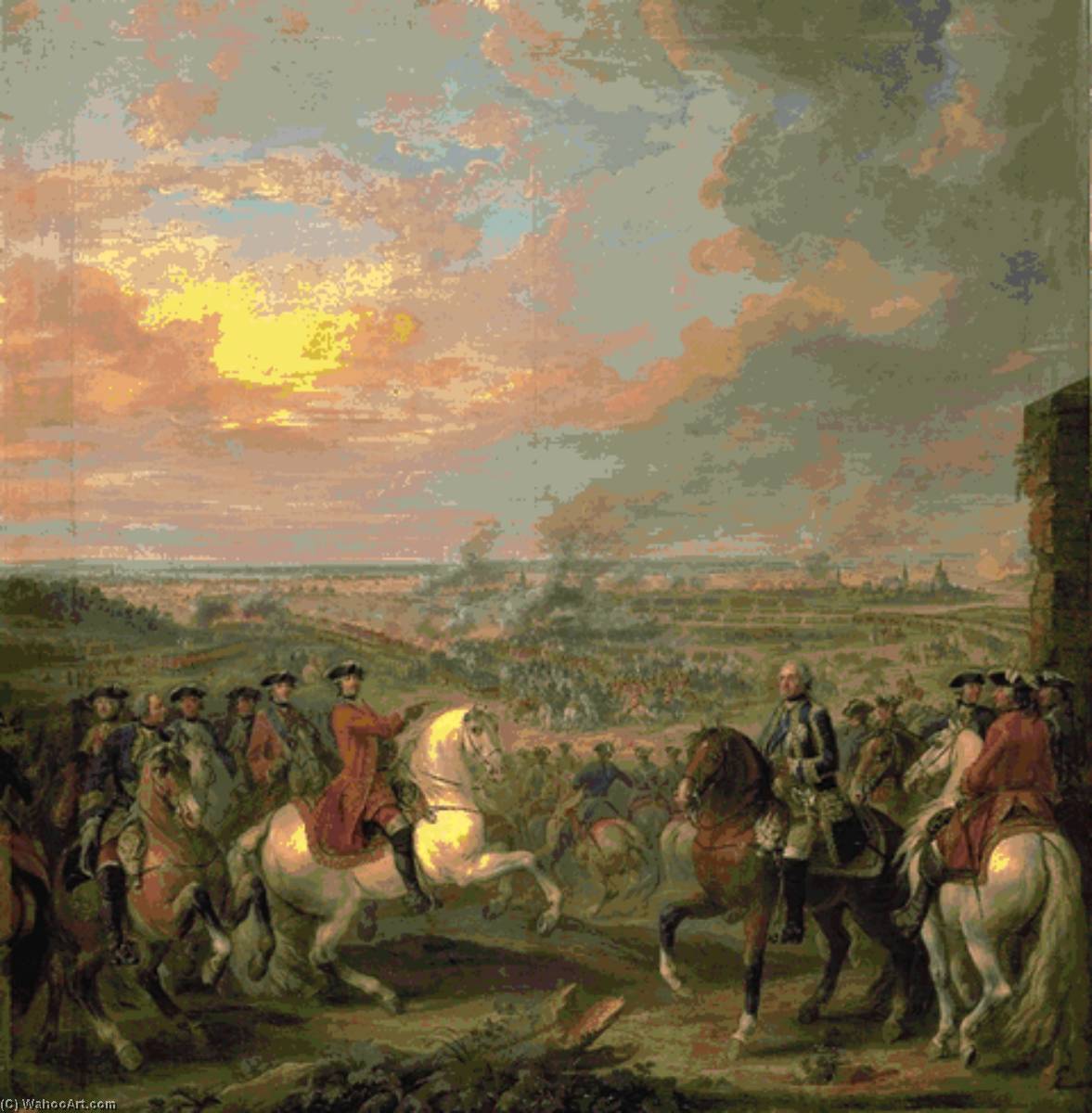
EPISODE DU COMBAT DE MELLE.1745 DIT AUTREFOIS BATAILLE DE FONTENOY


 詳細を見る
詳細を見る
ジークレー/アートプリント
迅速な制作と多彩な仕上げオプションを備えた、ミュージアムクオリティのジークレーまたはキャンバスプリント。 ( 手描きの絵画を購入 画像を購入)




P118B $10

P118H $10

P118W $10

P438Z $10

P508JH $12

P508YH $12

P805H $10

P805Z $10

P919BZ $10

P919G $10

P919XJ $10

P959ZH $10

P968JZ $12

W106C $8

W218G $10

W218JH $8

W218Y $10

W307PJ $10

W316G $10

W316PJ $8

W316Y $10

W398PJ $8

W4111J $10

W500HY $15

W500JH $15

W692G $12

W849H $8

W940BG $15

W953PJ $8




作品のオリジナル比率に合わせた、当店の規定サイズからお選びください。

特定のフレームやスペースに合わせて、ご自身でサイズを指定することも可能です。選択されたサイズが元の画像の比率と一致しない場合、作品をトリミングするか、鏡面反射または単色での塗りつぶしによって画像を拡張いたします。制作を開始する前に、ご確認用のデジタルモックアップをお送りいたします。
画面上のプレビューには、実際のトリミングや拡張は反映されませんのでご注意ください。最終的な構図を正確に確認できるのは、モックアップのみとなります。
カスタムサイズも承っておりますが、元の比率を維持するためには、あらかじめ用意されたリストからサイズを選択することをお勧めいたします。


 ガラスオプションは、110cm未満のサイズでのみご利用いただけます。

EPISODE DU COMBAT DE MELLE.1745 DIT AUTREFOIS BATAILLE DE FONTENOY
ジークレー/アートプリント
複製画のサイズ
-


合計金額
$ 62
作品詳細説明
A Vision of Valor: Pierre L'Enfant’s “Episode du Combat de Melle.1745”
The painting "Episode du Combat de Melle.1745," also known as the Battle of Fontenoy, stands as a monumental testament to Pierre Charles L’Enfant’s artistic prowess and his pivotal role in shaping the landscape of Washington D.C., though it predates the city's formal establishment by several decades. Executed around 1771, this dramatic depiction captures a moment frozen in time—the fervent anticipation preceding a decisive clash between French and Prussian armies during the Seven Years’ War. More than just a historical record, L’Enfant’s masterpiece embodies the spirit of Enlightenment idealism and reflects his profound understanding of military strategy interwoven with artistic expression.- Subject Matter: The scene portrays a battlefield tableau—a squadron of French cavalry charging into action against Prussian forces. The artist meticulously rendered the dynamism of movement, conveying the urgency and intensity of the impending battle.
- Style & Technique: L’Enfant adhered to the principles of Neoclassicism, drawing inspiration from classical sculpture and architecture. His brushstrokes are deliberate and controlled, prioritizing clarity and precision—a hallmark of the style—to achieve a sense of grandeur and solemnity. The palette is muted yet impactful, utilizing earthy tones to emphasize the seriousness of the subject matter.
- Historical Context: Fontenoy was a crucial engagement in the larger conflict between Britain and France for dominance over Europe. L’Enfant's painting served as a visual chronicle of this pivotal moment, reflecting the anxieties and aspirations of the era. It speaks to the broader narrative of colonial ambition and the struggle for national identity.
- Symbolism: The central figure—a French officer astride a white horse—represents leadership and courage amidst adversity. The horse itself symbolizes nobility and strength, mirroring the ideals of republican virtue championed during the American Revolution. L’Enfant skillfully employed visual cues to communicate these concepts, elevating the painting beyond mere depiction into a statement about moral fortitude.
- Emotional Impact: Viewing “Episode du Combat de Melle.1745” evokes feelings of awe and contemplation. The artist's masterful composition compels the viewer to confront the realities of warfare while simultaneously celebrating human resilience—a duality that underscores L’Enfant’s artistic vision.
関連作品

アーティストの略歴
A Life Bridging Worlds: Pierre Charles L'Enfant and the Birth of a Capital
Pierre Charles L’Enfant, a name often synonymous with the grand design of Washington, D.C., was far more than just an architect or city planner. Born in Paris on August 2, 1754, into a family steeped in artistic tradition – his father, Pierre L'Enfant, served as a painter to King Louis XV – young Charles’s early life unfolded amidst the elegance and intellectual ferment of pre-revolutionary France. He received a rigorous education at the Royal Academy in the Louvre, honing his skills not only in painting but also in engraving and architecture under his father’s tutelage. However, destiny beckoned him across the Atlantic, drawn by the burgeoning spirit of rebellion in the American colonies. A pivotal encounter with Pierre Augustin Caron de Beaumarchais, the playwright and secret agent, led to L'Enfant’s enlistment as a military engineer in support of the Continental Army in 1777. This decision marked a dramatic shift, transforming him from a French artist into an active participant in the forging of a new nation. He even adopted the more Americanized name “Peter” upon his arrival, signaling a conscious embrace of his chosen allegiance.From Battlefield Engineer to Portraitist of Revolutionaries
L’Enfant's service during the Revolutionary War was distinguished and multifaceted. He quickly rose through the ranks, becoming a captain in the Corps of Engineers by 1779, serving with Major General Lafayette and even finding himself on General George Washington’s staff at Valley Forge. It was during this period that his artistic talents found renewed expression, though now directed towards capturing the likenesses of key figures and documenting the realities of war. The Marquis de Lafayette commissioned him to paint a portrait of Washington, a testament to L'Enfant’s growing reputation as an artist capable of conveying both physical resemblance and character. Beyond this significant commission, he created numerous pencil portraits of Washington and other Continental Army officers, offering intimate glimpses into the faces that shaped American independence. He also documented scenes of encampments, providing visual records of the hardships and resilience of the soldiers. Wounded at the Siege of Savannah in 1779 and later captured during the surrender of Charleston in 1780, L’Enfant endured the trials of war firsthand before being exchanged in 1780 and continuing his service until the army's disbandment in 1783. His wartime experiences instilled within him a deep admiration for the American ideals of liberty and self-governance, shaping his future endeavors.A Vision for the New Republic: Designing Washington, D.C.
Following the war, L’Enfant established himself as a successful civil engineer in New York City, undertaking projects ranging from furniture design to architectural renovations – notably redesigning New York City Hall for the First Congress of the United States (resulting in Federal Hall). However, his most enduring legacy would be his visionary plan for the nation's capital. In 1791, President George Washington tasked L’Enfant with designing a federal city on the Potomac River, a project born from political compromise between northern and southern states. The “Residence Act” had established the location, but it was L’Enfant who transformed this nascent idea into a breathtaking reality. His plan, presented in 1791 – often referred to as the "L'Enfant Plan" – was revolutionary for its time. It incorporated grand avenues radiating from prominent circles and squares, monumental public buildings strategically positioned to emphasize civic power, and a harmonious blend of natural landscapes with carefully planned urban spaces. He envisioned a city that would not merely function as a seat of government but also inspire awe and embody the ideals of the new republic. The plan drew heavily on European Baroque and Neoclassical principles, reflecting L’Enfant's artistic training, yet adapted them to the American context, creating something uniquely its own.Legacy and Lasting Influence
Though his relationship with the commissioners overseeing the project became strained due to his strong personality and uncompromising vision – leading to his eventual dismissal in 1792 – L’Enfant's fundamental plan for Washington, D.C., remained largely intact. The city that rose from the shores of the Potomac stands as a testament to his genius, a living embodiment of his artistic and engineering prowess. His influence extends beyond the physical layout of the capital; he established principles of urban planning that continue to inform civic design today. L’Enfant also contributed to other aspects of national symbolism, designing the badge for the Society of the Cincinnati, an organization of former Continental Army officers, and even working on designs for American coinage. He spent his later years largely in relative obscurity, struggling financially despite his significant contributions. He died in 1825, but his vision lives on, etched into the very fabric of the nation’s capital. Pierre Charles L'Enfant was a true Renaissance man, seamlessly blending artistic sensibility with engineering expertise and unwavering dedication to the ideals of the American Revolution, leaving an indelible mark on the landscape – and the spirit – of the United States.
pierre l'enfant
1754 - 1825 , France
基本情報
- Artistic Movement Or Style: Neoclassical
- Artists Or Movements Influenced By This Artist:
- City planning
- American architecture
- Artists Who Influenced This Artist: ["Pierre L'Enfant (father)"]
- Date Of Birth: August 2, 1754
- Date Of Death: 1825
- Full Name: Pierre Charles L'Enfant
- Nationality: French-American
- Notable Artworks:
- L'Enfant Plan
- Washington portraits
- Federal Hall design
- Place Of Birth: Paris, France
関連記事
ルノワール傑作25選:光と色彩が織りなす印象派の華麗なる世界 | ArtsDot
ルノワールの傑作25選🎨 印象派の光と色彩が輝く世界へ。絵画の背景、技法、そして時代を超えて愛される理由を紐解きます。ArtsDotで高品質な複製画やインテリアアートを見つけ、お部屋に芸術的な彩りを✨ Explore the full collection online!
ジョルジュ・スーラ傑作25選:光と色彩の科学が織りなす芸術の世界|ArtsDot
ジョルジュ・スーラの傑作25選。点描画の光と色彩、印象派から新印象派へ—ArtsDotで美術史を紐解き、リビングやダイニングを彩る高品質なアートプリントを見つけましょう。セーラ作品集をオンラインで鑑賞ください。
Pierre-Paul Prud'hon: Exploring Neoclassical Sensibility & Romantic Precursors
Explore the captivating world of Pierre-Paul Prud'hon, a pivotal French painter bridging Neoclassicism & Romanticism. Discover his allegorical masterpieces and lasting influence on 19th-century art history.
Pierre Puvis de Chavannes: Symbolism, Mural Painting, and the Pursuit of Ideal Beauty
Explore the life & work of Pierre Puvis de Chavannes, a pivotal Symbolist painter renowned for his monumental murals. Discover his aesthetic principles, key artworks like 'Hope,' and lasting influence on modern art. A deep dive into 19th-century French painting.

デトロイト美術館の至宝25選:名画とアートが語る街の歴史 | ArtsDot
デトロイト美術館の至宝25選。ゴッホ、モネ、レンブラント…名画に秘められた物語と感動を紐解きます。印象派から写実主義まで、美術史を彩る傑作を鑑賞。ArtsDotで高品質な複製画やインテリアアートを見つけましょう。全コレクションはこちら: ArtsDot.com

