 プレビュー
プレビュー
 シェアする
シェアする シェアする
シェアする
 詳細を見る
詳細を見る

 ダウンロード
 似ている作品
 X線調査
X線調査 スライドショー
Farm at Duivendrecht


 詳細を見る
詳細を見る
ジークレー/アートプリント
迅速な制作と多彩な仕上げオプションを備えた、ミュージアムクオリティのジークレーまたはキャンバスプリント。 ( 手描きの絵画を購入 画像を購入)




P118B $10

P118H $10

P118W $10

P438Z $10

P508JH $12

P508YH $12

P805H $10

P805Z $10

P919BZ $10

P919G $10

P919XJ $10

P959ZH $10

P968JZ $12

W106C $8

W218G $10

W218JH $8

W218Y $10

W307PJ $10

W316G $10

W316PJ $8

W316Y $10

W398PJ $8

W4111J $10

W500HY $15

W500JH $15

W692G $12

W849H $8

W940BG $15

W953PJ $8




作品のオリジナル比率に合わせた、当店の規定サイズからお選びください。

特定のフレームやスペースに合わせて、ご自身でサイズを指定することも可能です。選択されたサイズが元の画像の比率と一致しない場合、作品をトリミングするか、鏡面反射または単色での塗りつぶしによって画像を拡張いたします。制作を開始する前に、ご確認用のデジタルモックアップをお送りいたします。
画面上のプレビューには、実際のトリミングや拡張は反映されませんのでご注意ください。最終的な構図を正確に確認できるのは、モックアップのみとなります。
カスタムサイズも承っておりますが、元の比率を維持するためには、あらかじめ用意されたリストからサイズを選択することをお勧めいたします。


 ガラスオプションは、110cm未満のサイズでのみご利用いただけます。

Farm at Duivendrecht
ジークレー/アートプリント
複製画のサイズ
-


合計金額
$ 62
A Threshold of Transformation: The Soul of Duivendrecht
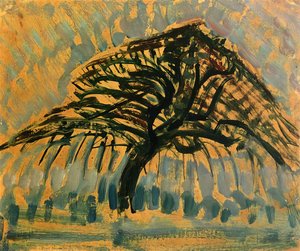
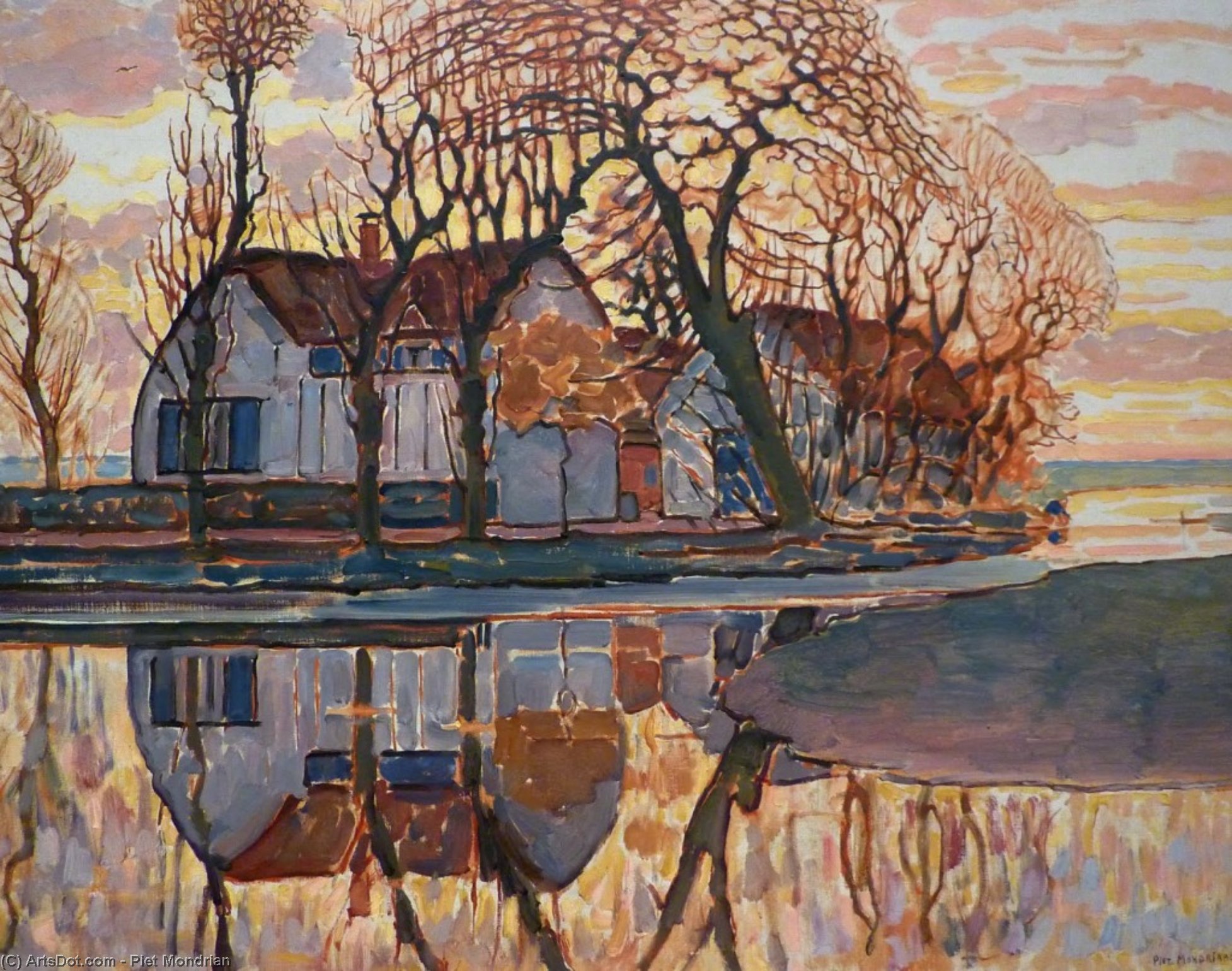
In the quiet evolution of modern art, few moments are as poignant as the transition captured in Piet Mondrian’s Farm at Duivendrecht. Painted around 1916, this masterpiece serves as a profound bridge between the recognizable world and the radical abstraction that would later define the twentieth century. At first glance, the viewer is greeted by a serene Dutch landscape, a scene of pastoral tranquility featuring a farmhouse nestled among a skeletal network of trees. Yet, beneath this picturesque surface lies a restless spirit, an artist caught in the act of deconstructing reality to find a more universal truth. The painting does not merely depict a location near Amsterdam; it documents the very moment where nature begins to dissolve into geometry.
The subject matter—a farmhouse and its surrounding trees—was a recurring obsession for Mondrian, who revisited this specific site with rhythmic persistence throughout the Great War. There is an intimate, almost meditative quality to the way he observes the flat topography of his native Holland. The house, with its sturdy chimney, stands as a grounded anchor amidst a landscape that feels increasingly ethereal. As one gazues into the composition, the trees do not appear as mere organic matter but as an interlocking web of dark, linear branches that begin to suggest the grid-like structures of his later, iconic De Stijl works. It is a landscape in the process of becoming a blueprint.
The Alchemy of Color and Line
Technically, Farm at Duivendrecht is a masterclass in controlled emotion. Mondrian moves away from the fragmented, chaotic perspectives of Cubism to embrace a more restrained, rhythmic approach. The palette is a deliberate departure from naturalism; while hints of the earth remain, they are elevated by a striking use of primary colors and luminous hues. A vibrant, almost celestial orange halo surrounds the dark branches, creating a sense of twilight or perhaps a spiritual dawn. This warmth is balanced by horizontal bands of color that suggest the horizon, punctuated by vertical black lines that impose a sense of structural order upon the scene.
For the collector or interior designer, this painting offers a unique duality. It possesses the soft, atmospheric charm of Impressionism, making it an exquisite addition to spaces that require warmth and a sense of history. Simultaneously, its burgeoning geometric rigor allows it to integrate seamlessly into contemporary, minimalist environments. The way the black lines intersect with the ochre and pale orange tones creates a visual rhythm that is both calming and intellectually stimulating. It is a piece that invites the eye to wander through the branches while simultaneously demanding respect for its structural precision.
A Legacy of Universal Harmony
Beyond its aesthetic beauty, the painting carries a deep symbolic weight. For Mondrian, the goal of art was to strip away the accidental and the temporary to reveal the permanent and the universal. In this work, we witness the stripping away of the "accidental" details of the farm to reveal the "permanent" essence of line and color. The tension between the organic shapes of the trees and the emerging mathematical precision of the composition reflects a search for harmony in an era of global upheaval. It is a visual manifestation of Neo-Plasticism in its infancy—a pursuit of balance that transcends borders and eras.
Owning a high-quality reproduction of this work is more than an act of decoration; it is an invitation to contemplate the beauty of transition. Whether placed in a sunlit studio or a sophisticated living space, Farm at Duivendrecht acts as a window into the mind of a genius. It reminds us that even within the most familiar landscapes, there is a hidden architecture waiting to be discovered, and that true harmony is found when we learn to see the underlying structure of the world around us.
関連作品
アーティストの略歴
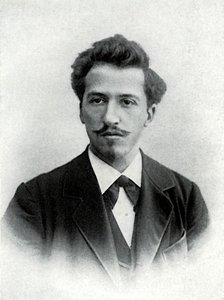
ピエト・モンドリアン:抽象の探求と普遍性の追求
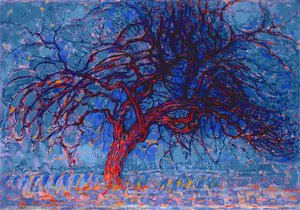
ピエト・モンドリアン、あるいは正式名称ではピーター・コルネリス・モンドリアーンは、1872年にオランダのアムステルダム郊外にあるアムスフォルトで生まれました。彼の芸術的旅路は、一朝一夕に開花したものではなく、徐々に深まる探求の道でした。幼少期から絵画の世界に触れ、叔父フリッツ・モンドリアンが既に画家として活躍していたことも影響を与えましたが、当初は風景画を通して自然を写実的に表現することに励みました。ハーグ派やオランダ印象派の影響を受けた初期作品群は、緻密な観察眼と卓越した技術を示唆する一方で、単なる再現を超えた何かを求める彼の内なる衝動を静かに物語っていました。点描主義やフォーヴィズムといった様々なスタイルへの試行錯誤を経て、モンドリアンは徐々に自身の芸術的アイデンティティを確立していくことになります。パリでの転換とネオプラスティシズムの誕生
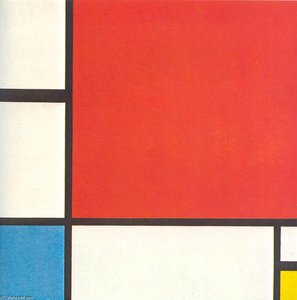
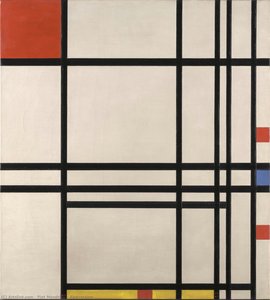
1912年、モンドリアンは芸術の中心地であるパリへと移り住きます。そこで彼は、キュビスムという革新的な芸術運動に触れ、その影響を受けました。しかし、単なる模倣ではなく、モンドリアンは自身の内にある精神的探求を深めるための手段として、キュビスムの解体主義的な手法を取り入れました。彼が信じていたのは、芸術が目に見える現実を超越した普遍的な真理を表現する力を持つという信念でした。この頃、彼は神智学の影響を受け、芸術を通して隠された宇宙の原理を表現しようと試みます。そして1917年頃には、ネオプラスティシズム(新造形主義)と呼ばれる独自の芸術理論を構築します。これは、直線、直角、そして赤、青、黄色の三原色という極めて限られた要素のみを用いることで、宇宙の秩序と調和を表現しようとする試みでした。モンドリアンにとって、この還元は単純化ではなく、むしろより高次の精神性を具現化するための手段だったのです。彼は同時代の芸術家テオ・ファン・ドゥルブルクと共に《De Stijl》(スタイル)という芸術運動を立ち上げ、ネオプラスティシズムの理念を広めました。《赤、青、黄による構成》や《第5番構成表題なし》といった作品は、この時期の彼の芸術的探求を象徴する傑作として知られています。ニューヨークと新たなリズム:晩年の創造性
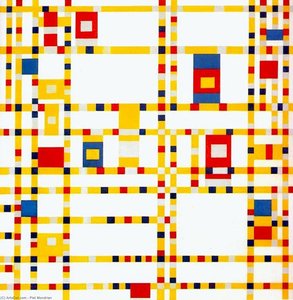
第二次世界大戦の勃発により、1940年、モンドリアンはヨーロッパからアメリカへと移住します。ニューヨークという都市に身を置いた彼は、そこで新たなインスピレーションを見出しました。マンハッタンのグリッド状の街並みは、彼の芸術的原則と驚くほど調和し、彼の創造性を刺激しました。晩年の作品《ブロードウェイ・ブギー・ウーギー》に見られるように、モンドリアンの絵画には、これまで以上にダイナミックなリズムとエネルギーが加わりました。直線は依然として重要な要素ですが、それらはより自由奔放に交差し、都市の活気あふれる雰囲気を表現しています。ジャズ音楽の影響も指摘されており、モンドリアンは自身の芸術的語彙を拡張しながら、現代都市における複雑さを捉えようとしたのです。1944年、ニューヨークで亡くなるまでの短い期間、彼は精力的に制作活動を続けました。遺産:抽象芸術とデザインへの影響
ピエト・モンドリアンの芸術は、単なる絵画を超えて、20世紀の美術史に多大な影響を与えました。彼の作品は、抽象表現主義、ミニマリズム、カラーフィールドペインティングといった後続の芸術運動に大きな影響を与え、現代アートの方向性を決定づけました。しかし、モンドリアンの影響力は絵画の世界だけに留まりません。彼のネオプラスティシズムの原則——単純さ、明瞭さ、幾何学的な秩序——は、建築、デザイン、ファッションといった様々な分野に浸透し、私たちの視覚的環境を形作ってきました。家具やテキスタイルから建物のファサード、グラフィックデザインに至るまで、モンドリアンの美意識は現代社会のあらゆる場所に息づいています。彼の芸術は、単なる美的価値を超え、普遍的な調和と精神性を追求する人間の飽くなき探求を体現しているのです。主要作品
- 《赤い風車》 - 初期における自然描写
- 《赤、青、黄による構成》 - ネオプラスティシズムの代表作
- 《第5番構成表題なし》 - 幾何学的な要素の純粋な表現
- 《ブロードウェイ・ブギー・ウーギー》 - ニューヨークの都市的リズムを捉えた作品
ピエト・モンドリアン
1872 - 1944 , オランダ
基本情報
- フルネーム: ピエト・モンドリアン
- 主な作品:
- Composition with Red, Blue and Yellow
- Tableau no. 2 Composition V
- Broadway Boogie Woogie
- 出生地: アムステルダム、オランダ
- 国籍: オランダ
- 影響を与えたアーティストまたは運動:
- 抽象表現主義
- ミニマリズム
- カラーフィールド絵画
- 影響を受けたアーティスト:
- ハーグ派
- 印象派
- キュビスム
- 死亡年月日: 1944年2月1日
- 生年月日: 1872年3月7日
- 芸術運動またはスタイル: ネオプラスティシズム、De Stijl
関連記事

幾何学的抽象絵画を定義した傑作10選|アート、アーティスト、インテリア装飾
モンドリアン、マレーヴィチ…幾何学的抽象絵画を代表する傑作10選。各作品の背景や色彩構成、アーティストの情熱に迫ります。美術館品質の複製画はArtsDot.comで。オンラインでアートコレクションをご覧ください。
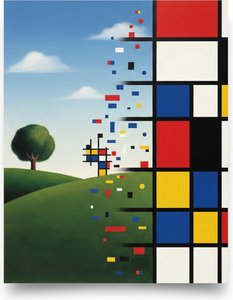
Piet Mondrian: Deconstructing Reality – A Study of Neo-Plasticism & Universal Harmony
Explore the revolutionary art of Piet Mondrian and the principles of Neo-Plasticism. Discover De Stijl's influence, iconic compositions like 'Composition with Red, Yellow and Blue,' and Mondrian’s lasting legacy on modern design.
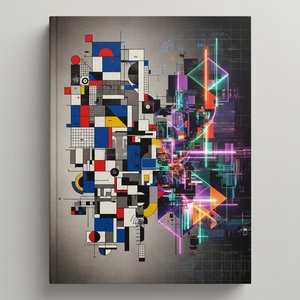
Beyond Form & Color: Geometric Abstraction's Evolution in 20th/21st Century Art
Explore the evolution of geometric abstraction from Cubism to contemporary art. Discover key artists like Malevich & Mondrian, investment insights, and expert collecting advice at ArtsDot.
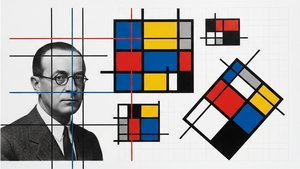
Theo van Doesburg: Pioneering De Stijl & the Evolution of Neo-Plasticism
Explore the revolutionary De Stijl movement & Neo-Plasticism with our expert guide. Discover Piet Mondrian, Theo van Doesburg, and the lasting impact of this influential art style. Learn about collecting & investing in De Stijl masterpieces.
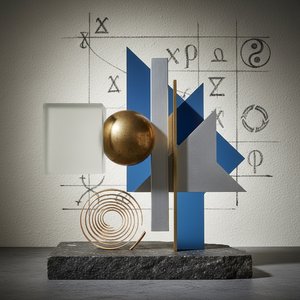
Beyond Form: Exploring the Philosophical Foundations of Geometric Abstraction
Explore the philosophical roots & artistic evolution of geometric abstraction with ArtsDot. Discover Mondrian, Malevich, De Stijl & more. Expert insights for collectors and art enthusiasts.