 プレビュー
プレビュー
 プリントを購入
 シェアする
シェアする シェアする
シェアする
 詳細を見る
詳細を見る

 ダウンロード
 似ている作品
 X線調査
X線調査 スライドショー
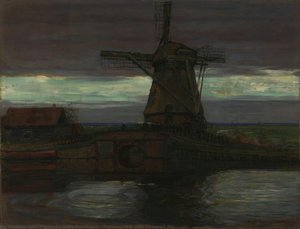
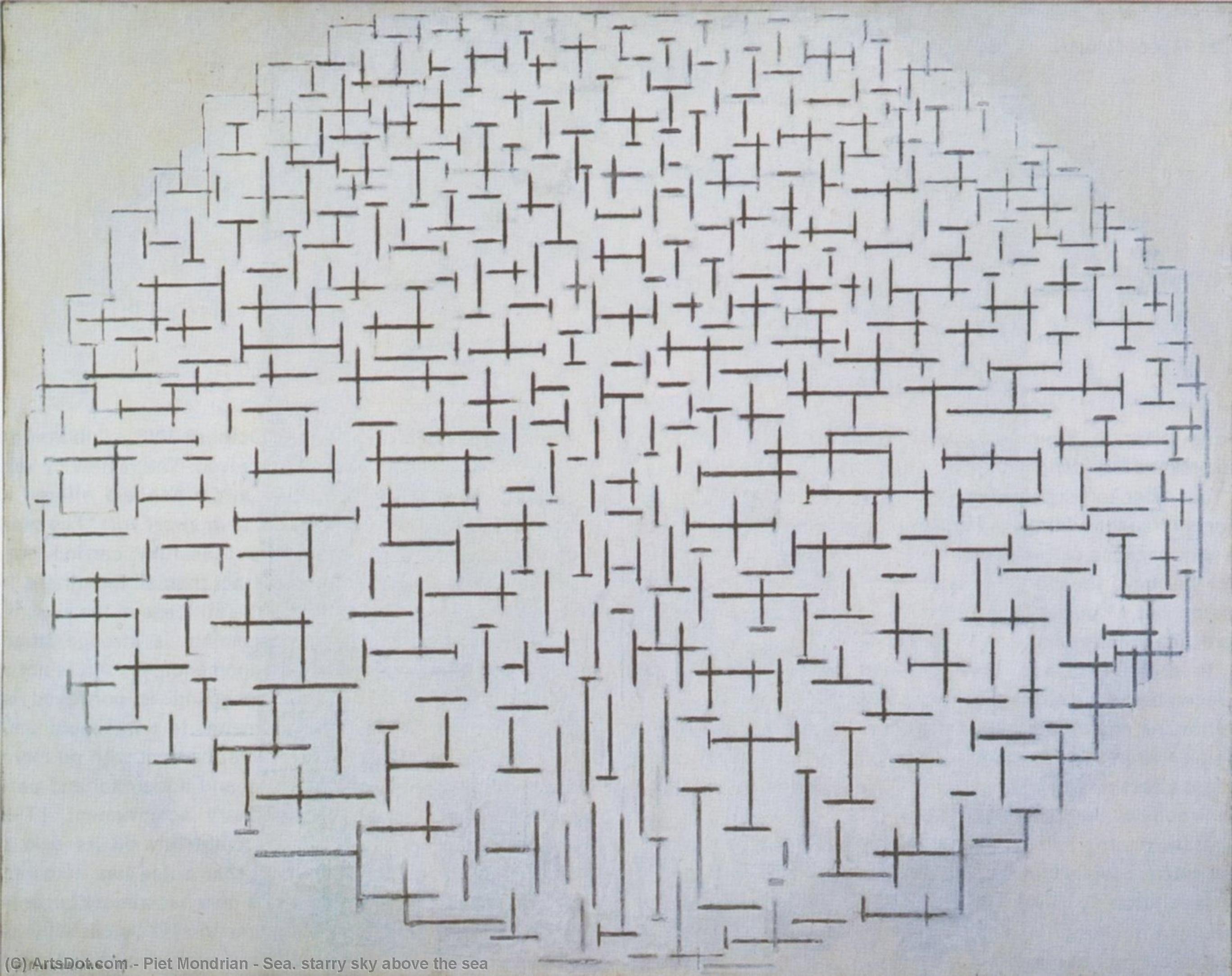
Sea. starry sky above the sea

 詳細を見る
詳細を見る




P118B $10

P118H $10

P118W $10

P438Z $10

P508JH $12

P508YH $12

P805H $10

P805Z $10

P919BZ $10

P919G $10

P919XJ $10

P959ZH $10

P968JZ $12

W106C $8

W218G $10

W218JH $8

W218Y $10

W307PJ $10

W316G $10

W316PJ $8

W316Y $10

W398PJ $8

W4111J $10

W500HY $15

W500JH $15

W692G $12

W849H $8

W940BG $15

W953PJ $8




作品のオリジナル比率に合わせた、当店の規定サイズからお選びください。

特定のフレームやスペースに合わせて、ご希望のサイズをご入力いただけます。選択されたサイズが元の画像の比率と異なる場合、アートワークをトリミングするか、手描きで要素を追加して絵画を拡張いたします。デジタルモックアップ を制作し、制作開始前にご確認(承認)をいただきます。
画面上のプレビューは、実際のトリミングや拡張を正確に反映しているものではありません。最終的な構図は、モックアップによってのみ正確にご確認いただけます。
カスタムサイズもご利用いただけますが、元の比率を維持するためには、あらかじめ用意されたリストからサイズを選択することをお勧めいたします。
ご注文後、ArtsDot.com チームより詳細な指示をお送りするとともに、仕上がりイメージ(モックアップ)をご提供いたします。


 ガラスオプションは、110cm未満のサイズでのみご利用いただけます。

Sea. starry sky above the sea
複製技法
複製画のサイズ
-


合計金額
$ 263
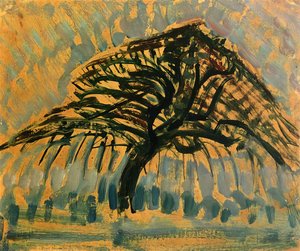
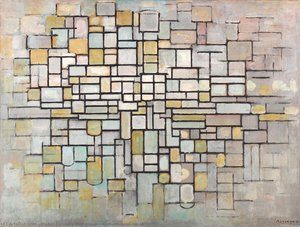
A Pioneer's Pursuit of Geometric Harmony: Exploring Piet Mondrian’s Sea
Piet Mondrian, born Pieter Cornelis Mondriaan in 1872, in Amersfoort, Netherlands, wasn’t a painter who burst onto the artistic scene with flamboyant declarations. Instead, his journey toward abstraction was marked by quiet observation and persistent experimentation—a process that ultimately yielded one of the most recognizable visual languages of the twentieth century.
Initially drawn to landscape painting under the influence of the Hague School and Dutch Impressionism – notably *The Red Mill* – Mondrian diligently honed his skills capturing the beauty of nature. However, even amidst these meticulously rendered depictions, a fundamental dissatisfaction lingered. He recognized that mere imitation couldn’t convey the deeper truths he sought; he needed to transcend representation altogether.
Early explorations encompassed Pointillism and Fauvism, styles that allowed him to wrestle with color theory and form exploration. Yet, Mondrian remained unconvinced by these approaches. They offered valuable insights into artistic expression but didn’t align with his evolving vision of pure abstraction—a vision rooted in the belief that art should distill its essence.
The Birth of Neo-Plasticism
Around 1914, Mondrian embarked on a transformative path toward what would become known as Neo-Plasticism. Rejecting traditional perspective and illusionistic techniques, he embraced geometric forms—primarily horizontal and vertical lines—and rectangles and squares—to create compositions that prioritized clarity and balance.
This radical departure from convention wasn’t simply stylistic preference; it represented a profound philosophical stance. Mondrian believed that these fundamental shapes mirrored the underlying structure of the universe, reflecting the immutable laws governing existence. He sought to express this cosmic order through visual language devoid of emotional content—a deliberate effort to liberate art from subjective interpretation.
Analyzing Mondrian’s Sea
The artwork in question, *Sea*, exemplifies Mondrian's Neo-Plasticist principles with striking precision. The dominant element is a large rectangle positioned horizontally across the canvas, anchoring the composition and conveying stability. Above this rectangle are several smaller rectangles arranged vertically, creating a rhythmic interplay of lines that draws the eye upward.
The color palette is deliberately restrained—primarily black, white, and shades of gray—reflecting Mondrian’s commitment to eliminating chromatic distraction. These monochrome hues serve not as decorative embellishments but as conduits for conveying pure geometric form and structural harmony. The absence of color amplifies the visual impact of the lines and rectangles, emphasizing their essential role in communicating Mondrian's conceptual framework.
Symbolism Beyond Representation
While seemingly devoid of representational imagery—there’s no depiction of the sea itself—*Sea* is laden with symbolic significance. The horizontal line represents stability and grounding, mirroring the earth beneath the ocean surface. Conversely, the vertical lines symbolize aspiration and transcendence, reaching towards the heavens.
These geometric elements aren't merely aesthetically pleasing; they embody Mondrian’s metaphysical convictions about the cosmos—a conviction that art should aspire to capture not what is seen but what is felt—the underlying order of reality. By stripping away extraneous details, Mondrian aimed to reveal a deeper truth about human experience.
Emotional Resonance and Artistic Legacy
Despite its austere appearance, *Sea* possesses an undeniable emotional resonance. The simplicity of the composition invites contemplation and encourages viewers to engage with fundamental questions about perception and consciousness. It’s a testament to Mondrian's ability to communicate profound ideas through visual language—a legacy that continues to inspire artists and designers today.
Reproductions of *Sea*, crafted with meticulous attention to detail, offer an opportunity to appreciate the enduring beauty and intellectual depth of this iconic artwork. Its geometric harmony transcends time and culture, reminding us that art can illuminate the human condition while simultaneously reflecting the grandeur of the universe.
関連作品
アーティストの略歴
ピエト・モンドリアン:抽象の探求と普遍性の追求
ピエト・モンドリアン、あるいは正式名称ではピーター・コルネリス・モンドリアーンは、1872年にオランダのアムステルダム郊外にあるアムスフォルトで生まれました。彼の芸術的旅路は、一朝一夕に開花したものではなく、徐々に深まる探求の道でした。幼少期から絵画の世界に触れ、叔父フリッツ・モンドリアンが既に画家として活躍していたことも影響を与えましたが、当初は風景画を通して自然を写実的に表現することに励みました。ハーグ派やオランダ印象派の影響を受けた初期作品群は、緻密な観察眼と卓越した技術を示唆する一方で、単なる再現を超えた何かを求める彼の内なる衝動を静かに物語っていました。点描主義やフォーヴィズムといった様々なスタイルへの試行錯誤を経て、モンドリアンは徐々に自身の芸術的アイデンティティを確立していくことになります。パリでの転換とネオプラスティシズムの誕生
1912年、モンドリアンは芸術の中心地であるパリへと移り住きます。そこで彼は、キュビスムという革新的な芸術運動に触れ、その影響を受けました。しかし、単なる模倣ではなく、モンドリアンは自身の内にある精神的探求を深めるための手段として、キュビスムの解体主義的な手法を取り入れました。彼が信じていたのは、芸術が目に見える現実を超越した普遍的な真理を表現する力を持つという信念でした。この頃、彼は神智学の影響を受け、芸術を通して隠された宇宙の原理を表現しようと試みます。そして1917年頃には、ネオプラスティシズム(新造形主義)と呼ばれる独自の芸術理論を構築します。これは、直線、直角、そして赤、青、黄色の三原色という極めて限られた要素のみを用いることで、宇宙の秩序と調和を表現しようとする試みでした。モンドリアンにとって、この還元は単純化ではなく、むしろより高次の精神性を具現化するための手段だったのです。彼は同時代の芸術家テオ・ファン・ドゥルブルクと共に《De Stijl》(スタイル)という芸術運動を立ち上げ、ネオプラスティシズムの理念を広めました。《赤、青、黄による構成》や《第5番構成表題なし》といった作品は、この時期の彼の芸術的探求を象徴する傑作として知られています。ニューヨークと新たなリズム:晩年の創造性
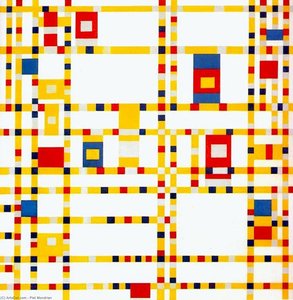
第二次世界大戦の勃発により、1940年、モンドリアンはヨーロッパからアメリカへと移住します。ニューヨークという都市に身を置いた彼は、そこで新たなインスピレーションを見出しました。マンハッタンのグリッド状の街並みは、彼の芸術的原則と驚くほど調和し、彼の創造性を刺激しました。晩年の作品《ブロードウェイ・ブギー・ウーギー》に見られるように、モンドリアンの絵画には、これまで以上にダイナミックなリズムとエネルギーが加わりました。直線は依然として重要な要素ですが、それらはより自由奔放に交差し、都市の活気あふれる雰囲気を表現しています。ジャズ音楽の影響も指摘されており、モンドリアンは自身の芸術的語彙を拡張しながら、現代都市における複雑さを捉えようとしたのです。1944年、ニューヨークで亡くなるまでの短い期間、彼は精力的に制作活動を続けました。遺産:抽象芸術とデザインへの影響
ピエト・モンドリアンの芸術は、単なる絵画を超えて、20世紀の美術史に多大な影響を与えました。彼の作品は、抽象表現主義、ミニマリズム、カラーフィールドペインティングといった後続の芸術運動に大きな影響を与え、現代アートの方向性を決定づけました。しかし、モンドリアンの影響力は絵画の世界だけに留まりません。彼のネオプラスティシズムの原則——単純さ、明瞭さ、幾何学的な秩序——は、建築、デザイン、ファッションといった様々な分野に浸透し、私たちの視覚的環境を形作ってきました。家具やテキスタイルから建物のファサード、グラフィックデザインに至るまで、モンドリアンの美意識は現代社会のあらゆる場所に息づいています。彼の芸術は、単なる美的価値を超え、普遍的な調和と精神性を追求する人間の飽くなき探求を体現しているのです。主要作品
- 《赤い風車》 - 初期における自然描写
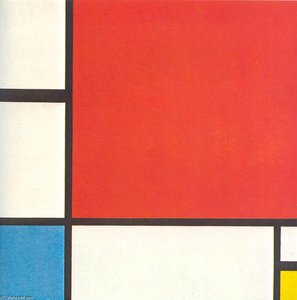
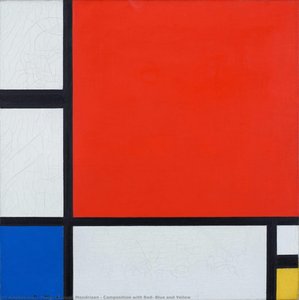
- 《赤、青、黄による構成》 - ネオプラスティシズムの代表作
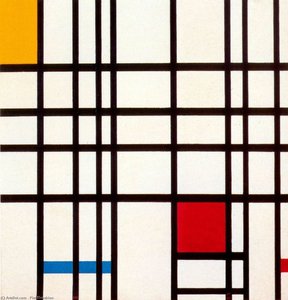
- 《第5番構成表題なし》 - 幾何学的な要素の純粋な表現
- 《ブロードウェイ・ブギー・ウーギー》 - ニューヨークの都市的リズムを捉えた作品
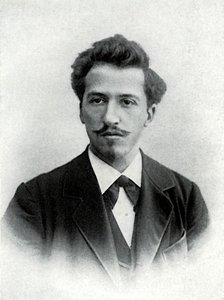
ピエト・モンドリアン
1872 - 1944 , オランダ
基本情報
- フルネーム: ピエト・モンドリアン
- 主な作品:
- Composition with Red, Blue and Yellow
- Tableau no. 2 Composition V
- Broadway Boogie Woogie
- 出生地: アムステルダム、オランダ
- 国籍: オランダ
- 影響を与えたアーティストまたは運動:
- 抽象表現主義
- ミニマリズム
- カラーフィールド絵画
- 影響を受けたアーティスト:
- ハーグ派
- 印象派
- キュビスム
- 死亡年月日: 1944年2月1日
- 生年月日: 1872年3月7日
- 芸術運動またはスタイル: ネオプラスティシズム、De Stijl
関連記事

幾何学的抽象絵画を定義した傑作10選|アート、アーティスト、インテリア装飾
モンドリアン、マレーヴィチ…幾何学的抽象絵画を代表する傑作10選。各作品の背景や色彩構成、アーティストの情熱に迫ります。美術館品質の複製画はArtsDot.comで。オンラインでアートコレクションをご覧ください。

White on Canvas: 10 Masterpieces & Timeless Elegance for Your Home Decor
Explore 10 iconic white paintings by Monet, Whistler & Rothko! Discover the stories behind these serene masterpieces and their impact on art history. Find museum-quality reproductions for your home decor at .
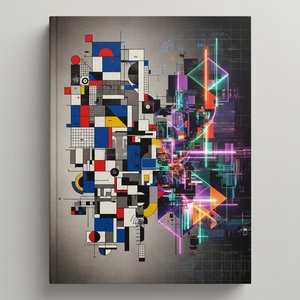
Beyond Form & Color: Geometric Abstraction's Evolution in 20th/21st Century Art
Explore the evolution of geometric abstraction from Cubism to contemporary art. Discover key artists like Malevich & Mondrian, investment insights, and expert collecting advice at ArtsDot.

Kandinsky's Masterpieces: 25 Paintings That Define Abstract Art | ArtsDot
Journey through Wassily Kandinsky's 25 most iconic abstract paintings. Explore his revolutionary use of color, form & spiritual expressionism. Find museum-quality Kandinsky reproductions and elevate your home decor with ArtsDot.com. Discover all masterpieces on ArtsDot.com!
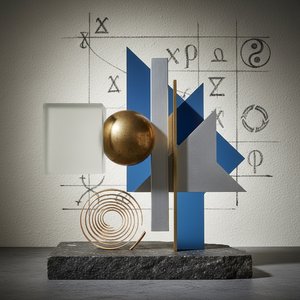
Beyond Form: Exploring the Philosophical Foundations of Geometric Abstraction
Explore the philosophical roots & artistic evolution of geometric abstraction with ArtsDot. Discover Mondrian, Malevich, De Stijl & more. Expert insights for collectors and art enthusiasts.