

 プレビュー
プレビュー
 プリントを購入
 シェアする
シェアする シェアする
シェアする
 詳細を見る
詳細を見る

 ダウンロード
 似ている作品
 X線調査
X線調査 スライドショー
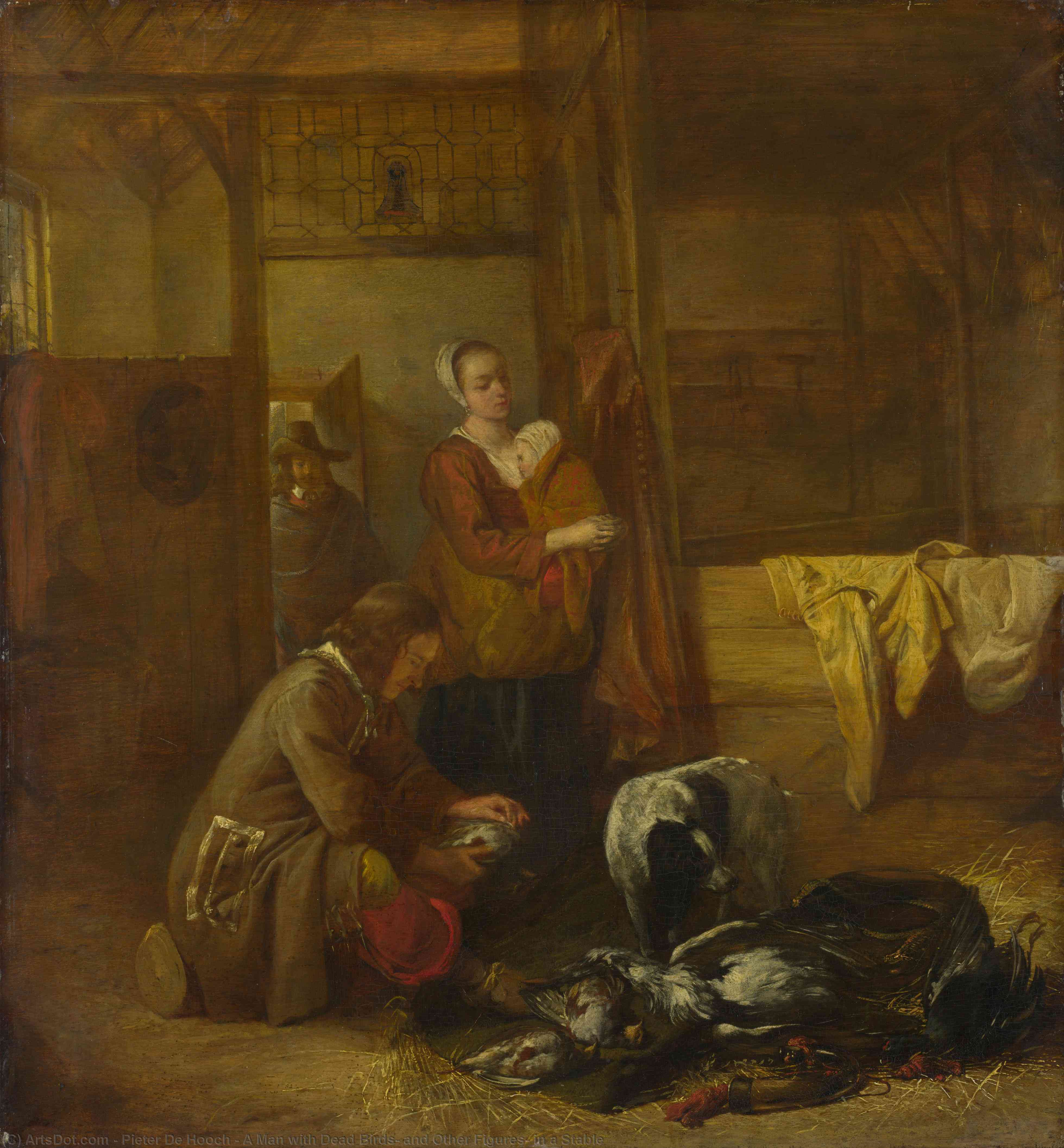
A Man with Dead Birds, and Other Figures, in a Stable
 Oil On Canvas
- WallArt
- Dutch Golden Age
 1655
1655- Early Modern
 54.0 x 50.0 cm
 詳細を見る
詳細を見る
オンラインプレビューをはるかに凌ぐ、高解像度で鮮明なデジタル画像をご購入いただけます。
各ファイルは、社内の専門家が高度なツールと熟練した手作業によるレタッチを用いて、細心の注意を払って準備されています。すべての画像において、卓越した鮮明度、正確な色彩再現性、そして繊細なディテールを保証いたします。
最終ファイルは、プロフェッショナルな編集・印刷環境ですぐにご利用いただけるよう最適化された状態で、72時間以内にメールにてお届けいたします。これは、一流のデザインスタジオ、出版社、ギャラリーから信頼されているものと同等の品質です。
デジタル画像のご注文に付随する特典
高品質なデジタル画像配信を、確かな品質で。
ArtsDot.com を選ぶことは、単に画像を手に入れることではありません。それは、プロの手によって精密に仕上げられ、満足保証が付いた高品質なデジタルアートワークを受け取ることを意味します。ご注文いただいた際に自動的に付随する内容は、以下の通りです:

メールですぐにお届け
ご注文から72時間以内に、高解像度のデジタル画像ファイルがメールでお手元に届きます。すぐにそのままご利用いただけます。

AI技術で最適化されたデジタルファイル
お客様の作品は、高度なAIツールと専門家による手作業の編集を組み合わせてプロフェッショナルに最適化されており、細部のディテール、鮮明さ、そして正確な色再現性を最大限に引き出しています。

一生涯無料の再送サービス
ファイルを誤って削除したり、紛失してしまったりしましたか?ご安心ください。いつでも無料で再送いたします。

輸入手数料は一切かかりません
関税や手数料、配送料を気にすることなく、お気に入りのアートワークをすぐにお楽しみいただけます。デジタルダウンロードは常に免税です。

色彩再現の保証
プロ仕様のツールとカラーマネジメント技術を用いることで、デジタル画像が元の色を最大限に忠実に再現することを保証いたします。

60日間満足保証
ご購入いただいたデジタル画像にご満足いただけない場合は、60日以内であれば、修正または100%の返金(理由を問う必要はありません)をさせていただきます。

100% 返金保証
ご満足いただけない場合は、デジタルファイルを受け取ってから60日以内であれば、理由を問わず全額返金いたします。

まとめ買い割引
3枚購入で10%OFF - 5枚購入で15%OFF - 10枚以上購入で20%OFF。クリエイティブなプロジェクト、ギャラリー、エージェンシーに最適です。
作品の詳細
A Quiet Resonance in the Dutch Golden Age
In the heart of a rustic seventeenth-century interior, Pieter de Hooch captures a moment that feels both profoundly ordinary and hauntingly eternal. "A Man with Dead Birds, and Other Figures, in a Stable," painted in 1655, serves as a masterful window into the Dutch Golden Age, a period where the beauty of the mundane was elevated to the level of high art. The scene unfolds within the textured confines of a stable, where the air seems heavy with the scent of hay and the weight of daily survival. A man kneels amidst a collection of fowl, his focus absorbed by the grim reality of his task, while nearby, a woman cradles a swaddled infant. This juxtaposition of new life and death creates a poignant tension that draws the viewer into the intimate, often difficult, rhythms of rural existence.
De Hooch’s technical prowess is on full display through his meticulous use of oil on canvas. The artist employs a palette dominated by warm, earthy tones—deep browns, muted ochres, and soft creams—which imbue the composition with a sense of grounded realism. His brushwork, though smooth and controlled, possesses a remarkable ability to render varied textures: the coarse grain of the wooden walls, the delicate softness of the baby’s swaddling, and the iridescent, fragile quality of the bird feathers. The lighting is particularly masterful; a subdued, directional glow enters the space, casting soft shadows that lend volume to the figures and create a palpable sense of depth within the flattened perspective typical of early Dutch genre painting.
Symbolism and the Texture of Life
Beyond its surface realism, the painting is rich with the symbolic language of the seventeenth century. The presence of the dead birds serves as a memento mori, a subtle reminder of the transience of life and the inevable cycle of mortality that touches even the most domestic of settings. Yet, this melancholy is balanced by the presence of the mother and child, representing continuity, piety, and the enduring strength of the family unit. The composition itself, arranged in a stable triangular formation, directs the eye toward the central figures, ensuring that the emotional core of the work—the connection between generations—remains the focal point amidst the surrounding hardship.
For the discerning collector or interior designer, this piece offers more than mere decoration; it provides a narrative anchor for a room. The artwork’s ability to evoke quiet dignity and a sense of historical gravity makes it an ideal centerpiece for spaces designed for reflection and warmth. Whether placed in a study filled with leather-bound books or a contemporary living space seeking a touch of classical soul, de Hooch’s masterpiece brings with it an atmosphere of timelessness. It is a profound exploration of the human condition, rendered with a level of detail and emotional intelligence that continues to captivate the modern eye.
関連作品
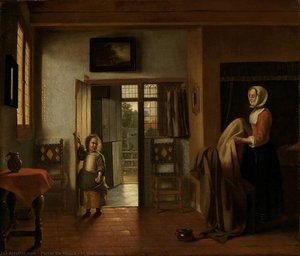
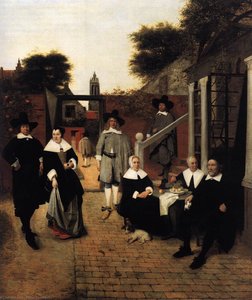
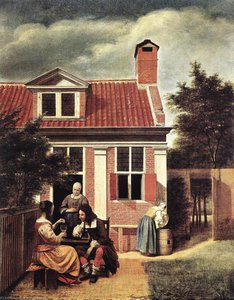
作家の略歴
生い立ちと修行時代
ピーテル・デ・ホーホは、オランダ黄金時代を代表する巨匠の一人として、1629年12月20日、ネーデルラントのロッテルダムに生を受けました。煉瓦職人のヘンドリック・ヘンドリックスス・デ・ホーホと、助産師のアネット・ピータースの間に生まれた五人兄弟の長男です。彼の若き日の詳細については謎に包まれている部分も多いものの、ロッテルダム、デルフト、そしてアムステルダムといった都市で活動していたことが知られています。デ・ホーホの芸術的な研鑽は、風景画家ニコラス・ベルヘムのもと、ハールレムにてヤコブ・オハテルヴェルトと共に受けられました。この修行時代こそが、後に彼が代名詞とする、開かれた扉の向こうへと視線を誘うような、静謐な室内風景を描き出すための揺るぎない礎となったのです。芸術的スタイルと主題
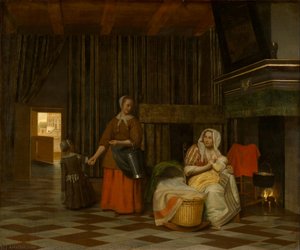
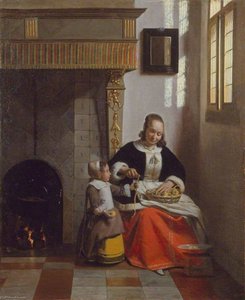
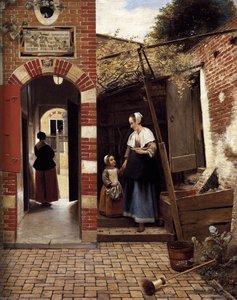
デ・ホーホの作品を語る上で欠かせないのは、細部への徹底したこだわり、自然主義的な描写、そして光の魔法のような使い手であることです。彼の絵画はしばしば日常の営みを捉え、台頭しつつあった中産階抹階級の価値観や憧憬を映し出していました。その卓越したスタイルの象徴とも言えるのが、「デルフトの家の中庭」(1658年)です。この作品には、ありふれた日常の細かな機微を捉える彼の類まれな才能が凝縮されています。また、デ・ホーホの作品はエマニュエル・デ・ウィッテと主題や構図において共通点を持っていますが、人物とその間に流れる人間関係に焦点を当てる点において、彼は独自の地位を確立しています。その情熱は、「乳児に授乳する女」(1658年)や「膝に赤ん坊を乗せた女」(1658年)といった、家庭的な情景への深い洞察に満ちた作品群からも鮮明に見て取ることができます。代表作とその遺産
デ・ホーホの輝かしい業績の中でも、特に特筆すべき作品には以下のようなものがあります:- 「陽気な飲み手」(1650年頃)
- 「陽光差し込む部屋でのカード遊び」(1658年)
- 「少年のためにパンとバターを用意する女」(1661年)
美術館とコレクション
デ・ホーホの傑作は世界各地の美術館に収蔵されています。その中には、15世紀から20世紀に至るまでの膨大なヨーロッパ美術を誇るベルギーのアントワープ、王立美術館(Koninklijk Museum voor Schone Kunsten)も含まれています。ピーテル・デ・ホーホとその作品について、ArtsDotでさらに詳しく探索しましょう: [https://ArtsDot.com/@/pieter-de-hooch](https://ArtsDot.com/@/pieter-de-hooch) /ja/art/show/art-d3b4kt-ja/ (ベルギー王立美術館の至宝を体験する)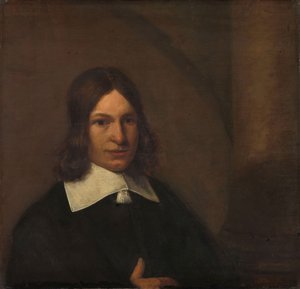
ピーテル・デ・ホーホ
1629 - 1694 , オランダ
プロフィール概要
- Artistic Movement Or Style: デルフト派、オランダ黄金時代
- Artists Or Movements Influenced By This Artist: ['ヤン・フェルメール']
- Artists Who Influenced This Artist: ['ニコラス・ベルヘム']
- Date Of Birth: 1629年12月20日
- Full Name: ピーテル・ヘンドリックスス・デ・ホーホ
- Nationality: オランダ
- Notable Artworks:
- 空のグラス
- 手紙を読む女
- 陽光の差し込む部屋のカード遊びをする人々
- パンとバターを用意する女性
- Place Of Birth: オランダ、ロッテルダム

