

 プレビュー
プレビュー
 プリントを購入
 シェアする
シェアする シェアする
シェアする
 詳細を見る
詳細を見る

 ダウンロード
 似ている作品
 X線調査
X線調査 スライドショー
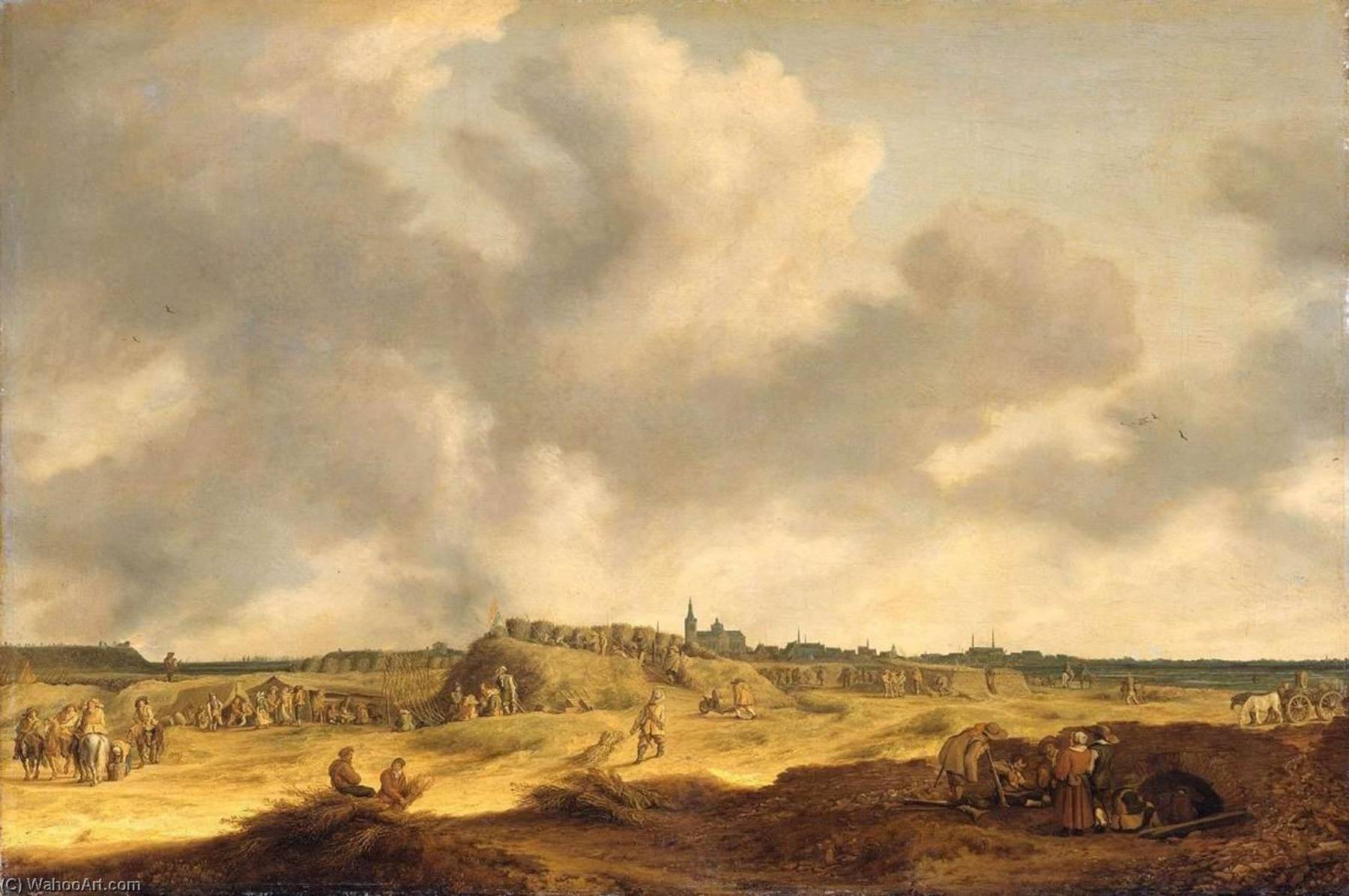
Siege of 's Hertogenbosch by Frederik Hendrik
 1639
1639 78.0 x 114.0 cm
 詳細を見る
詳細を見る




































作品のオリジナル比率に合わせた、当店の規定サイズからお選びください。

特定のフレームやスペースに合わせて、ご希望のサイズをご入力いただけます。選択されたサイズが元の画像の比率と異なる場合、アートワークをトリミングするか、手描きで要素を追加して絵画を拡張いたします。デジタルモックアップ を制作し、制作開始前にご確認(承認)をいただきます。
画面上のプレビューは、実際のトリミングや拡張を正確に反映しているものではありません。最終的な構図は、モックアップによってのみ正確にご確認いただけます。
カスタムサイズもご利用いただけますが、元の比率を維持するためには、あらかじめ用意されたリストからサイズを選択することをお勧めいたします。
ご注文後、ArtsDot.com チームより詳細な指示をお送りするとともに、仕上がりイメージ(モックアップ)をご提供いたします。


 ガラスオプションは、110cm未満のサイズでのみご利用いただけます。

Siege of 's Hertogenbosch by Frederik Hendrik
複製技法
複製画のサイズ
-


合計金額
$ 263
関連作品




アーティストの略歴
The Architect of Landscapes: The Life and Legacy of Pieter de Neyn
In the vibrant tapestry of the Dutch Golden Age, few artists captured the intersection of structural precision and atmospheric beauty as uniquely as Pieter de Neyn. Born in Haarlem in 1597, De Neyn’s path to artistic mastery was far from conventional. Before he ever held a brush to canvas, his hands were trained in the rugged, tactile world of masonry. This early apprenticeship, arranged by his father, instilled in him a profound understanding of form, weight, and the physical reality of the built environment. While he eventually turned his intellect toward the abstract realms of mathematics and architecture, this foundational period as a mason would forever haunt his paintings, lending them an unmistakable sense of structural integrity and spatial depth that set him apart from his contemporaries.
The evolution of De Neyn’s artistry was deeply intertwined with the mentorship of Esaias van de Velde. Between 1611 and 1617, during his formative years, De Neyn studied under this landscape master, absorbing the subtle tonal gradations and the delicate realism that defined the era's burgeoning landscape movement. This period of education was not merely about learning technique; it was an immersion into a shared aesthetic vision of the Dutch countryside. Alongside fellow students like Jan van Goyen, De Neyn learned to navigate the complexities of light and shadow, developing a style that could transition seamlessly from the tranquil, sun-drenched vistas of rural farmland to the more turbulent, dramatic skies of historical narratives.
A Mastery of Contrast and Composition
De Neyn’s oeuvre is characterized by a remarkable ability to balance the serene with the spectacular. His landscapes often invite the viewer into a world of quiet contemplation, where farmhouses sit nestled against rolling hills and river estuaries flow with a rhythmic grace. Yet, beneath this pastoral surface lies a sophisticated use of composition informed by his mathematical training. He frequently employed a dark, diagonal band in the foreground—a technique that serves to anchor the viewer before leading the eye toward an intense, luminous middle ground. This interplay of light and shadow creates a sense of theatricality, a hallmark of the Baroque spirit.
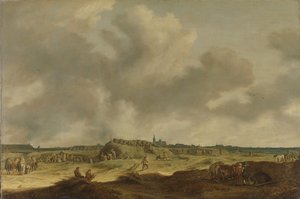
Beyond the idyllic, De Neyn possessed a profound talent for capturing the visceral energy of conflict. His battle scenes, such as the celebrated depictions related to the Siege of ’s-Hertogenbosch, demonstrate his ability to render chaos with meticulous detail. In these works, the artist does not merely document history; he recreates the atmosphere of war. One can almost feel the tension in the neatly lined pikes of the army camps and see the grit in the reinforced earthworks. By blending the architectural precision of a builder with the emotive power of a painter, he was able to portray both the grand scale of military maneuvers and the small, human moments of labor and survival that occur within the shadow of siege.
The Final Chapter and Enduring Influence
Despite his rising prominence and his appointment as a city sculptor in 1632, De Neyn’s life was tragically shortened. The very trade that provided his early foundation—masonry—is believed to have contributed to his untimely death from lung disease in 1639. Though his career was relatively brief, the impact of his work resonated through the decades of the seventeenth century. His ability to marry the technical rigors of architecture with the fluid beauty of nature left a lasting imprint on the Dutch landscape tradition.
Today, we remember Pieter de Neyn not just as a painter of scenes, but as an artist who understood the very bones of the world he depicted. His legacy lives on in the way his canvases continue to command attention through:
- Structural Depth: The use of mathematical perspective to create immersive, three-dimensional environments.
- Atmospheric Realism: A mastery of light that captures the fleeting moods of the Dutch sky and countryside.
- Narrative Complexity: The seamless integration of historical drama within the broader context of the natural landscape.
Pieter de Neyn
1597 - 1639
基本情報
- Artistic Movement Or Style: Baroque
- Artists Or Movements Influenced By This Artist: ['Landscape art']
- Artists Who Influenced This Artist:
- Esaias van de Velde
- Jan van Goyen
- Date Of Birth: 1597
- Date Of Death: 1639
- Full Name: Pieter de Neyn
- Nationality: Dutch
- Notable Artworks:
- Farm Houses on Country Road
- Siege of ’s-Hertogenbosch
- Place Of Birth: Netherlands

