

 プレビュー
プレビュー
 プリントを購入
 シェアする
シェアする シェアする
シェアする
 詳細を見る
詳細を見る

 ダウンロード
 似ている作品
 X線調査
X線調査 スライドショー
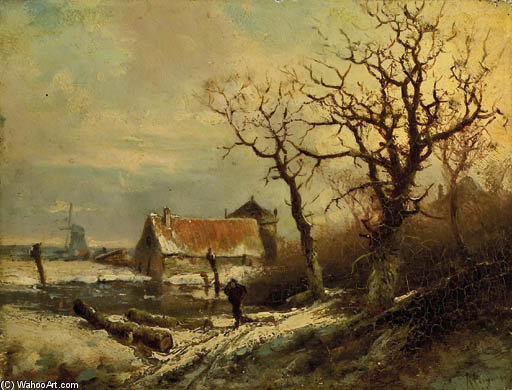
A Winter Landscape With A Wood Gatherer On A Snowy Track

 詳細を見る
詳細を見る




































作品のオリジナル比率に合わせた、当店の規定サイズからお選びください。

特定のフレームやスペースに合わせて、ご希望のサイズをご入力いただけます。選択されたサイズが元の画像の比率と異なる場合、アートワークをトリミングするか、手描きで要素を追加して絵画を拡張いたします。デジタルモックアップ を制作し、制作開始前にご確認(承認)をいただきます。
画面上のプレビューは、実際のトリミングや拡張を正確に反映しているものではありません。最終的な構図は、モックアップによってのみ正確にご確認いただけます。
カスタムサイズもご利用いただけますが、元の比率を維持するためには、あらかじめ用意されたリストからサイズを選択することをお勧めいたします。
ご注文後、ArtsDot.com チームより詳細な指示をお送りするとともに、仕上がりイメージ(モックアップ)をご提供いたします。


 ガラスオプションは、110cm未満のサイズでのみご利用いただけます。

A Winter Landscape With A Wood Gatherer On A Snowy Track
複製技法
複製画のサイズ
-


合計金額
$ 263
関連作品
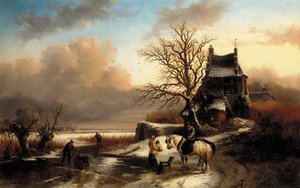
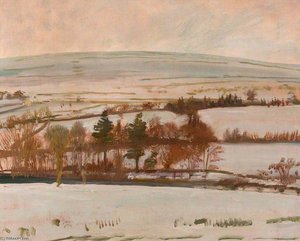
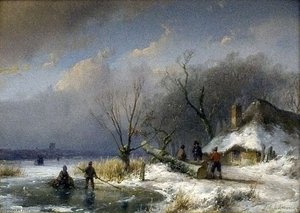
アーティストの略歴
The Silent Majesty of the Dutch Landscape: The Life of Pieter Lodewijk Francisco Kluyver
In the heart of the nineteenth century, as the gears of the industrial revolution began to turn across Europe, a quiet revolution of light and atmosphere was unfolding within the canvases of the Netherlands. At the forefront of this movement stood Pieter Lodewijk Francisco Kluyver, an artist whose brush possessed the rare ability to capture not just the topography of the Dutch countryside, but its very soul. Born in Amsterdam in 1816, Kluyver emerged from a lineage of great Dutch landscape traditions, acting as a bridge between the golden age of the seventeenth century and the burgeoning sensitivities of the Romantic era. His life was a journey through the most evocative landscapes of his homeland, moving from the bustling streets of Amsterdam to the tranquil reaches of Amersfoort, and eventually returning to his native city, where he remained an active and vital force in the art world until his passing in 1900.
The foundation of Kluyver’s mastery was laid through rigorous observation and a deep-seated respect for the natural world. While historical accounts vary regarding his earliest mentors—some pointing to the celebrated Johannes Hendrik Willem Lingeman, others to M. de Root or George Andries Roth—the result of his training was undeniably consistent: an extraordinary precision in rendering light. He developed an eye that could discern the subtle shifts in a cloudy sky and the way a soft, diffused glow might settle upon a snowy track. This technical prowess allowed him to create works that felt less like static images and perhaps more like captured moments of breath and stillness.
A Symphony of Light and Winter Tones
To look upon a Kluyver landscape is to enter a world of profound serenity. He was a master of the panoramic view, often composing scenes that invited the viewer to wander through vast, open spaces. His oeuvre is particularly celebrated for its winter landscapes, where the artist demonstrated an unparalleled ability to render the crisp, biting texture of snow and the heavy, damp atmosphere of a frozen Dutch afternoon. In these works, one might find solitary figures—perhaps wood gatherers traversing a white expanse—which serve as poignant reminders of human resilience amidst the overwhelming beauty of nature.
His technique was characterized by a controlled, fine brushwork that avoided the excessive idealization often found in Romanticism. Instead, he sought a truth found in tonal gradation. Rather than relying on jarring or bold hues, Kluyver utilized a sophisticated palette of muted tones to achieve depth and dimension. This approach allowed him to masterfully depict:
- Atmospheric Perspective: The way distant hills and villages soften into the haze of the horizon.
- Luminous Transitions: The delicate interplay between sunlight filtering through overcast clouds and the deep shadows of a forest edge.
- Textural Realism: The palpable difference between the smoothness of an icy river and the rugged bark of a winter-stripped tree.
By focusing on these elements, Kluyver achieved a sense of poetic realism. He did not merely paint what he saw; he painted the feeling of the cold air against the skin and the quietude of a landscape undisturbed by the clamor of modern progress.
Legacy and the Romantic Spirit
The historical significance of Pieter Lodewijk Francisco Kluyver lies in his ability to synthesize the past with the contemporary. While he drew immense inspiration from the legendary Jacob van Ruisdael, translating the seventeenth-century Dutch tradition into a nineteenth-century Romantic sensibility, he was not a mere imitator. There is an embryonic Impressionistic quality to his work—a preoccupation with the fleeting nature of light that prefigured the great movements of the late century. He captured the essence of regions such as Haarlem, Arnhem, and The Hague, documenting the rural character of the Netherlands with a devotion that felt both archival and deeply personal.
Ultimately, Kluyver’s art serves as a window into a vanished era of tranquility. His paintings remain enduring testaments to the beauty of the unadorned landscape, offering a sanctuary of peace for the modern viewer. Through his meticulous attention to detail and his profound emotional connection to the earth, he ensured that the quiet, majestic spirit of the Dutch countryside would be preserved in oil and light forever.
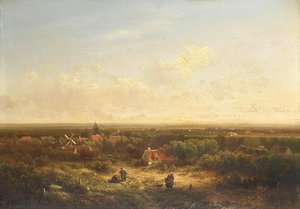
pieter lodewijk francisco kluyver
1816 - 1900 , Netherlands
基本情報
- Artistic Movement Or Style: Romantic Landscape Painting
- Artists Or Movements Influenced By This Artist: ['Dutch Romanticism']
- Artists Who Influenced This Artist: ['Cornelis Cornelissen Bloemendaal']
- Date Of Birth: 1816
- Full Name: Pieter Lodewijk Francisco Kluyver
- Nationality: Dutch
- Notable Artworks:
- Winter Landscape
- Width Dutch landscape in summer
- Wood Gatherers in a Snowy Landscape
- Place Of Birth: Amsterdam, Netherlands
関連記事
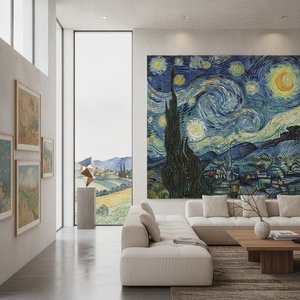
Beyond the Horizon: A Curated Guide to Integrating Post-Impressionist Landscapes into Modern Interiors
Transform your home with the emotive power of Post-Impressionist landscapes. Discover expert tips on selecting hand-painted oil reproductions to create a soulful, vibrant interior that reflects your unique style and connection to nature.
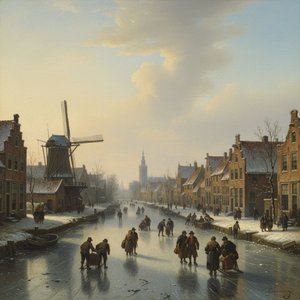
Charles Leickert: Capturing the Dutch Golden Age Light – A Comprehensive Study of Technique, Context, and Legacy
Explore the captivating winter landscapes of Charles Leickert, a master of Dutch Golden Age light & atmosphere. Discover his techniques, symbolism, and lasting legacy – a comprehensive study for art enthusiasts and collectors.
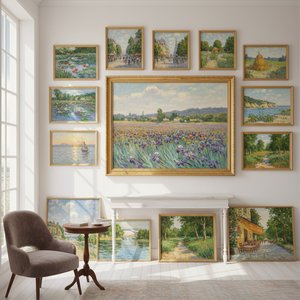
印象派風景を彩った至宝:アート史に名を刻む10選
印象派風景の革新を彩った10選。モネ、ルノワールら巨匠の名作を紐解き、色彩と光が生み出す感動の世界へ。アートの歴史とインテリアのインスピレーションをArtsDot.comで。高品質な複製画で、あなただけの空間を創造しましょう。

Impressionistic Landscapes: 10 Masterpieces That Changed Art & Decor
Journey into the heart of Impressionism! Explore 10 masterpieces by Monet, Renoir & Degas that revolutionized landscape art. Discover their stories, techniques & find museum-quality reproductions to elevate your home decor on ArtsDot.com.
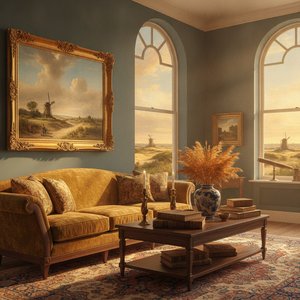
Golden Light & Dutch Skies: Bringing the Magic of Dutch Golden Age Landscapes into Your Home
Transform your home with the breathtaking light of Dutch Golden Age landscapes. Discover how hand-painted oil reproductions of masterworks like Ruisdael and Vermeer bring timeless elegance, atmosphere, and soulful texture to modern interiors. Elevate your space with museum-quality art.

