

 シェアする
シェアする シェアする
シェアする
 詳細を見る
詳細を見る

 ダウンロード
 似ている作品
 スライドショー
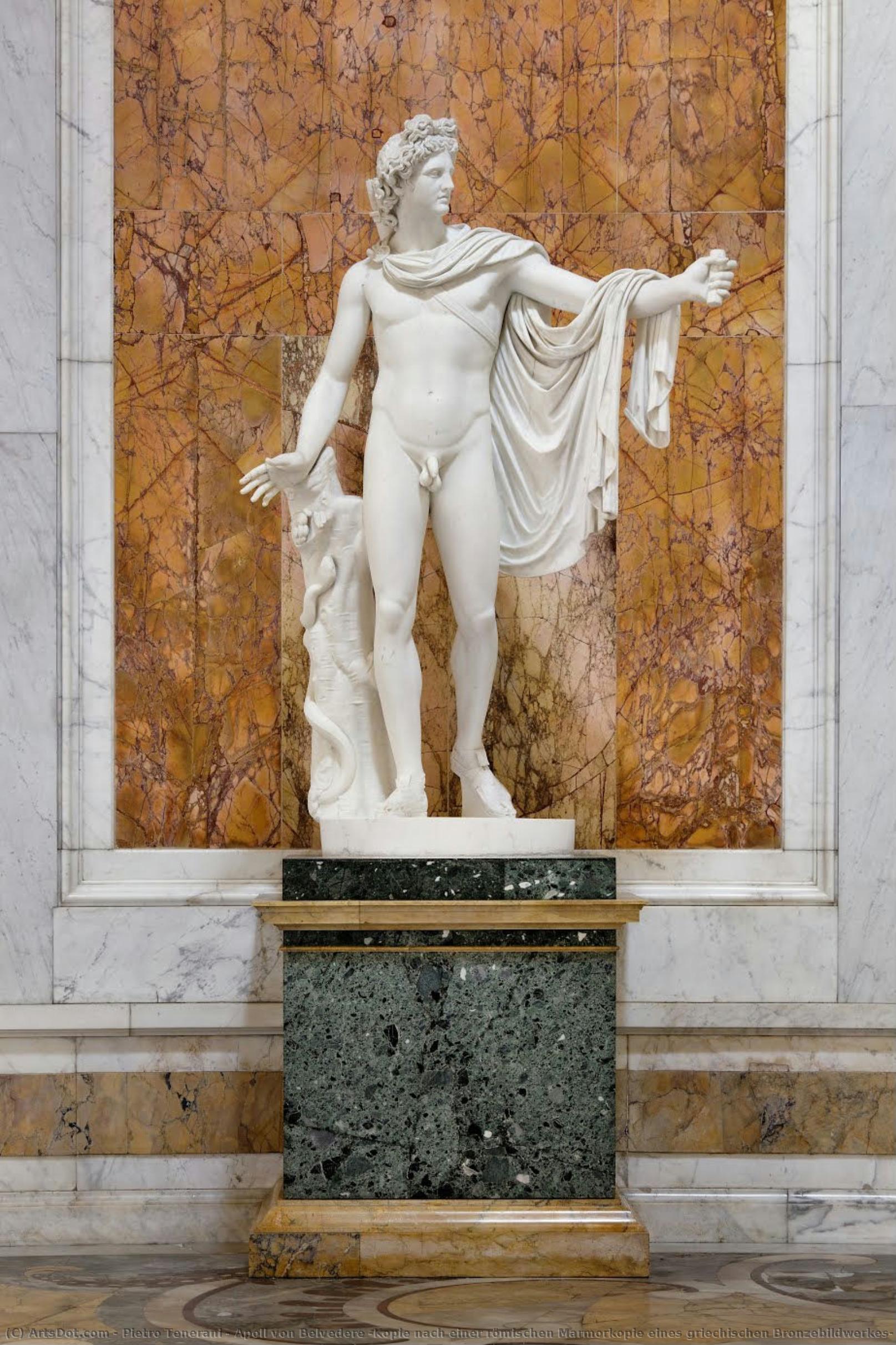
Apoll von Belvedere (Kopie nach einer römischen Marmorkopie eines griechischen Bronzebildwerkes, das Leochares um 350/325 v. Chr. zugeschrieben wird)


 詳細を見る
詳細を見る
ジークレー/アートプリント
迅速な制作と多彩な仕上げオプションを備えた、ミュージアムクオリティのジークレーまたはキャンバスプリント。 ( 手描きの絵画を購入 画像を購入)




































作品のオリジナル比率に合わせた、当店の規定サイズからお選びください。

特定のフレームやスペースに合わせて、ご自身でサイズを指定することも可能です。選択されたサイズが元の画像の比率と一致しない場合、作品をトリミングするか、鏡面反射または単色での塗りつぶしによって画像を拡張いたします。制作を開始する前に、ご確認用のデジタルモックアップをお送りいたします。
画面上のプレビューには、実際のトリミングや拡張は反映されませんのでご注意ください。最終的な構図を正確に確認できるのは、モックアップのみとなります。
カスタムサイズも承っておりますが、元の比率を維持するためには、あらかじめ用意されたリストからサイズを選択することをお勧めいたします。


 ガラスオプションは、110cm未満のサイズでのみご利用いただけます。

Apoll von Belvedere (Kopie nach einer römischen Marmorkopie eines griechischen Bronzebildwerkes, das Leochares um 350/325 v. Chr. zugeschrieben wird)
ジークレー/アートプリント
複製画のサイズ
-


合計金額
$ 62
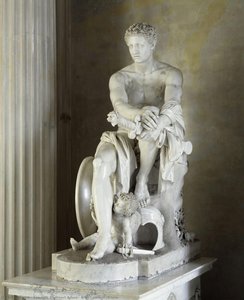
Pietro Tenerani: Apoll von Belvedere – A Legacy in Marble
The sculpture “Apoll von Belvedere,” created by Pietro Tenerani before 1830 in Paris, stands as a testament to the enduring influence of Neoclassicism and embodies the spirit of its time. More than just a depiction of mythology—the Apollo Belvedere is a reimagining of Michelangelo’s David—it represents a pivotal moment in artistic history, reflecting the revival of classical ideals amidst the burgeoning Romantic movement.
Early Career and Thorvaldsen's Influence
Born November 11, 1789, in Torano near Carrara, Italy, Pietro Tenerani’s artistic journey began under the tutelage of his maternal uncle, Pietro Marchetti, a sculptor and professor at the Accademia di Belle Arti in Carrara. This formative connection instilled within him a profound understanding of sculptural form and technique—a foundation that would later solidify his reputation as one of Rome's foremost artists.
Rome: The Crucible of Innovation
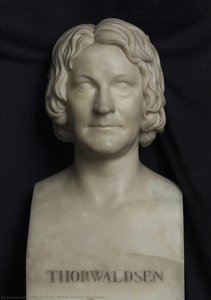
A scholarship secured in 1813 propelled Tenerani to Rome, the epicenter of artistic experimentation. There he honed his skills under the guidance of Bertel Thorvaldsen, a Danish sculptor who championed Purismo—a stylistic approach prioritizing purity and clarity of form—and whose studio became a crucible for shaping Tenerani’s aesthetic sensibilities. Thorvaldsen's emphasis on idealized beauty and anatomical precision profoundly impacted Tenerani’s artistic vision.
The Apollo Belvedere: A Symbol of Perfection
The creation of the Apollo Belvedere exemplifies Tenerani’s commitment to Neoclassical principles. Michelangelo’s David had captivated European artists for decades, establishing a precedent for portraying human figures with heroic grandeur and anatomical accuracy. Tenerani skillfully adapted this model, capturing Apollo's serene posture and muscular physique—symbols of divine intellect and youthful vigor—within the confines of marble.
A Reproduction Worthy of Distinction
ArtsDot.com offers high-quality reproductions of Pietro Tenerani’s “Apoll von Belvedere,” ensuring that its timeless beauty remains accessible to collectors and enthusiasts alike. Our meticulous craftsmanship guarantees a faithful representation of the original artwork, preserving its textural nuances and conveying its emotional resonance. Explore our selection today!
- Artist: Pietro Tenerani
- Born Year: 1789
- Death Year: 1869
- Birth City: Carrara
- Nationality: Italian
© ArtsDot.com — Alle Rechte fürbehält.
関連作品
アーティストの略歴
A Legacy in Marble: The Life and Art of Pietro Tenerani
Pietro Tenerani, born November 11, 1789, in the marble-rich region of Torano near Carrara, Italy, stands as a compelling figure bridging the Neoclassical ideals of his time with the burgeoning Romantic sensibilities of the 19th century. His life unfolded against a backdrop of artistic fervor and shifting aesthetic paradigms, leaving an indelible mark on Italian sculpture. Tenerani’s initial exposure to the world of art came through his maternal uncle, Pietro Marchetti, a sculptor and professor at the Accademia di Belle Arti in Carrara. This familial connection provided a foundational training, instilling within him a deep appreciation for form and technique. However, it was a scholarship secured in 1813 that propelled Tenerani towards Rome – the heart of artistic innovation – where his true development began.Formative Years Under Thorvaldsen’s Guidance
Rome proved to be a transformative experience for the young sculptor. He immersed himself in the study of classical antiquity, absorbing the principles of balance, harmony, and idealized beauty that defined the Neoclassical movement. Crucially, Tenerani fell under the tutelage of Bertel Thorvaldsen, the celebrated Danish sculptor whose work epitomized these ideals. Thorvaldsen’s influence was profound; he instilled in Tenerani a rigorous approach to form and composition, shaping his early style. Psyche Abandoned, sculpted around 1817, quickly established Tenerani's reputation. This piece, admired for its refined elegance and emotional depth, showcased his mastery of marble and his ability to capture mythological narratives with grace. Yet, even in these early works, hints of a developing individuality began to emerge – a subtle shift away from strict imitation towards a more personal expression. He also created several copies of this work for prominent patrons, each iteration revealing a gradual tendency toward sentimental narrative.Evolving Style and the Embrace of Purismo
As Tenerani matured as an artist, his style underwent a subtle but significant evolution. While remaining firmly rooted in Neoclassical principles, he began to incorporate elements that foreshadowed the Romantic movement. This transition was further influenced by his association with the *Purismo* movement, which advocated for a return to artistic purity and simplicity, rejecting excessive ornamentation and dramatic emotionalism. This pursuit of clarity and restraint is evident in his later works, where a greater emphasis on narrative and expressive qualities can be observed. Beyond mythological subjects, Tenerani gained considerable acclaim for his funerary monuments. His monument to Pope Pius VIII within St. Peter’s Basilica stands as a testament to his ability to blend artistic skill with profound emotional resonance and symbolic meaning. He also excelled in portraiture, creating busts of prominent figures like Popes Gregory XVI and Pius IX, and statesmen such as Pellegrino Rossi – each capturing not only physical likeness but also the essence of their subjects' character.A Sculptor of Monuments and Legacy
Tenerani’s talent extended beyond intimate portraits and funerary art; he undertook large-scale public commissions that solidified his position as a leading sculptor of his time. Perhaps most notably, he was entrusted with the creation of the statue of Simón Bolívar in Bogotá, Colombia – a remarkable feat demonstrating his ability to adapt classical forms to represent contemporary historical figures. This commission underscored his international recognition and his capacity to engage with diverse cultural contexts. Throughout his career, Tenerani held prestigious positions within artistic institutions, including membership and eventual presidency of the Accademia di San Luca, further cementing his influence in the Roman art world. He also mentored numerous students who carried on sculptural traditions in Italy. Pietro Tenerani died in Rome on December 16, 1869, leaving behind a legacy that continues to inspire admiration for its technical brilliance, aesthetic beauty, and historical significance. His work serves as a poignant reminder of an era where classical ideals were reinterpreted through the lens of individual expression, bridging the gap between Neoclassicism and Romanticism and establishing him as a pivotal figure in 19th-century European sculpture.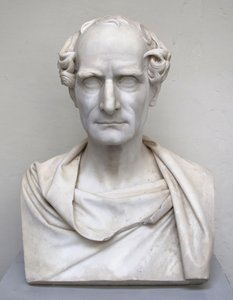
Pietro Tenerani
1789 - 1869 , Italy
基本情報
- Artistic Movement Or Style: Neoclassicism, Purismo
- Artists Or Movements Influenced By This Artist: ['Romanticism']
- Artists Who Influenced This Artist:
- Bertel Thorvaldsen
- Lorenzo Bartolini
- Date Of Birth: November 11, 1789
- Date Of Death: December 16, 1869
- Full Name: Pietro Tenerani
- Nationality: Italian
- Notable Artworks:
- Psyche Abandoned
- Diana von Versailles
- Apoll von Belvedere
- Place Of Birth: Carrara, Italy
関連記事

Bronze Sculptures That Defined Art History | ArtsDot
Journey through art history with our Top 10 bronze sculptures! Explore masterpieces by Rodin, Michelangelo & more. Discover stories behind iconic statues and find museum-quality reproductions for your home decor at ArtsDot.com.

The Enduring Form: Exploring Themes & Techniques in Sculpture Across Historical Periods
Explore the rich history of sculpture from ancient masterpieces to contemporary innovations. Discover key techniques, influential artists & investment potential for discerning art collectors.

Giclée Prints: Archival Quality & Aesthetic Nuances for the Discerning Collector
Explore the world of giclée prints with ArtsDot. Learn about archival quality, aesthetic nuances & investment potential. Expert guidance for discerning art collectors seeking museum-quality reproductions and lasting value.

Bronze Age to Modern Masters: 10 Sculptures That Redefined Art | ArtsDot
Journey through art history with 10 legendary bronze sculptures – from Michelangelo's David to Rodin’s Thinker. Explore the stories, techniques & timeless beauty of these masterpieces. Find museum-quality reproductions & elevate your home decor on ArtsDot.com.

The Enduring Form: Sculpture Across History, Technique & Emotional Resonance
Explore the rich history of sculpture with ArtsDot. Discover key techniques, influential artists & investment potential for discerning collectors. Expert insights into valuing and collecting timeless masterpieces.

