

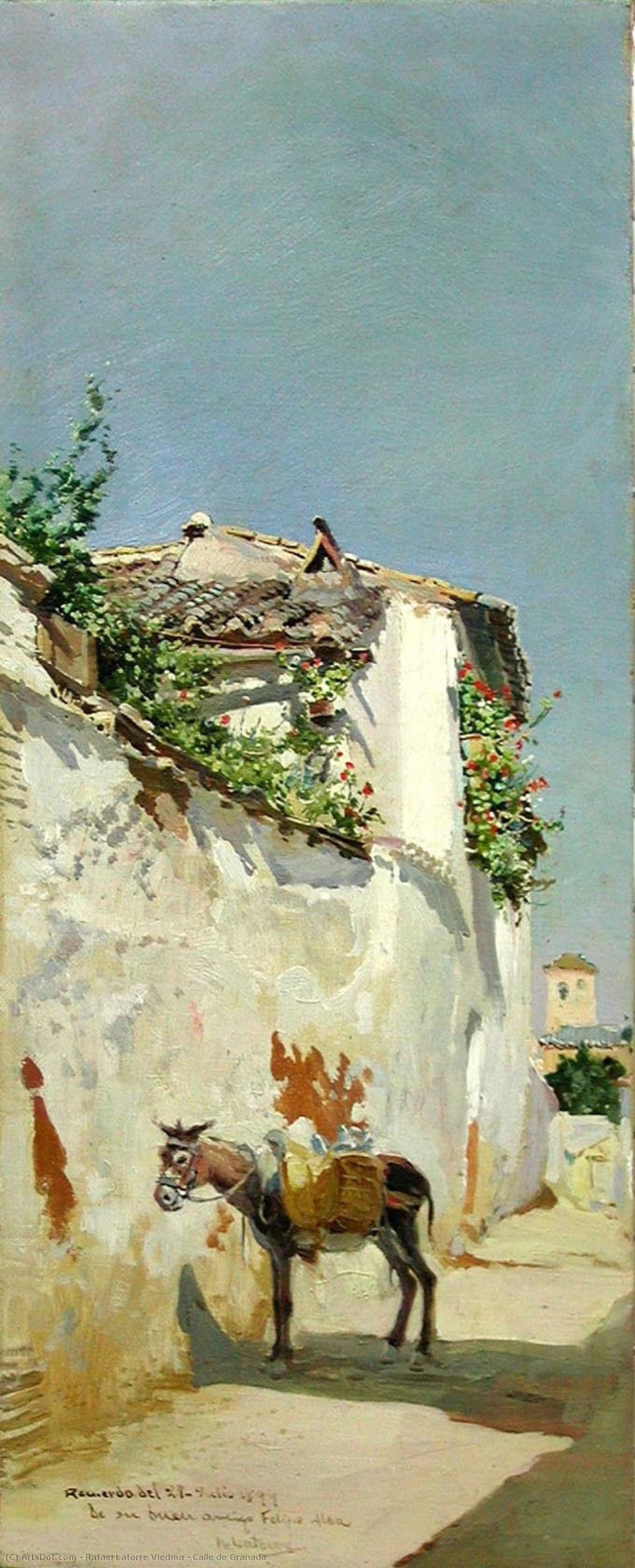
 プレビュー
プレビュー
 シェアする
シェアする シェアする
シェアする
 詳細を見る
詳細を見る

 ダウンロード
 似ている作品
 X線調査
X線調査 スライドショー
 統計情報
統計情報Calle de Granada

 詳細を見る
詳細を見る
手描き油彩複製画
当社のアーティストが、お客様のご希望のサイズと額縁に合わせて、キャンバスに手描きで制作する油彩画です。 ( プリント版に切り替え デジタル画像販売へ切り替え)




































作品のオリジナル比率に合わせた、当店の規定サイズからお選びください。

特定のフレームやスペースに合わせて、ご希望のサイズをご入力いただけます。選択されたサイズが元の画像の比率と異なる場合、アートワークをトリミングするか、手描きで要素を追加して絵画を拡張いたします。デジタルモックアップ を制作し、制作開始前にご確認(承認)をいただきます。
画面上のプレビューは、実際のトリミングや拡張を正確に反映しているものではありません。最終的な構図は、モックアップによってのみ正確にご確認いただけます。
カスタムサイズもご利用いただけますが、元の比率を維持するためには、あらかじめ用意されたリストからサイズを選択することをお勧めいたします。
ご注文後、ArtsDot.com チームより詳細な指示をお送りするとともに、仕上がりイメージ(モックアップ)をご提供いたします。


 ガラスオプションは、110cm未満のサイズでのみご利用いただけます。

Calle de Granada
複製技法
複製画のサイズ
-


合計金額
$ 263
関連作品









アーティストの略歴
A Granadine Master: The Life and Art of Rafael Latorre Viedma
Rafael Latorre Viedma, born in Granada, Spain, in 1873 and passing away in 1960, stands as a pivotal figure within the ‘Escuela Granadina de Pintura’ – the Granadine School of Painting that flourished from 1850 to 1950. His life was deeply interwoven with the artistic fabric of his hometown, a commitment he maintained throughout his career despite opportunities for wider recognition. Latorre wasn't merely a painter; he embodied a multifaceted role as restorer, professor, and antiquarian, dedicating himself to preserving and promoting Granada’s rich cultural heritage. His earliest artistic explorations began in 1890 with an exhibition at the ‘Exposición Local de Arte Moderno’, marking the initial public acknowledgement of his burgeoning talent. This early showing signaled a trajectory focused on capturing the unique beauty of Granada, particularly its most iconic landmark: the Alhambra and its associated museum.The Alhambra as Muse: A Painterly Obsession
Latorre Viedma’s artistic identity became inextricably linked with the Alhambra. He didn't simply depict the palace-fortress; he *lived* within it, studying its intricate details, absorbing its atmosphere, and translating its ethereal beauty onto canvas. His paintings of the Alhambra are not merely topographical representations but rather deeply felt evocations of a place steeped in history, romance, and architectural splendor. He captured the play of light on the delicate stucco work, the lush gardens reflecting in tranquil pools, and the imposing grandeur of the palace walls. These works weren’t simply about visual accuracy; they were imbued with a sense of reverence for the Moorish artistry that defined Granada's past. He understood the Alhambra not just as stone and tile but as a symbol of cultural confluence—a testament to centuries of artistic exchange. His dedication extended beyond painting, actively participating in the preservation efforts within the museum itself, ensuring its legacy for future generations.Beyond the Brush: Restoration, Teaching & Antiquarian Pursuits
While celebrated for his paintings, Latorre Viedma’s contributions to Granadine art were far broader. His skills as a restorer were highly sought after, entrusted with the delicate task of preserving numerous historical artworks and artifacts within the region. This work demanded not only technical proficiency but also a deep understanding of artistic techniques and materials—knowledge he generously shared as a professor. He dedicated years to educating aspiring artists, fostering a new generation committed to upholding the traditions of the Escuela Granadina. His role as an antiquarian further solidified his position as a guardian of Granada’s cultural past, meticulously researching and documenting its history and artistic treasures. This holistic approach—painter, restorer, professor, and antiquarian—defined Latorre Viedma as a true Renaissance figure within his local context.A Lasting Legacy: Historical Significance & Continued Appreciation
Rafael Latorre Viedma’s work has been consistently presented at auction, demonstrating enduring interest in his paintings. While not achieving widespread international fame during his lifetime, his significance within Spanish art—particularly the Granadine School—is undeniable. His paintings offer a valuable glimpse into the Alhambra as it appeared during the late 19th and early 20th centuries, providing both artistic beauty and historical documentation. The Frick Collection’s research database acknowledges his importance, highlighting his place within the broader timeline of Spanish artists. More recently, exhibitions dedicated to his work—such as the tribute held at the Archaeological Museum of Granada in 2010 on the occasion of the 50th anniversary of his death—have served to reintroduce his art to a wider audience and cement his position as a master of Granadine painting. His dedication to preserving and celebrating the artistic heritage of his region ensures that Rafael Latorre Viedma’s legacy will continue to inspire for generations to come.
rafael latorre viedma
1873 - 1960 , Spain
基本情報
- Artistic Movement Or Style: Granadine School
- Date Of Birth: 1873
- Date Of Death: 1960
- Full Name: Rafael Latorre Viedma
- Nationality: Spanish
- Notable Artworks:
- Paintings of Alhambra
- Museum Paintings
- Place Of Birth: Granada, Spain