

 プレビュー
プレビュー
 シェアする
シェアする シェアする
シェアする
 詳細を見る
詳細を見る

 ダウンロード
 似ている作品
 X線調査
X線調査 スライドショー
 統計情報
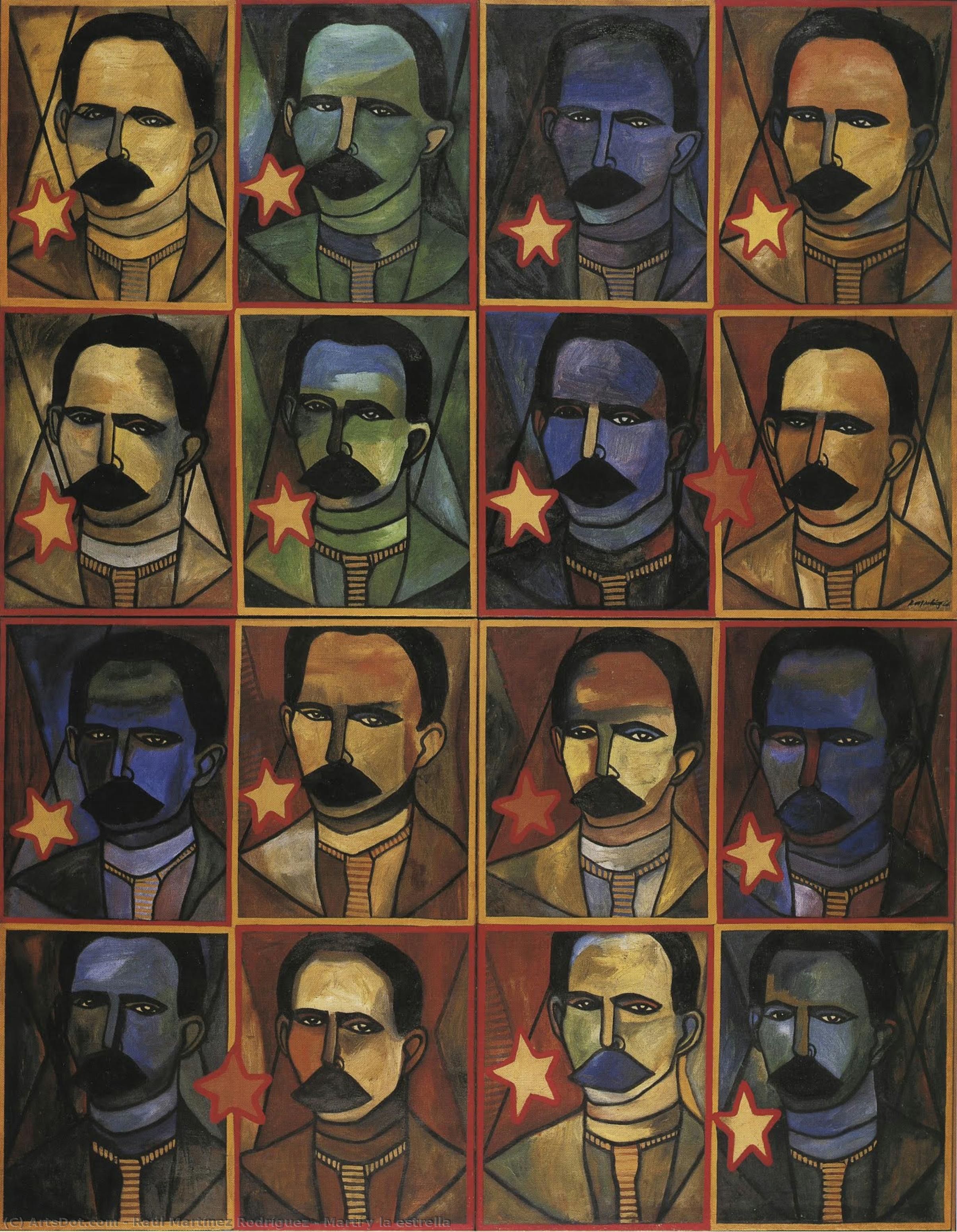
統計情報Martí y la estrella
 1966
1966 184.0 x 143.0 cm
 The Bronx Museum of the Arts
 詳細を見る
詳細を見る
ジークレー/アートプリント
迅速な制作と多彩な仕上げオプションを備えた、ミュージアムクオリティのジークレーまたはキャンバスプリント。 ( 手描きの絵画を購入 デジタル画像販売へ切り替え)




































作品のオリジナル比率に合わせた、当店の規定サイズからお選びください。

特定のフレームやスペースに合わせて、ご自身でサイズを指定することも可能です。選択されたサイズが元の画像の比率と一致しない場合、作品をトリミングするか、鏡面反射または単色での塗りつぶしによって画像を拡張いたします。制作を開始する前に、ご確認用のデジタルモックアップをお送りいたします。
画面上のプレビューには、実際のトリミングや拡張は反映されませんのでご注意ください。最終的な構図を正確に確認できるのは、モックアップのみとなります。
カスタムサイズも承っておりますが、元の比率を維持するためには、あらかじめ用意されたリストからサイズを選択することをお勧めいたします。


 ガラスオプションは、110cm未満のサイズでのみご利用いただけます。

Martí y la estrella
ジークレー/アートプリント
複製画のサイズ
-


合計金額
$ 62
関連作品








アーティストの略歴
Raúl Martínez Rodríguez: A Life in Color and Revolution
Early Life and Artistic Beginnings
- Born: January 21, 1927, Havana, Cuba.
- Raúl Martínez Rodríguez embarked on his artistic journey in the 1940s, a period of significant social and political change in Cuba.
- His early work demonstrated an immediate affinity for vibrant colors and geometric forms, which would become hallmarks of his signature style.
- He initially explored painting, graphic design, photography, and muralism, showcasing a versatile talent from the outset.
Artistic Development and Influences
- Martínez Rodríguez’s artistic development was deeply intertwined with the burgeoning Cuban Revolution.
- Influences: While specific artists aren't explicitly documented as direct influences, his style reflects a broader movement towards geometric abstraction and a desire to create art that resonated with the spirit of social change.
- He embraced bold colors and simplified forms, moving away from traditional representational styles. This aesthetic choice was not merely stylistic; it was a deliberate attempt to communicate ideas about progress, unity, and national identity.
Contribution to the Cuban Revolution’s Visual Identity
- A Pivotal Role: Martínez Rodríguez's artwork played a crucial role in shaping the visual language of the Cuban Revolution. His posters, murals, and paintings became iconic representations of the revolutionary ideals.
- As an active member of the Cuban National Union of Writers and Artists (UNEAC), he contributed significantly to the country’s cultural landscape.
- His work wasn't simply *about* the revolution; it actively participated in constructing its image, fostering a sense of collective identity and purpose.
Notable Works and Exhibitions
- Key Artwork: “Martí y la estrella” is among his most recognized pieces, exemplifying his geometric style and patriotic themes.
- His work has been featured in numerous exhibitions at the Museo Nacional de Bellas Artes de la Habana, Cuba, solidifying his place within Cuban art history.
- Today, reproductions of his artwork are widely available through platforms like ArtsDot, demonstrating continued interest and appreciation for his legacy.
Legacy and Historical Significance
- Lasting Impact: Raúl Martínez Rodríguez passed away on February 2, 1995, but his artistic legacy endures.
- He inspired generations of Cuban artists with his innovative style and commitment to using art as a tool for social commentary.
- His geometric shapes and vibrant colors remain synonymous with the spirit of the Cuban Revolution, continuing to evoke powerful emotions and inspire dialogue about Cuba’s history and identity.
- Martínez Rodríguez's work serves as a testament to the power of art to reflect, shape, and preserve cultural memory.

raúl martínez rodríguez
1927 - 1995 , Cuba
基本情報
- Birth Date: January 21, 1927
- Birth Place: Havana, Cuba
- Death Date: February 2, 1995
- Influenced: Generations of Cuban artists
- Influenced By: Vibrant colors and geometric shapes
- Movement: Geometric Abstraction, Cuban Revolution Art
- Name: Raúl Martínez Rodríguez
- Nationality: Cuban
- Notable Works: Martí y la estrella