

 プレビュー
プレビュー
 プリントを購入
 シェアする
シェアする シェアする
シェアする
 詳細を見る
詳細を見る

 ダウンロード
 似ている作品
 X線調査
X線調査 スライドショー
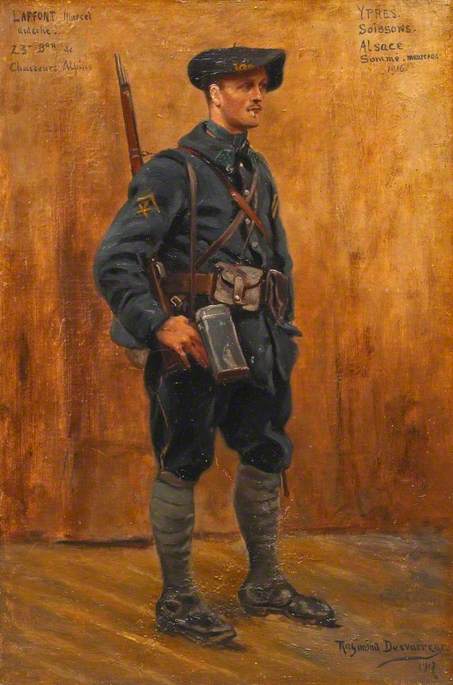
Marcel Laffont, Ardèche, Chasseurs Alpins Ypres, Soissons, Alsace, Somme, Maureras, 1916
 1917
1917 41.0 x 27.0 cm
 詳細を見る
詳細を見る




































作品のオリジナル比率に合わせた、当店の規定サイズからお選びください。

特定のフレームやスペースに合わせて、ご希望のサイズをご入力いただけます。選択されたサイズが元の画像の比率と異なる場合、アートワークをトリミングするか、手描きで要素を追加して絵画を拡張いたします。デジタルモックアップ を制作し、制作開始前にご確認(承認)をいただきます。
画面上のプレビューは、実際のトリミングや拡張を正確に反映しているものではありません。最終的な構図は、モックアップによってのみ正確にご確認いただけます。
カスタムサイズもご利用いただけますが、元の比率を維持するためには、あらかじめ用意されたリストからサイズを選択することをお勧めいたします。
ご注文後、ArtsDot.com チームより詳細な指示をお送りするとともに、仕上がりイメージ(モックアップ)をご提供いたします。


 ガラスオプションは、110cm未満のサイズでのみご利用いただけます。

Marcel Laffont, Ardèche, Chasseurs Alpins Ypres, Soissons, Alsace, Somme, Maureras, 1916
複製技法
複製画のサイズ
-


合計金額
$ 263
関連作品






アーティストの略歴
Raymond Desvarreux: A British Witness to the Great War
Raymond Desvarreux (1876-1961) stands as a compelling figure in 20th-century art, primarily remembered for his remarkably detailed and evocative depictions of European military life during World War I. Born in London, England, his artistic journey was shaped by a unique blend of influences – classical training, a fascination with historical subjects, and an increasingly acute awareness of the realities of modern warfare. Desvarreux’s work offers not just visual representations but also poignant glimpses into the lives, uniforms, and anxieties of soldiers from various European regiments during a tumultuous period in history.Early Life and Artistic Training
Desvarreux's formal artistic education began at the Slade School of Fine Art in London, where he studied under prominent instructors like Frederick Leighton. This early training instilled in him a strong foundation in academic painting techniques – meticulous observation, precise draftsmanship, and a deep understanding of composition and color theory. However, it was his travels throughout Europe, particularly to France and Belgium, that profoundly shaped his artistic vision. These journeys exposed him to the grandeur of European military traditions and, crucially, to the devastating impact of the war firsthand. He began to capture these experiences in his paintings, moving beyond purely historical subjects to document the human cost of conflict.The War Years: Painting the Front Lines
Desvarreux’s artistic output during World War I is remarkably prolific and intensely focused on military themes. Unlike many artists who idealized war or glorified its heroism, Desvarreux presented a starkly realistic portrayal of soldiers in their uniforms, often amidst challenging landscapes – muddy trenches, desolate battlefields, and the grim realities of camp life. His paintings are characterized by an almost photographic quality, achieved through painstaking detail and a remarkable ability to capture the textures of fabric, metal, and earth. Works like “Zouave à l’attaque, la Bassée” (1918) vividly depict the chaos and intensity of combat, while pieces such as "Claes, Flamand Huitième Régiment" showcase the weariness and resilience of individual soldiers. He meticulously researched uniforms and equipment, ensuring accuracy in his depictions, further enhancing the historical authenticity of his work.- Notable Subjects: He frequently painted British, French, German, and Belgian troops, offering a diverse representation of European military forces.
- Technique: His paintings are characterized by meticulous detail, realistic textures, and a strong sense of spatial depth.
- Emotional Tone: While depicting scenes of battle, Desvarreux often conveyed a sense of melancholy and the psychological toll of war rather than outright glorification.
Influences and Artistic Style
Desvarreux’s artistic style can be understood as a synthesis of several influences. His early training at the Slade School provided him with a solid grounding in academic painting, while his travels throughout Europe exposed him to the traditions of military art – particularly the works of artists like Jean-Léon Gérôme and Théodore Rousseau, who depicted historical and contemporary scenes with remarkable realism. However, Desvarreux’s work also demonstrates an awareness of Impressionist techniques, evident in his use of light and color to capture atmospheric effects and convey mood. He skillfully blended these influences to create a distinctive style that is both historically accurate and emotionally resonant.Legacy and Historical Significance
Raymond Desvarreux’s paintings offer invaluable insights into the social and cultural context of World War I. They provide a visual record of military life during this pivotal period, capturing not only the physical realities of war but also the psychological impact on those who fought in it. His work is particularly significant for its unflinching realism and its avoidance of romanticized depictions of conflict. Today, his paintings are exhibited in museums and private collections around the world, serving as a poignant reminder of the human cost of war and a testament to the power of art to document history. His dedication to portraying soldiers with dignity and honesty cemented his place as an important chronicler of the Great War, offering a uniquely detailed and emotionally powerful perspective on one of the most transformative events in modern history.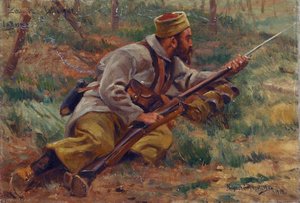
raymond desvarreux
1876 - 1961
基本情報
- Artistic Movement Or Style: Military paintings
- Date Of Birth: 1876
- Date Of Death: 1961
- Full Name: Raymond Desvarreux
- Nationality: British
- Notable Artworks:
- Zouave à l'attaque
- Three British Sailors
- Claes, Flamand Huitieme Régiment
- Place Of Birth: WahooArt

