

 プリントを購入
 シェアする
シェアする シェアする
シェアする
 詳細を見る
詳細を見る

 ダウンロード
 似ている作品
 スライドショー
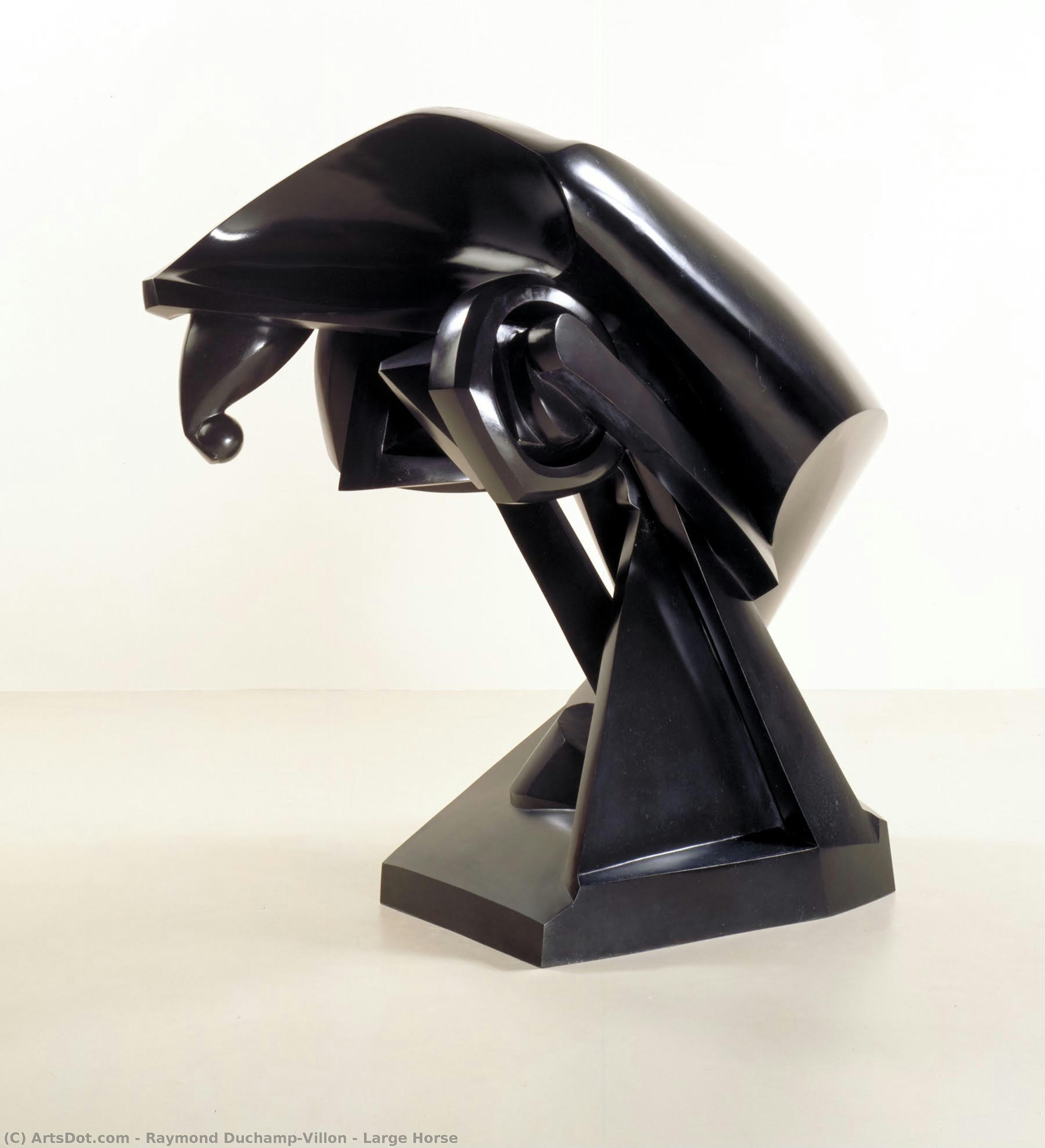
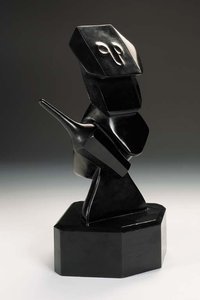
Large Horse


 詳細を見る
詳細を見る




































作品のオリジナル比率に合わせた、当店の規定サイズからお選びください。

特定のフレームやスペースに合わせて、ご希望のサイズをご入力いただけます。選択されたサイズが元の画像の比率と異なる場合、アートワークをトリミングするか、手描きで要素を追加して絵画を拡張いたします。デジタルモックアップ を制作し、制作開始前にご確認(承認)をいただきます。
画面上のプレビューは、実際のトリミングや拡張を正確に反映しているものではありません。最終的な構図は、モックアップによってのみ正確にご確認いただけます。
カスタムサイズもご利用いただけますが、元の比率を維持するためには、あらかじめ用意されたリストからサイズを選択することをお勧めいたします。
ご注文後、ArtsDot.com チームより詳細な指示をお送りするとともに、仕上がりイメージ(モックアップ)をご提供いたします。


 ガラスオプションは、110cm未満のサイズでのみご利用いただけます。

Large Horse
複製技法
複製画のサイズ
-


合計金額
$ 263
A Fragmented Vision: Exploring Raymond Duchamp-Villon’s “Large Horse”
Raymond Duchamp-Villon's "Large Horse," a bronze sculpture created in 1914, stands as a pivotal work bridging the waning years of traditional sculpture with the radical experimentation of early modernism. More than simply an image of a horse, it’s a distilled essence of dynamism, a fractured embodiment of mechanical energy and the anxieties of a rapidly changing world. The piece resides within the Lillie and Hugh Roy Cullen Sculpture Garden at the Museum of Fine Arts, Houston, offering viewers a direct encounter with its powerfully unsettling beauty. Duchamp-Villon, born Pierre-Maurice-Raymond Duchamp in Damville, France, inherited an artistic lineage rich with talent – his brothers Jacques Villon, Marcel Duchamp, and Suzanne Duchamp-Crotti all made significant contributions to the art world. This familial creative environment undoubtedly influenced his own trajectory, though he forged a distinctly individual path marked by a fascination with technology and its impact on form.Deconstructing Form: Style, Technique, and Materials
The sculpture’s aesthetic is undeniably Cubist, yet it transcends simple categorization. Duchamp-Villon deliberately dismantled the traditional representation of a horse, reducing it to a series of interlocking geometric planes – sharp angles of cubes, rectangles, and triangles dominate the composition. This fragmentation isn't merely stylistic; it reflects a broader artistic impulse to challenge established notions of reality and perception. The bronze itself is meticulously cast, showcasing a remarkable level of detail despite its abstracted form. The surface retains a subtle texture, revealing the marks of the casting process – a testament to the artist’s dedication to his craft. Interestingly, the original plaster model was enlarged by his brother Jacques Villon in 1930-31, demonstrating a collaborative spirit within the Duchamp family and solidifying the sculpture's final form. The choice of bronze speaks volumes about the artist’s intent – a durable, enduring material capable of capturing both the solidity of form and the inherent dynamism of movement.Echoes of War and Modernity: Historical Context
“Large Horse” was conceived during a period of immense social and political upheaval—the eve of World War I. The sculpture can be interpreted as a reflection of this turbulent era, embodying the sense of disruption and fragmentation experienced by Europe. Duchamp-Villon’s own life was tragically cut short in 1918, succumbing to typhoid fever during his military service. This untimely death adds another layer of poignancy to the work, suggesting a premature silencing of a visionary artist. The sculpture's angularity and tension evoke feelings of dynamism, power, and perhaps even anxiety—qualities that resonated deeply with the artistic sensibilities of the time. It’s not simply a depiction of a horse; it’s a visual metaphor for the anxieties and uncertainties of modernity.Symbolism and Emotional Resonance
The fractured form of “Large Horse” invites multiple interpretations. Some scholars suggest it symbolizes the breakdown of traditional values and the disintegration of established order in the face of technological advancement. The machine age, with its emphasis on efficiency and standardization, is powerfully represented through the sculpture’s geometric construction. However, there's also a sense of raw energy and vitality within the piece—a suggestion that even amidst fragmentation, life persists. Duchamp-Villon himself described his artistic vision as being inspired by the power of mathematics, engineering, and the machine, suggesting a belief in their potential to shape both art and society. Ultimately, “Large Horse” remains an enigmatic work, prompting viewers to confront questions about form, representation, and the human condition within a rapidly changing world. It’s a sculpture that demands engagement, inviting us to contemplate its fragmented beauty and profound symbolism.

アーティストの略歴
A Pioneer Forged in Form: The Life and Legacy of Raymond Duchamp-Villon
Raymond Duchamp-Villon, born Pierre-Maurice-Raymond Duchamp in 1876 in Damville, France, stands as a pivotal figure in the dramatic shift from traditional sculpture to the dynamic language of modernism. His tragically short life – he succumbed to typhoid fever in 1918 at just forty-one years old – belies an artistic output that profoundly impacted the course of twentieth-century art. Coming from a remarkably creative family—brothers Jacques Villon, Marcel Duchamp, and sister Suzanne Duchamp-Crotti all achieved prominence as artists—Raymond initially pursued medicine at the Sorbonne. However, rheumatic fever forced him to abandon his medical studies in 1898, an unforeseen turning point that redirected his energies toward sculpture. This wasn’t a sudden leap; he began sculpting during his convalescence, discovering a natural aptitude and quickly mastering the technical demands of the medium. Early works initially echoed the naturalistic style of Auguste Rodin, but this phase was merely a foundation upon which he would build a radically new sculptural vocabulary. To distinguish himself within his artistically gifted family, he adopted the name Duchamp-Villon for all his artistic endeavors, signaling an assertion of individual identity and creative direction.Embracing Cubism: A Sculptural Revolution
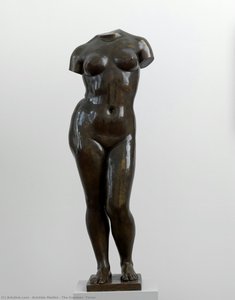
The early years of the twentieth century witnessed a seismic shift in the art world with the emergence of Cubism, pioneered by Pablo Picasso and Georges Braque. Duchamp-Villon was among the first to translate this revolutionary visual language into three dimensions. He wasn’t simply replicating Cubist paintings in sculptural form; rather, he sought to embody its principles – fragmentation, multiple perspectives, and geometric abstraction – within the physicality of sculpture itself. This exploration led him to become a central member of the Section d’Or group, a collective of artists, poets, and critics who profoundly shaped early modern art. The Section d’Or aimed to synthesize artistic disciplines and explore the mathematical principles underlying beauty and harmony. Within this context, Duchamp-Villon's work moved beyond mere representation toward an exploration of form, movement, and the very essence of sculptural space. Torse de jeune homme (Torso of a Young Man), exemplifies this evolving style, demonstrating his increasing abstraction while retaining a sense of anatomical structure. His participation in the 1912 Salon de la Section d’Or and the groundbreaking 1913 Armory Show in New York cemented his position at the forefront of avant-garde art, introducing his innovative sculptures to an international audience.The Horse and The House: Defining a Modern Aesthetic
Duchamp-Villon's most celebrated achievement is undoubtedly Le Cheval Majeur (The Large Horse), begun in 1914 but never fully completed in his lifetime. This monumental sculpture, existing in multiple casts – notably one housed at the Miami Art Museum – embodies a dynamic fusion of animal form and mechanical energy. It’s not merely a representation of a horse; it's an evocation of movement, power, and the burgeoning industrial age. The fragmented planes and angular forms capture the essence of equine locomotion while simultaneously suggesting the intricate workings of machinery. La Maison Cubiste (The Cubist House), another significant work from 1912-1914, showcases his architectural experimentation within a Cubist framework. Designed as a façade for a Parisian art gallery, it demonstrates his ability to apply abstract principles to functional design, blurring the boundaries between sculpture and architecture. Gallic Cock, created in 1916, further illustrates his mastery of layered relief sculpture, radiating energy and bold color through its dynamic composition. These works weren’t isolated experiments; they were integral parts of a broader artistic investigation into the possibilities of form, space, and movement.Influences and Lasting Impact
Duchamp-Villon's artistic vision was shaped by a confluence of influences. Beyond the foundational impact of Cubism – particularly the work of Picasso and Braque – he shared an affinity with Italian Futurists in his depiction of dynamism and mechanical movement. The Futurist fascination with speed, technology, and the energy of modern life resonated deeply with his own sculptural explorations. He also drew inspiration from Primitivist art forms, evident in later works like Portrait of Professor Gosset, which bears a striking resemblance to an African death mask. This engagement with non-Western aesthetics reflects a broader trend among early modernist artists seeking new sources of artistic expression. His contribution to modern sculpture is immeasurable. Duchamp-Villon’s innovative use of geometric forms, his exploration of movement and dynamism, and his bridging of the gap between painting and sculpture fundamentally altered the course of sculptural practice. His untimely death during World War I – he served in a medical capacity before contracting typhoid fever – robbed the art world of a truly visionary talent. However, posthumous exhibitions featuring his work alongside that of his family members ensured his place as a pivotal figure in the development of Cubism and modern sculpture, an enduring legacy forged in form and innovation.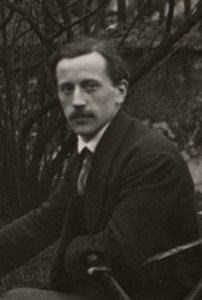
Raymond Duchamp-Villon
1876 - 1918 , France
基本情報
- Artistic Movement Or Style: Cubism
- Artists Or Movements Influenced By This Artist:
- Futurism
- Modern sculpture
- Artists Who Influenced This Artist:
- Picasso
- Braque
- Rodin
- Date Of Birth: November 5, 1876
- Date Of Death: October 9, 1918
- Full Name: Pierre-Maurice-Raymond Duchamp
- Nationality: French
- Notable Artworks:
- Torso of a Young Man
- The Cubist House
- The Large Horse
- Gallic Cock
- Place Of Birth: Damville, France
関連記事

Bronze Age to Modern Masters: 10 Sculptures That Redefined Art | ArtsDot
Journey through art history with 10 legendary bronze sculptures – from Michelangelo's David to Rodin’s Thinker. Explore the stories, techniques & timeless beauty of these masterpieces. Find museum-quality reproductions & elevate your home decor on ArtsDot.com.

Bronze Sculptures That Defined Art History | ArtsDot
Journey through art history with our Top 10 bronze sculptures! Explore masterpieces by Rodin, Michelangelo & more. Discover stories behind iconic statues and find museum-quality reproductions for your home decor at ArtsDot.com.
The Enduring Legacy of Bronze: A Historical & Artistic Exploration for the Collector
Explore the rich history & enduring appeal of bronze sculpture with expert insights for collectors at ArtsDot. Learn about casting techniques, iconic artists, collecting tips & contemporary interpretations.
The Enduring Legacy of Bronze: History, Technique & Artistic Expression for the Collector
Explore the rich history & enduring appeal of bronze sculpture with expert insights for collectors at ArtsDot. Learn about casting techniques, iconic artists, and collecting tips.
The Enduring Legacy of Bronze Sculpture: A Collector's Guide to Form & Cultural Significance
Explore the rich history & enduring appeal of bronze sculpture with expert insights for collectors at ArtsDot. Learn about casting techniques, iconic artists, and collecting tips to build a discerning art collection.