

 プレビュー
プレビュー
 プリントを購入
 シェアする
シェアする シェアする
シェアする
 詳細を見る
詳細を見る

 ダウンロード
 似ている作品
 X線調査
X線調査 スライドショー
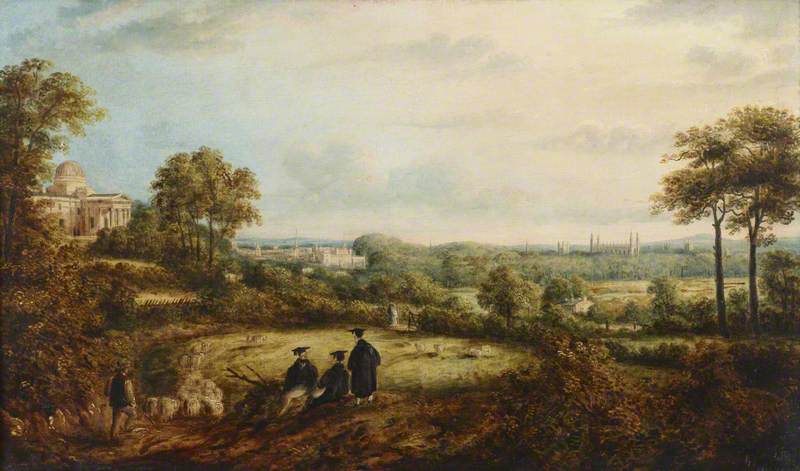
A View of Cambridge from the Observatory
 1835
1835 36.0 x 61.0 cm
 National Trust
 詳細を見る
詳細を見る




































作品のオリジナル比率に合わせた、当店の規定サイズからお選びください。

特定のフレームやスペースに合わせて、ご希望のサイズをご入力いただけます。選択されたサイズが元の画像の比率と異なる場合、アートワークをトリミングするか、手描きで要素を追加して絵画を拡張いたします。デジタルモックアップ を制作し、制作開始前にご確認(承認)をいただきます。
画面上のプレビューは、実際のトリミングや拡張を正確に反映しているものではありません。最終的な構図は、モックアップによってのみ正確にご確認いただけます。
カスタムサイズもご利用いただけますが、元の比率を維持するためには、あらかじめ用意されたリストからサイズを選択することをお勧めいたします。
ご注文後、ArtsDot.com チームより詳細な指示をお送りするとともに、仕上がりイメージ(モックアップ)をご提供いたします。


 ガラスオプションは、110cm未満のサイズでのみご利用いただけます。

A View of Cambridge from the Observatory
複製技法
複製画のサイズ
-


合計金額
$ 263
関連作品










アーティストの略歴
The Visionary Chronicler of Cambridge: The Life and Art of Richard Bankes Harraden
In the quiet, sun-dappled corridors of nineteenth-century England, few artists captured the serene dignity of academic life as intimately as Richard Bankes Harraden. Born in 1778 to a prosperous Norfolk family, Harraden was a man whose life and art were inextricably woven into the fabric of Cambridge University. His journey was one of intellectual refinement and aesthetic devotion, shaped by an education at Eton College and later at Trinity College, Cambridge—an institution that would not only serve as his academic home but also as his most enduring muse. As he rose to become the Warden of Trinity Hall, Harraden balanced the heavy responsibilities of scholarly leadership with a delicate, observant eye for the natural world, creating a body of work that serves as a luminous window into a bygone era.
Harroden’s artistic development was marked by a departure from the grand, often turbulent historical narratives favored by many of his contemporaries. Instead, he found profound meaning in the stillness of the English landscape and the architectural majesty of his collegiate surroundings. His training, nurtured by dedicated tutors, instilled in him a mastery of both watercolor and oil, allowing him to navigate the subtle transitions of light and atmosphere with remarkable precision. There is a palpable sense of solace in his work; during an age defined by the rapid, often jarring shifts of the Industrial Revolution, Harraden’s canvases offered a sanctuary of permanence and peace, celebrating the enduring beauty of the British countryside and the venerable stone facades of Cambridge.
A Master of Light, Detail, and Atmosphere
To gaze upon a Harraden landscape is to experience a meticulous study of reality infused with poetic emotion. He possessed an unparalleled ability to render the intricate textures of the world—the rugged bark of ancient trees, the delicate veins of seasonal foliage, and the weathered surfaces of historic masonry. His paintings, such as the celebrated Trinity Hall from the Fellows' Garden, demonstrate a sophisticated command of composition, where architectural elements like clock towers provide a sense of structural grandeur against the soft, organic movement of nature.
However, Harraden’s true genius lay in his treatment of light. He did not merely document shapes; he captured the very essence of time passing through the play of shadow and luminosity. His use of warm tones could evoke the comforting glow of a summer afternoon, while his more nuanced shadows breathed life into the architectural recesses of the colleges. This technical prowess allowed him to achieve a sense of depth that invited the viewer to step directly into the scene, making his depictions of Cambridge feel less like static images and much more like living, breathing environments.
His repertoire extended beyond the local vistas of Cambridge, occasionally touching upon classical themes that reflected his deep scholarly roots. In works such as View of Athens and the Acropolis, one can see how his passion for precision met a fascination with historical grandeur, blending the topographical accuracy of a chronicler with the romantic spirit of a landscape painter.
Legacy and Historical Significance
The legacy of Richard Bankes Harraden is found in the preservation of a specific, tranquil English identity. Through his meticulous observations, he provided future generations with a visual record of the Cambridge landscapes as they existed before the modern era transformed them. His work remains a vital touchstone for historians and art lovers alike, offering a glimpse into the intersection of academic life and artistic expression.
While his fame was rooted in the specialized circles of British watercolor and landscape painting, his contribution to the visual history of the United Kingdom is profound. He stands as a testament to the power of the observant eye—a painter who found the extraordinary within the ordinary, and who transformed the familiar stones and gardens of his home into timeless works of art. His life, spanning from the late eighteenth century to 1862, remains etched in the very landscapes he so lovingly immortalized.
richard bankes harraden
1778 - 1862
基本情報
- Artistic Movement Or Style: Romantic Landscape Painting
- Artists Who Influenced This Artist:
- John Constable
- William Turner
- Date Of Birth: 1778
- Date Of Death: 1862
- Full Name: Richard Bankes Harraden
- Nationality: British
- Notable Artworks:
- The Chapel Hill, Trinity College Cambridge
- The Quadrangle, Trinity Hall Cambridge
- Place Of Birth: Cambridge, England