

 プレビュー
プレビュー
 シェアする
シェアする シェアする
シェアする
 詳細を見る
詳細を見る

 ダウンロード
 似ている作品
 X線調査
X線調査 スライドショー
 Stats
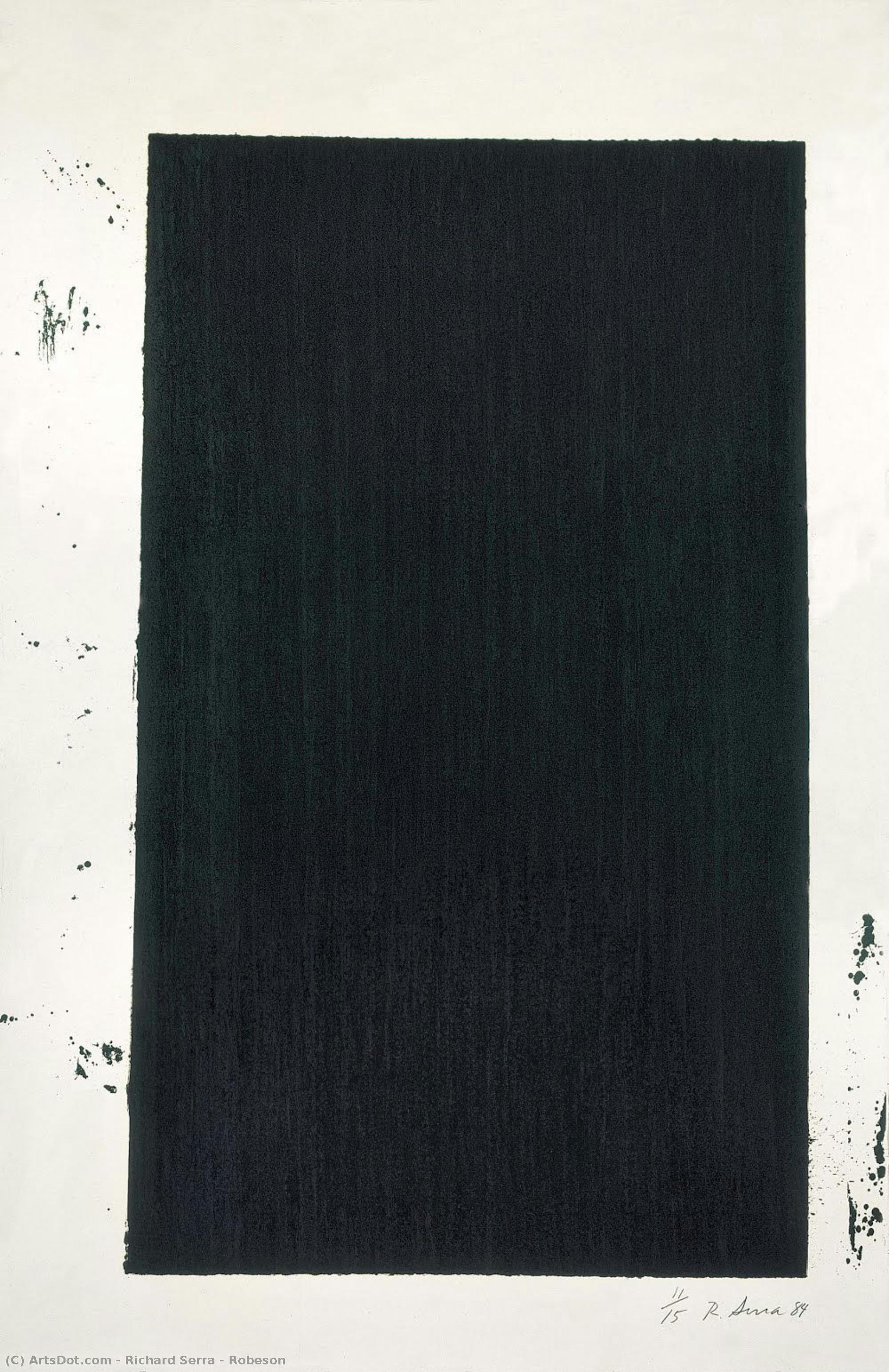
StatsRobeson
 1984
1984 258.0 x 167.0 cm
 Lentos Kunstmuseum Linz
 詳細を見る
詳細を見る
ジークレー/アートプリント
迅速な制作と多彩な仕上げオプションを備えた、ミュージアムクオリティのジークレーまたはキャンバスプリント。 ( 手描きの絵画を購入 Switch to Digital Image)




































作品のオリジナル比率に合わせた、当店の規定サイズからお選びください。

特定のフレームやスペースに合わせて、ご自身でサイズを指定することも可能です。選択されたサイズが元の画像の比率と一致しない場合、作品をトリミングするか、鏡面反射または単色での塗りつぶしによって画像を拡張いたします。制作を開始する前に、ご確認用のデジタルモックアップをお送りいたします。
画面上のプレビューには、実際のトリミングや拡張は反映されませんのでご注意ください。最終的な構図を正確に確認できるのは、モックアップのみとなります。
カスタムサイズも承っておりますが、元の比率を維持するためには、あらかじめ用意されたリストからサイズを選択することをお勧めいたします。


 ガラスオプションは、110cm未満のサイズでのみご利用いただけます。

Robeson
ジークレー/アートプリント
複製画のサイズ
-


合計金額
$ 62
関連作品





アーティストの略歴
The Weight of Presence: The Life and Legacy of Richard Serra
To encounter the work of Richard Serra is to engage in a physical dialogue with gravity, mass, and the very essence of space. Born in San Francisco in 1938, Serra’s artistic consciousness was forged not in the quietude of a studio, but amidst the industrial grit of the Marine Shipyards. Watching the monumental construction of steel tankers, he developed an early, profound intimacy with the raw power of metal and the transformative potential of heavy industry. This childhood exposure to the rhythmic, massive scale of maritime engineering would later become the heartbeat of his sculptural language, turning the cold rigidity of steel into a medium of profound emotional and spatial experience.
His intellectual journey was one of unexpected transitions, moving from the linguistic structures of English Literature at the University of California, Berkeley, to the rigorous formal training of Yale University. It was during his formative years in the late 1950s and early 1960s that Serra bridged the gap between the cerebral and the tactile. While studying art history, he supported himself by working in steel mills and iron foundries, a period of labor that served as a vital apprenticeship. This hands-on mastery of fabrication allowed him to move beyond mere representation, treating steel not just as a material, but as a protagonist capable of bending, twisting, and asserting its own monumental will.
The Alchemy of Process and Material
Serra’s emergence within the Minimalist and Process Art movements marked a radical shift in how sculpture was perceived by the public. He moved away from the idea of sculpture as a self-contained object sitting upon a pedestal, instead proposing that art should be an environmental encounter. His early, seminal works, such as the Splash series, utilized molten lead to trace the boundaries between floor and wall, effectively making the act of creation—the physical movement of the liquid metal—the subject of the work itself. This emphasis on the process of transformation became a cornerstone of his practice, where the traces of action remained etched into the final form.
As his career progressed, Serra’s scale expanded to match his ambitions. He began working with massive plates of Cor-Ten steel, a material celebrated for its ability to develop a warm, protective layer of rust over time. This oxidation process allowed his sculptures to exist in a state of living evolution, reacting to the atmosphere and the passage of years. His works, such as the Torqued Ellipse series, do not merely occupy space; they redefine it. By curving enormous steel walls toward the viewer, he creates compressed corridors that force a heightened awareness of one's own body, breath, and movement within the architectural void.
A Monumental Legacy of Controversy and Connection
The historical significance of Richard Serra lies in his ability to provoke deep, often visceral, responses from both the public and the institution. His career was not without its storms, most notably the controversy surrounding Tilted Arc, a site-specific installation in New York City that was ultimately removed following intense public outcry. Yet, even in this moment of friction, Serra’s core philosophy remained unshaken: art must be inextricably linked to its site, and the viewer's relationship to that site is paramount. He believed that sculpture should not be an ornament added to a landscape, but a force that alters the very perception of the environment.
Throughout his decades of prolific creation, Serra’s achievements have been recognized with the highest honors, including the US National Arts Award and the J. Paul Getty Medal. His influence persists in the way contemporary artists approach scale, materiality, and the phenomenological experience of art. To walk through The Matter of Time is to lose oneself in a labyrinth of steel and shadow, experiencing a sense of time that is measured not by clocks, but by the slow, rhythmic movement of the human spirit through space. He leaves behind a world permanently altered by his vision—a world where steel can sing with silence and where gravity becomes a form of poetry.

Richard Serra
1939 - , United States of America
基本情報
- Artistic Movement Or Style: Minimalism & Process Art
- Artists Or Movements Influenced By This Artist: ['']
- Artists Who Influenced This Artist: ['']
- Date Of Birth: 1938
- Date Of Death: 2024
- Full Name: Richard Serra
- Nationality: American
- Notable Artworks:
- Tilted Arc
- Snake
- Naples
- Place Of Birth: San Francisco, United States