

 プレビュー
プレビュー
 シェアする
シェアする シェアする
シェアする
 詳細を見る
詳細を見る

 ダウンロード
 似ている作品
 X線調査
X線調査 スライドショー
 Stats
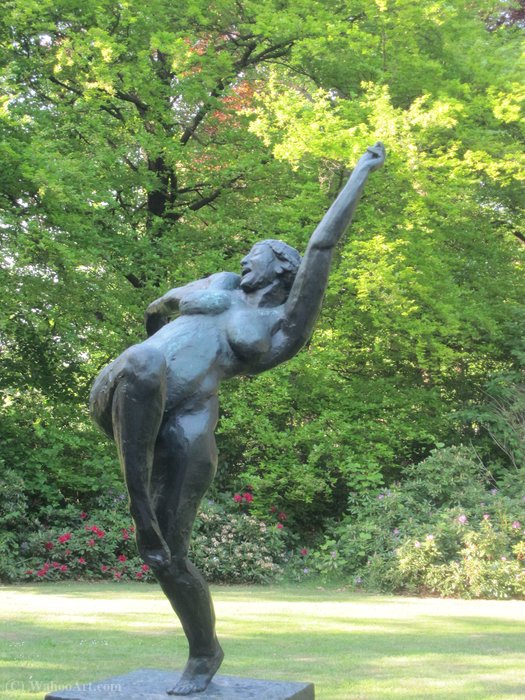
StatsHet zotte geweld, (2) (1912)
 詳細を見る
詳細を見る
手描き油彩複製画
当社のアーティストが、お客様のご希望のサイズと額縁に合わせて、キャンバスに手描きで制作する油彩画です。 ( Switch to Print Switch to Digital Image)




































作品のオリジナル比率に合わせた、当店の規定サイズからお選びください。

特定のフレームやスペースに合わせて、ご希望のサイズをご入力いただけます。選択されたサイズが元の画像の比率と異なる場合、アートワークをトリミングするか、手描きで要素を追加して絵画を拡張いたします。デジタルモックアップ を制作し、制作開始前にご確認(承認)をいただきます。
画面上のプレビューは、実際のトリミングや拡張を正確に反映しているものではありません。最終的な構図は、モックアップによってのみ正確にご確認いただけます。
カスタムサイズもご利用いただけますが、元の比率を維持するためには、あらかじめ用意されたリストからサイズを選択することをお勧めいたします。
ご注文後、ArtsDot.com チームより詳細な指示をお送りするとともに、仕上がりイメージ(モックアップ)をご提供いたします。


 ガラスオプションは、110cm未満のサイズでのみご利用いただけます。

Het zotte geweld, (2) (1912)
複製技法
複製画のサイズ
-


合計金額
$ 263
関連作品


アーティストの略歴
A Life of Vibrant Intensity: The Legacy of Rik Wouters
The history of Belgian modernism is indelibly marked by the brief but brilliant meteor that was Rik Wouters. Born in Mechelen on August 21, 1882, Wouters possessed a creative spirit that refused to be contained by the rigid academicism of his era. His journey began not in a grand studio, but amidst the scent of wood and the tactile reality of his father’s workshop, where he learned the delicate art of ornamental sculpture. This early immersion in craftsmanship instilled in him a profound respect for form and material, a foundation that would later allow him to navigate the worlds of painting, drawing, and bronze sculpture with equal mastery. Though his life was tragically truncated by illness during the First World War, leaving him only thirty-four years to leave his mark upon the world, the sheer density of emotion within his two hundred surviving works speaks to a lifetime of unbridled passion.
Wouters’s artistic evolution was a bold departure from the shadows of tradition toward the luminous frontiers of Fauvism. While his training at the Académie Royale des Beaux-Arts in Brussels provided him with technical rigor, it was his encounter with the revolutionary spirit of artists like Matisse and Cézanne that truly ignited his vision. He moved beyond the atmospheric subtleties of Impressionism to embrace a chromatic language that prioritized emotional truth over objective reality. In his hands, color became a visceral force; he utilized deep reds, sun-drenched yellows, and verdant greens not merely to describe a scene, but to evoke its very soul. This approach often involved leaving portions of the canvas unpainted, a technique that allowed the raw texture of the support to breathe alongside his vigorous, loose brushstrokes, creating a sense of immediacy and light that felt profoundly modern.
The Muse and the Masterpiece
At the heart of Wouters’s most intimate works lies a profound devotion to his wife and muse, Hélène "Nel" Deurinckx. She was the silent protagonist in much of his oeuvre, appearing in domestic scenes that captured the quiet dignity of everyday life. Whether she was depicted in the focused rhythm of Woman Ironing or resting in a moment of peaceful solitude, Wouters imbued her image with a warmth and tenderness that stood in stark contrast to the detached, symbolic complexities favored by many of his contemporaries. His portraits of Nel were not mere studies of a person, but explorations of intimacy, where the boundaries between the subject and the artist's affection seemed to dissolve into the vibrant pigment.
This connection to the human form extended into his sculptural achievements, most notably in the breathtaking bronze The Mad Maiden (1912). Inspired by the ecstatic modern dance of Isadora Duncan, this sculpture captures Nel in a dynamic, carefree pose that defies the static nature of traditional academic sculpture. It remains one of his most significant triumphs, embodying the Fauvist rejection of emotionless perfection in favor of a more sensual and genuine expression of life. Through both his canvases and his bronzes, Wouters sought to capture the "zotte geweld"—the wild or mad force—of existence, celebrating the beauty found in movement, light, and the simple grace of a domestic moment.
A Lasting Impression on Belgian Art
The historical significance of Rik Wouters lies in his role as a pioneer who bridged the gap between traditional Belgian craftsmanship and the radical avant-garde. Though critics of his time occasionally dismissed his bold palette as "primitive," history has vindicated his vision, recognizing him as a vital architect of the Fauvist movement in Belgium. His ability to synthesize the structural lessons of Cézanne with the emotive power of color allowed him to create a style that was uniquely his own—one that felt both grounded in the physical world and elevated by spiritual intensity.
Today, Wouters’s work serves as a poignant reminder of the power of artistic conviction. His legacy is defined by several key contributions:
- Chromatic Revolution: The introduction of an audacious, non-naturalistic palette to Belgian painting, prioritizing emotional resonance over literal representation.
- Integration of Media: A seamless mastery across sculpture, etching, and painting, driven by a unified vision of form and color.
- Humanistic Focus: A rejection of heavy symbolism in favor of capturing the "warmth and tenderness" of real life and intimate human connection.
- Modernist Spirit: The courage to embrace the experimental textures and loose brushwork that would define the trajectory of early 20th-century modern art.
Though he passed away in Amsterdam in 1916, far from his beloved Mechelen, the vibrant light Wouters brought to the canvas continues to shine. His works remain essential touchstones for anyone seeking to understand the moment when art broke free from the constraints of the past to embrace the colorful, chaotic, and beautiful reality of the modern age.
rik wouters
1882 - 1916
基本情報
- Artistic Movement Or Style: Fauvist Painter
- Artists Who Influenced This Artist:
- Henri Matisse
- André Derain
- Date Of Birth: August 21, 1882
- Date Of Death: July 11, 1916
- Full Name: Hendrik Emil Wouters
- Nationality: Belgian
- Notable Artworks:
- The Pink Avenue
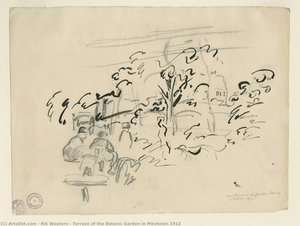
- Terrace of the Botanic Garden in Mechelen
- Woman Gardening
- Place Of Birth: Mechelen, Belgium