

 プレビュー
プレビュー
 シェアする
シェアする シェアする
シェアする
 詳細を見る
詳細を見る

 ダウンロード
 似ている作品
 X線調査
X線調査 スライドショー
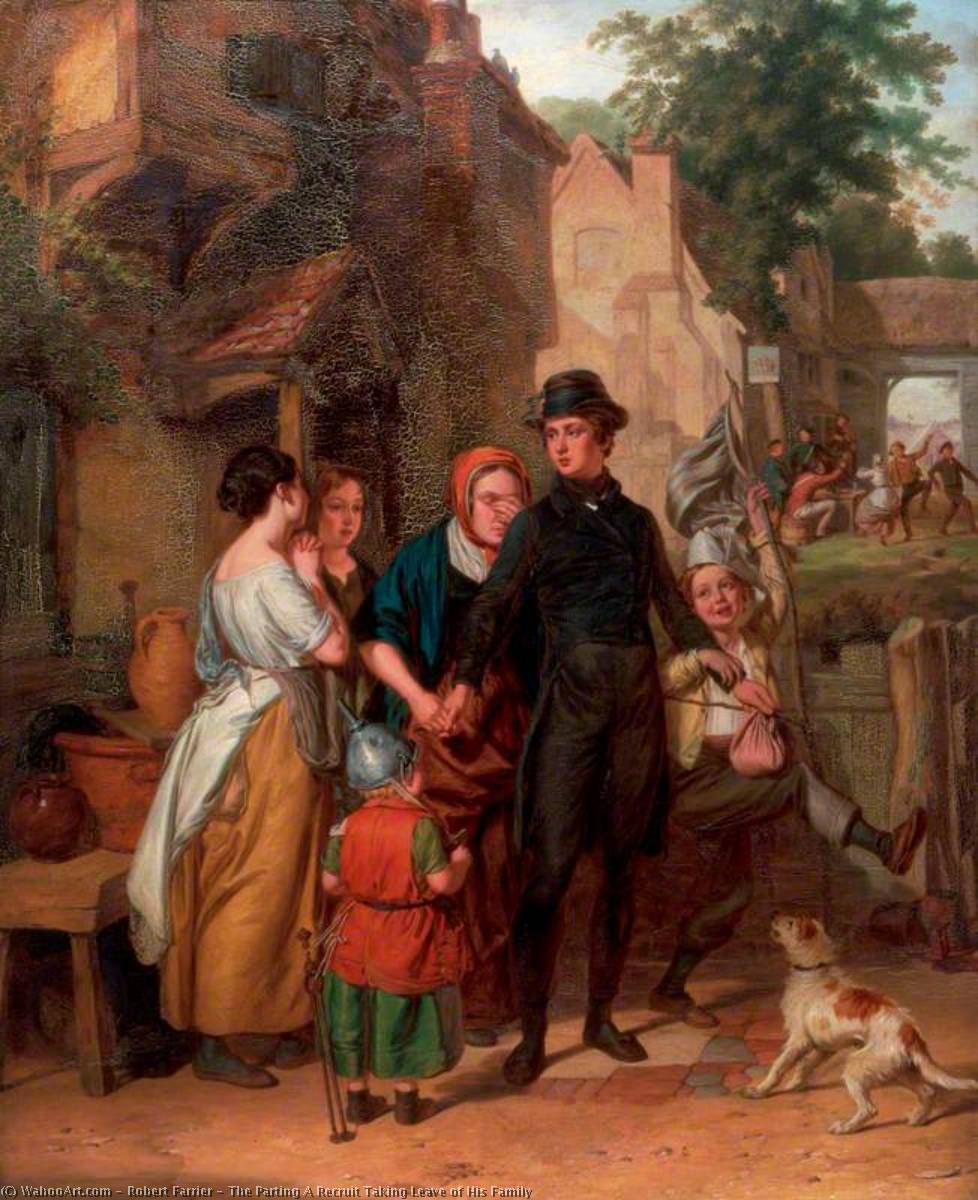
The Parting A Recruit Taking Leave of His Family
 1844
1844 74.0 x 62.0 cm
 詳細を見る
詳細を見る
ジークレー/アートプリント
迅速な制作と多彩な仕上げオプションを備えた、ミュージアムクオリティのジークレーまたはキャンバスプリント。 ( 手描きの絵画を購入 画像を購入)




































作品のオリジナル比率に合わせた、当店の規定サイズからお選びください。

特定のフレームやスペースに合わせて、ご自身でサイズを指定することも可能です。選択されたサイズが元の画像の比率と一致しない場合、作品をトリミングするか、鏡面反射または単色での塗りつぶしによって画像を拡張いたします。制作を開始する前に、ご確認用のデジタルモックアップをお送りいたします。
画面上のプレビューには、実際のトリミングや拡張は反映されませんのでご注意ください。最終的な構図を正確に確認できるのは、モックアップのみとなります。
カスタムサイズも承っておりますが、元の比率を維持するためには、あらかじめ用意されたリストからサイズを選択することをお勧めいたします。


 ガラスオプションは、110cm未満のサイズでのみご利用いただけます。

The Parting A Recruit Taking Leave of His Family
ジークレー/アートプリント
複製画のサイズ
-


合計金額
$ 62
関連作品










アーティストの略歴
The Gentle Humorist of Chelsea: The Life and Legacy of Robert Farrier
In the bustling heart of nineteenth-century London, amidst the evolving landscapes of the Victorian era, there lived an artist who possessed the rare ability to find extraordinary charm in the most ordinary moments. Robert Farrier (1796–1879), born in Chelsea, was much more than a mere chronicler of his time; he was a master of the miniature, a painter who could distill the vast complexities of human emotion into a small, exquisitely rendered frame. His journey began not with a brush, but with the precise, disciplined hand of an engraver’s apprentice. This early training in printmaking instilled within him a foundational mastery of tonal control and meticulous detail—skills that would later allow him to breathe life into the delicate features of his subjects, particularly the innocent faces of childhood.
Farrier’s artistic evolution was marked by a transition from the rigid precision of engraving to the fluid, emotive possibilities of miniature portraiture. While he sought formal instruction at the Royal Academy, debuting there in 1818, his true genius emerged when he began to infuse his work with a sense of whimsical observation. Unlike many of his contemporaries who pursued the grand, sweeping narratives of Romanticism, Farrier turned his gaze inward toward the domestic sphere. He became a storyteller of the small-scale, capturing the fleeting glances, the quiet mischief, and the tender vulnerabilities of daily life. His ability to blend a subtle realism with a playful, almost humorous spirit set him apart, creating a body of work that felt both intimately personal and universally relatable.
A Mastery of Miniature and Mood
The brilliance of Farrier’s technique lies in his command over tonal gradation and the delicate application of light. In his miniature portraits, every brushstroke was calculated to evoke a psychological depth that belied the small size of the canvas. He had an uncanny knack for capturing what might be called "the soul in miniature." This is perhaps most evident in his celebrated depictions of youth. Through works such as “The Mischievous Boy” and “Schoolboy,” Farrier invited viewers into a world of childhood innocence, where a single furrowed brow or a shy smile could convey an entire narrative of growing up.
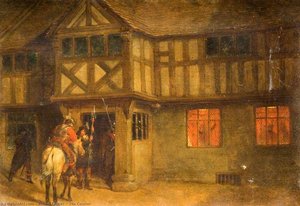
Beyond the intimate portraits, Farrier’s versatility extended to larger compositions that explored themes of movement and social connection. His painting “The Courier” serves as a magnificent testament to his ability to handle oil on canvas, showcasing a dynamic scene of travelers set against an imposing architectural backdrop. In this work, one can sense the same spirit of adventure and camaraderie that he brought to his domestic scenes, albeit through a more expansive lens. His mastery was not limited to the brush; his engravings, including notable works after Romney and Simmons, further solidified his reputation as a versatile technician capable of navigating both the fine lines of printmaking and the rich textures of oil painting.
Historical Significance and Enduring Charm
The historical significance of Robert Farrier resides in his role as a bridge between the formal traditions of the late eighteenth century and the burgeoning sentimentalism of the Victorian age. He captured a specific cultural zeitgeist—a period that valued domestic stability, the sanctity of the family, and the romanticized beauty of the everyday. His notable works, including “Sunday Morning—The Toilet,” “Hesitation,” and “The Parting,” remain enduring examples of how art can serve as a mirror to the human condition, reflecting our most fundamental joys and sorrows through an understated visual language.
Today, Farrier’s legacy is preserved in esteemed collections such as the Wolverhampton Art Gallery, where his ability to evoke nostalgia continues to resonate with modern audiences. He remains a celebrated figure for those who appreciate the nuance of the miniature and the profound impact of a gentle, humorous perspective. His life's work stands as a testament to the idea that greatness is not always found in the monumental, but often in the quiet, beautifully captured moments of a life well-observed.
robert farrier
1796 - 1879
基本情報
- Artistic Movement Or Style: Romanticism
- Artists Or Movements Influenced By This Artist: ['Romantic Painting']
- Artists Who Influenced This Artist: ['William Hayley']
- Date Of Death: 1879
- Full Name: Robert Farrier
- Nationality: English
- Notable Artworks:
- The Schoolboy
- Sunday Morning
- Hesitation
- Minnie O'Donnell's Toilet
- Place Of Birth: Chelsea, London

