 プレビュー
プレビュー
 プリントを購入
 シェアする
シェアする シェアする
シェアする
 詳細を見る
詳細を見る

 ダウンロード
 似ている作品
 X線調査
X線調査 スライドショー
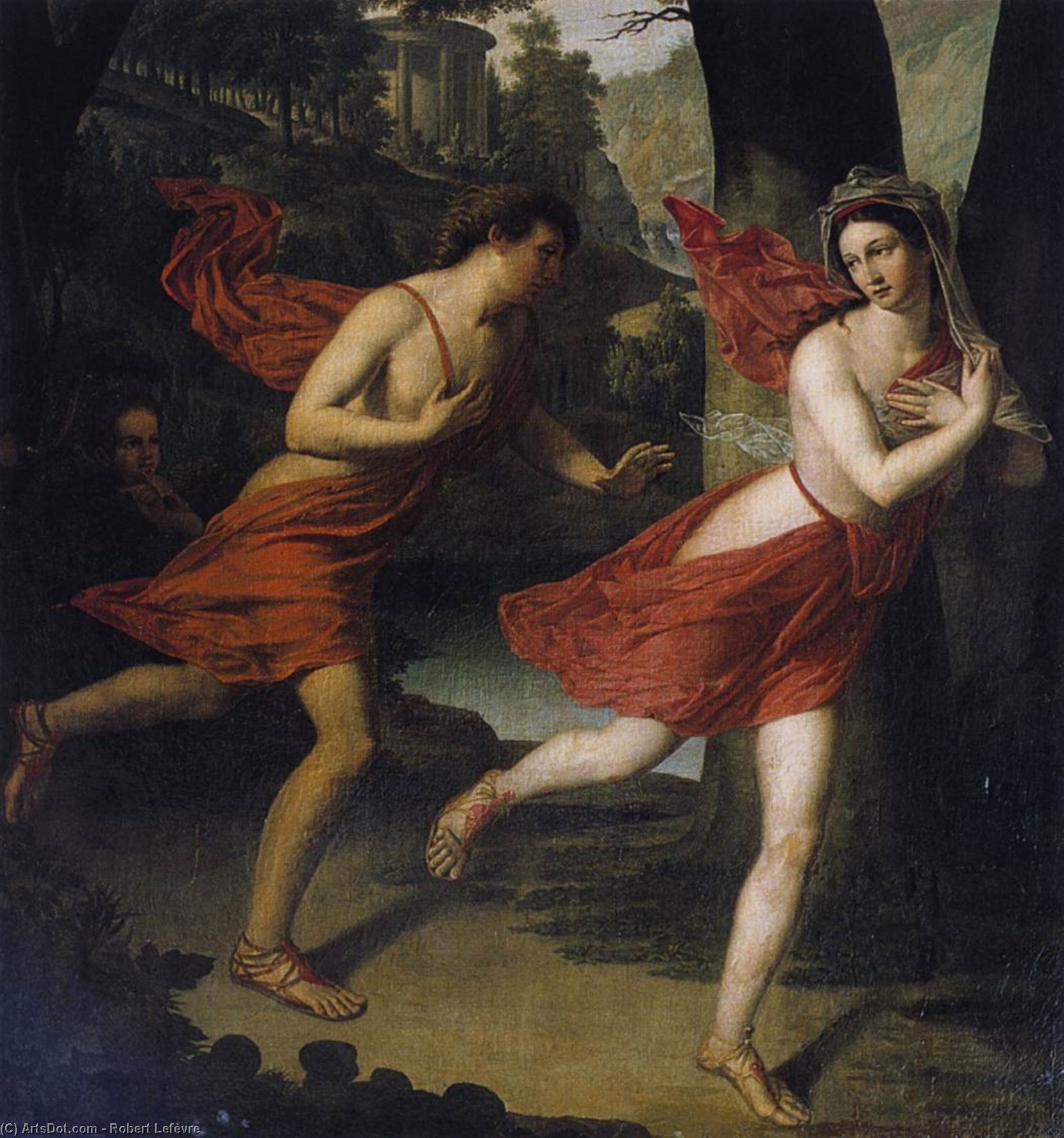
Pauline as Daphne Fleeing from Apollo
 1810
1810 119.0 x 105.0 cm
 詳細を見る
詳細を見る




































作品のオリジナル比率に合わせた、当店の規定サイズからお選びください。

特定のフレームやスペースに合わせて、ご希望のサイズをご入力いただけます。選択されたサイズが元の画像の比率と異なる場合、アートワークをトリミングするか、手描きで要素を追加して絵画を拡張いたします。デジタルモックアップ を制作し、制作開始前にご確認(承認)をいただきます。
画面上のプレビューは、実際のトリミングや拡張を正確に反映しているものではありません。最終的な構図は、モックアップによってのみ正確にご確認いただけます。
カスタムサイズもご利用いただけますが、元の比率を維持するためには、あらかじめ用意されたリストからサイズを選択することをお勧めいたします。
ご注文後、ArtsDot.com チームより詳細な指示をお送りするとともに、仕上がりイメージ(モックアップ)をご提供いたします。


 ガラスオプションは、110cm未満のサイズでのみご利用いただけます。

Pauline as Daphne Fleeing from Apollo
複製技法
複製画のサイズ
-


合計金額
$ 263
関連作品
アーティストの略歴
Robert Lefèvre: The Shadowy Master of the Imperial Court
Robert Lefèvre, a name often whispered in the annals of 18th-century French art, remains an enigmatic figure despite his undeniable impact on portraiture and historical painting. Born in Bayeux in 1755, Lefèvre’s career unfolded against the backdrop of dramatic political shifts – from the waning years of the Ancien Régime to the turbulent reign of Napoleon Bonaparte. He wasn't a flamboyant personality, preferring the quiet intensity of his studio to the limelight, yet his work profoundly shaped the visual language of the French court and left an enduring legacy on Neoclassical art.
Lefèvre’s early artistic development was unconventional. Rather than pursuing a formal apprenticeship, he embarked on a solitary journey to Paris at the tender age of eighteen, abandoning a planned legal career to immerse himself in the works of the Old Masters. This self-directed education proved pivotal, instilling in him a deep appreciation for classical forms and a meticulous approach to technique. He found mentorship with Jean-Baptiste Regnault, a respected painter to the King, but it was within Regnault’s studio that he encountered Charles Paul Landon, a fellow student who would become a lifelong collaborator. This partnership fostered a shared artistic vision and contributed significantly to Lefèvre's distinctive style – characterized by its crisp detail, subtle modeling, and an almost photographic realism.
The Rise of a Court Painter
Lefèvre’s reputation began to solidify with his exhibition at the 1791 Salon, where his painting *Dame en velours noir* (Lady in Velvet) immediately captivated audiences. The work's striking composition and masterful handling of light and shadow established him as a rising star within the Parisian art world. He quickly gained commissions from prominent figures, including members of the aristocracy and officials within the burgeoning revolutionary government. Lefèvre’s ability to capture both the outward appearance and inner character of his subjects made him exceptionally sought after.
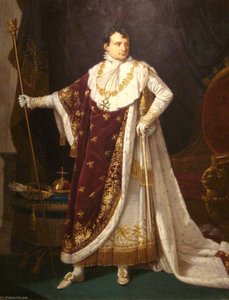
The Napoleonic era marked the zenith of Lefèvre's career. He was entrusted with painting portraits of some of the most important figures in France – Napoleon Bonaparte himself, Empress Joséphine, Marie Louise, and numerous members of the royal family. The portrait of Napoleon in coronation attire, now housed in Aachen City Hall, stands as a testament to his skill and understanding of power. These works weren’t merely likenesses; they were carefully constructed narratives designed to project an image of authority and grandeur. Lefèvre's meticulous attention to detail – from the folds of Napoleon’s uniform to the subtle expression on his face – conveyed both strength and intelligence.
A Style Defined by Neoclassicism
Lefèvre’s artistic style is often categorized as Neoclassical, though it transcends simple labels. He was deeply influenced by Jacques-Louis David, particularly in his use of clear lines, balanced compositions, and a restrained palette. However, Lefèvre possessed a unique sensibility that set him apart. His paintings are imbued with a sense of quiet dignity and psychological depth, qualities often lacking in the more overtly dramatic works of David. He was also influenced by antiquity, evident in his careful study of classical sculpture and architecture.
His technique involved painstaking preparation – extensive sketching, detailed studies of anatomy, and meticulous layering of paint. Lefèvre’s approach to portraiture was remarkably modern for its time, prioritizing the accurate representation of individual features and expressions. He employed a technique known as “pointillé,” using small, precise brushstrokes to build up form and texture, creating an illusion of remarkable realism.
Legacy and Lasting Influence
Despite his considerable talent and success, Lefèvre’s career was tragically cut short. Following the Bourbon Restoration, he lost his official positions and struggled financially. In 1830, disillusioned and impoverished, he took his own life. His death marked the end of an era in French portraiture.
However, Lefèvre's influence endured. His meticulous technique and psychological insight profoundly impacted subsequent generations of artists. He is remembered as a master of Neoclassical portraiture, whose works continue to be admired for their beauty, realism, and subtle power. The portraits he created during the Napoleonic era remain iconic representations of an age of grandeur and ambition, offering a valuable glimpse into the lives and personalities of some of history’s most influential figures. His legacy is not one of flamboyant spectacle, but rather of quiet mastery—a testament to the enduring power of observation, skill, and artistic vision.
robert jacques françois lefèvre
1755 - 1830
基本情報
- Artistic Movement Or Style: Neoclassical, Portraiture
- Artists Who Influenced This Artist: ['Jacques-Louis David],\n "Artists or movements influenced by this artist": ["Neoclassical art"]\n}']
- Date Of Birth: September 24, 1755
- Date Of Death: October 3, 1830
- Full Name: Robert Jacques François Faust Lefèvre
- Nationality: French
- Notable Artworks:
- Dame en velours noir
- Joséphine Bonaparte
- Napoleon I (coronation)
- Place Of Birth: Bayeux, France