

 プレビュー
プレビュー
 シェアする
シェアする シェアする
シェアする
 詳細を見る
詳細を見る

 ダウンロード
 似ている作品
 X線調査
X線調査 スライドショー
 統計情報
統計情報Snakes and Ladders
 Oil On Canvas
- WallArt
- Contemporary Expressionism
 2014
2014- Modern
 242.0 x 242.0 cm
 The Ramzi and Saeda Dalloul Art Foundation
 詳細を見る
詳細を見る
オンラインプレビューをはるかに凌ぐ、高解像度で鮮明なデジタル画像をご購入いただけます。
各ファイルは、社内の専門家が高度なツールと熟練した手作業によるレタッチを用いて、細心の注意を払って準備されています。すべての画像において、卓越した鮮明度、正確な色彩再現性、そして繊細なディテールを保証いたします。
最終ファイルは、プロフェッショナルな編集・印刷環境ですぐにご利用いただけるよう最適化された状態で、72時間以内にメールにてお届けいたします。これは、一流のデザインスタジオ、出版社、ギャラリーから信頼されているものと同等の品質です。
デジタルアート
個人での鑑賞、印刷、クリエイティブなプロジェクト用に、高解像度ファイルをダウンロードできます。 ( プリント版に切り替え 手描きの絵画を購入)
デジタル画像のご注文に付随する特典
高品質なデジタル画像配信を、確かな品質で。
ArtsDot.com を選ぶことは、単に画像を手に入れることではありません。それは、プロの手によって精密に仕上げられ、満足保証が付いた高品質なデジタルアートワークを受け取ることを意味します。ご注文いただいた際に自動的に付随する内容は、以下の通りです:

メールですぐにお届け
ご注文から72時間以内に、高解像度のデジタル画像ファイルがメールでお手元に届きます。すぐにそのままご利用いただけます。

AI技術で最適化されたデジタルファイル
お客様の作品は、高度なAIツールと専門家による手作業の編集を組み合わせてプロフェッショナルに最適化されており、細部のディテール、鮮明さ、そして正確な色再現性を最大限に引き出しています。

一生涯無料の再送サービス
ファイルを誤って削除したり、紛失してしまったりしましたか?ご安心ください。いつでも無料で再送いたします。

輸入手数料は一切かかりません
関税や手数料、配送料を気にすることなく、お気に入りのアートワークをすぐにお楽しみいただけます。デジタルダウンロードは常に免税です。

色彩再現の保証
プロ仕様のツールとカラーマネジメント技術を用いることで、デジタル画像が元の色を最大限に忠実に再現することを保証いたします。

100日間満足保証
ご購入いただいたデジタル画像にご満足いただけない場合は、100日以内であれば、理由を問わず修正または100%の返金対応をさせていただきます。

100% 返金保証
ご満足いただけない場合は、デジタルファイルを受け取ってから100日以内であれば、理由を問わず全額返金いたします。

まとめ買い割引
3枚購入で10%OFF - 5枚購入で15%OFF - 10枚以上購入で20%OFF。クリエイティブなプロジェクト、ギャラリー、エージェンシーに最適です。
A Descent into Uncertainty: Exploring "Snakes and Ladders" by Sadik Kwaish Alfraji
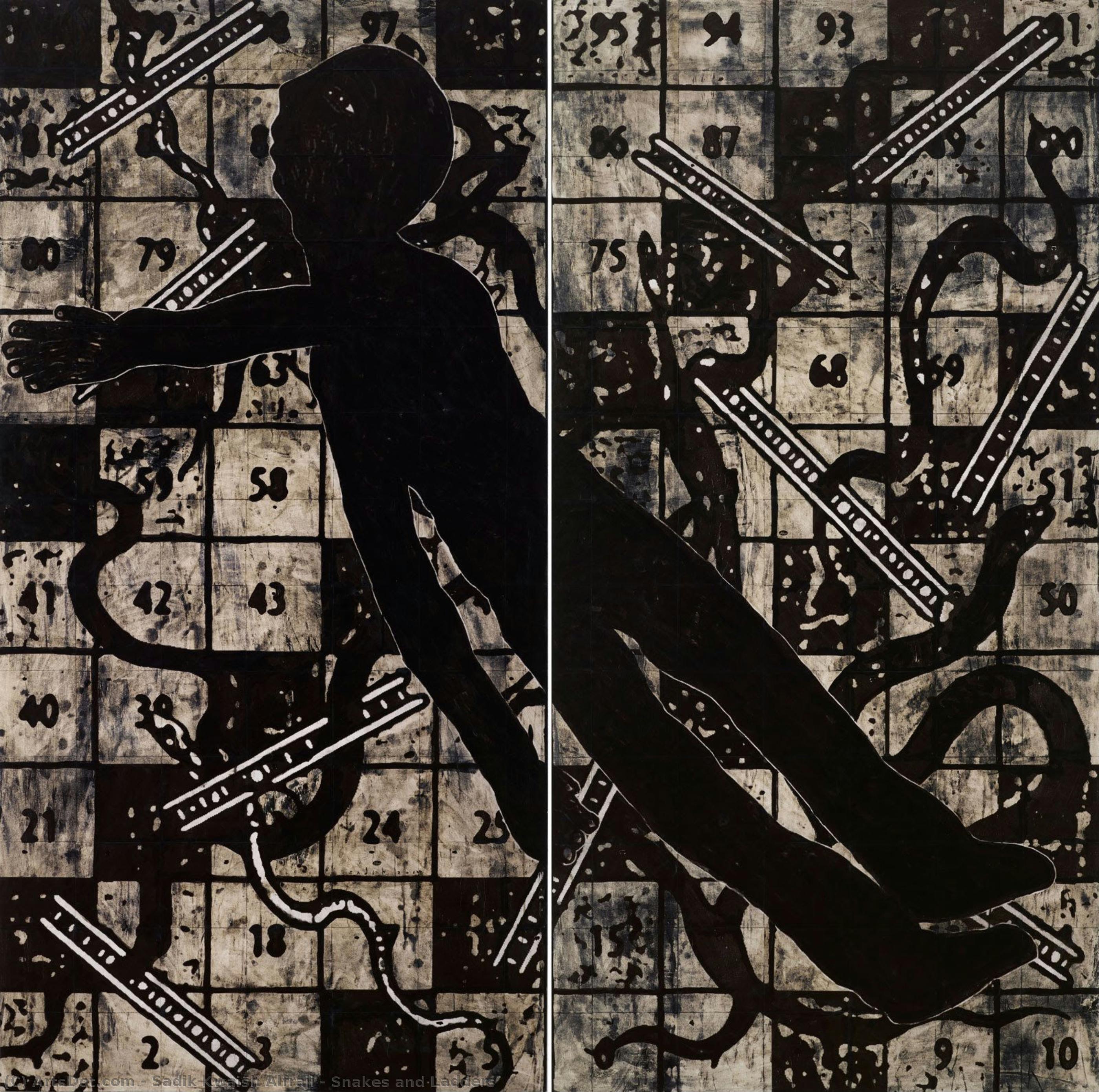
Sadik Kwaish Alfraji’s “Snakes and Ladders” (2014) is a powerfully unsettling work that transcends the simple depiction of a childhood game. Measuring an imposing 242 x 242 cm, this large-scale painting immediately commands attention with its stark contrasts and dynamic composition. Created by the Iraqi artist born in Baghdad in 1960, Alfraji masterfully employs a limited palette – primarily black, white, and shades of grey – to evoke a profound sense of anxiety and the precarious nature of existence. The artwork’s strength lies not just in its visual impact but also in its layered symbolism, inviting viewers to contemplate themes of fate, failure, and the unpredictable trajectory of life.
- Composition & Movement: The diagonal placement of the falling figure is crucial. It isn't merely a depiction of someone tumbling; it’s an active descent, suggesting a loss of control and a surrender to forces beyond one’s grasp. The grid-like Snakes and Ladders board acts as both backdrop and metaphor, reinforcing this sense of predetermined paths and potential pitfalls.
- Stylistic Influences: Alfraji's work blends elements of expressionism with graphic design principles. The bold lines, simplified forms, and geometric shapes – squares for the board, rectangles for the ladders – create a deliberately unsettling aesthetic reminiscent of early 20th-century modernist art while retaining a contemporary visual clarity.
Technique and Materials: A Layered Exploration
The creation of “Snakes and Ladders” reveals a sophisticated technique rooted in traditional oil painting practices, yet infused with modern sensibilities. Alfraji’s use of thick layers of paint, visible brushstrokes, and likely stenciling or masking techniques contribute to the artwork's textural richness despite its predominantly monochrome palette. The application of paint suggests a deliberate process of building up form and emphasizing key elements – particularly the angular lines defining both the figure and the game board. The choice of oil paints allows for layering and blending, crucial in achieving the painting’s dramatic contrasts and creating an illusion of depth.
- Layering & Stenciling: Evidence suggests the use of stencils or masking techniques to create the precise grid pattern of the Snakes and Ladders board. This meticulous approach highlights Alfraji's attention to detail and his control over the composition.
- Material Choices: The artwork is likely executed on a canvas, chosen for its ability to support thick paint application and maintain structural integrity.
Symbolism and Emotional Resonance
Beyond its formal qualities, “Snakes and Ladders” resonates deeply with viewers through its potent symbolism. The game itself represents the human condition – a journey filled with both fortunate rises (ladders) and unfortunate falls (snakes). The falling figure is not just an accident; it’s a visual representation of setbacks, failures, and the inherent vulnerability of existence. The starkness of the monochrome palette amplifies this emotional impact, stripping away any comforting illusions and confronting us with the raw reality of uncertainty.
- Metaphorical Interpretation: The artwork can be interpreted as a commentary on societal structures – the “ladders” representing systems that may offer advantages while the “snakes” symbolize obstacles or injustices.
- Existential Themes: Alfraji’s work taps into profound existential themes, prompting reflection on mortality, fate, and the human struggle for meaning in a seemingly chaotic world.
A Statement Piece for Discerning Collectors
"Snakes and Ladders" is more than just a painting; it's an experience. Its powerful imagery, masterful technique, and layered symbolism make it a compelling addition to any art collection or interior design scheme. ArtsDot.com offers meticulously crafted hand-painted reproductions of this iconic artwork, ensuring that you can bring its evocative power into your space. Whether you are drawn to its unsettling beauty, its profound philosophical themes, or simply its striking visual impact, “Snakes and Ladders” is a work destined to provoke thought and inspire contemplation for years to come.
関連作品



作家の略歴
The Shadowed Soul: The Existential Journey of Sadik Kwaish Alfraji
In the quiet, contemplative spaces of contemporary art, few voices resonate with as much haunting intimacy as that of Sadik Kwaish Alfraji. Born in Baghdad in 1960, Alfraji’s life and work are inextricably linked to the shifting sands of history and the profound weight of human memory. His artistic odyssey began amidst the vibrant yet turbulent atmosphere of Iraq, where he first cultivated his skills at the Institute of Fine Arts in Baghdad. This early period was marked by a rigorous training in painting and printmaking, providing him with a technical foundation that would later serve as the scaffolding for much more complex, multi-media explorations. As a young artist in the 1980s, he even ventured into the realm of animation for children’s television, a surprising precursor to the dark, moving silhouettes that would eventually define his mature aesthetic.
The trajectory of Alfraji’s career was profoundly shaped by the geopolitical upheavals of his homeland. Leaving Iraq in the 1990s and eventually settling in Amersfoort, Netherlands, he carried with him a sense of fragmentation and displacement that would become the emotional core of his oeuvre. This transition from the familiar landscapes of Baghdad to the European continent infused his work with a unique tension between belonging and exile. His later studies in Graphic Design at Constantijn Huygens in the Netherlands further expanded his creative vocabulary, allowing him to merge the tactile nature of traditional painting with the precision of graphic art and the immersive potential of video animation and installation.
A Visual Language of Absence and Presence
To encounter an Alfraji piece is to enter a world of profound existential inquiry. He is perhaps best known for his preoccupation with the problem of existence, a theme he explores through a signature visual language characterized by dark, shadowy figures. These silhouettes—often rendered in charcoal or ink—act as vessels for the viewer's own anxieties and reflections. They are not merely shapes, but rather "black voids" that function as filters through which the complexities of life, loss, and vulnerability are processed. By minimizing formal properties and focusing on the subtle inflections of a solitary character’s movement, Alfraji captures the fragility of the human condition within psychologically laden environments.
His technical mastery allows him to traverse various mediums to tell these stories of fragmentation. Whether through the bold, expressionistic lines of an oil painting like Snakes and Ladders—which uses a game board metaphor to evoke life's unpredictable uncertainties—or the melancholic movement of his animated works, the artist maintains a consistent emotional frequency. His animations, such as the poignant Ali’s Boat, serve as elegies for lost homes and fractured connections, bridging the gap between personal biography and universal themes of longing. This ability to blend the graphic with the painterly creates an immersive experience where shadows possess as much weight as light.
Legacy and Global Resonance
The significance of Sadik Kwaish Alfraji lies in his ability to transform personal and historical trauma into a universal dialogue on mortality. His work does not merely document the struggles of the Iraqi diaspora; it transcends them to touch upon the fundamental human fear of erasure. This profound resonance has earned him prestigious recognition on the global stage, with his works finding homes in esteemed institutions such as the British Museum and being featured in major international forums like the Venice Biennale.
Throughout his career, Alfraji has maintained a presence in the most vital art hubs, from solo exhibitions in Madrid and Munich to significant showcases at the Ayyam Gallery in Dubai and London. His contributions to contemporary art are marked by several key achievements:
- Interdisciplinary Innovation: The seamless integration of animation, installation, and traditional printmaking to create multi-sensory existential narratives.
- Philosophical Depth: The successful translation of complex existentialist and sophist philosophies into a visceral, visual medium.
- Cultural Bridge-Building: Creating a body of work that speaks simultaneously to the specific historical context of Iraq and the broader global experience of displacement and human frailty.
Ultimately, Alfraji remains an artist of the threshold, standing between light and shadow, memory and forgetting, presence and absence. His work continues to challenge viewers to confront the void, finding within that darkness a profound and necessary reflection of our shared humanity.

sadik kwaish alfraji
1960 - , Iraq
プロフィール概要
- Artistic Movement Or Style: Existentialism; Dark, shadowy figures
- Artists Or Movements Influenced By This Artist:
- Venice Biennale
- British Museum
- Artists Who Influenced This Artist:
- German Expressionists
- European Art
- Date Of Birth: 1960 Baghdad, Iraq
- Full Name: Sadik Kwaish Alfraji
- Nationality: Iraqi
- Notable Artworks:
- Snakes and Ladders
- Al-Mullaiya at the Martyr
- Place Of Birth: Baghdad, Iraq