

 プレビュー
プレビュー
 プリントを購入
 シェアする
シェアする シェアする
シェアする
 詳細を見る
詳細を見る

 ダウンロード
 似ている作品
 X線調査
X線調査 スライドショー
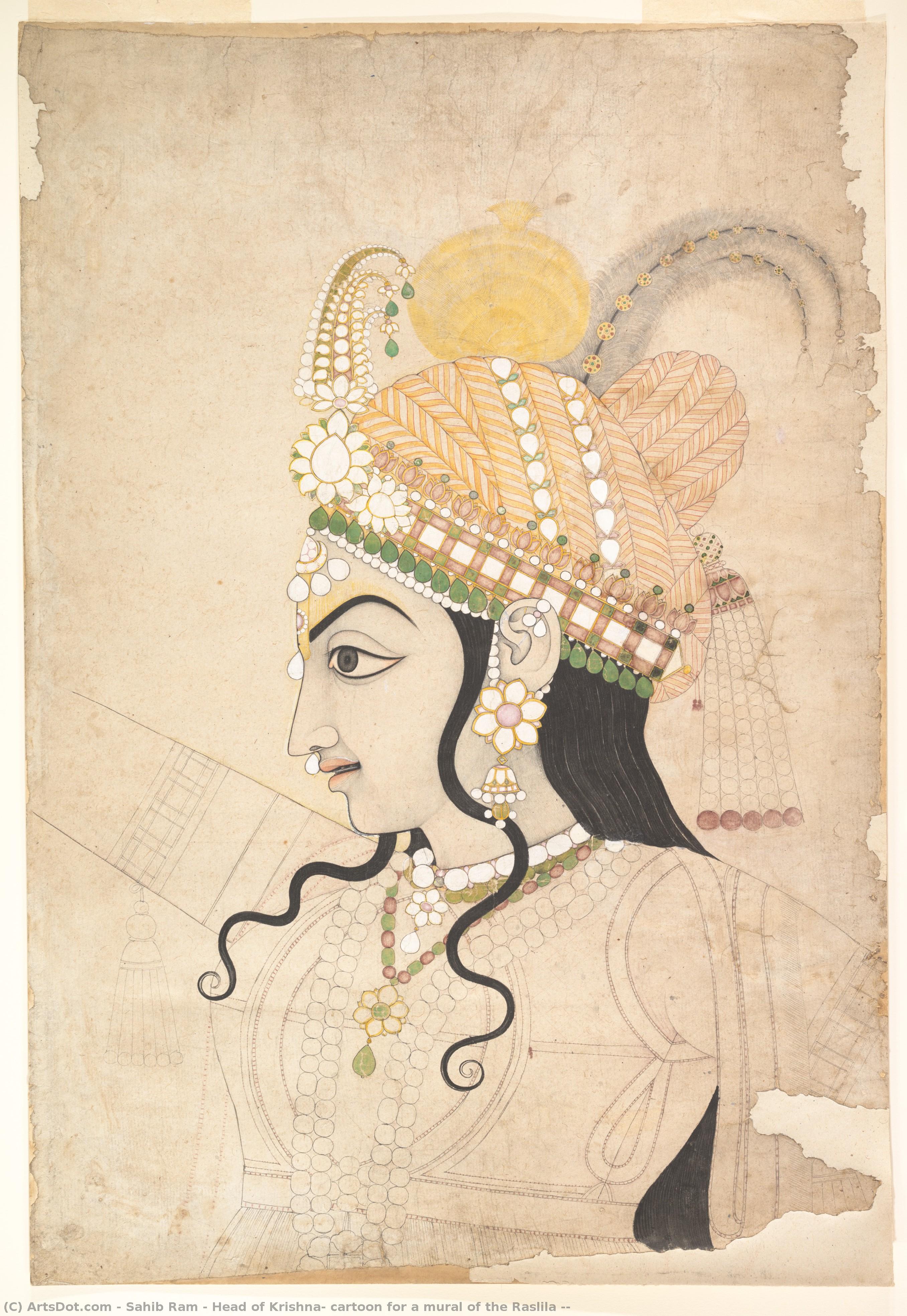
Head of Krishna: cartoon for a mural of the Raslila
 1800
1800 69.0 x 47.0 cm
 詳細を見る
詳細を見る




































作品のオリジナル比率に合わせた、当店の規定サイズからお選びください。

特定のフレームやスペースに合わせて、ご希望のサイズをご入力いただけます。選択されたサイズが元の画像の比率と異なる場合、アートワークをトリミングするか、手描きで要素を追加して絵画を拡張いたします。デジタルモックアップ を制作し、制作開始前にご確認(承認)をいただきます。
画面上のプレビューは、実際のトリミングや拡張を正確に反映しているものではありません。最終的な構図は、モックアップによってのみ正確にご確認いただけます。
カスタムサイズもご利用いただけますが、元の比率を維持するためには、あらかじめ用意されたリストからサイズを選択することをお勧めいたします。
ご注文後、ArtsDot.com チームより詳細な指示をお送りするとともに、仕上がりイメージ(モックアップ)をご提供いたします。


 ガラスオプションは、110cm未満のサイズでのみご利用いただけます。

Head of Krishna: cartoon for a mural of the Raslila
複製技法
複製画のサイズ
-


合計金額
$ 263
関連作品



アーティストの略歴
The Master of the Jaipur Atelier
In the vibrant, sun-drenched history of Rajasthan, few names resonate with the quiet authority of Sahib Ram. Born in 1745 within the illustrious artistic lineage of Jaipur, India, Sahib Ram was more than a mere painter; he was a cornerstone of the royal suratkhana—the prestigious workshop that served as the beating heart of creative innovation under the reigns of Maharaja Madho Singh I and his successor, Maharaja Sawai Pratap Singh. His life was woven into the very fabric of the Jaipur court, a world where art, devotion, and political power converged in a brilliant display of cultural splendor.
The foundations of his mastery were laid in the intimate setting of his family’s workshop, where he received rigorous training from his father. This early immersion in the traditions of Indian miniature painting instilled in him a profound respect for meticulous observation and the disciplined execution of line. As he ascended to the position of head of the Jaipur workshop, Sahib Ram became a bridge between eras, blending the established Mughal aesthetic with indigenous Rajasthani sensibilities. His role was not merely that of a creator but of a leader, overseeing an atelier that flourished under royal patronage, where even the most delicate brushstrokes were intended to immortalize the grandeur of the princely state.
A Symphony of Color and Line
The true genius of Sahib Ram is most vividly realized in his command over opaque watercolor on paper. This medium allowed him to transcend the flat boundaries of traditional portraiture, imbuing his subjects with a remarkable sense of tonal depth and textural richness. His technique was characterized by a sophisticated use of finely controlled line brushwork, which could capture the shimmering intricacy of royal jewelry or the soft, almond-shaped gaze of a monarch with breathtaking precision. Unlike many of his contemporaries who relied on heavy ornamentation, Sahib Ram often utilized flattened planes of color paired with subtle gradations to create an atmosphere of profound serenity and grace.
His works frequently served as preparatory studies for even larger-scale masterpieces, such as palace murals. In these intimate drawings and paintings, one can observe a delicate balance between reality and symbolism. For instance, in his depictions of Maharaja Pratap Singh, the artist subtly integrates elements of Hindu devotion, such as the peacock feather sarpech or specific forehead markings, which link the ruler to the god Krishna. This ability to weave religious iconography into the very essence of royal portraiture demonstrates a profound understanding of how art functions as both a record of history and a vessel for spiritual identity.
Legacy of the Jaipur School
Though historical records regarding his personal life remain as delicate as his brushwork, Sahib Ram’s impact on the trajectory of Indian art is undeniable. He presided over an era where the Jaipur school reached new heights of sophistication, influencing generations of painters who followed in his footsteps. His ability to harmonize the structured elegance of Mughal influence with the emotive, vibrant spirit of Rajasthan helped define a unique visual language that continues to captivate scholars and collectors worldwide.
Today, the works attributed to Sahib Ram reside in some of the world's most esteemed institutions, including The Metropolitan Museum of Art and the Cleveland Museum of Art. These treasures serve as enduring testaments to a master who could capture the fleeting light of a royal court and freeze it in time through the medium of pigment and paper. His legacy remains a vital chapter in the story of Indian art, reminding us of a period when the artist's hand was essential in shaping the visual soul of a kingdom.
Sahib Ram
1745 - 1803 , India
基本情報
- Artistic Movement Or Style: Opaque watercolor
- Artists Or Movements Influenced By This Artist: ['European Influences']
- Artists Who Influenced This Artist: ['Mughal Painting']
- Date Of Birth: Jaipur, India (1745)
- Date Of Death: 1803
- Full Name: Sahib Ram
- Nationality: Indian
- Notable Artworks:
- Singer and Sarinda Player
- Portrait of Maharaja Pratap Singh
- Place Of Birth: Jaipur, India

