

 プレビュー
プレビュー
 プリントを購入
 シェアする
シェアする シェアする
シェアする
 詳細を見る
詳細を見る

 ダウンロード
 似ている作品
 X線調査
X線調査 スライドショー

 詳細を見る
詳細を見る
デジタル画像のご注文に付随する特典
高品質なデジタル画像配信を、確かな品質で。
ArtsDot.com を選ぶことは、単に画像を手に入れることではありません。それは、プロの手によって精密に仕上げられ、満足保証が付いた高品質なデジタルアートワークを受け取ることを意味します。ご注文いただいた際に自動的に付随する内容は、以下の通りです:

メールですぐにお届け
ご注文から72時間以内に、高解像度のデジタル画像ファイルがメールでお手元に届きます。すぐにそのままご利用いただけます。

AI技術で最適化されたデジタルファイル
お客様の作品は、高度なAIツールと専門家による手作業の編集を組み合わせてプロフェッショナルに最適化されており、細部のディテール、鮮明さ、そして正確な色再現性を最大限に引き出しています。

一生涯無料の再送サービス
ファイルを誤って削除したり、紛失してしまったりしましたか?ご安心ください。いつでも無料で再送いたします。

輸入手数料は一切かかりません
関税や手数料、配送料を気にすることなく、お気に入りのアートワークをすぐにお楽しみいただけます。デジタルダウンロードは常に免税です。

色彩再現の保証
プロ仕様のツールとカラーマネジメント技術を用いることで、デジタル画像が元の色を最大限に忠実に再現することを保証いたします。

100日間満足保証
ご購入いただいたデジタル画像にご満足いただけない場合は、100日以内であれば、修正または100%の返金(理由を問う必要はありません)をさせていただきます。

100% 返金保証
ご満足いただけない場合は、デジタルファイルを受け取ってから100日以内であれば、理由を問わず全額返金いたします。

まとめ買い割引
3枚購入で10%OFF - 5枚購入で15%OFF - 10枚以上購入で20%OFF。クリエイティブなプロジェクト、ギャラリー、エージェンシーに最適です。
関連作品








作家の略歴
The Soul of the Woodblock: The Life and Legacy of Kiyoshi Saitō
Kiyoshi Saitō (1907–1997) was far more than a mere printmaker; he was a visionary architect of light and form who bridged the ancient traditions of Japan with the bold, experimental spirit of Western modernism. Born in the quiet beauty of Aizu Bangi, Fukushima Prefecture, Saitō’s early life was shadowed by profound personal loss. Orphaned at the age of twelve, he navigated a childhood marked by poverty and instability, yet these very hardships seemed to forge an ironclad resilience and a deep, contemplative connection to the world around him. This sensitivity would later become the heartbeat of his work, allowing him to find profound meaning in the simplest landscapes and architectural silhouettes. Before he became a master of the sōsaku hanga movement, Saitō’s hands were acquainted with the practicalities of commercial art, working as a sign painter. This early training provided him with a foundational understanding of color and composition that would later serve his more avant-garde pursuits. His journey eventually led him to the vibrant artistic epicenter of Paris in the 1930s, an experience that fundamentally altered his aesthetic DNA. Immersed in the revolutionary currents of Cubism and Surrealism, he encountered the works of masters like Paul Gauguin, Henri Matisse, and Pablo Picasso. These encounters ignited a desire to synthesize the structural rigor of European modernism with the delicate, expressive potential of the Japanese woodblock medium.A Synthesis of East and West
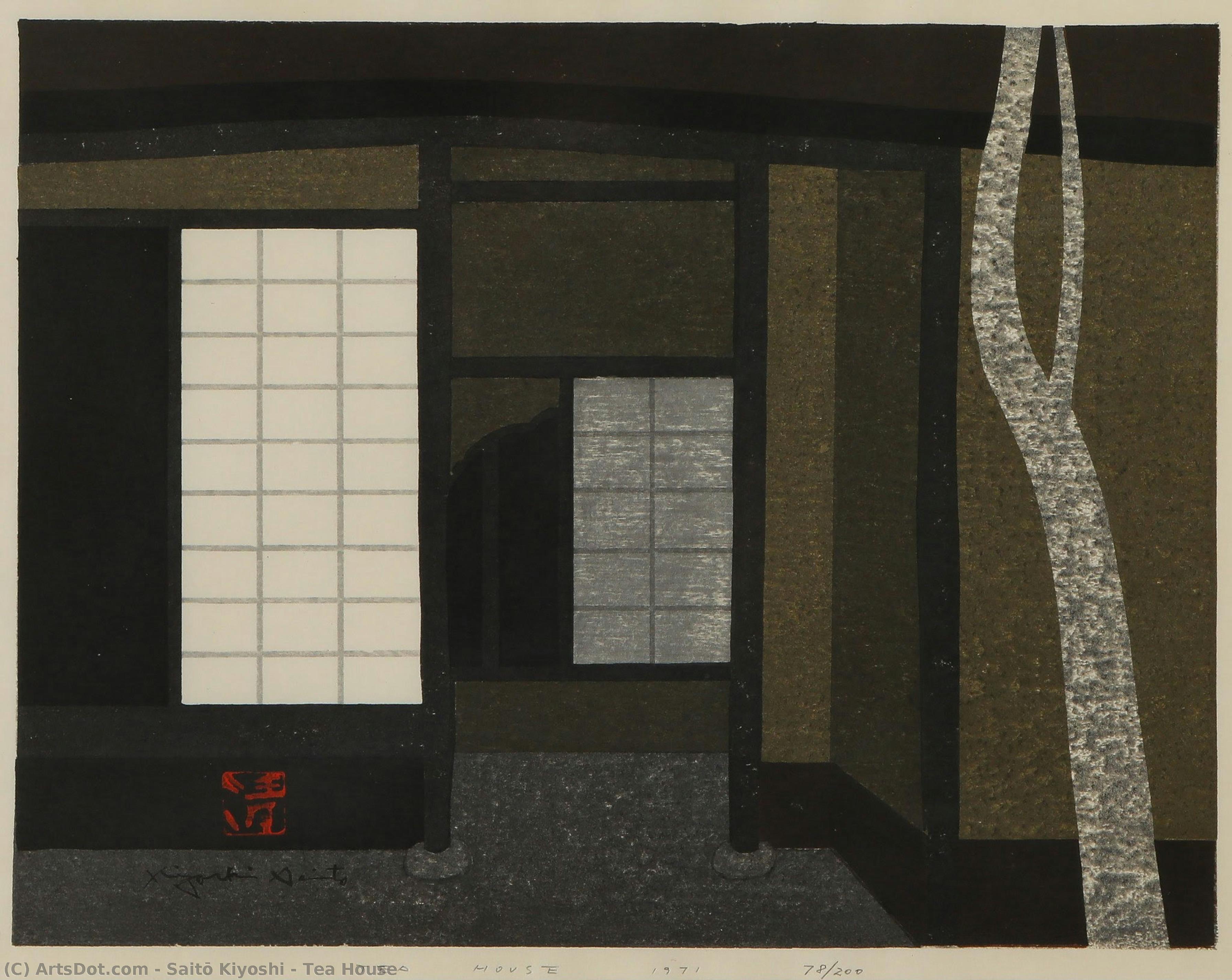
The true brilliance of Saitō’s oeuvre lies in his ability to inhabit two worlds simultaneously. In 1936, he turned his focus toward woodblock printing, a medium deeply embedded in Japanese cultural identity. His early series, the celebrated “Winter in Aizu,” showcased a remarkable degree of realism and three-dimensionality, capturing the snowy, poignant atmosphere of his homeland with meticulous detail. However, as his career matured, Saitō moved away from literal representation toward a more profound abstraction. He began to strip his subjects down to their essential geometric truths, much like the Dutch master Piet Mondrian. In his later works, one can observe a mesmerizing transformation where buildings, telephone poles, and even shadows are reduced to clean, horizontal and vertical lines. This stylistic evolution allowed him to explore themes of architecture and nature through a flattened, two-dimensional lens that felt both ancient and strikingly contemporary. Whether depicting the serene streets of Nishinokyō in Nara or the abstract geometry of a Japanese teahouse, Saitō’s prints possess a rhythmic balance that guides the viewer's eye through a landscape of structured tranquility.Global Recognition and Enduring Influence
Saitō’s impact extended far beyond the borders of Japan. He was one of the first Japanese printmakers to achieve significant acclaim on the international stage, notably winning recognition at the São Paulo Biennale in 1951. His exhibitions in the United States, including cities like Detroit and California, allowed him to present a version of Japan that was both culturally authentic and aesthetically modern, reshaping how the Western world perceived Japanese art. The historical significance of his work is perhaps best measured by its enduring resonance in contemporary culture. His ability to blend disparate influences has left a mark on modern media, even finding subtle echoes in the visual language of acclaimed animated films like Kubo and the Two Strings. This connection highlights the timelessness of his aesthetic—a way of seeing that finds beauty in the intersection of structure and spirit. Through his mastery of the sōsaku hanga technique, Kiyoshi Saitō ensured that the woodblock print would not remain a relic of the past, but rather a living, breathing medium capable of expressing the complexities of the modern soul.
saitō kiyoshi
1907 - 1997 , Japan
プロフィール概要
- Artistic Movement Or Style: Sōsaku-hanga
- Artists Or Movements Influenced By This Artist: ['Ichimokukai']
- Artists Who Influenced This Artist:
- Paul Gauguin
- Henry Matisse
- Pablo Picasso
- Date Of Birth: April 27, 1907
- Date Of Death: November 14, 1997
- Full Name: Kiyoshi Saitō
- Nationality: Japanese
- Notable Artworks:
- Autumn
- Red Poppies
- Place Of Birth: Aizu Bangi, Japan