

 プレビュー
プレビュー
 プリントを購入
 シェアする
シェアする シェアする
シェアする
 詳細を見る
詳細を見る

 ダウンロード
 似ている作品
 X線調査
X線調査 スライドショー
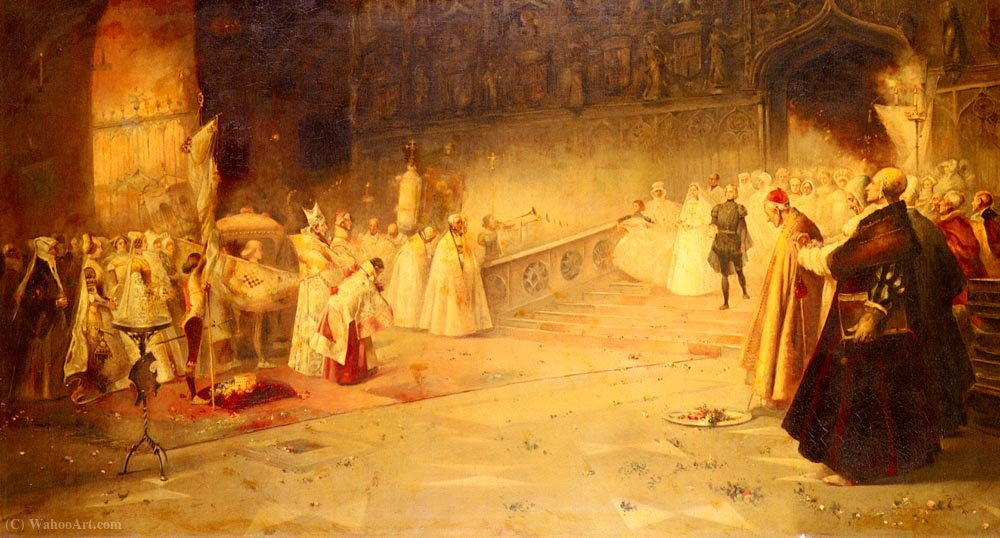
A royal wedding
 詳細を見る
詳細を見る




































作品のオリジナル比率に合わせた、当店の規定サイズからお選びください。

特定のフレームやスペースに合わせて、ご希望のサイズをご入力いただけます。選択されたサイズが元の画像の比率と異なる場合、アートワークをトリミングするか、手描きで要素を追加して絵画を拡張いたします。デジタルモックアップ を制作し、制作開始前にご確認(承認)をいただきます。
画面上のプレビューは、実際のトリミングや拡張を正確に反映しているものではありません。最終的な構図は、モックアップによってのみ正確にご確認いただけます。
カスタムサイズもご利用いただけますが、元の比率を維持するためには、あらかじめ用意されたリストからサイズを選択することをお勧めいたします。
ご注文後、ArtsDot.com チームより詳細な指示をお送りするとともに、仕上がりイメージ(モックアップ)をご提供いたします。


 ガラスオプションは、110cm未満のサイズでのみご利用いただけます。

A royal wedding
複製技法
複製画のサイズ
-


合計金額
$ 263
関連作品

アーティストの略歴
A Roman Visionary: The Life and Legacy of Salvador Sánchez Barbudo
In the golden twilight of the Belle Époque, few artists captured the intersection of historical grandeur and intimate human emotion as poignantly as Salvador Sánchez Barbudo. Born in 1857 in the sun-drenched landscape of Jerez de la Frontera, Spain, his journey was one of profound movement—from the academic traditions of Andalusia to the vibrant, cosmopolitan heart of Rome. As a painter who breathed life into the past, Barbudo did not merely replicate history; he reimagined it through a lens of Romanticism, infusing theatrical scenes and period dramas with a palpable sense of soul and atmosphere.
His artistic foundation was deeply rooted in the classical disciplines of form and structure. Influenced by his father, a skilled sculptor, Barbudo’s early training embraced both the tactile nature of sculpture and the delicate precision of drawing. This dual education at the Seville Provincial School of Fine Arts, under the guidance of masters like Pedro Vera, instilled in him a rigorous academic discipline. However, it was his departure for Italy that would truly ignite his creative spirit. Under the generous patronage of the Marqués del Castrillo, Barbudo moved to Rome in 1878, entering a world where classical antiquity and modern romanticism collided.
The Roman Crucible and Artistic Evolution
Rome served as more than just a residence for Barbudo; it was his greatest muse. Within the thriving community of Spanish expatriate artists, he found himself immersed in an environment of intense intellectual and aesthetic exchange. Working alongside figures such as José Villegas Cordero, Barbudo began to refine a style that blended meticulous craftsmanship with an expressive, almost dreamlike use of color. He was part of a prestigious circle that included the likes of Rosales and Fortuny, artists who were redefining the boundaries of historical and Orientalist painting.
This period of his life was marked by a fascination with the theatrical and the evocative. His canvases often functioned as windows into other eras, capturing the tension of a Shakespearean tragedy or the quiet elegance of Venetian life. One of his most celebrated achievements was his depiction of a scene from the final act of Hamlet, a work that earned him prestigious recognition at the Exposition of Fine Arts in Madrid in 1886. Through such works, he demonstrated an uncanny ability to use light and shadow—the very essence of the Romantic tradition—to convey the weight of destiny and the fragility of human existence.
Mastery of Light, Color, and Subject Matter
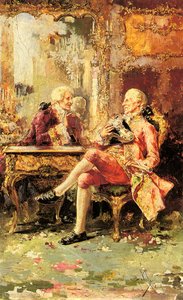
The breadth of Barbudo’s repertoire reveals an artist deeply enamored with the nuances of light. Whether he was painting the sweeping vistas of a Venetian lagoon or the intimate, quiet moments of domestic life, his brushwork possessed a unique ability to evoke nostalgia. His later works, such as Confidences, showcase a transition toward a more impressionistic touch, where thick impasto and warm, glowing light create scenes that feel less like historical records and more like cherished, fading memories.
His thematic interests were as diverse as the landscapes he inhabited:
- Historical Narratives: Recreating pivotal moments from literature and history with dramatic intensity.
- Venetian Splendor: Capturing the unique atmosphere of Venice, from gondola rides to 15th-century costumes.
- Modern Life and Intimacy: Exploring the quiet, often melancholic beauty found in everyday human connections and social settings like the café.
Ultimately, the significance of Salvador Sánchez Barbudo lies in his role as a bridge between eras. He carried the disciplined weight of Spanish academicism into the emotive freedom of the late 19th century. Though he passed away in Rome in 1917, his legacy remains etched in the canvases that continue to transport viewers to a lost world of elegance, drama, and profound emotional depth.
salvador sánchez barbudo
1857 - 1917
基本情報
- Artistic Movement Or Style: Orientalist painting
- Artists Or Movements Influenced By This Artist: ['Vincente Poveda']
- Artists Who Influenced This Artist: ['José Villegas Cordero']
- Date Of Death: 1917
- Full Name: Salvador Sánchez Barbudo
- Nationality: Spanish
- Notable Artworks: ['Hamlet & Venetian life']
- Place Of Birth: Jerez de la Frontera, Spain

