

 プレビュー
プレビュー
 シェアする
シェアする シェアする
シェアする
 詳細を見る
詳細を見る

 ダウンロード
 似ている作品
 X線調査
X線調査 スライドショー
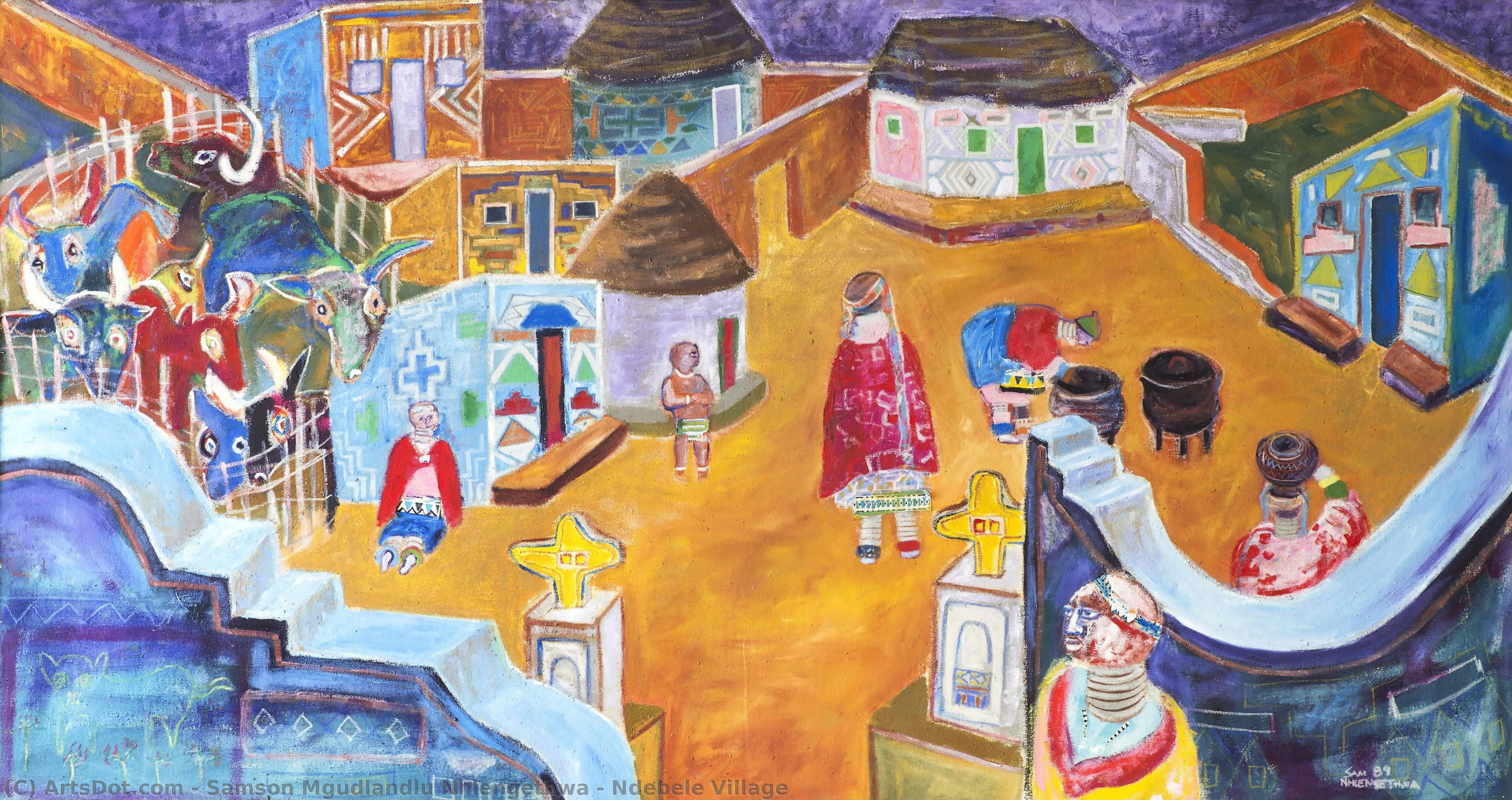
Ndebele Village


 詳細を見る
詳細を見る
ジークレー/アートプリント
迅速な制作と多彩な仕上げオプションを備えた、ミュージアムクオリティのジークレーまたはキャンバスプリント。 ( 手描きの絵画を購入 画像を購入)




P118B $10

P118H $10

P118W $10

P438Z $10

P508JH $12

P508YH $12

P805H $10

P805Z $10

P919BZ $10

P919G $10

P919XJ $10

P959ZH $10

P968JZ $12

W106C $8

W218G $10

W218JH $8

W218Y $10

W307PJ $10

W316G $10

W316PJ $8

W316Y $10

W398PJ $8

W4111J $10

W500HY $15

W500JH $15

W692G $12

W849H $8

W940BG $15

W953PJ $8




作品のオリジナル比率に合わせた、当店の規定サイズからお選びください。

特定のフレームやスペースに合わせて、ご自身でサイズを指定することも可能です。選択されたサイズが元の画像の比率と一致しない場合、作品をトリミングするか、鏡面反射または単色での塗りつぶしによって画像を拡張いたします。制作を開始する前に、ご確認用のデジタルモックアップをお送りいたします。
画面上のプレビューには、実際のトリミングや拡張は反映されませんのでご注意ください。最終的な構図を正確に確認できるのは、モックアップのみとなります。
カスタムサイズも承っておりますが、元の比率を維持するためには、あらかじめ用意されたリストからサイズを選択することをお勧めいたします。


 ガラスオプションは、110cm未満のサイズでのみご利用いただけます。

Ndebele Village
ジークレー/アートプリント
複製画のサイズ
-


合計金額
$ 62
作品詳細説明
A Vibrant Tapestry of Tradition: Discovering Ndebele Village
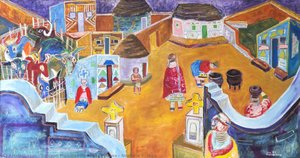
In the evocative masterpiece Ndebele Village, created in 1989 by the renowned South African artist Sam Nhlengethwa, the canvas breathes with the rhythmic pulse of township life and ancestral heritage. This striking work, executed in acrylic and paper on canvas, serves as a window into a world where tradition and modernity dance in a delicate, colorful embrace. The painting captures a moment of communal vitality, presenting a landscape where the geometric precision of Ndebele architecture meets the spontaneous energy of daily human interaction. For the discerning collector or interior designer, this piece offers more than mere decoration; it provides a profound narrative of resilience and cultural pride that can serve as a soulful centerpiece in any sophisticated space.
The technique employed by Nhlengethwa is nothing short of mesmerizing, utilizing a layered approach that mirrors the complexity of the South African experience. The artist’s use of acrylic allows for a saturation of color that makes the decorated walls of the village huts appear to glow from within. These structures, adorned with the iconic, intricate patterns characteristic of Ndebele art, provide a structured, rhythmic backdrop to the more fluid movements of the villagers. By integrating paper elements into the composition, Nhlengethwa introduces a tactile dimension, adding texture and depth that invites the viewer to lean closer and explore the subtle nuances of the village streets. The presence of livestock in their pens and the scattered objects—from chairs to bottles—creates a sense of lived-in realism, grounding the vibrant abstraction in the tangible reality of rural life.
Beyond its visual splendor, Ndebele Village is steeped in historical and personal significance. Growing up amidst the soulful melodies of jazz and the shifting landscapes of forced removals, Nhlengethwa developed a unique visual language that speaks to both displacement and belonging. In this work, we see the artist’s fascination with the spaces people inhabit and the ways in which they claim them through art and community. The inclusion of modern artifacts, such as a television set amidst traditional settings, acts as a poignant symbol of a culture in transition, navigating the intersection of ancient customs and an evolving globalized world. It is this tension between the old and the new, the static pattern and the moving figure, that gives the painting its enduring emotional resonance.
For those looking to infuse their environment with warmth, history, and a sense of global connection, a high-quality reproduction of this work offers an unparalleled opportunity. The painting’s palette—a symphony of bright, celebratory hues—can breathe life into a neutral gallery wall or provide a striking contrast in a contemporary minimalist setting. To possess such a piece is to hold a fragment of South African history, a tribute to the enduring spirit of the Ndebele people, and a celebration of an artist who transformed the rhythms of his upbringing into a timeless visual legacy.
関連作品
アーティストの略歴
A Tapestry of Township Life: The Art of Sam Nhlengethwa
Sam Nhlengethwa, born in 1955 in Payneville township, Springs, Gauteng, South Africa, is more than just a collage artist; he’s a visual storyteller deeply rooted in the vibrant and often turbulent history of his nation. His work, characterized by layered magazine reproductions, intricate textures, and a palpable sense of rhythm, offers a poignant reflection on urban life, jazz music, and the enduring spirit of South Africa. Nhlengethwa's journey began not within formal art institutions, but in the everyday realities of township existence – a formative experience that profoundly shaped his artistic vision.
Growing up amidst the sounds of jazz and the rhythms of daily life in Springs, Nhlengethwa’s early years were marked by displacement. Following forced removals, his family relocated to Kwa-Themba, later settling in Ratanda, Heidelberg. This movement, coupled with a deep connection to his musical heritage – his brother was a renowned jazz musician – instilled within him a keen awareness of social change and the complexities of identity. He began collecting jazz records at 17, an activity that would become inextricably linked to his artistic practice, informing both the subject matter and the aesthetic sensibility of his work.
The Foundations: Early Training and Artistic Beginnings
Nhlengethwa’s formal art education commenced at the Evangelical Lutheran Church Art and Craft Centre in Rorke's Drift and later at the Johannesburg Art Foundation. These early experiences provided him with foundational skills while simultaneously exposing him to a burgeoning artistic community. Crucially, he established his own practice of exchanging artwork for others, fostering a collaborative spirit that would become a hallmark of his career. This informal apprenticeship, fueled by shared passion and mutual exchange, laid the groundwork for his later work with the Bag Factory Artists’ Studio.
The Bag Factory, co-founded in 1991, represented a pivotal moment in South African art history. It provided a vital space for black artists to develop their careers, fostering dialogue and collaboration within a context often marginalized by the dominant art establishment. Nhlengethwa’s involvement with the studio solidified his commitment to representing the experiences of ordinary people, particularly those residing in townships – a theme that would dominate much of his oeuvre.
Collage as Commentary: Style and Technique
Nhlengethwa's distinctive collage style is immediately recognizable. He meticulously cuts and arranges fragments from magazines—advertisements, fashion spreads, news clippings—creating layered compositions that evoke the chaotic energy of urban environments. The use of hard-edge cuts juxtaposed with soft textures generates a dynamic tension, mirroring the complexities of South African society. His work isn’t simply decorative; it's a deliberate act of commentary, transforming ephemeral images into enduring statements about culture, identity, and social change.
Beyond collage, Nhlengethwa has also explored photogravure and lithography, techniques that further enhance the textural richness and layered narratives within his work. These processes allow him to create subtle tonal variations and intricate patterns, adding depth and nuance to his compositions. He often incorporates elements of jazz—patterns reminiscent of musical scores or rhythmic arrangements—into his collages, reflecting his lifelong fascination with this influential genre.
Recognition and Legacy
Nhlengethwa’s artistic achievements have been widely recognized both within South Africa and internationally. In 1994, he was awarded the prestigious Standard Bank Young Artist of the Year award, a testament to his emerging talent and commitment to representing the experiences of marginalized communities. His work has been exhibited in major galleries and museums across the globe, including Carnegie Hall in New York City and the Venice Biennale.
Throughout his career, Nhlengethwa has remained dedicated to fostering artistic community and supporting emerging artists. His co-founding of the Bag Factory Artists’ Studio stands as a lasting legacy—a testament to his belief in the power of collaboration and the importance of providing opportunities for black artists to thrive. Sam Nhlengethwa's art is not merely a reflection of South Africa’s past; it’s an ongoing exploration of its present, offering a powerful and enduring commentary on identity, memory, and the resilience of the human spirit.
samson mgudlandlu nhlengethwa
1955 - , South Africa
基本情報
- Artistic Movement Or Style: Collage art, Photogravure
- Artists Or Movements Influenced By This Artist: ['David Krut Workshop']
- Artists Who Influenced This Artist:
- Jazz musicians
- Township life
- Date Of Birth: January 9, 1955
- Full Name: Sam Nhlengethwa
- Nationality: South African
- Notable Artworks:
- Stop it Verwoerd
- Life, Jazz and Lots of Other Things
- Place Of Birth: Payneville Township, Springs, Gauteng
関連記事
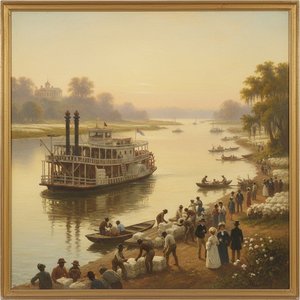
William Aiken Walker: A Southern Luminist's Vision of River Life & Antebellum Society
Explore the evocative paintings of William Aiken Walker, a master of Southern Luminism. Discover his poignant depictions of post-Civil War life, African American culture & antebellum landscapes. Learn about this important artist's legacy.
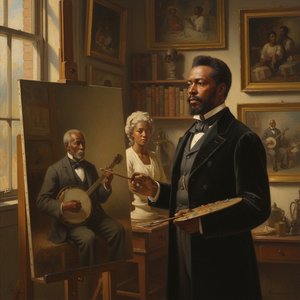
Henry Ossawa Tanner: Pioneering African American Representation in 19th-Century Art
Explore the life and groundbreaking work of Henry Ossawa Tanner, a pioneering African American artist who achieved international acclaim with his deeply spiritual and realistic paintings. Discover his legacy at ArtsDot.
Harmonizing Heritage: A Cross-Cultural Approach to Interior Design with Asian, European, and African Art Reproductions
Discover the art of cross-cultural interior design with ArtsDot.com. Explore museum-quality reproductions & expert guidance to create a globally inspired, sophisticated home. Shop now!
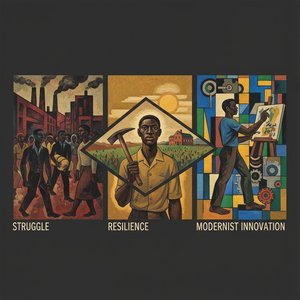
Jacob Lawrence: Narratives of Struggle, Resilience & Modernist Innovation
Explore the powerful narratives of Jacob Lawrence, a pivotal African American artist of the Harlem Renaissance. Discover his iconic 'Migration Series,' dynamic cubism style, and lasting impact on American art history.
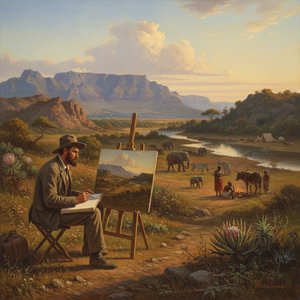
Thomas Baines: Pioneering Landscape Art & Visual Documentation of 19th-Century Southern Africa
Explore the life & art of Thomas Baines, a pioneering British explorer and artist who documented 19th-century Southern Africa & Australia. Discover his stunning landscapes, war paintings, and invaluable cartographic contributions.

