

 プリントを購入
 シェアする
シェアする シェアする
シェアする
 詳細を見る
詳細を見る

 ダウンロード
 似ている作品
 スライドショー
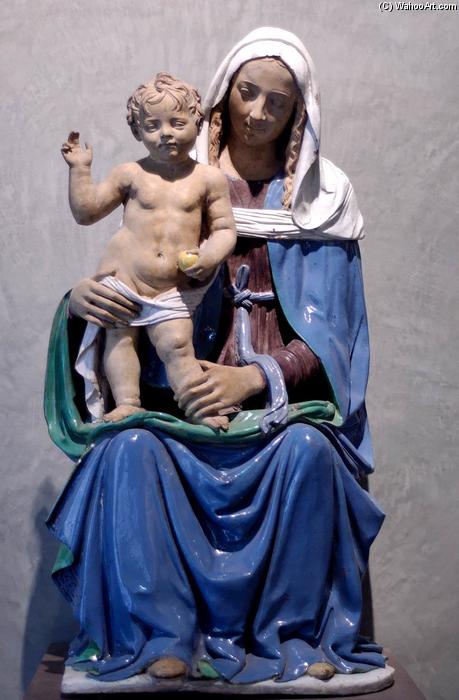
Seated Virgin


 詳細を見る
詳細を見る




































作品のオリジナル比率に合わせた、当店の規定サイズからお選びください。

特定のフレームやスペースに合わせて、ご希望のサイズをご入力いただけます。選択されたサイズが元の画像の比率と異なる場合、アートワークをトリミングするか、手描きで要素を追加して絵画を拡張いたします。デジタルモックアップ を制作し、制作開始前にご確認(承認)をいただきます。
画面上のプレビューは、実際のトリミングや拡張を正確に反映しているものではありません。最終的な構図は、モックアップによってのみ正確にご確認いただけます。
カスタムサイズもご利用いただけますが、元の比率を維持するためには、あらかじめ用意されたリストからサイズを選択することをお勧めいたします。
ご注文後、ArtsDot.com チームより詳細な指示をお送りするとともに、仕上がりイメージ(モックアップ)をご提供いたします。


 ガラスオプションは、110cm未満のサイズでのみご利用いただけます。

Seated Virgin
複製技法
複製画のサイズ
-


合計金額
$ 263
A Testament to Grace and Devotion
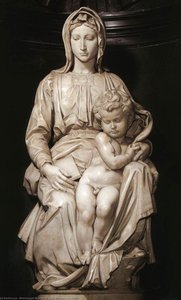
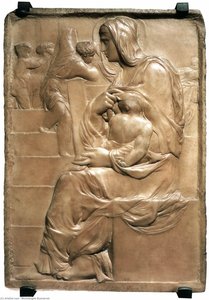
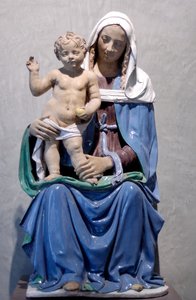
Santi Buglioni’s “Seated Virgin with the Christ Child,” a terracotta sculpture housed within the Chiesa dei Santi Lorenzo e Ippolito in Castelfiorentino, Italy, is more than just a depiction of Mary and child; it's a profound meditation on motherhood, faith, and the enduring power of human compassion. Created between 1520 and 1530 during the High Renaissance, this work stands as a testament to Buglioni’s exceptional skill in capturing both serene dignity and palpable emotion within the confines of sculpted clay. The sculpture immediately draws the viewer into its intimate scene – a mother cradling her infant son, an image that resonates deeply across cultures and throughout history.
The piece is executed with remarkable attention to detail, characteristic of Buglioni’s workshop. The smooth, polished surface of the terracotta creates a luminous quality, enhanced by the artist's skillful use of glazing – a technique perfected by his predecessors but masterfully employed here to achieve an almost ethereal glow. Note particularly the delicate folds of Mary’s blue cloak, the subtle modeling of her face conveying both tenderness and contemplation, and the youthful innocence of the Christ Child. The way Buglioni has rendered the textures—the soft fabric, the smooth skin—demonstrates a deep understanding of human anatomy and material properties.
The Legacy of Benedetto and Santi Buglioni
To fully appreciate “Seated Virgin,” it’s crucial to understand the context within which it was created. Santi Buglioni was the nephew and collaborator of Benedetto Buglioni, a pivotal figure in Renaissance sculpture. Benedetto, renowned for his work on the façade of Florence Cathedral and his collaborations with Michelangelo, established a workshop that became a significant center for terracotta sculpture. Santi inherited this legacy, building upon his uncle’s techniques while also developing his own distinctive style. The Buglionis were particularly celebrated for their innovative use of glazed terracotta, a technique they refined after learning it from Luca della Robbia, and which allowed them to create sculptures with vibrant colors and remarkable luminosity.
The sculpture's creation coincided with a period of intense artistic patronage in Florence. The Medici family, powerful rulers of the city, were avid collectors of art and commissioned numerous works from leading sculptors. This patronage fueled innovation and experimentation within the Florentine art world, encouraging artists to push the boundaries of their craft. “Seated Virgin” exemplifies this spirit of creativity and ambition, showcasing Buglioni’s ability to synthesize classical ideals with contemporary artistic sensibilities.
Symbolism and Spiritual Resonance
The imagery within “Seated Virgin” is rich in symbolic meaning. The pose itself—a mother cradling her child—is a powerful representation of maternal love, protection, and sacrifice. Mary’s serene expression embodies humility, piety, and acceptance of God's will. The Christ Child, depicted with an innocent gaze, symbolizes hope, redemption, and the promise of salvation. The sculpture can be interpreted as a meditation on the Virgin Mary’s role as the embodiment of grace and compassion – a figure who represents both earthly motherhood and divine connection.
Furthermore, the choice of terracotta—a material associated with earth and fertility—adds another layer of meaning to the work. It connects the image to the natural world and emphasizes the sacredness of life and family. The sculpture’s placement within the Chiesa dei Santi Lorenzo e Ippolito further enhances its spiritual significance, creating a space for contemplation and devotion.
A Timeless Masterpiece
“Seated Virgin” remains a profoundly moving work of art, captivating viewers with its beauty, grace, and emotional depth. It’s a testament to the enduring power of human creativity and the timeless themes explored within Renaissance sculpture. Reproductions of this iconic piece offer an accessible way to experience Buglioni's genius and bring the serenity of this devotional image into any setting. Consider commissioning a high-quality giclée print – a faithful digital reproduction that captures the original’s luminosity and detail—to grace your home or office with this enduring symbol of faith and love.
アーティストの略歴
Michelangelo Buonarroti: A Titan of the Renaissance
Michelangelo di Lodovico Buonarroti Simoni, born in Caprese (1494) and died in Rome (1564), stands as arguably the most influential artist of the High Renaissance. More than simply a painter or sculptor, he was a polymath—a master of architecture, poetry, and crucially, human anatomy. His work embodies the ideals of classical beauty and humanist thought, profoundly shaping Western art for centuries to come. Michelangelo’s life was one of intense dedication, often marked by personal struggles and creative conflicts, yet consistently producing masterpieces that continue to inspire awe and debate.
Michelangelo's early years were spent in Florence, where he apprenticed under Domenico Ghirlandaio, a prominent painter. However, his true passion lay in sculpture, and he quickly sought the tutelage of Bertoldo di Giovanni, sculptor to Lorenzo de’ Medici. This period instilled in him a deep understanding of classical forms and a commitment to anatomical accuracy. His early works, such as the *Battle of the Centaurs* (1492-93), already demonstrated his powerful draftsmanship and dramatic flair, foreshadowing the monumental scale and emotional intensity that would characterize his later achievements.
The Sculptor’s Vision: David and Pietà
Michelangelo's reputation as a sculptor solidified with the creation of *David* (1501-04), commissioned for Florence Cathedral. This colossal marble statue, depicting the biblical hero before his battle with Goliath, is a testament to Michelangelo’s mastery of human form—a figure of heroic strength and unwavering resolve. The sheer scale of the sculpture, combined with its remarkably lifelike detail and psychological depth, immediately established it as one of the greatest works of art ever created.
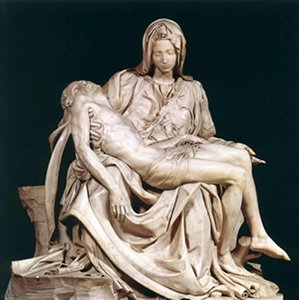
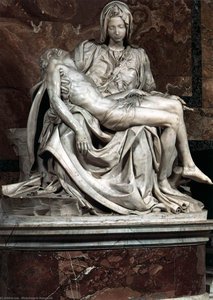
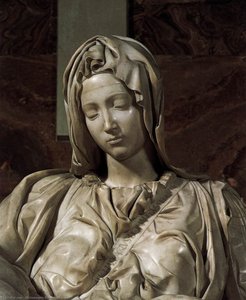
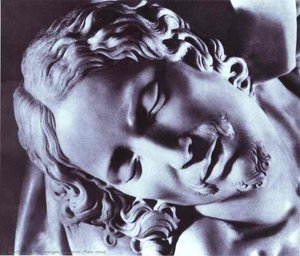
Perhaps even more profoundly moving is the *Pietà* (1498-99), sculpted for St. Peter’s Basilica in Rome. This depiction of Mary cradling the dead Christ is a masterpiece of emotional restraint and exquisite beauty. The figures are rendered with astonishing tenderness, conveying both sorrow and profound dignity. The *Pietà* exemplifies Michelangelo's ability to imbue inanimate stone with an almost palpable sense of humanity—a hallmark of his artistic genius.
Painting and Architecture: A Broadening Palette
While renowned primarily as a sculptor, Michelangelo’s talents extended significantly into the realms of painting and architecture. Pope Julius II commissioned him to paint the ceiling of the Sistine Chapel in Vatican City (1508-12), a project that consumed nearly four years of his life. The frescoes depict scenes from Genesis—the Creation, the Fall of Man, the Flood, and Noah’s Ark—executed with breathtaking scale, dynamism, and anatomical precision. The *Creation of Adam*, arguably the most famous image within the cycle, captures a moment of divine inspiration with unparalleled power.
Following the completion of the Sistine Chapel ceiling, Michelangelo turned his attention to designing the New Sacristy for St. Peter’s Basilica (1536-1541). This architectural masterpiece is characterized by its elegant proportions, intricate detailing, and harmonious integration with the surrounding basilica. The Sacistry showcases Michelangelo's understanding of classical architecture and his ability to create spaces that are both visually stunning and spiritually uplifting.
Mannerism and Legacy
As Michelangelo’s career progressed, his style evolved, reflecting the influence of the burgeoning Mannerist movement. His later works, such as *The Last Judgment* (1536-1541) on the altar wall of the Sistine Chapel and the Tomb of Pope Julius II, exhibit a greater emphasis on dramatic gesture, distorted perspective, and emotional intensity—a departure from the balanced harmony of his earlier work. Despite these stylistic shifts, Michelangelo’s commitment to anatomical accuracy, psychological depth, and expressive power remained unwavering.
Michelangelo's impact on Western art is immeasurable. His mastery of sculpture, painting, and architecture set a new standard for artistic excellence, inspiring generations of artists to strive for greater technical skill, emotional intensity, and intellectual rigor. His works continue to be studied, admired, and debated—a testament to the enduring power and timeless beauty of his genius. He remains not just an artist, but a symbol of human potential and creative achievement.
santi buglioni (santi di michele)
1494 - 1576 , Italy
基本情報
- Artistic Movement Or Style: High Renaissance, Early Mannerism
- Artists Or Movements Influenced By This Artist:
- Raphael
- Botticelli
- Artists Who Influenced This Artist:
- Donatello
- Leonardo da Vinci
- Date Of Birth: March 6, 1475
- Date Of Death: February 18, 1564
- Full Name: Michelangelo di Lodovico Buonarroti Simoni
- Nationality: Italian
- Notable Artworks:
- David
- Pietà
- The Last Judgment
- Place Of Birth: Caprese Michelangelo, Italy
関連記事
ミケランジェロ傑作25選:美術史を彩る巨匠の魂と革新 - ArtsDot
ミケランジェロの傑作25選。ルネサンスを代表する芸術家の魂が宿る絵画、彫刻の世界へ。ダビデ像やピエタなど、美術史に残る名作の物語と技法を紐解きます。ArtsDotで高品質な複製画とインテリアアートを見つけましょう。

Bronze Sculptures That Defined Art History | ArtsDot
Journey through art history with our Top 10 bronze sculptures! Explore masterpieces by Rodin, Michelangelo & more. Discover stories behind iconic statues and find museum-quality reproductions for your home decor at ArtsDot.com.

Bronze Age to Modern Masters: 10 Sculptures That Redefined Art | ArtsDot
Journey through art history with 10 legendary bronze sculptures – from Michelangelo's David to Rodin’s Thinker. Explore the stories, techniques & timeless beauty of these masterpieces. Find museum-quality reproductions & elevate your home decor on ArtsDot.com.
ウフィツィ美術館の至宝25選:ルネサンス巨匠たちの傑作とアートデコレーション
ウフィツィ美術館の至宝25選:ボッティチェリ、レオナルド・ダ・ヴィンチ…ルネサンス巨匠たちの傑作と感動的な物語を紐解きます。高品質な絵画複製やアートプリントで、お部屋に名画の輝きを。ArtsDot.comで芸術の世界へ。

The Enduring Form: Exploring Themes & Techniques in Sculpture Across Historical Periods
Explore the rich history of sculpture from ancient masterpieces to contemporary innovations. Discover key techniques, influential artists & investment potential for discerning art collectors.

