

 プレビュー
プレビュー
 プリントを購入
 シェアする
シェアする シェアする
シェアする
 詳細を見る
詳細を見る

 ダウンロード
 似ている作品
 X線調査
X線調査 スライドショー
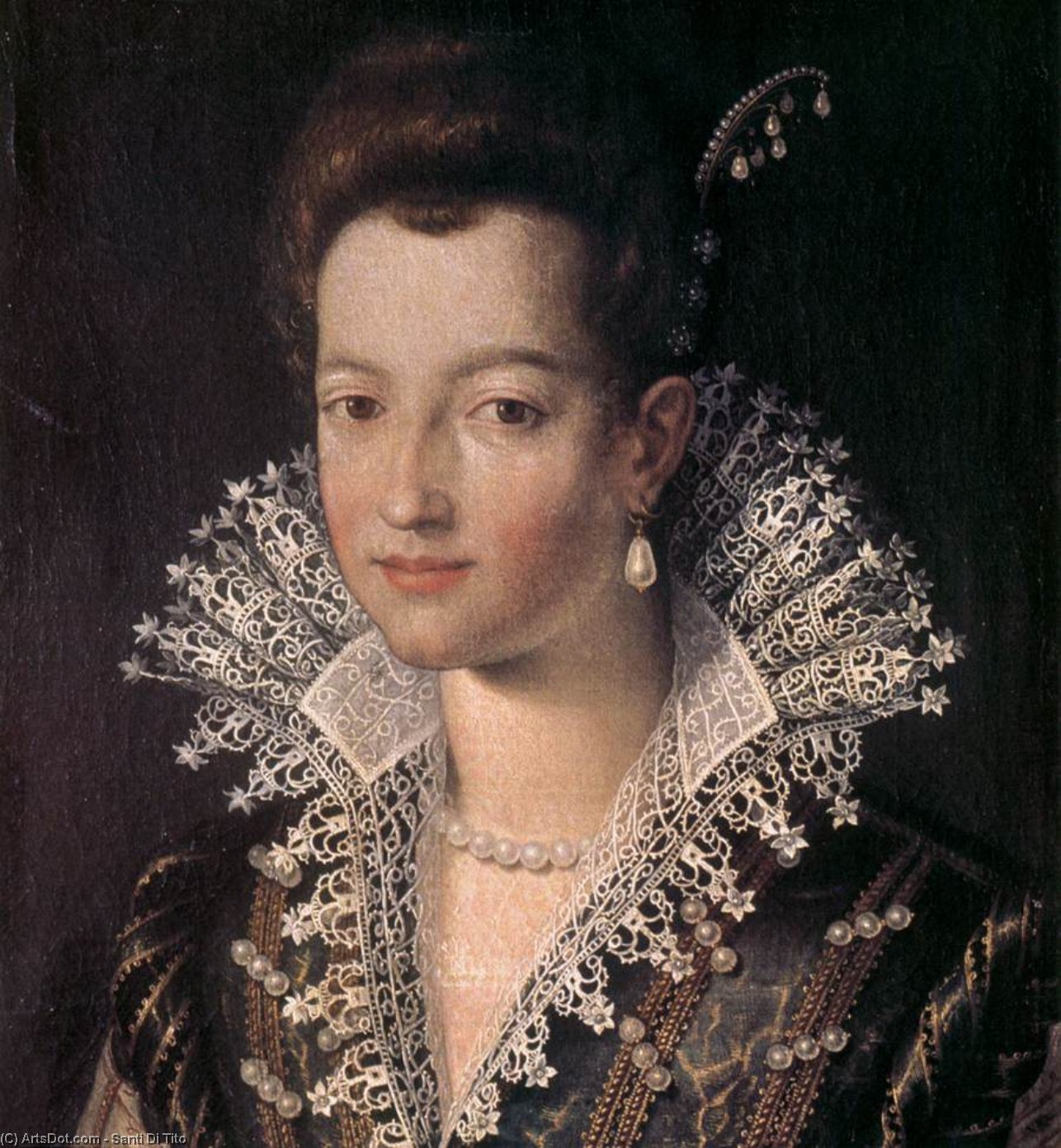
Portrait of the Young Maria de' Medici
 Oil On Canvas
- WallArt
- Baroque
 1590
1590- Early Modern
 61.0 x 45.0 cm
 Museo dell'Opificio delle Pietre Dure
 詳細を見る
詳細を見る




P118B $10

P118H $10

P118W $10

P438Z $10

P508JH $12

P508YH $12

P805H $10

P805Z $10

P919BZ $10

P919G $10

P919XJ $10

P959ZH $10

P968JZ $12

W106C $8

W218G $10

W218JH $8

W218Y $10

W307PJ $10

W316G $10

W316PJ $8

W316Y $10

W398PJ $8

W4111J $10

W500HY $15

W500JH $15

W692G $12

W849H $8

W940BG $15

W953PJ $8




作品のオリジナル比率に合わせた、当店の規定サイズからお選びください。

特定のフレームやスペースに合わせて、ご希望のサイズをご入力いただけます。選択されたサイズが元の画像の比率と異なる場合、アートワークをトリミングするか、手描きで要素を追加して絵画を拡張いたします。デジタルモックアップ を制作し、制作開始前にご確認(承認)をいただきます。
画面上のプレビューは、実際のトリミングや拡張を正確に反映しているものではありません。最終的な構図は、モックアップによってのみ正確にご確認いただけます。
カスタムサイズもご利用いただけますが、元の比率を維持するためには、あらかじめ用意されたリストからサイズを選択することをお勧めいたします。
ご注文後、ArtsDot.com チームより詳細な指示をお送りするとともに、仕上がりイメージ(モックアップ)をご提供いたします。


 ガラスオプションは、110cm未満のサイズでのみご利用いただけます。

Portrait of the Young Maria de' Medici
複製技法
複製画のサイズ
-


合計金額
$ 263
A Glimpse of Florentine Grace
In the delicate brushstrokes of Santi di Tito’s Portrait of the Young Maria de' Medici, we find ourselves transported to the vibrant, aristocratic atmosphere of late sixteenth-century Florence. This intimate oil on canvas, dating from 1590, captures a moment of youthful vitality and burgeoning nobility. The subject, a young Maria de' Medici, is presented not with the stiff, frozen formality often found in Mannerist portraiture, but with a soft, approachable warmth. Her gentle smile and the luminous quality of her skin suggest a spirit that is both poised and profoundly human. As she gazes toward the viewer, there is an inviting sense of presence that bridges the centuries, making this piece an extraordinary focal point for any collection dedicated to the elegance of the Italian Renaissance.
The technical mastery displayed in this work reflects Santi di Tito’s pivotal role in the transition from the complex artifice of Mannerism toward the more naturalistic Counter-Maniera style. The artist employs a sophisticated use of light and shadow to sculpt the young Medici's features, lending a three-dimensional realism to her face and neck. Notice the meticulous attention to texture: the crisp, architectural folds of her ruffled collar contrast beautifully with the soft, organic luster of the pearls draped around her neck. These details are not merely decorative; they serve to ground the subject in a tangible reality, showcasing a technique that prioritizes clarity and emotional resonance over unnecessary ornamentation.
Symbolism and the Splendor of Status
Every element within this portrait serves as a silent testament to the prestige of the Medici lineage. The pearls, shimmering against her skin, are timeless symbols of purity and high social standing, acting as luminous anchors within the composition. The intricate lace and fine fabrics of her attire speak to the immense wealth and cultural influence of the Florentine court. Through these material signifiers, Santi di Tito does more than paint a likeness; he constructs an icon of dynastic power. For the discerning collector or interior designer, this painting offers a profound sense of historical weight, providing a sophisticated narrative element that can elevate the character of a room with its themes of heritage and timeless beauty.
Beyond the display of wealth, there is an emotional depth found in the interplay between the subject's youthful innocence and the heavy mantle of her future responsibilities. The painting captures a fleeting moment of lightness before the complexities of political life took hold. This duality—the tension between the ephemeral joy of youth and the enduring legacy of a great house—creates a captivating psychological depth. Whether displayed in a grand library or a contemporary living space, this reproduction brings with it an aura of contemplative grace, inviting viewers to linger on the subtle nuances of light, texture, and human expression.
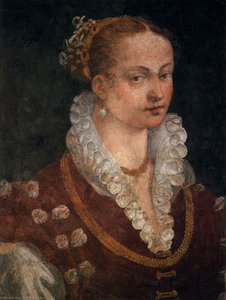
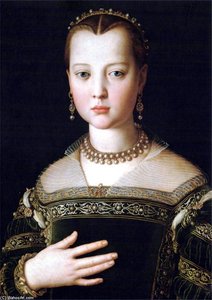
関連作品

アーティストの略歴
The Architect of Counter-Maniera
In the vibrant, shifting landscape of late 16th-century Italy, few figures played as pivotal a role in redefining the visual language of Florence as Santi di Tito. Born in 1536, this master emerged during a period of profound artistic transition, standing at the crossroads between the highly stylized, artificial elegance of Mannerism and the burgeoning naturalism that would eventually blossom into the Baroque. While his contemporaries often sought refuge in the complex, elongated forms and intellectual puzzles of the Maniera, di Tito embarked on a different journey—one of reform, clarity, and a return to the profound grace of classical tradition.
The early years of his career were marked by significant collaborative endeavors that expanded his horizons far beyond the borders of Tuscany. Between 1558 and 1564, di Tito’s presence was felt in the grand halls of Rome, where he worked alongside talented peers such as Giovanni de’ Vecchi and Niccolò Circignani. Their monumental fresco projects at the Palazzo Salviati and the Sala Grande of the Belvedere served as a crucible for his developing style. It was during this Roman period that he began to absorb the Raphaelesque influences that would become the hallmark of his mature work, moving away from the crowded, ornamental aesthetics of the Zuccari brothers toward a more balanced and legible composition.
A Departure from Tradition
Upon his return to Florence in 1564, Santi di Tito did not merely rejoin the existing artistic community; he sought to transform it. As a member of the prestigious Accademia del Disegno, he became a central figure in a movement often described by historians as Counter-Maniera. This was not simply a rejection of style, but a profound intellectual shift. While his early contributions to Francesco I de’ Medici's Studiolo—such as The Sisters of Pheton and Hercules and Io—still echoed the stylized conventions of Florentine Mannerism, they contained the seeds of his later revolution.
Driven by a desire for greater naturalism and emotional sincerity, di Tito famously distanced himself from the influence of Bronzino. He viewed the prevailing trend of extreme artifice as a barrier to true artistic expression. Instead, he looked backward to the clarity of the High Renaissance and forward toward a more direct, humanistic approach to painting. His work began to emphasize:
- Classical Form: A renewed focus on anatomical accuracy and structural integrity.
- Clarity of Composition: Moving away from overwhelming, overcrowded scenes toward more legible and focused narratives.
- Innovative Color Palettes: The use of light and color to create depth and atmosphere rather than mere decorative effect.
Legacy and Historical Significance
The legacy of Santi di Tito is etched into the very fabric of Italian art history. By championing a style that favored clarity and naturalism, he paved the way for the dramatic innovations of the 17th century. His ability to marry the intellectual rigor of Florentine training with a new, accessible emotionality made him one of the most respected painters of his era. His prolific output, including monumental altarpieces such as The Resurrection for Santa Croce, demonstrated that art could be both profoundly beautiful and deeply communicative.
Ultimately, di Tito stands as a bridge between two worlds. He took the sophisticated, often impenetrable language of the late Renaissance and refined it into something more enduring and human. In doing so, he helped steer the course of Western art, ensuring that the transition from the complex Mannerist era to the emotive Baroque was marked by a profound respect for the classical foundations of beauty.
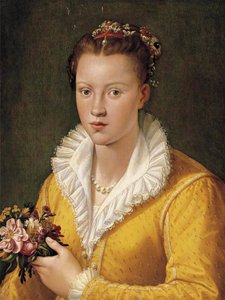
Santi di Tito
1536 - 1603 , Italy
基本情報
- Artistic Movement Or Style: Proto-Baroque & Counter-Maniera
- Artists Or Movements Influenced By This Artist:
- Vasari
- Alessandro Allori
- Artists Who Influenced This Artist:
- Titian
- Bronzino
- Date Of Birth: Florence, Italy (1536)
- Date Of Death: 1603
- Full Name: Santi di Tito
- Nationality: Italian
- Notable Artworks:
- Madonna and Child with the Infant Saint John the Baptist
- Vision of St Thomas Aquinas
- Saint Eustahe
- Place Of Birth: Florence
関連記事
ジョット・ディ・ボンドーネ:至高の25選 - ルネサンスの夜明けを彩る傑作たち | ArtsDot
ジョット・ディ・ボンドーネの至高の25選。ルネサンス美術を牽引した巨匠の傑作と、その感動的な物語を紐解きます。高品質な絵画複製やインテリアアートで、名画の世界をあなたの空間に。ArtsDot.com でコレクションをご覧ください。

ゴヤ傑作25選:スペインの魂を揺さぶる、深遠な芸術の世界 | ArtsDot
ゴヤ傑作25選:ロマン主義を代表するスペインの巨匠、フランシスコ・デ・ゴヤの世界へ。黒衣の女からマハまで、魂を揺さぶる絵画の物語と技法を紐解きます。ArtsDotで高品質なアートレプリカを見つけ、インテリアに深みと風格を。今すぐコレクションをご覧ください。

About Us
Discover our story! We bring world-class art into your life through expert curation, personalized creations, and free previews. Trusted by individuals and businesses since 2000.
ヴェネツィア・ビエンナーレ厳選25作品:芸術と歴史が織りなす至高のコレクション | ArtsDot
ヴェネツィア・ビエンナーレの至宝25選。印象派から現代アートまで、名画の背景にある物語と芸術家の情熱を紐解きます。ArtsDotで、キャンバスアートや油絵複製をお楽しみください。今すぐコレクションをご覧ください。
Pieter de Hooch: Illuminating Dutch Domestic Life & Golden Age Charm
Explore the captivating world of Pieter de Hooch, a master of Dutch Golden Age painting. Discover his innovative use of light, intimate domestic scenes, and lasting influence on art history. Learn more at ArtsDot.

