

 プレビュー
プレビュー
 プリントを購入
 シェアする
シェアする シェアする
シェアする
 詳細を見る
詳細を見る

 ダウンロード
 似ている作品
 X線調査
X線調査 スライドショー
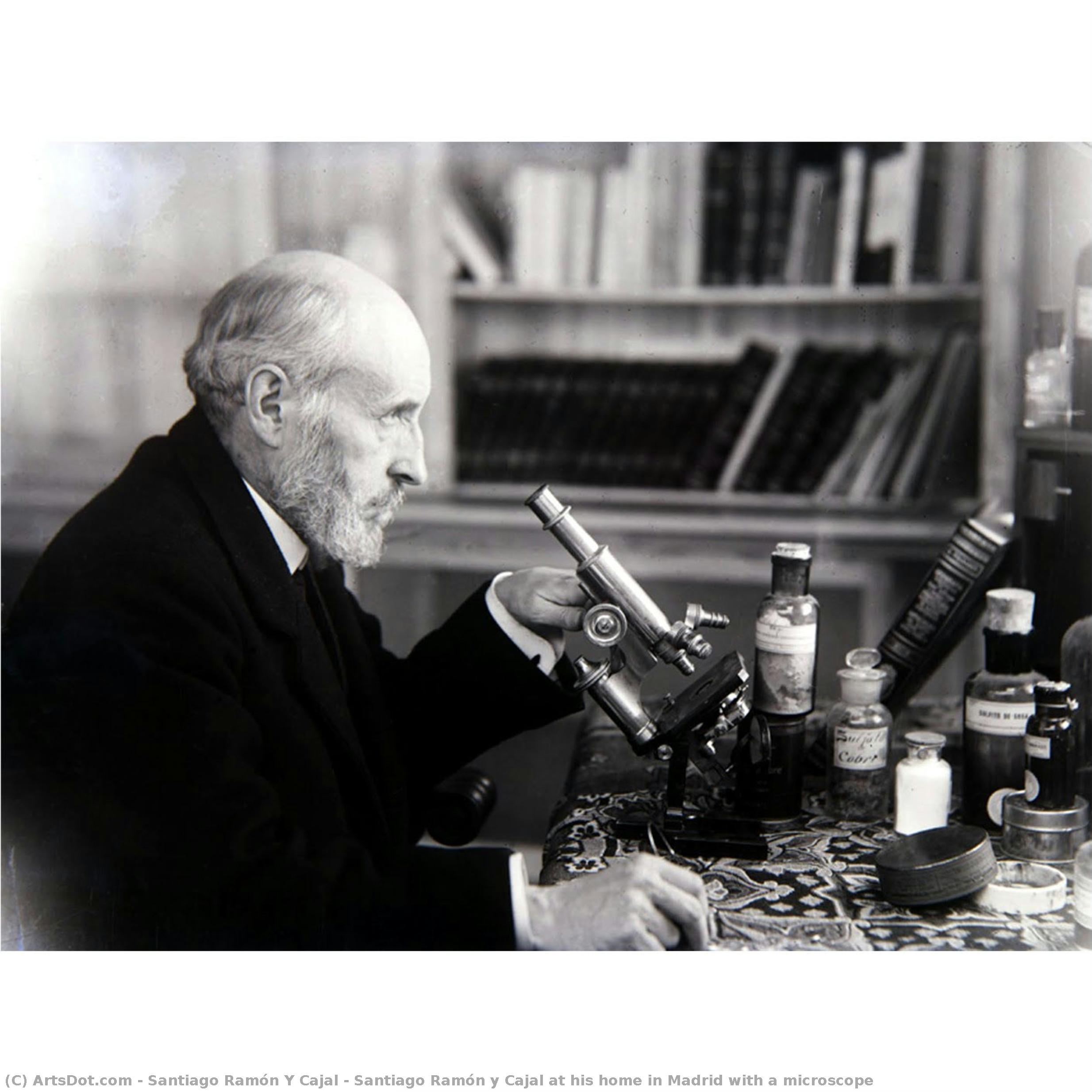
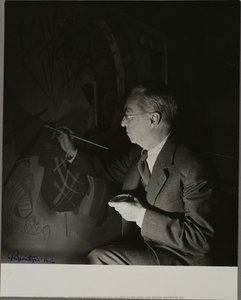
Santiago Ramón y Cajal at his home in Madrid with a microscope

 詳細を見る
詳細を見る




































作品のオリジナル比率に合わせた、当店の規定サイズからお選びください。

特定のフレームやスペースに合わせて、ご希望のサイズをご入力いただけます。選択されたサイズが元の画像の比率と異なる場合、アートワークをトリミングするか、手描きで要素を追加して絵画を拡張いたします。デジタルモックアップ を制作し、制作開始前にご確認(承認)をいただきます。
画面上のプレビューは、実際のトリミングや拡張を正確に反映しているものではありません。最終的な構図は、モックアップによってのみ正確にご確認いただけます。
カスタムサイズもご利用いただけますが、元の比率を維持するためには、あらかじめ用意されたリストからサイズを選択することをお勧めいたします。
ご注文後、ArtsDot.com チームより詳細な指示をお送りするとともに、仕上がりイメージ(モックアップ)をご提供いたします。


 ガラスオプションは、110cm未満のサイズでのみご利用いただけます。

Santiago Ramón y Cajal at his home in Madrid with a microscope
複製技法
複製画のサイズ
-


合計金額
$ 263
関連作品






アーティストの略歴
The Architect of the Mind: The Dual Legacy of Santiago Ramón y Cajal
In the annals of human achievement, few figures possess a legacy as profoundly dualistic as Santiago Ramón y Cajal. To the scientific community, he is the revered father of modern neuroscience, the Nobel laureate who mapped the invisible labyrinth of the human brain. To the art historian, he represents a rare specimen of the polymath—a man whose meticulous hand could translate the microscopic mysteries of life into breathtakingly precise visual narratives. Born in 1852 in Petilla de Aragón, Spain, Cajal’s life was not merely a pursuit of knowledge, but a lifelong dialogue between the analytical rigor of medicine and the expressive freedom of the brush.
His early years were marked by a tension between duty and desire. While his father, a man of science and discipline, sought to steer him toward a practical medical career, Cajal found solace in the boundless realms of artistic imagination. This period of his life was characterized by an intense, almost rebellious, devotion to painting. He did not see art and science as opposing forces; rather, he viewed them as two different lenses through which one could observe the fundamental truths of nature. This early inclination toward aesthetics would later become his greatest scientific asset, providing him with the observational acuity necessary to perceive what others had overlooked.
A Symphony of Silver and Shadow
The true metamorphosis of Cajal’s career occurred when he turned his artistic eye toward the microscopic world. Utilizing a revolutionary technique involving potassium dichromate and silver nitrate—a method often referred to as the Golgi stain—he achieved what was previously thought impossible: the visualization of individual neurons. Where others saw only a chaotic, undifferentiated mass of cellular matter, Cajal’s trained eyes perceived a complex, interconnected web of arborized structures. His drawings were not merely scientific records; they were masterpieces of biological illustration, imbued with a sense of depth, texture, and structural elegance that captured the very essence of neural communication.
These illustrations served as a bridge between raw data and human understanding. Through his work, the concept of the neuron doctrine—the idea that neurons are discrete, individual cells rather than a continuous reticulum—was brought to light. His ability to render the delicate dendrites and sturdy axons with such clarity allowed him to communicate complex neuroanatomical concepts with an unparalleled precision. This period of his life represents a pinnacle where technique met vision, as he used the tools of chemistry to feed the hunger of his artistic soul, ultimately revealing the intricate architecture of thought itself.
A Lasting Impression on Science and Art
The historical significance of Santiago Ramón y Cajal cannot be overstated. In 1906, the world recognized his monumental contributions when he was awarded the Nobel Prize in Physiology or Medicine. This honor cemented his status as a titan of science, yet his influence extended far beyond the laboratory. His anatomical studies and oil paintings remain testament to a man who refused to be confined by a single discipline. He demonstrated that the scientific method is enhanced by the artist's sensitivity to form, light, and detail.
Today, we look back at Cajal not just as a researcher, but as a visionary who bridged two worlds. His legacy lives on in every modern map of the brain and in every piece of scientific illustration that seeks to find beauty in truth. He remains an enduring inspiration for anyone who believes that the pursuit of logic and the pursuit of beauty are, at their core, the same journey.
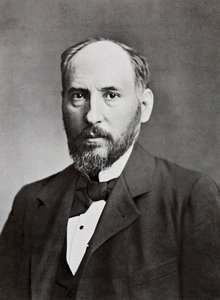
santiago ramón y cajal
1852 - 1934 , Spain
基本情報
- Artistic Movement Or Style: Scientific Illustration
- Artists Or Movements Influenced By This Artist: ['Neuroscience']
- Artists Who Influenced This Artist: ['León Abadías y Santolaria']
- Date Of Birth: May 1, 1852
- Date Of Death: 1934
- Full Name: Santiago Ramón y Cajal
- Nationality: Spanish
- Notable Artworks: ['Drawings of Ramón y Cajal']
- Place Of Birth: Petilla de Aragón, Spain

